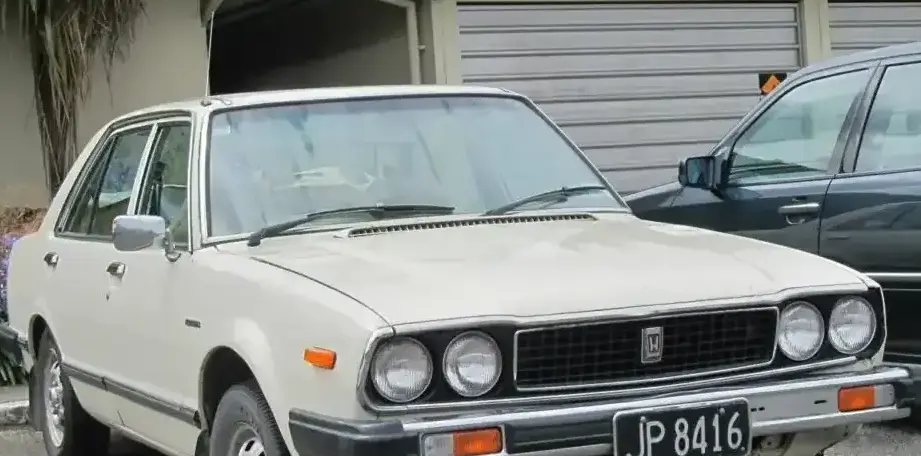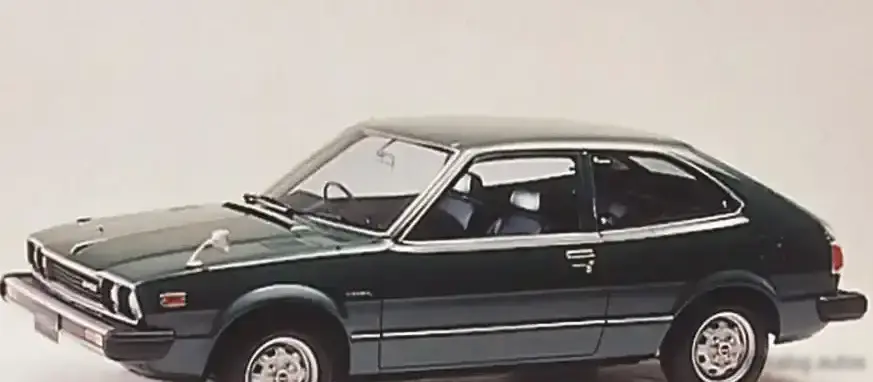
The Honda Accord I Hatchback, specifically the 1.6 EX (SJ) variant produced between 1976 and 1981, represents Honda’s initial foray into the compact car market with a hatchback body style. This model, designated as SJ and SY internally, was a crucial step in establishing Honda’s reputation for reliability and fuel efficiency in both Japan and export markets. The 1.6 EX (SJ) occupied an important position within the first-generation Accord lineup, offering a balance between affordability and a reasonable level of equipment. It served as a stepping stone for buyers who found the base models too spartan but weren’t prepared to pay for the more luxurious options.
Technical Specifications
| Brand | Honda |
| Model | Accord |
| Generation | Accord I Hatchback (SJ,SY) |
| Type (Engine) | 1.6 EX (SJ) (80 Hp) |
| Start of production | 1976 |
| End of production | 1981 |
| Powertrain Architecture | Internal Combustion engine |
| Body type | Hatchback |
| Seats | 5 |
| Doors | 3 |
| Fuel Type | Petrol (Gasoline) |
| Weight-to-power ratio | 11.5 kg/Hp, 87.1 Hp/tonne |
| Weight-to-torque ratio | 7.2 kg/Nm, 138.3 Nm/tonne |
| Power | 80 Hp @ 5300 rpm |
| Power per litre | 49.9 Hp/l |
| Torque | 127 Nm @ 3500 rpm (93.67 lb.-ft. @ 3500 rpm) |
| Engine layout | Front, Transverse |
| Engine displacement | 1602 cm3 (97.76 cu. in.) |
| Number of cylinders | 4 |
| Engine configuration | Inline |
| Cylinder Bore | 77 mm (3.03 in.) |
| Piston Stroke | 86 mm (3.39 in.) |
| Compression ratio | 8.4:1 |
| Engine aspiration | Naturally aspirated engine |
| Kerb Weight | 918 kg (2023.84 lbs.) |
| Fuel tank capacity | 50 l (13.21 US gal | 11 UK gal) |
| Length | 4125 mm (162.4 in.) |
| Width | 1620 mm (63.78 in.) |
| Height | 1335 mm (52.56 in.) |
| Wheelbase | 2380 mm (93.7 in.) |
| Front track | 1400 mm (55.12 in.) |
| Rear (Back) track | 1390 mm (54.72 in.) |
| Front overhang | 850 mm (33.46 in.) |
| Rear overhang | 895 mm (35.24 in.) |
| Ride height (ground clearance) | 165 mm (6.5 in.) |
| Drivetrain Architecture | The Internal combustion engine (ICE) drives the front wheels of the vehicle. |
| Drive wheel | Front wheel drive |
| Number of gears and type of gearbox | 5 gears, manual transmission |
| Front suspension | Independent type McPherson |
| Rear suspension | McPherson |
| Front brakes | Disc |
| Rear brakes | Drum |
| Steering type | Steering rack and pinion |
| Power steering | Hydraulic Steering |
Powertrain & Engine Architecture
The 1.6 EX (SJ) was powered by Honda’s 1602cc inline-four cylinder engine, designated as the S16A. This engine featured a single overhead camshaft (SOHC) valvetrain operating two valves per cylinder. Fuel delivery was managed by a Hitachi carburetor, a common setup for the era. The engine produced 80 horsepower at 5300 rpm and 127 Nm (93.67 lb-ft) of torque at 3500 rpm. The engine’s transverse mounting and front-wheel drive configuration were relatively novel for Honda at the time, reflecting a shift towards more modern automotive engineering. The five-speed manual transmission was standard, providing a reasonable balance between fuel economy and performance.
Driving Characteristics
The 1.6 EX (SJ) offered a modest but adequate driving experience for its time. With 80 horsepower propelling approximately 918 kg (2023.84 lbs), acceleration was not brisk, but sufficient for everyday driving. The five-speed manual transmission allowed drivers to keep the engine in its optimal power band, improving responsiveness. Compared to potential higher-spec Accords with larger engines, the 1.6 EX felt noticeably less powerful, particularly when fully loaded or tackling inclines. However, its lighter weight and relatively nimble handling made it enjoyable to drive on winding roads. The gear ratios were tuned for fuel efficiency, prioritizing economy over outright performance.
Equipment & Trim Levels
The 1.6 EX (SJ) trim level represented a step up from the base Accord models. Standard features typically included cloth upholstery, a basic AM/FM radio, and a heater. The interior was functional and durable, reflecting the car’s overall focus on practicality. Optional extras could include a more advanced radio, upgraded interior trim, and even air conditioning, depending on the market. The EX designation generally indicated a slightly more refined interior finish and a few additional convenience features compared to the more basic models.
Chassis & Braking
The Accord I Hatchback utilized a McPherson strut suspension system at both the front and rear, providing a comfortable ride and predictable handling. The front brakes were disc brakes, offering better stopping power than the drum brakes found on the rear wheels. Steering was via a rack and pinion system with hydraulic power assistance, making the car relatively easy to maneuver. The suspension was tuned for a balance between ride comfort and handling, prioritizing a smooth ride over sporty performance. The relatively narrow tires of the era limited grip, but the car’s light weight helped to mitigate this.
Market Reception & Comparison
The Honda Accord I Hatchback, including the 1.6 EX (SJ) variant, was generally well-received by automotive critics and consumers alike. It was praised for its reliability, fuel efficiency, and relatively spacious interior. The 1.6 EX offered a good value proposition for buyers seeking a practical and economical compact car. Compared to other cars in its class, such as the Toyota Corolla and Nissan Sunny, the Accord offered a more modern design and a slightly more refined driving experience. However, some critics noted that the 1.6-liter engine was somewhat underpowered, particularly when compared to larger-engined competitors.
Legacy
The Honda Accord I Hatchback, and the 1.6 EX (SJ) in particular, played a significant role in establishing Honda as a major player in the global automotive market. Its reputation for reliability and fuel efficiency helped to build brand loyalty and pave the way for future generations of Accords. Today, these early Accords are becoming increasingly collectible, particularly well-maintained examples. The 1.6-liter engine, while not known for its high performance, proved to be remarkably durable and relatively easy to maintain. Finding parts can be challenging, but a dedicated community of Honda enthusiasts ensures that these classic cars continue to be enjoyed for years to come. The 1.6 EX (SJ) represents a pivotal moment in Honda’s history, marking the beginning of a long and successful journey in the compact car segment.