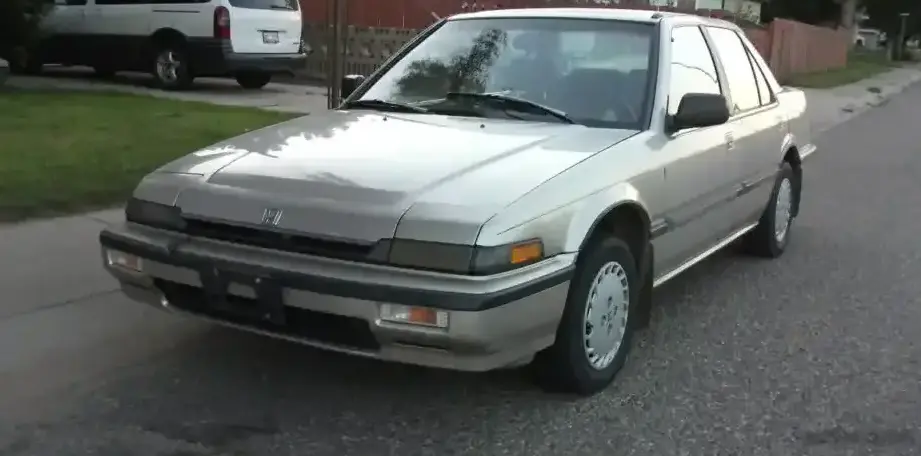
The Honda Accord III, specifically the 2.0 EX (CA5) variant produced between 1985 and 1989, marked a significant advancement for Honda in the competitive mid-size sedan segment. As part of the CA4/CA5 generation, this Accord improved upon its predecessors with enhanced refinement, reliability, and a more contemporary design. The 2.0 EX occupied a mid-range position in the Accord lineup, offering a balance of features and performance that appealed to a wide range of buyers. It played a key role in establishing Honda’s reputation for durable and dependable automobiles in North America, contributing to the brand’s growing market share.
Technical Specifications
| Brand | Honda |
| Model | Accord |
| Generation | Accord III (CA4, CA5) |
| Type (Engine) | 2.0 EX (CA5) (102 Hp) |
| Start of Production | 1985 |
| End of Production | 1989 |
| Powertrain Architecture | Internal Combustion Engine |
| Body Type | Sedan |
| Fuel Type | Petrol (Gasoline) |
| Power | 102 Hp |
| Engine Aspiration | Naturally Aspirated |
Powertrain & Engine Architecture
The 2.0 EX (CA5) Accord is powered by the F20A SOHC 16-valve inline-four cylinder engine. This 1997cc (121.8 cubic inch) engine generates 102 horsepower at 5,600 rpm and 109 lb-ft of torque at 3,200 rpm. The engine features a cast iron block and an aluminum cylinder head, a common configuration for Honda engines of the era. Fuel delivery is managed by Honda’s Programmed Fuel Injection (PGM-FI) system, a sophisticated electronic fuel injection system for its time. The SOHC valvetrain, while simpler than a DOHC setup, contributes to the engine’s reliability and ease of maintenance. The CA5 variant was exclusively paired with a four-speed automatic transmission. This transmission, while not focused on sporty performance, was designed for smooth and comfortable operation, prioritizing fuel efficiency and ease of use. It featured electronic control for smoother shifts and improved responsiveness compared to earlier automatic transmissions.
Driving Characteristics
The 2.0 EX automatic Accord delivers a comfortable and predictable driving experience. While not a performance-oriented vehicle, the 102 horsepower engine provides sufficient power for everyday driving, including highway merging and passing. The automatic transmission, with its relatively conservative gear ratios, prioritizes fuel economy over rapid acceleration. Compared to the five-speed manual transmission available on other Accord models, the automatic version feels noticeably slower, especially during initial acceleration. However, the automatic offers a more relaxed driving experience, particularly in stop-and-go traffic. The steering is light and precise, making the Accord easy to maneuver in urban environments. The suspension, tuned for comfort, effectively absorbs bumps and road imperfections, providing a smooth ride for both driver and passengers. The overall driving experience is geared towards practicality and ease of use, making it an ideal choice for families and commuters.
Equipment & Trim Levels
The 2.0 EX trim level represents an upgrade from the base DX model, offering a more comprehensive list of standard features. Typical features include cloth upholstery, a tilt steering wheel, an AM/FM stereo with a cassette player, and power windows and door locks. Air conditioning was often standard, or a popular factory option. The interior design is functional and straightforward, with a focus on ergonomics and durability. Optional extras available for the 2.0 EX included a sunroof, cruise control, and upgraded sound systems. The exterior features body-colored bumpers and trim, giving it a more refined appearance than the base model. The 2.0 EX also often included upgraded wheel covers or alloy wheels, depending on the specific package selected.
Chassis & Braking
The Accord III utilizes a front-engine, front-wheel-drive layout. The suspension consists of independent MacPherson struts in the front and a rear torsion beam axle. This setup provides a good balance of ride comfort and handling. The braking system features disc brakes in the front and drum brakes in the rear. While the front discs provide adequate stopping power, the rear drums were a cost-saving measure and offered less consistent performance, especially under heavy braking. The Accord III does not feature anti-lock brakes (ABS), which was not uncommon for vehicles in this price range during the mid-1980s. The chassis is relatively lightweight, contributing to the Accord’s fuel efficiency and nimble handling. A stabilizer bar is included in both the front and rear suspension to reduce body roll during cornering.
Market Reception & Comparison
The 1985-1989 Honda Accord was widely praised by automotive critics for its reliability, fuel efficiency, and overall value. The 2.0 EX automatic variant was particularly well-regarded for its comfortable ride and ease of use. However, some critics noted that the automatic transmission detracted from the Accord’s overall performance, and that the manual transmission offered a more engaging driving experience. Compared to other mid-size sedans of the era, such as the Toyota Camry and Ford Tempo, the Accord offered a more refined interior and a more sophisticated engine. Fuel economy was competitive, averaging around 22 mpg city and 30 mpg highway. Reliability was a major selling point, with the Accord consistently ranking high in consumer surveys. The 2.0 EX trim offered a compelling combination of features and value, making it a popular choice among buyers seeking a practical and dependable family sedan.
Legacy
The Honda Accord III, and particularly the 2.0 EX (CA5) variant, has earned a reputation as a remarkably durable and reliable vehicle. Many examples are still on the road today, a testament to Honda’s engineering and build quality. The F20A engine is known for its longevity and relatively simple maintenance requirements. While finding parts for these older Accords can sometimes be challenging, a dedicated aftermarket and a strong community of enthusiasts ensure that parts are still available. In the used car market, well-maintained Accord IIIs command a reasonable price, particularly those with low mileage and original features. The 2.0 EX automatic is often sought after by collectors and enthusiasts who appreciate its classic styling and comfortable driving experience. This generation of Accord solidified Honda’s position as a major player in the automotive industry and laid the foundation for the brand’s continued success in the years to come.