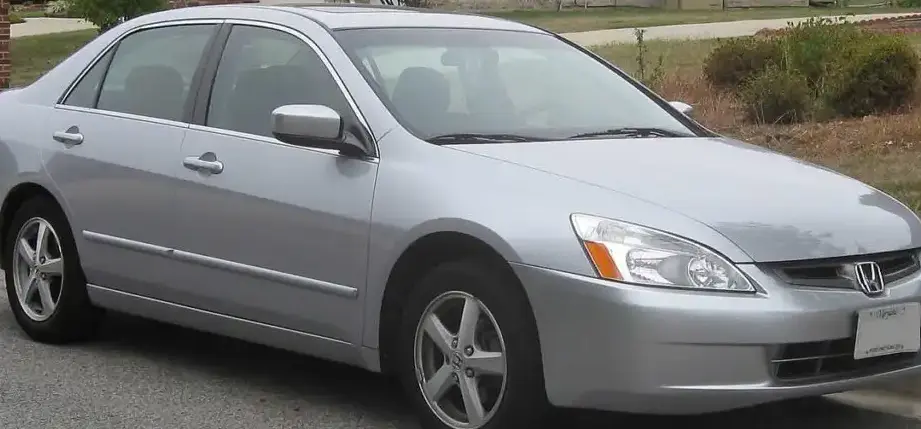
The Honda Accord IV, specifically the CB3 and CB7 chassis codes produced between 1990 and 1993, represented a significant step forward for Honda in the mid-size sedan segment. This generation Accord was a mainstay of the Japanese automaker’s North American lineup, offering a blend of reliability, practicality, and a relatively sporty driving experience. The 2.0-liter 16-valve engine producing 90 horsepower was a popular choice, positioned as a balance between affordability and performance within the broader Accord range. While not the top-tier offering – that distinction belonged to the more powerful and often manual-transmission equipped variants – the 2.0L 90 hp model with automatic transmission catered to buyers prioritizing comfort and ease of use.
Technical Specifications
| Brand | Honda |
| Model | Accord |
| Generation | Accord IV (CB3, CB7) |
| Type (Engine) | 2.0 16V (90 Hp) |
| Start of production | 1990 |
| End of production | 1993 |
| Powertrain Architecture | Internal Combustion engine |
| Body type | Sedan |
| Seats | 5 |
| Doors | 4 |
| Fuel consumption (urban) | 10.3 l/100 km (22.8 US mpg) |
| Fuel consumption (extra urban) | 7 l/100 km (33.6 US mpg) |
| Fuel consumption (combined) | 8.9 l/100 km (26.4 US mpg) |
| Fuel Type | Petrol (Gasoline) |
| Acceleration 0 – 100 km/h | 10.9 sec |
| Acceleration 0 – 62 mph | 10.9 sec |
| Acceleration 0 – 60 mph | 10.4 sec |
| Maximum speed | 184 km/h (114.33 mph) |
| Weight-to-power ratio | 13.6 kg/Hp |
| Weight-to-torque ratio | 8.2 kg/Nm |
| Power | 90 Hp @ 5500 rpm |
| Power per litre | 45.1 Hp/l |
| Torque | 149 Nm @ 2700 rpm (109.9 lb.-ft. @ 2700 rpm) |
| Engine layout | Front, Transverse |
| Engine displacement | 1996 cm3 (121.8 cu. in.) |
| Number of cylinders | 4 |
| Engine configuration | Inline |
| Cylinder Bore | 85 mm (3.35 in.) |
| Piston Stroke | 88 mm (3.46 in.) |
| Compression ratio | 8.9:1 |
| Number of valves per cylinder | 4 |
| Fuel injection system | Carburettor |
| Engine aspiration | Naturally aspirated |
| Engine oil capacity | 3.8 l (4.02 US qt | 3.34 UK qt) |
| Kerb Weight | 1220 kg (2689.64 lbs.) |
| Max. weight | 1740 kg (3836.04 lbs.) |
| Max load | 520 kg (1146.4 lbs.) |
| Trunk (boot) space – minimum | 448 l (15.82 cu. ft.) |
| Fuel tank capacity | 60 l (15.85 US gal | 13.2 UK gal) |
| Length | 4685 mm (184.45 in.) |
| Width | 1695 mm (66.73 in.) |
| Height | 1390 mm (54.72 in.) |
| Wheelbase | 2720 mm (107.09 in.) |
| Front track | 1475 mm (58.07 in.) |
| Rear (Back) track | 1480 mm (58.27 in.) |
| Drivetrain Architecture | The Internal combustion engine (ICE) drives the front wheels of the vehicle. |
| Drive wheel | Front wheel drive |
| Number of gears and type of gearbox | 5 gears, manual transmission |
| Front suspension | Coil spring |
| Rear suspension | Coil spring |
| Front brakes | Ventilated discs |
| Rear brakes | Drum |
| Assisting systems | ABS (Anti-lock braking system) |
| Steering type | Steering rack and pinion |
| Power steering | Hydraulic Steering |
| Tires size | 185/70 HR 14 |
| Wheel rims size | 14 |
Powertrain & Engine Architecture
The heart of this Accord variant was the F20A SOHC 16-valve inline-four cylinder engine. While sharing the same 2.0-liter displacement as other engines in the Accord lineup, the F20A differed in its carburetor-based fuel delivery system, a cost-saving measure compared to the fuel injection found in higher-spec models. This carburetor, typically a Keihin, contributed to the engine’s slightly lower output of 90 horsepower at 5500 rpm and 149 Nm (109.9 lb-ft) of torque at 2700 rpm. The engine featured a single overhead camshaft, operating four valves per cylinder. The automatic transmission paired with this engine was a four-speed unit, designed for smooth and comfortable shifts rather than outright performance. This transmission was a common choice for buyers prioritizing convenience over driver engagement.
Driving Characteristics
The 2.0L automatic Accord offered a comfortable and predictable driving experience. Acceleration was adequate for everyday driving, with a 0-60 mph time of around 10.4 seconds. However, it was noticeably slower than the manual transmission versions or those equipped with the more powerful engines. The automatic transmission’s gear ratios were optimized for fuel efficiency and smooth cruising, rather than aggressive acceleration. The engine felt somewhat strained when pushed hard, lacking the responsiveness of the fuel-injected variants. The suspension, tuned for comfort, provided a reasonably smooth ride, but didn’t offer the same level of handling precision as the sportier Accord models.
Equipment & Trim Levels
The 2.0L automatic Accord typically came with a standard equipment list focused on comfort and convenience. This included features like power steering, air conditioning, and an AM/FM radio. Interior upholstery was typically cloth, with a relatively simple dashboard layout. Optional extras included a sunroof, upgraded sound system, and cruise control. This trim level was generally considered the entry-level or mid-range offering, appealing to buyers who wanted a well-equipped and reliable sedan without the higher price tag of the more luxurious trims.
Chassis & Braking
The Accord IV utilized a front-engine, front-wheel-drive layout. The suspension consisted of coil springs and independent front suspension, while the rear employed a coil spring setup. Braking was accomplished via ventilated discs on the front wheels and drum brakes on the rear. ABS (Anti-lock Braking System) was often included as standard equipment, enhancing safety. The chassis was designed to provide a balance between ride comfort and handling stability, though it wasn’t particularly sporty in its overall feel.
Market Reception & Comparison
The 2.0L automatic Accord was well-received by consumers seeking a reliable and affordable mid-size sedan. Critics generally praised its build quality, comfortable ride, and fuel efficiency. However, the carburetor-equipped engine and automatic transmission were often criticized for their lack of performance compared to the fuel-injected and manual transmission options. Compared to the more powerful Accord variants, the 2.0L automatic offered lower running costs and a more relaxed driving experience, making it a popular choice for families and commuters. Fuel economy figures of around 26.4 US mpg combined were respectable for the time.
Legacy
The Honda Accord IV 2.0L 90 hp automatic has proven to be a remarkably durable vehicle. Many examples are still on the road today, a testament to Honda’s engineering and build quality. While not a collector’s item like some of the higher-performance Accord variants, it remains a popular choice in the used car market for its affordability and reliability. The F20A engine, while not the most powerful, is known for its longevity and relatively simple maintenance requirements. The automatic transmission, if properly maintained, can provide years of trouble-free service. This particular Accord variant represents a sweet spot for buyers seeking a classic Honda sedan that is both practical and dependable.