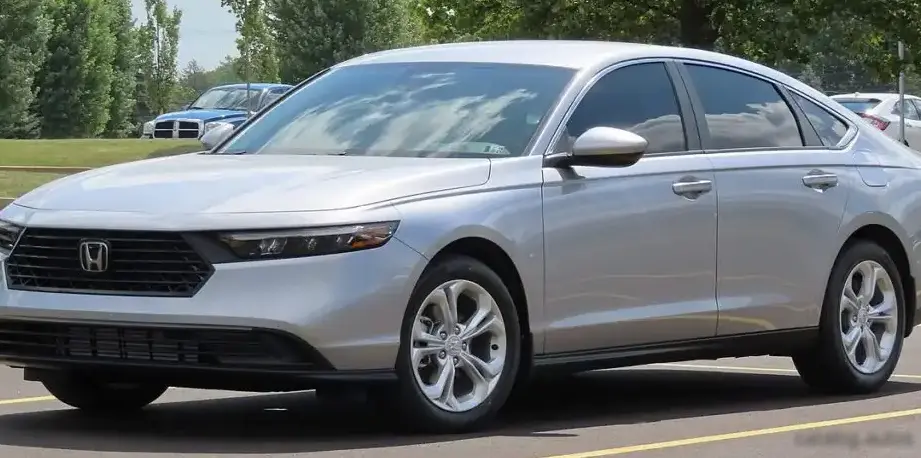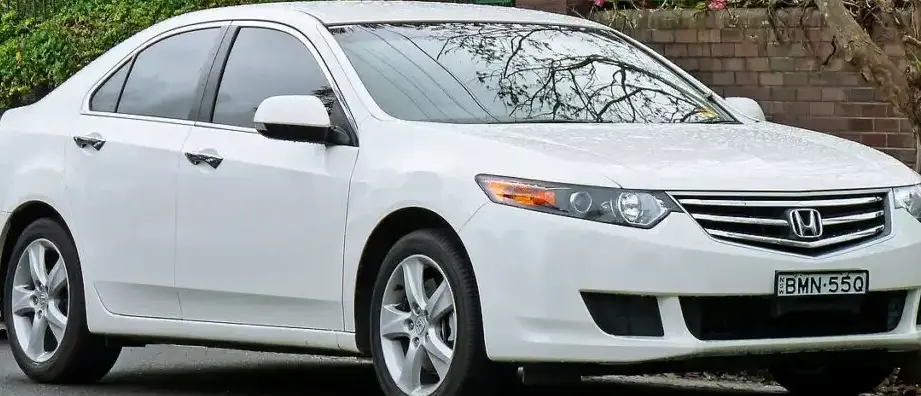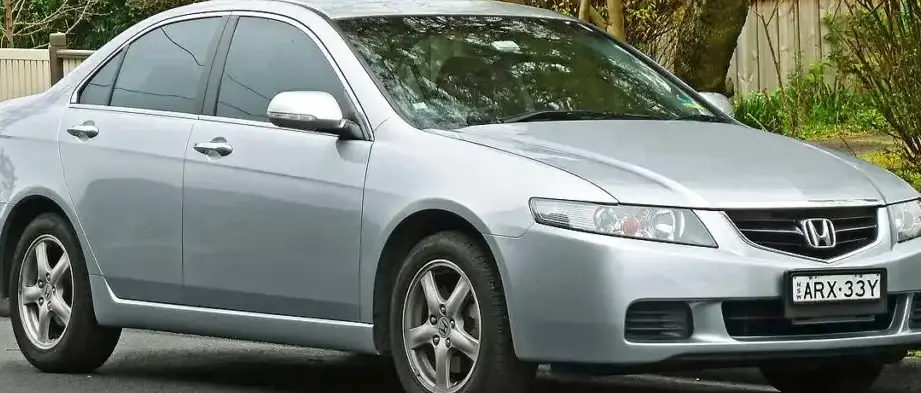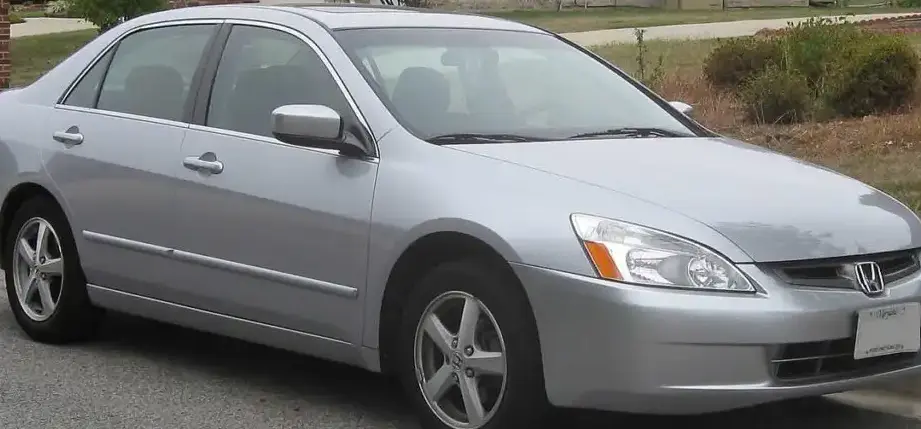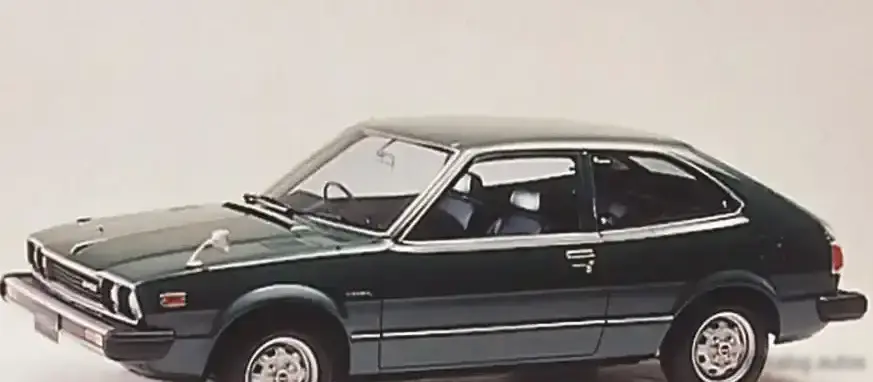
The Honda Accord IV, specifically the 2.2 i 16V variant produced between 1990 and 1993, represented a significant step forward for Honda in the mid-size sedan segment. Part of the CB3/CB7 chassis generation, this model aimed to balance performance, fuel efficiency, and practicality for the North American and Japanese markets. While the Accord IV was available with a range of engines, the 2.2-liter 16-valve engine, producing 150 horsepower, occupied a sweet spot in the lineup, offering a noticeable performance upgrade over the base models without the added cost and complexity of the later V6 options. This variant was primarily offered with a 5-speed manual transmission, though automatic options were available.
Technical Specifications
| Brand | Honda |
| Model | Accord |
| Generation | Accord IV (CB3,CB7) |
| Type (Engine) | 2.2 i 16V (150 Hp) |
| Start of production | 1990 year |
| End of production | 1993 year |
| Powertrain Architecture | Internal Combustion engine |
| Body type | Sedan |
| Seats | 5 |
| Doors | 4 |
| Fuel consumption (economy) – urban | 11.7 l/100 km (20.1 US mpg, 24.1 UK mpg, 8.5 km/l) |
| Fuel consumption (economy) – extra urban | 6.8 l/100 km (34.6 US mpg, 41.5 UK mpg, 14.7 km/l) |
| Fuel consumption (economy) – combined | 8.5 l/100 km (27.7 US mpg, 33.2 UK mpg, 11.8 km/l) |
| Fuel Type | Petrol (Gasoline) |
| Acceleration 0 – 100 km/h | 8.4 sec |
| Acceleration 0 – 62 mph | 8.4 sec |
| Acceleration 0 – 60 mph | 8 sec |
| Maximum speed | 212 km/h (131.73 mph) |
| Weight-to-power ratio | 8.7 kg/Hp, 114.9 Hp/tonne |
| Weight-to-torque ratio | 6.6 kg/Nm, 151.7 Nm/tonne |
| Power | 150 Hp @ 5900 rpm |
| Power per litre | 69.6 Hp/l |
| Torque | 198 Nm @ 5000 rpm (146.04 lb.-ft. @ 5000 rpm) |
| Engine layout | Front, Transverse |
| Engine Model/Code | F22A7 |
| Engine displacement | 2155 cm3 (131.51 cu. in.) |
| Number of cylinders | 4 |
| Engine configuration | Inline |
| Cylinder Bore | 85 mm (3.35 in.) |
| Piston Stroke | 95 mm (3.74 in.) |
| Compression ratio | 9.8:1 |
| Number of valves per cylinder | 4 |
| Fuel injection system | Multi-port manifold injection |
| Engine aspiration | Naturally aspirated engine |
| Valvetrain | OHC |
| Engine oil capacity | 3.8 l (4.02 US qt | 3.34 UK qt) |
| Coolant | 6.6 l (6.97 US qt | 5.81 UK qt) |
| Kerb Weight | 1305 kg (2877.03 lbs.) |
| Max. weight | 1840 kg (4056.51 lbs.) |
| Max load | 535 kg (1179.47 lbs.) |
| Trunk (boot) space – minimum | 448 l (15.82 cu. ft.) |
| Fuel tank capacity | 60 l (15.85 US gal | 13.2 UK gal) |
| Length | 4685 mm (184.45 in.) |
| Width | 1695 mm (66.73 in.) |
| Height | 1390 mm (54.72 in.) |
| Wheelbase | 2720 mm (107.09 in.) |
| Front track | 1475 mm (58.07 in.) |
| Rear (Back) track | 1480 mm (58.27 in.) |
| Drivetrain Architecture | The Internal combustion engine (ICE) drives the front wheels of the vehicle. |
| Drive wheel | Front wheel drive |
| Number of gears and type of gearbox | 5 gears, manual transmission |
| Front suspension | Coil spring |
| Rear suspension | Coil spring |
| Front brakes | Ventilated discs |
| Rear brakes | Disc |
| Assisting systems | ABS (Anti-lock braking system) |
| Steering type | Steering rack and pinion |
| Power steering | Hydraulic Steering |
| Tires size | 185/70 R14 |
| Wheel rims size | 14 |
Powertrain & Engine Architecture
The heart of this Accord variant is the F22A7 engine, a 2.2-liter inline-four cylinder powerplant. This engine featured a single overhead camshaft (SOHC) valvetrain operating 16 valves (four per cylinder). The F22A7 utilized multi-port fuel injection, a significant improvement over earlier carburetor-equipped models, contributing to better fuel efficiency and throttle response. The engine’s design prioritized reliability and smooth operation over outright peak power. The 5-speed manual transmission offered with this engine was a robust unit, known for its durability. Automatic transmission options were also available, though they typically resulted in a slight decrease in fuel economy and acceleration.
Driving Characteristics
The 150 horsepower and 146 lb-ft of torque provided by the F22A7 engine delivered a respectable driving experience for its time. Acceleration to 60 mph took around 8 seconds, making it competitive with other sedans in its class. The engine felt responsive in everyday driving situations, with adequate power for highway merging and passing maneuvers. Compared to the base engine options, the 2.2L offered a noticeable improvement in performance. However, it didn’t possess the same level of urgency as the later V6 models. The manual transmission allowed for greater driver control, while the automatic provided convenience, albeit with a slight performance penalty. The gear ratios were tuned for a balance of fuel economy and acceleration, favoring mid-range torque over high-revving power.
Equipment & Trim Levels
The 2.2 i 16V Accord typically came standard with features like power steering, air conditioning, and a basic audio system. Higher trim levels added options such as power windows and locks, cruise control, and upgraded upholstery. Interior materials were generally durable and practical, reflecting Honda’s reputation for build quality. The dashboard layout was functional and easy to use, with clearly marked controls. Alloy wheels were often included as standard equipment on this trim, differentiating it from the more basic models.
Chassis & Braking
The Accord IV utilized a front-engine, front-wheel-drive layout. Suspension consisted of coil springs and independent front suspension, providing a comfortable ride. The rear suspension employed a coil spring setup. Braking duties were handled by ventilated discs in the front and solid discs in the rear. Anti-lock brakes (ABS) were available as an option, enhancing safety. The chassis was designed to provide a balance of handling and ride comfort, making it suitable for both daily commuting and longer road trips.
Market Reception & Comparison
The 1990-1993 Honda Accord IV 2.2 i 16V was well-received by automotive critics and consumers alike. It was praised for its reliability, fuel efficiency, and comfortable ride. Compared to its competitors, such as the Toyota Camry and Ford Taurus, the Accord offered a more engaging driving experience and a reputation for long-term durability. The 2.2L engine provided a good balance of performance and economy, making it a popular choice for buyers who wanted more power than the base engines but didn’t want to pay the premium for the V6. Fuel economy figures of around 27.7 mpg combined were considered excellent for its class.
Legacy
The F22A7 engine and the CB3/CB7 Accord generation have earned a reputation for exceptional reliability. Many examples are still on the road today, a testament to Honda’s engineering prowess. The engine is known for its ability to withstand high mileage with proper maintenance. In the used car market, these Accords are often sought after for their affordability, dependability, and relatively simple mechanical design. While not a high-performance machine, the 2.2 i 16V Accord remains a practical and enjoyable classic car, representing a high point in Honda’s history.