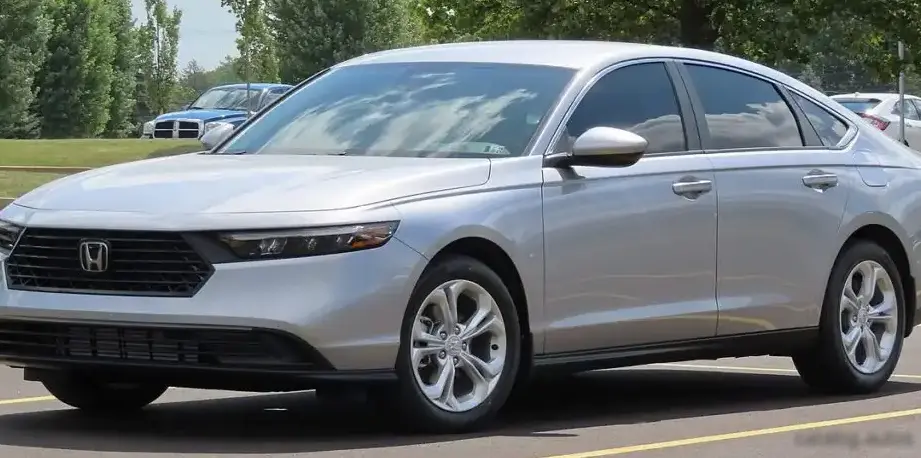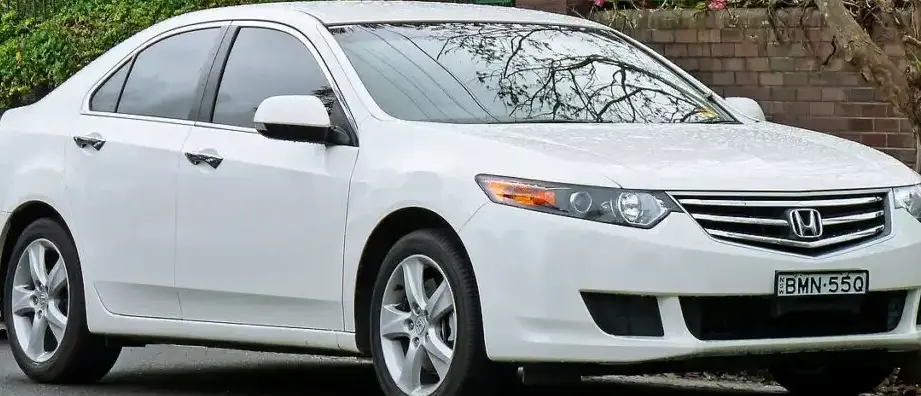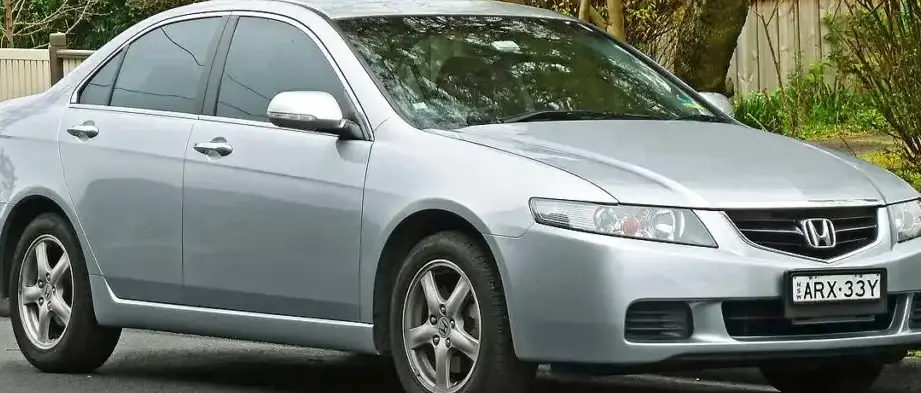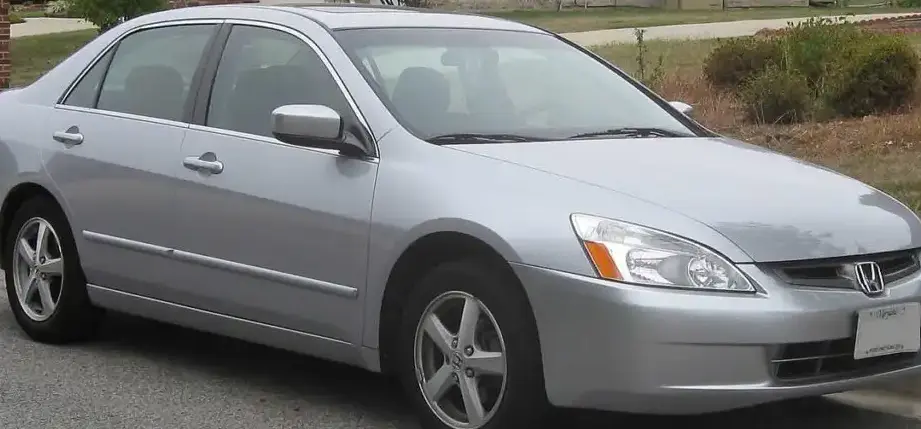
The Honda Accord IX 2.0 Plug-in Hybrid, produced from 2013 to 2015, represented Honda’s initial foray into plug-in hybrid technology within the highly competitive mid-size sedan segment, primarily targeted towards the North American and Japanese markets. Positioned as a premium offering within the ninth-generation Accord (2013-2017) lineup, it aimed to deliver enhanced fuel efficiency and a limited all-electric driving range without sacrificing the practicality and spaciousness expected of an Accord. This variant utilized Honda’s Intelligent Power Unit (IPU) and e-CVT transmission, distinguishing it from the conventionally powered 2.4-liter four-cylinder and 3.5-liter V6 models available during the same period.
Technical Specifications
| Brand | Honda |
| Model | Accord |
| Generation | Accord IX |
| Type (Engine) | 2.0 (196 Hp) Plug-in Hybrid e-CVT |
| Start of production | 2013 |
| End of production | 2015 |
| Powertrain Architecture | PHEV (Plug-in Hybrid Electric Vehicle) |
| Body type | Sedan |
| Seats | 5 |
| Doors | 4 |
| Fuel consumption (urban) | 5 l/100 km (47 US mpg, 56.5 UK mpg, 20 km/l) |
| Fuel consumption (extra urban) | 5.1 l/100 km (46.1 US mpg, 55.4 UK mpg, 19.6 km/l) |
| Fuel consumption (combined) | 5.1 l/100 km (46.1 US mpg, 55.4 UK mpg, 19.6 km/l) |
| Fuel Type | Petrol / electricity |
| Acceleration 0 – 60 mph | 7.7 sec |
| Maximum speed | 183 km/h (113.71 mph) |
| Emission standard | LEV3-SULEV20 |
| Weight-to-power ratio | 8.8 kg/Hp, 113.8 Hp/tonne |
| Weight-to-torque ratio | 10.4 kg/Nm, 95.8 Nm/tonne |
| Gross battery capacity | 6.7 kWh |
| Battery technology | Lithium-ion (Li-Ion) |
| Battery location | Under the trunk |
| All-electric range | 21 km (13.05 mi) |
| Average Energy consumption | 18.2 kWh/100 km (29.29 kWh/100 mi, 115 MPGe, 5.5 km/kWh, 3.4 mi/kWh) |
| Electric motor power | 166 Hp @ 3857-8000 rpm (225.69 lb.-ft. @ 0-3857 rpm) |
| Electric motor Torque | 306 Nm @ 0-3857 rpm |
| System power | 196 Hp @ 6200 rpm |
| Internal combustion engine power | 141 Hp @ 6200 rpm |
| Internal combustion engine torque | 165 Nm @ 3500-6000 rpm (121.7 lb.-ft. @ 3500-6000 rpm) |
| Engine layout | Front, Transverse |
| Engine Model/Code | LFA1 |
| Engine displacement | 1993 cm3 (121.62 cu. in.) |
| Number of cylinders | 4 |
| Engine configuration | Inline |
| Cylinder Bore | 81 mm (3.19 in.) |
| Piston Stroke | 96.7 mm (3.81 in.) |
| Compression ratio | 13:1 |
| Number of valves per cylinder | 4 |
| Fuel injection system | Multi-port manifold injection |
| Engine aspiration | Naturally aspirated engine |
| Valvetrain | DOHC, i-VTEC |
| Engine oil capacity | 3.7 l (3.91 US qt | 3.26 UK qt) |
| Coolant | 5.33 l (5.63 US qt | 4.69 UK qt) |
| Kerb Weight | 1723 kg (3798.56 lbs.) |
| Trunk (boot) space – minimum | 244 l (8.62 cu. ft.) |
| Fuel tank capacity | 46 l (12.15 US gal | 10.12 UK gal) |
| Length | 4915 mm (193.5 in.) |
| Width | 1849 mm (72.8 in.) |
| Height | 1466 mm (57.72 in.) |
| Wheelbase | 2776 mm (109.29 in.) |
| Front track | 1585 mm (62.4 in.) |
| Rear (Back) track | 1593 mm (62.72 in.) |
| Drag coefficient (Cd) | 0.30 |
| Minimum turning circle (turning diameter) | 11.6 m (38.06 ft.) |
| Drivetrain Architecture | Front wheel drive. PHEV. ICE and electric motor drive front wheels. |
| Drive wheel | Front wheel drive |
| Number of gears and type of gearbox | automatic transmission e-CVT |
| Front suspension | Independent type McPherson |
| Rear suspension | Independent multi-link suspension |
| Front brakes | Ventilated discs |
| Rear brakes | Disc |
| Assisting systems | ABS (Anti-lock braking system) |
| Steering type | Steering rack and pinion |
| Power steering | Electric Steering |
| Tires size | 225/50 R17 |
| Wheel rims size | 7.5J x 17 |
INTRODUCTION
The 2013-2015 Honda Accord Plug-in Hybrid represented a significant step for Honda in the realm of electrified vehicles. Built on the same platform (1HX0/A3) as the eighth-generation Accord, it distinguished itself through its plug-in hybrid powertrain, offering a blend of gasoline engine efficiency and electric-only driving capability. The Accord PHEV was primarily sold in the United States and Japan, where incentives for fuel-efficient vehicles were more prevalent. It aimed to appeal to environmentally conscious buyers seeking a practical and comfortable mid-size sedan.
Powertrain & Engine Architecture
At the heart of the Accord Plug-in Hybrid lies a 2.0-liter inline-four cylinder engine (code LFA1) paired with an electric motor and a lithium-ion battery pack. The engine itself utilizes Honda’s i-VTEC variable valve timing and lift system, along with multi-point fuel injection. The electric motor, integrated with the e-CVT (electronically controlled continuously variable transmission), provides supplemental power and enables all-electric driving. The 6.7 kWh lithium-ion battery pack is located under the trunk floor, slightly reducing cargo space compared to the standard Accord. The e-CVT isn’t a traditional CVT; it’s a power-split device that seamlessly blends power from the engine and electric motor, optimizing efficiency and responsiveness. The system operates in three modes: EV (electric only), Hybrid, and Engine Drive, automatically switching between them based on driving conditions and battery charge level.
Driving Characteristics
The 196 horsepower combined output of the engine and electric motor provides adequate acceleration, with a 0-60 mph time of around 7.7 seconds. However, the focus of this variant wasn’t outright performance. The e-CVT delivers smooth, linear acceleration, but lacks the engaging feel of a traditional automatic or manual transmission. In EV mode, the Accord PHEV offers a quiet and refined driving experience, with a range of approximately 13 miles. Compared to the standard 2.4-liter Accord, the PHEV feels slightly heavier due to the battery pack, impacting handling dynamics to a small degree. The higher-output 3.5-liter V6 Accord offered significantly more power and a more sporty driving experience, while the standard 2.4-liter provided a balance of performance and fuel economy. The PHEV prioritized efficiency and electric driving capability over outright performance.
Equipment & Trim Levels
The Accord Plug-in Hybrid was generally well-equipped, typically including features such as leather upholstery, heated front seats, a touchscreen infotainment system, a rearview camera, and Honda’s LaneWatch blind spot display. Standard safety features included ABS, stability control, and multiple airbags. Optional extras included a navigation system, premium audio, and LED headlights. The interior design mirrored that of other Accord trims, with a focus on comfort and practicality. The dashboard layout was clean and intuitive, with easy-to-use controls.
Chassis & Braking
The Accord Plug-in Hybrid utilized a MacPherson strut front suspension and a multi-link rear suspension, providing a comfortable and controlled ride. Ventilated disc brakes were used on the front wheels, while solid discs were used on the rear. ABS and electronic brake-force distribution were standard. The suspension tuning was slightly softer than that of the V6 Accord, prioritizing ride comfort over sporty handling. The added weight of the battery pack necessitated slightly stiffer spring rates to maintain acceptable handling characteristics.
Market Reception & Comparison
The Accord Plug-in Hybrid received generally positive reviews from automotive critics. It was praised for its fuel efficiency, comfortable ride, and spacious interior. However, some critics noted its relatively limited all-electric range compared to other plug-in hybrids on the market at the time. Compared to the standard Accord, the PHEV offered significantly better fuel economy, particularly for drivers who frequently commute short distances and can take advantage of the electric-only driving mode. The PHEV’s fuel economy was also competitive with other plug-in hybrids, such as the Toyota Prius Plug-in Hybrid and the Ford Fusion Energi.
Legacy
The Honda Accord Plug-in Hybrid served as an important stepping stone for Honda in its development of electrified vehicles. While production was limited to a relatively short run, it demonstrated Honda’s commitment to fuel efficiency and sustainable transportation. The powertrain technology developed for the Accord PHEV paved the way for future Honda hybrid and electric vehicles. On the used car market, the Accord Plug-in Hybrid remains a relatively desirable option for buyers seeking a fuel-efficient and reliable mid-size sedan. The longevity of the lithium-ion battery pack is a key consideration for potential buyers, but well-maintained examples continue to offer a compelling value proposition.