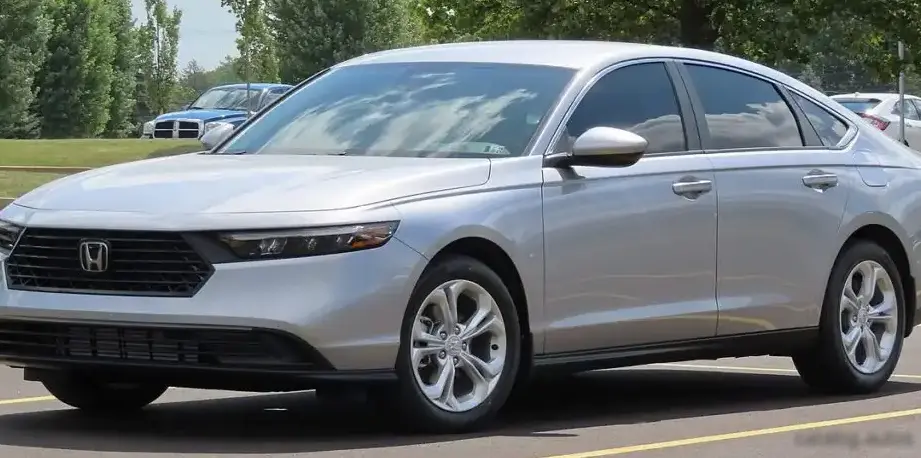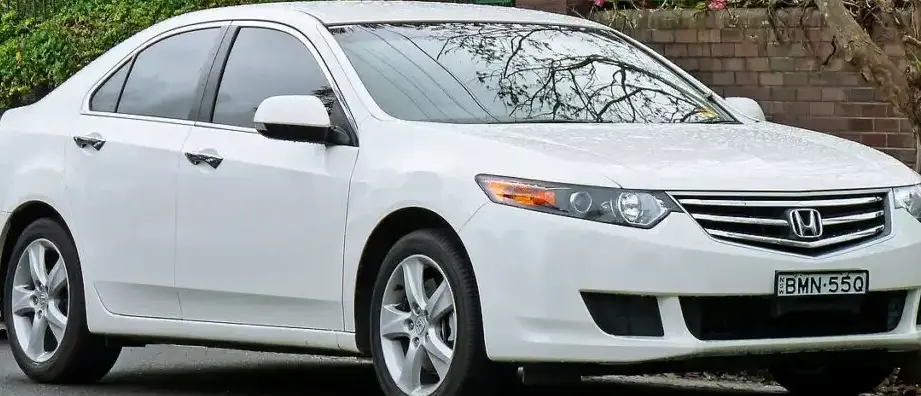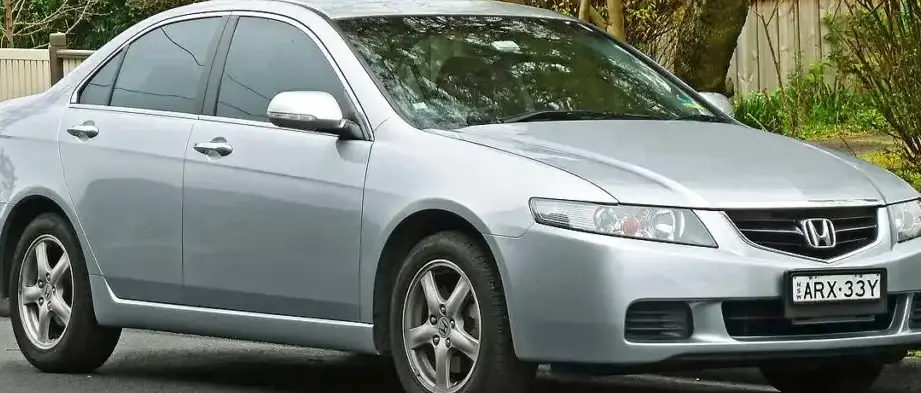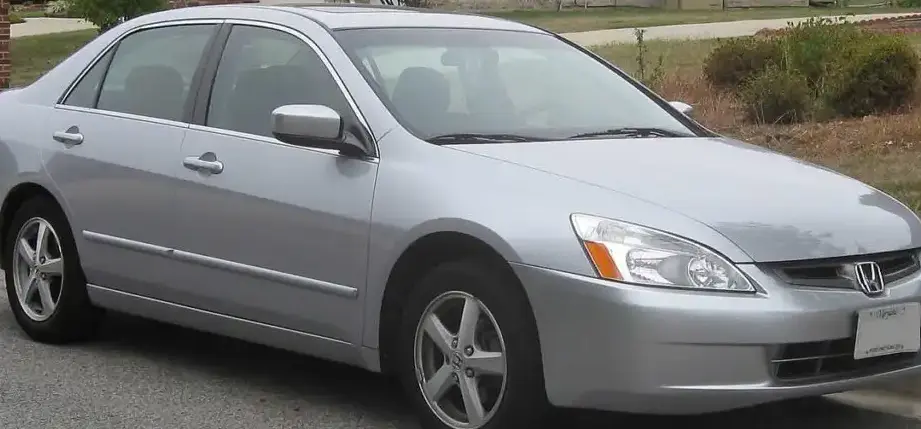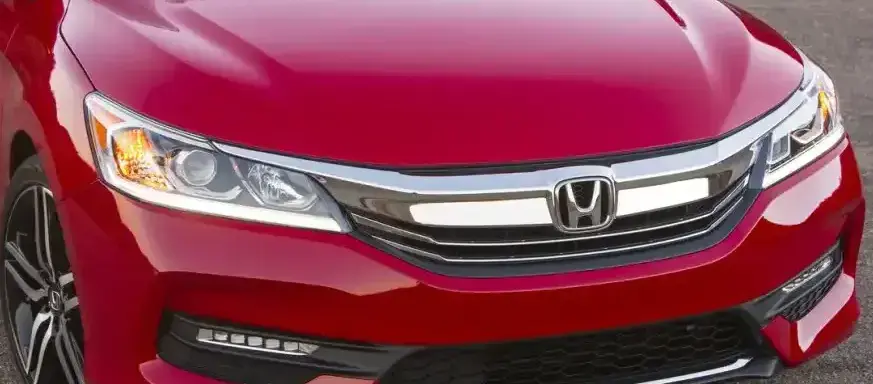
The Honda Accord IX, specifically the facelifted model produced from 2015 to 2016, represented a significant evolution of Honda’s mid-size sedan. Within the ninth generation (2013-2017), the 2015-2016 facelift brought revised styling, enhanced features, and refinements to the powertrain. The 2.4-liter (188 hp) variant paired with a Continuously Variable Transmission (CVT) occupied a sweet spot in the Accord lineup, offering a balance of performance, fuel efficiency, and affordability. It was positioned as a step up from the base 2.0-liter engine, appealing to buyers seeking more power without the higher price tag of the available hybrid model. This configuration was primarily aimed at the North American market, where larger displacement engines and automatic transmissions remained highly popular.
Technical Specifications
| Brand | Honda |
| Model | Accord |
| Generation | Accord IX (facelift 2015) |
| Type (Engine) | 2.4 (188 Hp) CVT |
| Start of production | 2015 |
| End of production | 2016 |
| Powertrain Architecture | Internal Combustion engine |
| Body type | Sedan |
| Seats | 5 |
| Doors | 4 |
| Fuel consumption (urban) | 8.7 l/100 km (27 US mpg, 32.5 UK mpg, 11.5 km/l) |
| Fuel consumption (extra urban) | 6.4 l/100 km (36.8 US mpg, 44.1 UK mpg, 15.6 km/l) |
| Fuel consumption (combined) | 7.6 l/100 km (30.9 US mpg, 37.2 UK mpg, 13.2 km/l) |
| Fuel Type | Petrol (Gasoline) |
| Weight-to-power ratio | 8 kg/Hp, 124.3 Hp/tonne |
| Weight-to-torque ratio | 6.2 kg/Nm, 161.9 Nm/tonne |
| Power | 188 Hp @ 6400 rpm |
| Power per litre | 79.8 Hp/l |
| Torque | 245 Nm @ 3900 rpm (180.7 lb.-ft. @ 3900 rpm) |
| Maximum engine speed | 6800 rpm |
| Engine layout | Front, Transverse |
| Engine Model/Code | K24W |
| Engine displacement | 2356 cm3 (143.77 cu. in.) |
| Number of cylinders | 4 |
| Engine configuration | Inline |
| Cylinder Bore | 87 mm (3.43 in.) |
| Piston Stroke | 99.1 mm (3.9 in.) |
| Compression ratio | 11.1:1 |
| Number of valves per cylinder | 4 |
| Fuel injection system | Direct injection |
| Engine aspiration | Naturally aspirated engine |
| Valvetrain | DOHC, i-VTEC |
| Engine oil capacity | 4.2 l (4.44 US qt | 3.7 UK qt) |
| Coolant capacity | 6.3 l (6.66 US qt | 5.54 UK qt) |
| Kerb Weight | 1513 kg (3335.59 lbs.) |
| Trunk (boot) space (minimum) | 447 l (15.79 cu. ft.) |
| Fuel tank capacity | 65 l (17.17 US gal | 14.3 UK gal) |
| Length | 4890 mm (192.52 in.) |
| Width | 1849 mm (72.8 in.) |
| Height | 1466 mm (57.72 in.) |
| Wheelbase | 2776 mm (109.29 in.) |
| Front track | 1585 mm (62.4 in.) |
| Rear track | 1590 mm (62.6 in.) |
| Drag coefficient (Cd) | 0.30 |
| Minimum turning circle | 11.6 m (38.06 ft.) |
| Drivetrain Architecture | The Internal combustion engine (ICE) drives the front wheels of the vehicle. |
| Drive wheel | Front wheel drive |
| Number of gears and type of gearbox | automatic transmission CVT |
| Front suspension | Independent type McPherson |
| Rear suspension | Independent multi-link suspension |
| Front brakes | Ventilated discs |
| Rear brakes | Disc |
| Assisting systems | ABS (Anti-lock braking system) |
| Steering type | Steering rack and pinion |
| Power steering | Electric Steering |
| Tires size | 215/55 R17 94V |
| Wheel rims size | 7.5J x 17 ET55 |
Powertrain & Engine Architecture
The heart of this Accord variant is the K24W 2.4-liter inline-four cylinder engine. This engine is a naturally aspirated powerplant featuring Honda’s i-VTEC (intelligent Variable valve Timing and lift Electronic Control) system. i-VTEC allows for variable control of both valve timing and lift, optimizing engine performance across a wide range of engine speeds. The K24W utilizes direct fuel injection, contributing to improved fuel efficiency and reduced emissions. The engine’s block is constructed from aluminum alloy, helping to reduce overall weight. Paired with the engine is a Continuously Variable Transmission (CVT). Honda’s CVT design aimed to provide smooth, seamless acceleration and improved fuel economy compared to traditional automatic transmissions. Unlike stepped automatic transmissions, a CVT doesn’t have fixed gear ratios, instead utilizing a belt and pulley system to provide an infinite number of ratios within its operating range.
Driving Characteristics
The 188 hp and 245 Nm (180.7 lb-ft) of torque delivered by the K24W engine and CVT combination provided adequate, though not exhilarating, performance. Acceleration from 0 to 60 mph typically took around 8-9 seconds. The CVT, while prioritizing fuel efficiency, could sometimes feel less responsive than a traditional automatic or manual transmission, exhibiting a “rubber band” effect during hard acceleration. However, Honda programmed the CVT to simulate gear changes at higher throttle inputs, mitigating this sensation to some extent. The CVT’s continuously variable nature allowed the engine to operate in its most efficient range more often, contributing to the Accord’s respectable fuel economy. Compared to the more powerful Accord V6, the 2.4L CVT model offered a more relaxed and fuel-conscious driving experience. Against the 1.5L turbo engine (introduced in later Accord generations), the 2.4L offered a more linear power delivery, though with slightly less overall peak torque.
Equipment & Trim Levels
The 2.4-liter CVT Accord typically came standard with a good level of equipment. Base models included features like automatic climate control, a rearview camera, Bluetooth connectivity, and a basic audio system. Higher trim levels, such as the EX and EX-L, added features like leather upholstery, a sunroof, upgraded audio systems, and Honda’s LaneWatch blind spot display. Optional extras included navigation systems, premium audio packages, and various accessory packages. Interior upholstery was typically cloth on lower trims, with leather available on the EX-L. The dashboard layout was functional and well-designed, with a focus on ease of use.
Chassis & Braking
The Accord IX utilized a MacPherson strut front suspension and a multi-link rear suspension. This setup provided a comfortable ride while maintaining reasonably good handling characteristics. The suspension was tuned to prioritize comfort over outright sportiness. Braking duties were handled by ventilated discs at the front and solid discs at the rear. Anti-lock brakes (ABS) were standard, as were electronic brake-force distribution and brake assist systems. Steering was provided by an electric power steering system, offering light and precise control.
Market Reception & Comparison
The 2.4-liter CVT Accord was generally well-received by automotive critics. It was praised for its comfortable ride, spacious interior, and good fuel economy. However, some reviewers noted the CVT’s lack of responsiveness compared to traditional automatic transmissions. Compared to the V6 Accord, the 2.4L CVT offered a more affordable option with acceptable performance for most drivers. In terms of reliability, the K24W engine proved to be a durable and dependable powerplant. Fuel economy figures of around 31 mpg combined were competitive for its class.
Legacy
The K24W engine, in various iterations, has been a mainstay of Honda’s lineup for many years, known for its reliability and longevity. The 2015-2016 Accord 2.4L CVT remains a popular choice in the used car market, offering a good balance of value, reliability, and fuel efficiency. While not the most exciting Accord variant, it represents a practical and well-rounded option for buyers seeking a dependable mid-size sedan. Maintenance costs are generally reasonable, and parts availability is good. The CVT transmission, while requiring adherence to Honda’s recommended fluid change intervals, has proven to be relatively reliable in this application.