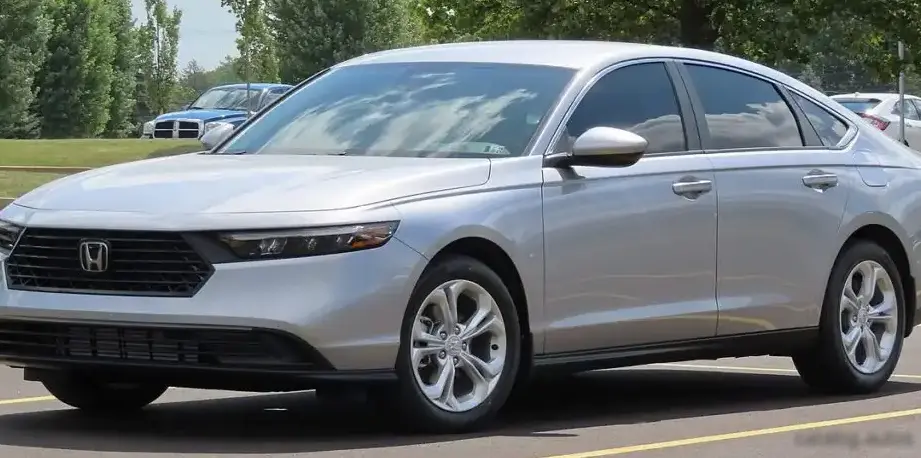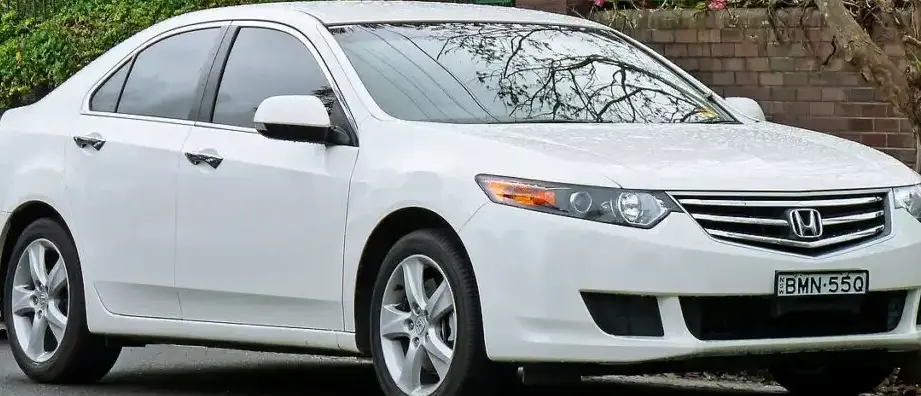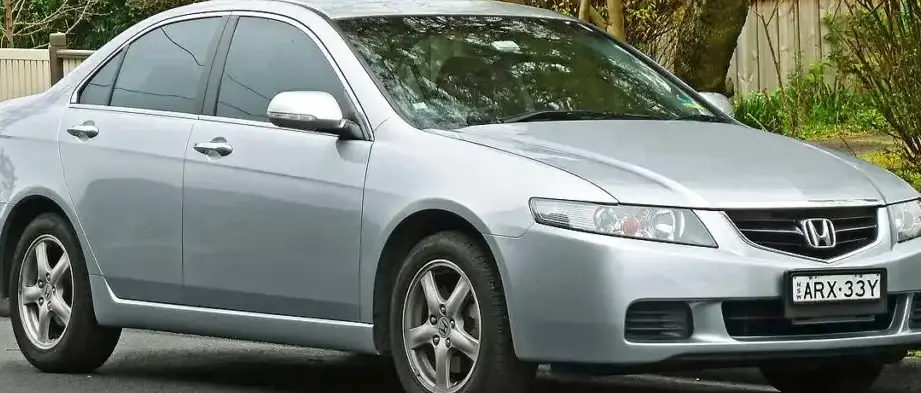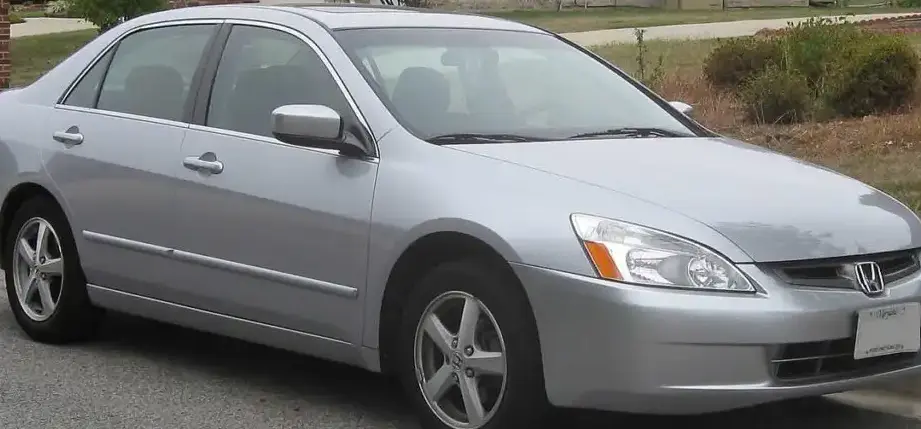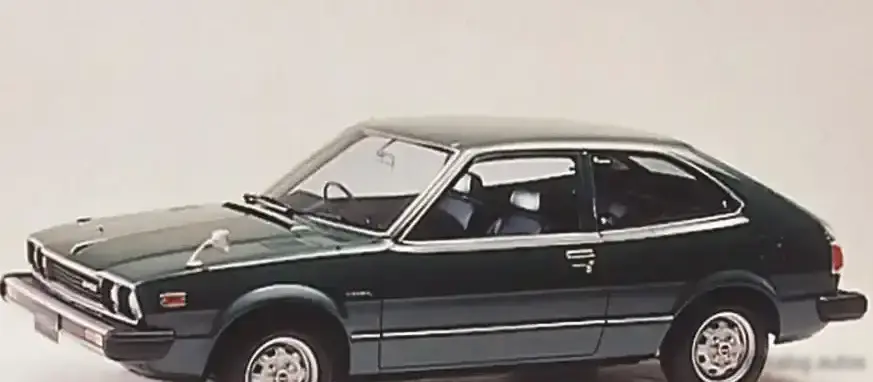
The Honda Accord V (CC7) 2.0i, produced between 1993 and 1996, represented a significant evolution in Honda’s popular mid-size sedan. This generation, known as the CC7 in many markets, built upon the success of its predecessors, offering increased refinement, safety features, and a more powerful engine lineup. The 2.0i variant, equipped with the F20Z2 engine producing 115 horsepower, occupied a middle ground within the CC7 range, positioned as a balance between affordability and performance. It served as a popular choice for buyers seeking a reliable and reasonably equipped family sedan. The CC7 Accord was primarily aimed at the North American and Japanese markets, with the 2.0i trim offering a compelling alternative to competitors like the Toyota Camry and Nissan Maxima.
Technical Specifications
| Brand | Honda |
| Model | Accord |
| Generation | Accord V (CC7) |
| Type (Engine) | 2.0 i (115 Hp) |
| Start of production | 1993 |
| End of production | 1996 |
| Powertrain Architecture | Internal Combustion engine |
| Body type | Sedan |
| Seats | 5 |
| Doors | 4 |
| Fuel consumption (combined) | 8.2 l/100 km |
| Fuel consumption (US mpg) | 28.7 US mpg |
| Fuel consumption (UK mpg) | 34.4 UK mpg |
| Fuel consumption (km/l) | 12.2 km/l |
| Fuel Type | Petrol (Gasoline) |
| Acceleration 0 – 100 km/h | 10.8 sec |
| Acceleration 0 – 62 mph | 10.8 sec |
| Acceleration 0 – 60 mph | 10.3 sec |
| Maximum speed | 197 km/h (122.41 mph) |
| Weight-to-power ratio | 10.8 kg/Hp |
| Weight-to-torque ratio | 7.2 kg/Nm |
| Power | 115 Hp @ 5300 rpm |
| Power per litre | 57.6 Hp/l |
| Torque | 172 Nm @ 4200 rpm (126.86 lb.-ft. @ 4200 rpm) |
| Engine layout | Front, Transverse |
| Engine Model/Code | F20Z2 |
| Engine displacement | 1997 cm3 (121.86 cu. in.) |
| Number of cylinders | 4 |
| Engine configuration | Inline |
| Cylinder Bore | 85 mm (3.35 in.) |
| Piston Stroke | 88 mm (3.46 in.) |
| Compression ratio | 9:1 |
| Number of valves per cylinder | 4 |
| Fuel injection system | Multi-port manifold injection |
| Engine aspiration | Naturally aspirated engine |
| Valvetrain | OHC |
| Engine oil capacity | 3.8 l (4.02 US qt | 3.34 UK qt) |
| Kerb Weight | 1240 kg (2733.73 lbs.) |
| Max. weight | 1820 kg (4012.41 lbs.) |
| Max load | 580 kg (1278.68 lbs.) |
| Trunk (boot) space – minimum | 405 l (14.3 cu. ft.) |
| Fuel tank capacity | 65 l (17.17 US gal | 14.3 UK gal) |
| Length | 4675 mm (184.06 in.) |
| Width | 1715 mm (67.52 in.) |
| Height | 1380 mm (54.33 in.) |
| Wheelbase | 2720 mm (107.09 in.) |
| Front track | 1475 mm (58.07 in.) |
| Rear (Back) track | 1480 mm (58.27 in.) |
| Drivetrain Architecture | The Internal combustion engine (ICE) drives the front wheels of the vehicle. |
| Drive wheel | Front wheel drive |
| Number of gears and type of gearbox | 5 gears, manual transmission |
| Front suspension | Double wishbone |
| Rear suspension | Transverse stabilizer |
| Front brakes | Ventilated discs |
| Rear brakes | Disc |
| Assisting systems | ABS (Anti-lock braking system) |
| Steering type | Steering rack and pinion |
| Power steering | Hydraulic Steering |
| Tires size | 185/70 R14 |
| Wheel rims size | 14 |
Powertrain & Engine Architecture
The heart of the Accord 2.0i was the F20Z2 engine, a 1.997-liter inline-four cylinder powerplant. This engine featured a single overhead camshaft (SOHC) valvetrain with four valves per cylinder. The F20Z2 utilized multi-point fuel injection, contributing to improved fuel efficiency and smoother power delivery. The engine’s 9:1 compression ratio was a compromise between performance and the ability to run on readily available fuel grades. Paired with the engine was a 5-speed manual transmission, providing drivers with direct control over the engine’s power. This transmission was known for its smooth shifting and durability. The engine’s transverse mounting and front-wheel-drive configuration were typical for vehicles in this class, maximizing interior space and improving packaging efficiency.
Driving Characteristics
The 115 horsepower and 126.86 lb-ft of torque produced by the F20Z2 engine provided adequate, though not exhilarating, performance. Acceleration from 0-60 mph took around 10.3 seconds, making it competitive with other similarly sized and priced sedans. The 5-speed manual transmission allowed drivers to keep the engine in its optimal power band, resulting in a more responsive driving experience. Compared to the more powerful Accord EX models with their larger engines, the 2.0i felt less potent, particularly during highway passing maneuvers. However, the 2.0i offered a more fuel-efficient and affordable option for buyers who prioritized practicality over outright speed. The gear ratios were well-matched for everyday driving, providing a balance between acceleration and fuel economy.
Equipment & Trim Levels
The 2.0i trim level of the Accord V (CC7) typically included standard features such as air conditioning, power steering, a basic audio system, and cloth upholstery. Power windows and door locks were often included, though sometimes as optional extras depending on the specific market. The interior design was functional and straightforward, prioritizing ergonomics and ease of use. Optional extras available for the 2.0i included a sunroof, upgraded audio systems, and alloy wheels. The dashboard layout was clean and uncluttered, with clearly labeled controls. The 2.0i trim generally represented the entry-level offering in the CC7 Accord lineup, providing a solid foundation of features at a competitive price point.
Chassis & Braking
The Accord 2.0i utilized a double wishbone suspension setup at the front, providing a comfortable ride and predictable handling. The rear suspension featured a transverse stabilizer, helping to reduce body roll during cornering. Braking duties were handled by ventilated discs at the front and solid discs at the rear. An anti-lock braking system (ABS) was standard, enhancing safety by preventing wheel lockup during hard braking. The chassis was designed to provide a balance between rigidity and weight, contributing to the car’s overall stability and handling characteristics. The relatively lightweight nature of the 2.0i model, weighing in at around 2733.73 lbs, further enhanced its agility.
Market Reception & Comparison
The Honda Accord V (CC7) 2.0i was generally well-received by automotive critics. It was praised for its reliability, fuel efficiency, and comfortable ride. However, some reviewers noted that the engine lacked the power of its larger counterparts. Compared to the Accord EX models, the 2.0i offered a more affordable entry point into the Accord lineup, but at the expense of performance. Fuel economy was a strong point, with the 2.0i achieving around 28.7 US mpg in combined driving. The 2.0i’s simplicity and robust construction contributed to its long-term reliability, making it a popular choice among used car buyers.
Legacy
The Honda Accord V (CC7) 2.0i has proven to be a remarkably durable and reliable vehicle. Many examples are still on the road today, a testament to Honda’s engineering prowess. The F20Z2 engine is known for its longevity and relatively low maintenance costs. In the used car market, the 2.0i typically commands a lower price than the more desirable EX models, making it an attractive option for budget-conscious buyers. The CC7 Accord, and particularly the 2.0i variant, remains a popular choice for those seeking a dependable and affordable mid-size sedan with a reputation for lasting quality.