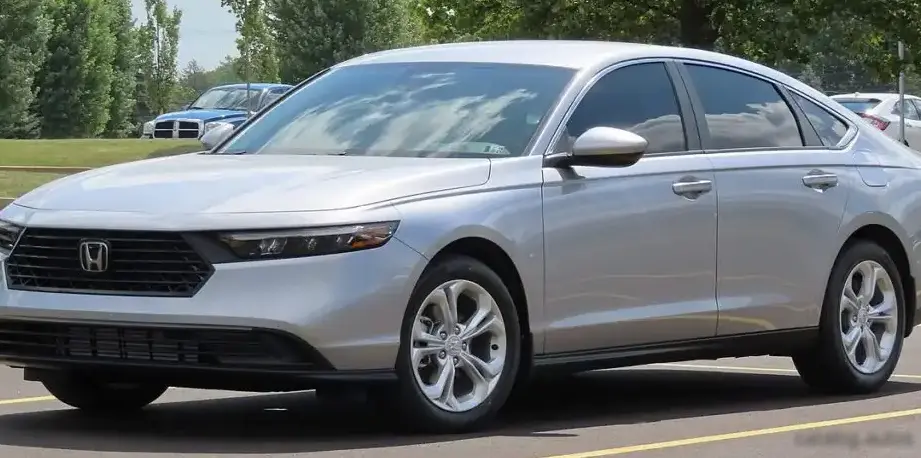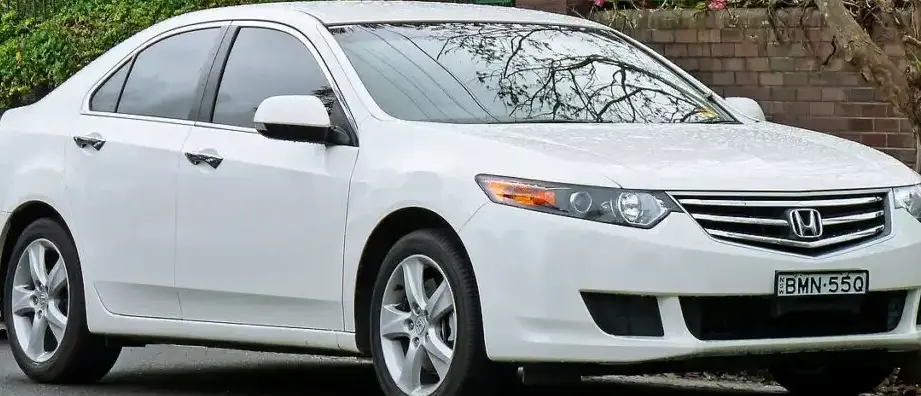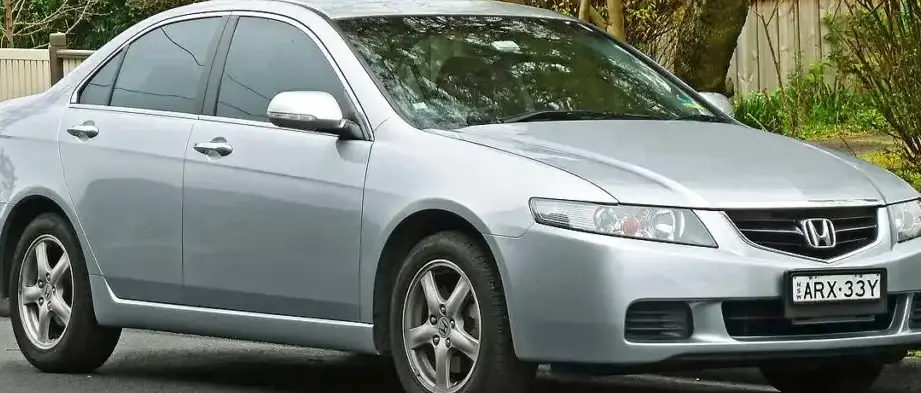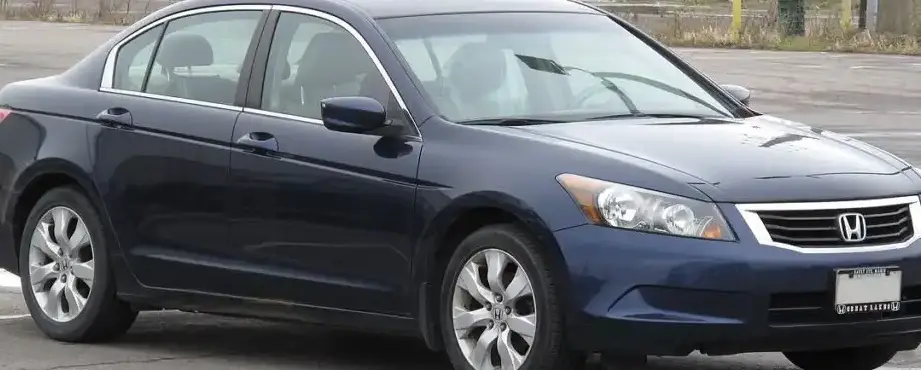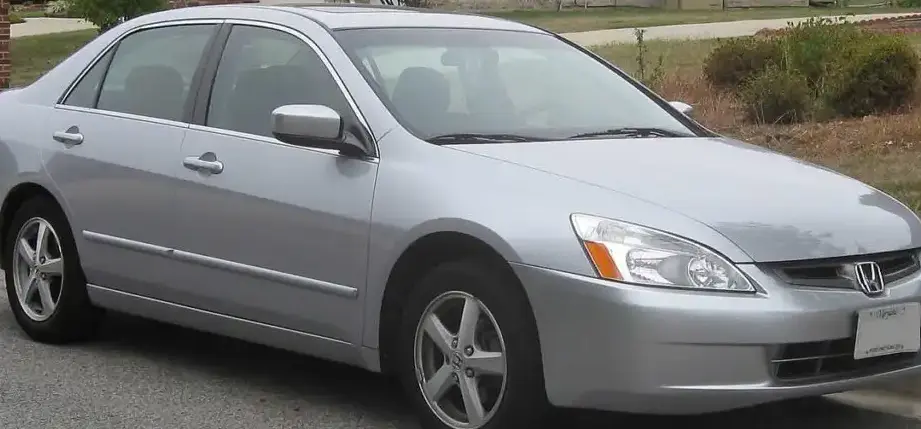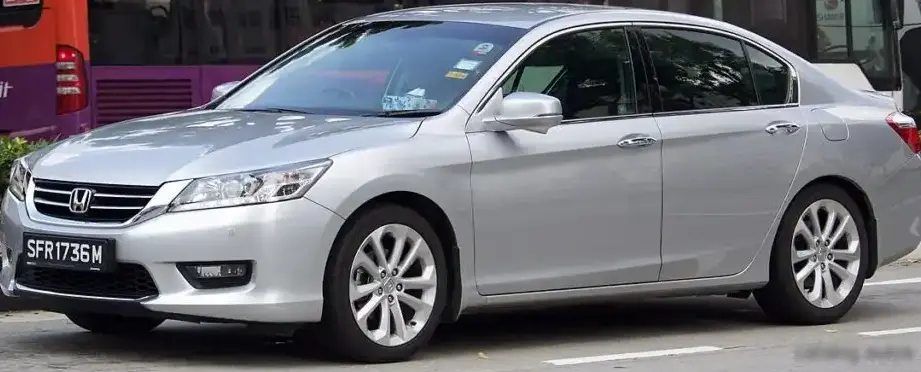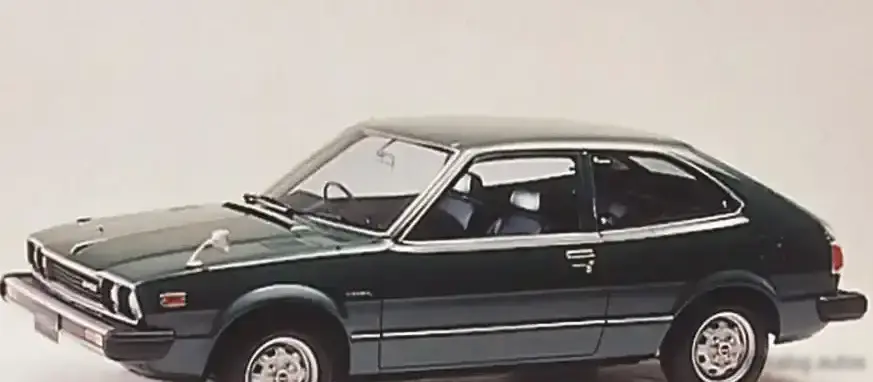
The Honda Accord V (CC7), specifically the 1.8i 16V facelift model produced from 1996 to 1998, represented a significant evolution of Honda’s popular mid-size sedan. This iteration of the fifth-generation Accord (1994-1997) benefited from a mid-cycle refresh, offering updated styling and refinements to the already well-regarded platform. Positioned as an entry-level to mid-range offering within the Accord lineup, the 1.8i 16V provided a balance of affordability, fuel efficiency, and Honda’s reputation for reliability. It served as a key model in both North American and international markets, though its popularity varied depending on regional preferences for engine size and trim levels.
Technical Specifications
| Brand | Honda |
| Model | Accord |
| Generation | Accord V (CC7, facelift 1996) |
| Type (Engine) | 1.8i 16V (125 Hp) |
| Start of production | 1996 |
| End of production | 1998 |
| Powertrain Architecture | Internal Combustion engine |
| Body type | Sedan |
| Seats | 5 |
| Doors | 4 |
| Fuel consumption (combined) | 7.1 l/100 km |
| Fuel consumption (US mpg) | 33.1 US mpg |
| Fuel consumption (UK mpg) | 39.8 UK mpg |
| Fuel consumption (km/l) | 14.1 km/l |
| Fuel Type | Petrol (Gasoline) |
| Weight-to-power ratio | 9.7 kg/Hp |
| Hp/tonne | 103.3 Hp/tonne |
| Weight-to-torque ratio | 7.4 kg/Nm |
| Nm/tonne | 135.5 Nm/tonne |
| Power | 125 Hp @ 5800 rpm |
| Power per litre | 67.6 Hp/l |
| Torque | 164 Nm @ 4500 rpm (120.96 lb.-ft. @ 4500 rpm) |
| Engine layout | Front, Transverse |
| Engine displacement | 1850 cm3 (112.89 cu. in.) |
| Number of cylinders | 4 |
| Engine configuration | Inline |
| Cylinder Bore | 85 mm (3.35 in.) |
| Piston Stroke | 81.5 mm (3.21 in.) |
| Compression ratio | 9:1 |
| Number of valves per cylinder | 4 |
| Fuel injection system | Multi-port manifold injection |
| Engine aspiration | Naturally aspirated engine |
| Valvetrain | OHC |
| Engine oil capacity | 3.8 l (4.02 US qt | 3.34 UK qt) |
| Kerb Weight | 1210 kg (2667.59 lbs.) |
| Trunk (boot) space – minimum | 405 l (14.3 cu. ft.) |
| Fuel tank capacity | 65 l (17.17 US gal | 14.3 UK gal) |
| Length | 4685 mm (184.45 in.) |
| Width | 1720 mm (67.72 in.) |
| Height | 1380 mm (54.33 in.) |
| Wheelbase | 2720 mm (107.09 in.) |
| Front track | 1475 mm (58.07 in.) |
| Rear (Back) track | 1480 mm (58.27 in.) |
| Drivetrain Architecture | The Internal combustion engine (ICE) drives the front wheels of the vehicle. |
| Drive wheel | Front wheel drive |
| Number of gears and type of gearbox | 5 gears, manual transmission |
| Front suspension | Double wishbone |
| Rear suspension | Transverse stabilizer |
| Front brakes | Ventilated discs |
| Rear brakes | Drum |
| Assisting systems | ABS (Anti-lock braking system) |
| Steering type | Steering rack and pinion |
| Power steering | Hydraulic Steering |
| Tires size | 185/70 R14 87S |
| Wheel rims size | 5J x 14 ET50 |
Powertrain & Engine Architecture
The heart of the 1.8i 16V Accord was the F18B engine, a 1.8-liter (1850 cc) inline-four cylinder powerplant. This engine utilized a single overhead camshaft (SOHC) valvetrain operating 16 valves (four per cylinder). The F18B featured multi-point fuel injection, contributing to improved fuel efficiency and smoother power delivery. The engine’s 9:1 compression ratio was a compromise between performance and the ability to run on readily available fuel grades. The engine was transversely mounted in the front of the vehicle, driving the front wheels. The 5-speed manual transmission was the standard offering, providing a direct connection between the engine and the wheels. This transmission was known for its relatively smooth shifts and durability.
Driving Characteristics
The 125 horsepower and 164 Nm (121 lb-ft) of torque produced by the 1.8i 16V engine provided adequate, though not exhilarating, performance. Acceleration from 0 to 60 mph was typically in the 9-10 second range. The engine felt most comfortable in the mid-range, offering sufficient power for everyday driving and highway cruising. Compared to the more powerful 2.2L four-cylinder or the V6 options available in the Accord lineup, the 1.8i felt noticeably less responsive. However, the lighter engine weight contributed to better handling balance. The 5-speed manual transmission allowed drivers to maximize the engine’s potential, while the gear ratios were well-suited for both city and highway driving. The manual transmission provided a more engaging driving experience than the available automatic option.
Equipment & Trim Levels
The 1.8i 16V Accord typically came standard with features such as power steering, air conditioning, a basic audio system, and cloth upholstery. Safety features included dual airbags and ABS (Anti-lock Braking System). Higher trim levels, often denoted by “LX” or “EX” designations, added features like power windows and locks, a sunroof, upgraded audio systems, and alloy wheels. Interior appointments were generally functional and durable, reflecting Honda’s focus on practicality. The dashboard layout was clean and straightforward, with easy-to-read gauges. Optional extras included cruise control and a CD player.
Chassis & Braking
The Accord V utilized a front independent suspension with double wishbones and a rear independent suspension with a transverse stabilizer. This suspension setup provided a comfortable ride and predictable handling. The front brakes were ventilated discs, offering good stopping power, while the rear brakes were drums. The use of rear drums was a cost-saving measure on the base models. The steering was rack and pinion, providing precise and responsive control. The 185/70 R14 tires offered a good balance of grip and ride comfort.
Market Reception & Comparison
The 1.8i 16V Accord was generally well-received by automotive critics as a practical and reliable family sedan. It was praised for its fuel efficiency, comfortable ride, and Honda’s renowned build quality. However, some reviewers noted that the engine lacked the power and refinement of its larger counterparts. Compared to the 2.2L Accord, the 1.8i offered better fuel economy but less performance. The V6 models provided significantly more power but came at a higher price point. In terms of reliability, the 1.8i 16V proved to be exceptionally durable, with many examples exceeding 200,000 miles with proper maintenance.
Legacy
The Honda Accord V 1.8i 16V has established a strong reputation for long-term reliability and affordability in the used car market. The F18B engine is known for its durability and relatively low maintenance costs. While not a performance standout, the 1.8i remains a popular choice for buyers seeking a dependable and fuel-efficient used sedan. Parts availability is generally good, and the car’s simple mechanical design makes it relatively easy to repair. Today, well-maintained examples of the 1.8i 16V Accord are still a common sight on the roads, a testament to Honda’s engineering and build quality.