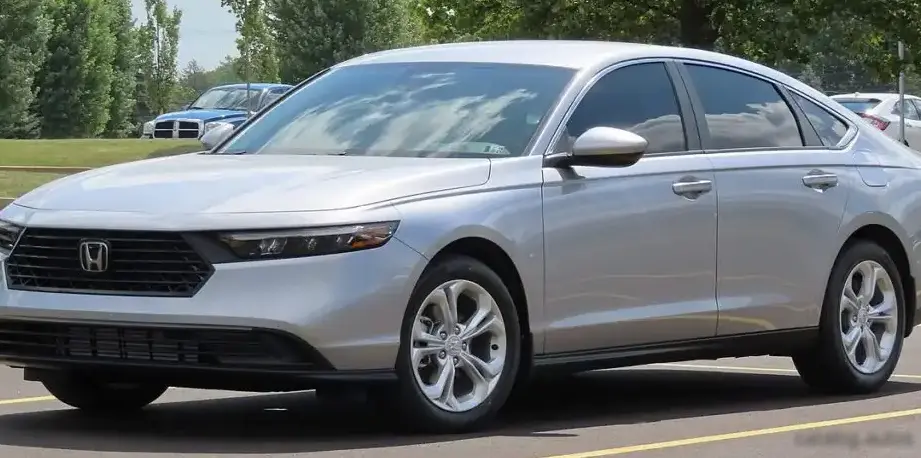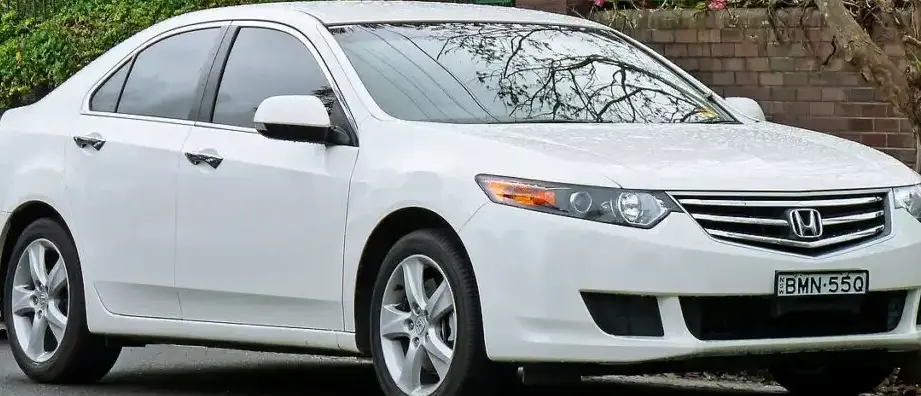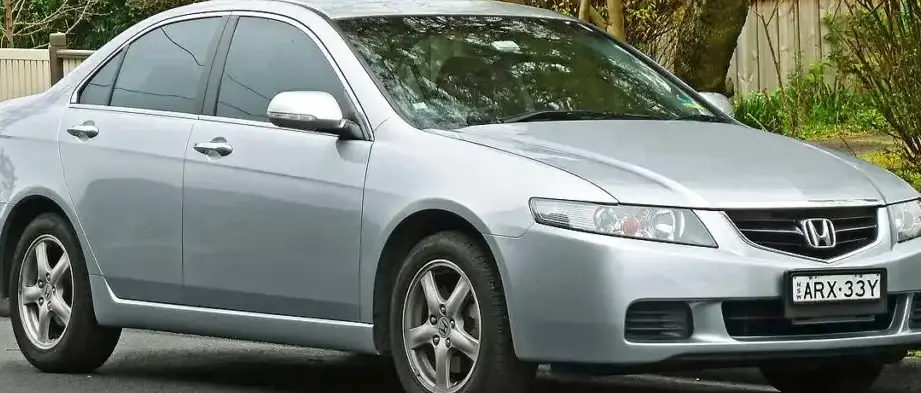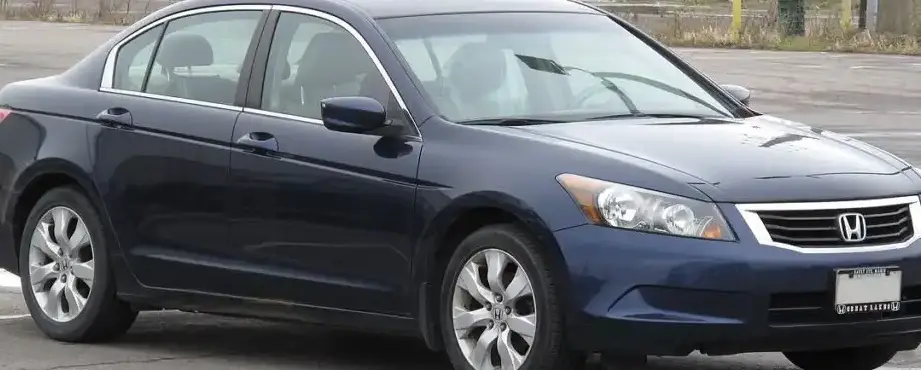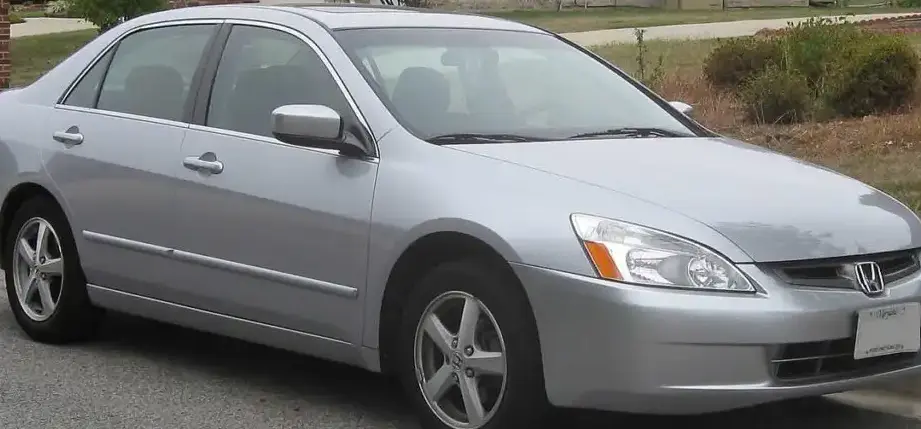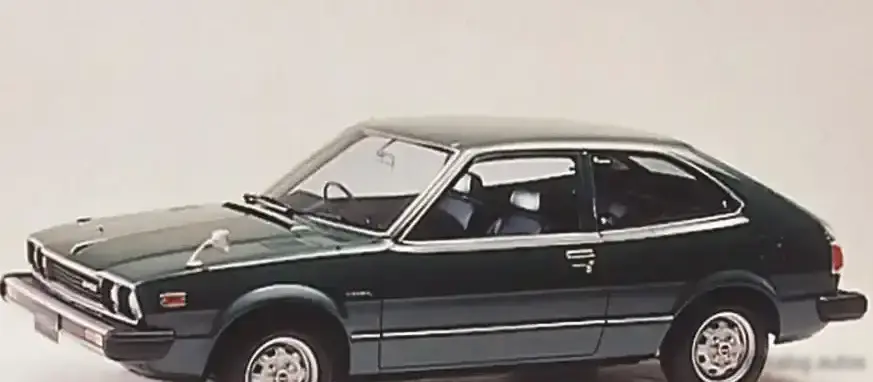
The Honda Accord V (CC7), specifically the facelifted model produced from 1996 to 1998, represented a significant evolution in Honda’s mid-size sedan offering. This generation Accord, sold primarily in North America, Europe, and parts of Asia, built upon the success of its predecessors by offering a blend of practicality, reliability, and increasingly sophisticated technology. The 2.2i VTEC variant, producing 150 horsepower, occupied a middle ground in the Accord V lineup, positioned above the base models and below the more performance-oriented options. It aimed to provide a balance of fuel efficiency and adequate power for everyday driving needs.
Technical Specifications
| Brand | Honda |
| Model | Accord |
| Generation | Accord V (CC7, facelift 1996) |
| Type (Engine) | 2.2i VTEC (150 Hp) |
| Start of production | 1996 |
| End of production | 1998 |
| Powertrain Architecture | Internal Combustion engine |
| Body type | Sedan |
| Seats | 5 |
| Doors | 4 |
| Fuel consumption (combined) | 8.5 l/100 km |
| Fuel consumption (US mpg) | 27.7 US mpg |
| Fuel consumption (UK mpg) | 33.2 UK mpg |
| Fuel consumption (km/l) | 11.8 km/l |
| Fuel Type | Petrol (Gasoline) |
| Acceleration 0 – 100 km/h | 9 sec |
| Acceleration 0 – 62 mph | 9 sec |
| Acceleration 0 – 60 mph | 8.6 sec |
| Maximum speed | 210 km/h (130.49 mph) |
| Weight-to-power ratio | 9.2 kg/Hp |
| Weight-to-torque ratio | 6.9 kg/Nm |
| Power | 150 Hp @ 5900 rpm |
| Power per litre | 69.6 Hp/l |
| Torque | 198 Nm @ 5000 rpm (146.04 lb.-ft. @ 5000 rpm) |
| Engine layout | Front, Transverse |
| Engine Model/Code | F22Z2 |
| Engine displacement | 2155 cm3 (131.51 cu. in.) |
| Number of cylinders | 4 |
| Engine configuration | Inline |
| Cylinder Bore | 85 mm (3.35 in.) |
| Piston Stroke | 95 mm (3.74 in.) |
| Compression ratio | 9.8:1 |
| Number of valves per cylinder | 4 |
| Fuel injection system | Multi-port manifold injection |
| Engine aspiration | Naturally aspirated engine |
| Valvetrain | OHC |
| Engine oil capacity | 4.3 l (4.54 US qt | 3.78 UK qt) |
| Coolant capacity | 6.9 l (7.29 US qt | 6.07 UK qt) |
| Kerb Weight | 1375 kg (3031.36 lbs.) |
| Max. weight | 1880 kg (4144.69 lbs.) |
| Max load | 505 kg (1113.33 lbs.) |
| Trunk (boot) space – minimum | 405 l (14.3 cu. ft.) |
| Fuel tank capacity | 65 l (17.17 US gal | 14.3 UK gal) |
| Length | 4685 mm (184.45 in.) |
| Width | 1720 mm (67.72 in.) |
| Height | 1380 mm (54.33 in.) |
| Wheelbase | 2720 mm (107.09 in.) |
| Front track | 1475 mm (58.07 in.) |
| Rear (Back) track | 1480 mm (58.27 in.) |
| Drivetrain Architecture | The Internal combustion engine (ICE) drives the front wheels of the vehicle. |
| Drive wheel | Front wheel drive |
| Number of gears and type of gearbox | 5 gears, manual transmission |
| Front suspension | Double wishbone |
| Rear suspension | Transverse stabilizer |
| Front brakes | Ventilated discs |
| Rear brakes | Disc |
| Assisting systems | ABS (Anti-lock braking system) |
| Steering type | Steering rack and pinion |
| Power steering | Hydraulic Steering |
| Tires size | 195/60 R15 |
| Wheel rims size | 15 |
Powertrain & Engine Architecture
The heart of the 1996-1998 Honda Accord V 2.2i VTEC was the F22Z2 engine, a 2.2-liter inline-four cylinder powerplant. This engine was a descendant of Honda’s F-series, known for its durability and relatively simple design. The “VTEC” designation signified Honda’s Variable Valve Timing and Lift Electronic Control system. This technology allowed the engine to switch between two distinct camshaft profiles – one optimized for low-end torque and fuel efficiency, and another for high-RPM power. The F22Z2 utilized a single overhead camshaft (SOHC) design, simplifying the valvetrain compared to dual-overhead cam setups found in some other VTEC engines. Fuel delivery was handled by a multi-port fuel injection system, ensuring precise fuel metering for optimal combustion. The engine was transversely mounted in the front of the vehicle, driving the front wheels. The 5-speed manual transmission was a robust unit, providing smooth shifts and contributing to the car’s overall driving experience.
Driving Characteristics
The 2.2i VTEC with the 5-speed manual transmission offered a reasonably engaging driving experience. While not a sports car, the 150 horsepower and 198 Nm of torque provided sufficient power for confident acceleration and highway cruising. The VTEC transition, noticeable around 5,000 rpm, provided a subtle surge in power. The gear ratios were well-matched, allowing the engine to stay within its optimal power band during typical driving situations. Compared to the base 2.0-liter engine, the 2.2i VTEC offered a noticeable improvement in performance. However, it didn’t possess the outright punch of the available V6 options. The manual transmission allowed for greater driver control, while the suspension provided a comfortable ride without excessive body roll.
Equipment & Trim Levels
The 2.2i VTEC trim typically included features such as power windows, power locks, and air conditioning as standard equipment. Interior upholstery was generally cloth, with options for upgraded materials available. The dashboard layout was functional and straightforward, prioritizing ease of use. Optional extras included a sunroof, upgraded audio systems, and alloy wheels. The specific trim level (LX, EX, etc.) determined the availability of these additional features. The EX trim, for example, often included features like a power driver’s seat and cruise control.
Chassis & Braking
The Accord V utilized a front independent suspension with double wishbones, providing a comfortable and controlled ride. The rear suspension employed a transverse stabilizer, helping to reduce body roll during cornering. Braking duties were handled by ventilated discs on the front wheels and solid discs on the rear. An Anti-lock Braking System (ABS) was standard, enhancing safety by preventing wheel lockup during hard braking. The steering system was a rack-and-pinion setup with hydraulic power assistance, providing precise and responsive steering feel.
Market Reception & Comparison
The 1996-1998 Honda Accord V 2.2i VTEC was generally well-received by automotive critics. It was praised for its reliability, fuel efficiency, and comfortable ride. While not the most exciting car in its class, it offered a practical and well-rounded package. Compared to other trims in the Accord lineup, the 2.2i VTEC provided a good balance between performance and economy. The base 2.0-liter engine was more affordable but lacked the power of the 2.2i VTEC, while the V6 models offered more performance but at a higher price point and with reduced fuel economy.
Legacy
The F22Z2 engine, when properly maintained, proved to be remarkably durable. Many examples of the 1996-1998 Accord V 2.2i VTEC continue to operate reliably today, often with high mileage. The engine’s relatively simple design and robust construction contribute to its longevity. In the used car market, these Accords are often sought after for their affordability, reliability, and reputation for trouble-free operation. While not a collector’s item, the 2.2i VTEC variant represents a sweet spot in the Accord V lineup, offering a good balance of features, performance, and long-term dependability.