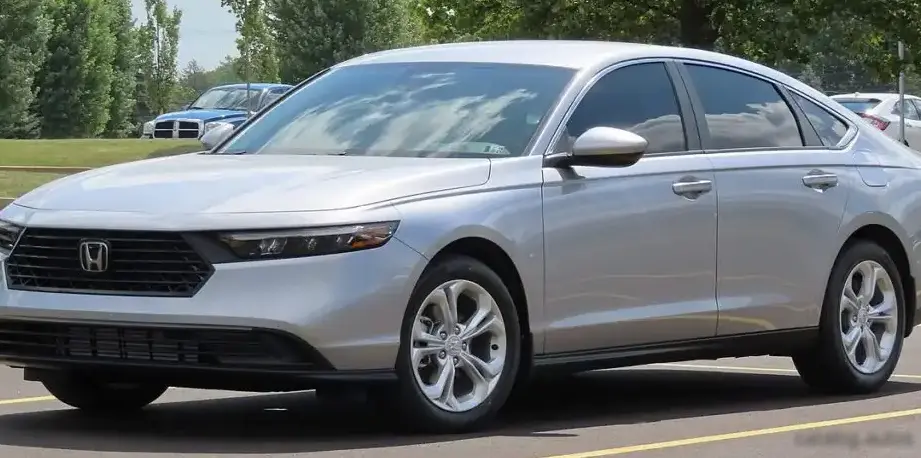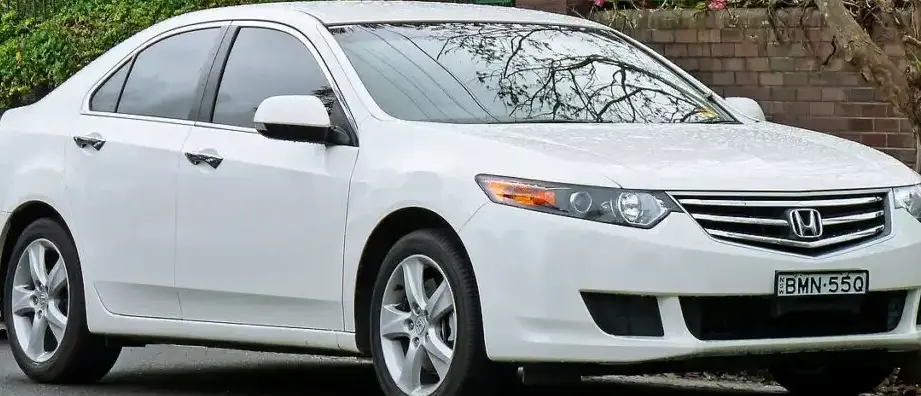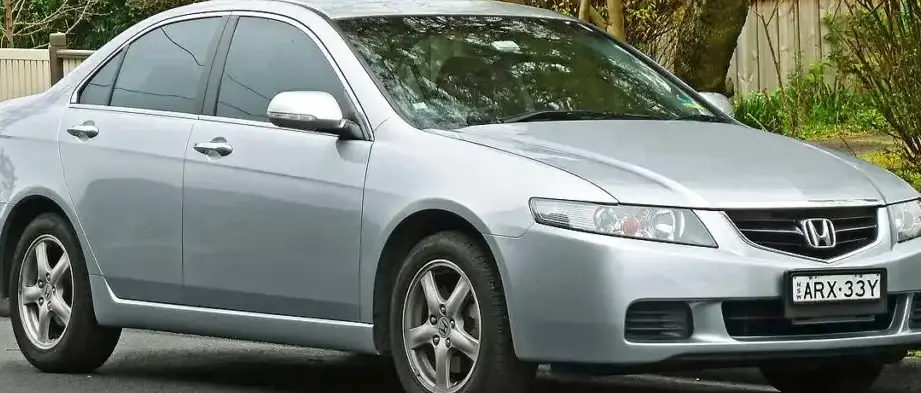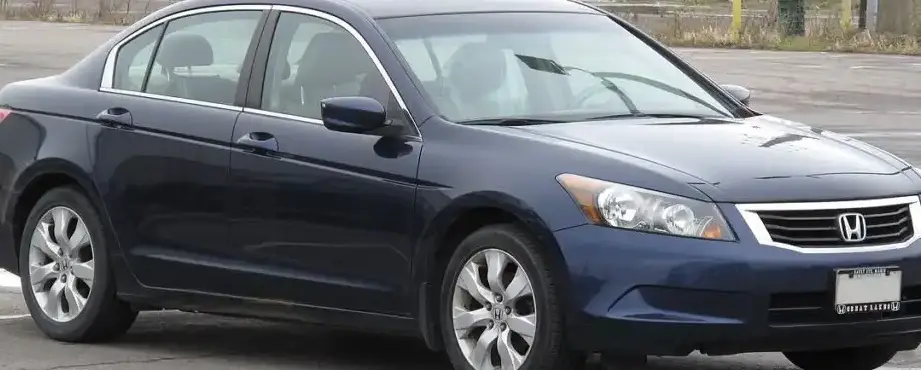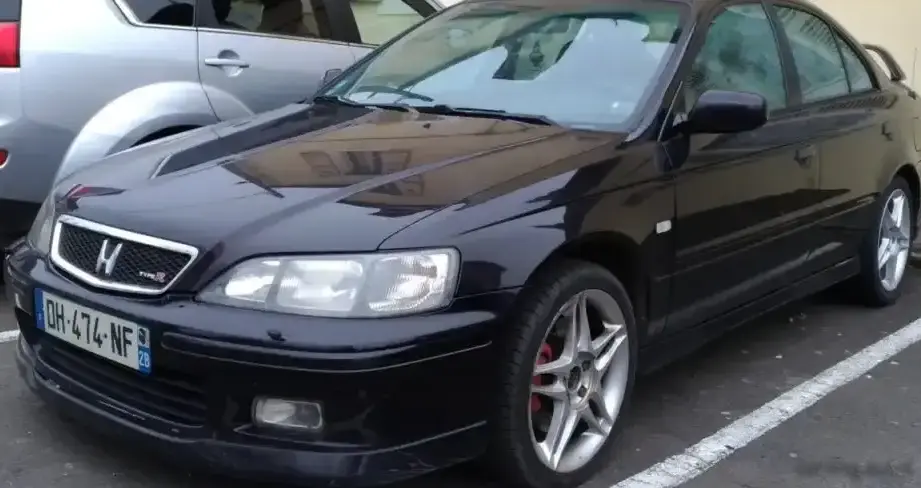
The Honda Accord VI (CE, CF) 2.2 Type-R, produced between 1999 and 2002, represents the pinnacle of performance for the sixth-generation Accord sedan. Positioned as the flagship trim, it was designed to appeal to enthusiasts seeking a sporty and engaging driving experience. Built on the CE/CF platform, the Type-R distinguished itself from other Accord variants with a high-revving engine, a close-ratio manual transmission, and a host of chassis and cosmetic upgrades. While the standard Accord VI catered to a broad market with its practicality and reliability, the Type-R aimed squarely at the performance sedan segment, competing with offerings from Europe and Japan.
Technical Specifications
| Brand | Honda |
| Model | Accord |
| Generation | Accord VI (CE,CF) |
| Type (Engine) | 2.2 Type-R (212 Hp) |
| Start of production | 1999 |
| End of production | 2002 |
| Powertrain Architecture | Internal Combustion engine |
| Body type | Sedan |
| Seats | 5 |
| Doors | 4 |
| Fuel consumption (urban) | 12.9 l/100 km (18.2 US mpg) |
| Fuel consumption (extra urban) | 7.8 l/100 km (30.2 US mpg) |
| Fuel Type | Petrol (Gasoline) |
| Acceleration 0 – 100 km/h | 7.2 sec |
| Acceleration 0 – 62 mph | 7.2 sec |
| Acceleration 0 – 60 mph | 6.8 sec |
| Maximum speed | 228 km/h (141.67 mph) |
| Weight-to-power ratio | 6.3 kg/Hp |
| Weight-to-torque ratio | 6.3 kg/Nm |
| Power | 212 Hp @ 7200 rpm |
| Power per litre | 98.3 Hp/l |
| Torque | 215 Nm @ 6700 rpm (158.58 lb.-ft. @ 6700 rpm) |
| Engine layout | Front, Transverse |
| Engine Model/Code | H22 |
| Engine displacement | 2157 cm3 (131.63 cu. in.) |
| Number of cylinders | 4 |
| Engine configuration | Inline |
| Cylinder Bore | 87 mm (3.43 in.) |
| Piston Stroke | 90.7 mm (3.57 in.) |
| Compression ratio | 11:1 |
| Number of valves per cylinder | 4 |
| Fuel injection system | Multi-port manifold injection |
| Engine aspiration | Naturally aspirated engine |
| Valvetrain | DOHC |
| Engine oil capacity | 4.8 l (5.07 US qt | 4.22 UK qt) |
| Coolant capacity | 6.9 l (7.29 US qt | 6.07 UK qt) |
| Kerb Weight | 1345 kg (2965.22 lbs.) |
| Max. weight | 1820 kg (4012.41 lbs.) |
| Max load | 475 kg (1047.2 lbs.) |
| Trunk (boot) space – minimum | 430 l (15.19 cu. ft.) |
| Fuel tank capacity | 65 l (17.17 US gal | 14.3 UK gal) |
| Length | 4595 mm (180.91 in.) |
| Width | 1750 mm (68.9 in.) |
| Height | 1430 mm (56.3 in.) |
| Wheelbase | 2670 mm (105.12 in.) |
| Front track | 1495 mm (58.86 in.) |
| Rear (Back) track | 1504 mm (59.21 in.) |
| Drivetrain Architecture | Front wheel drive |
| Number of gears | 5 |
| Gearbox type | Manual transmission |
| Front suspension | Double wishbone |
| Rear suspension | Several levers and rods |
| Front brakes | Ventilated discs |
| Rear brakes | Disc |
| Assisting systems | ABS (Anti-lock braking system) |
| Steering type | Steering rack and pinion |
| Power steering | Hydraulic Steering |
| Tires size | 215/45 R17 |
| Wheel rims size | 17 |
Powertrain & Engine Architecture
The heart of the Accord Type-R is the H22A engine, a 2.2-liter inline-four cylinder powerplant. This engine is a significant departure from the engines found in other Accord trims. The H22A features a higher compression ratio (11:1) and revised intake and exhaust ports, optimized for high-RPM performance. It utilizes a multi-point fuel injection system and a double overhead camshaft (DOHC) valvetrain with 16 valves. Honda’s VTEC (Variable Valve Timing and Lift Electronic Control) system is a key component, providing a noticeable increase in power and responsiveness at higher engine speeds. The engine was paired exclusively with a close-ratio 5-speed manual transmission, designed to maximize the engine’s potential. The transmission features reinforced gears and a shorter final drive ratio compared to other Accord models, contributing to quicker acceleration.
Driving Characteristics
The 2.2-liter Type-R engine delivers a distinctly sporty driving experience. The engine’s powerband is concentrated in the upper RPM range, requiring the driver to actively utilize the gearbox to stay within the optimal power zone. While not possessing the low-end torque of larger displacement engines, the Type-R compensates with its responsiveness and willingness to rev. The close-ratio manual transmission allows for precise gear changes, enhancing the feeling of control. Compared to the standard Accord’s automatic transmission options or the less powerful 1.8L and 2.0L engines, the Type-R offers a significantly more engaging and dynamic driving experience. The chassis revisions, including a stiffer suspension and improved steering feel, further contribute to the car’s handling prowess.
Equipment & Trim Levels
The Accord Type-R was relatively sparsely equipped compared to some of its competitors, with Honda prioritizing performance over luxury. Standard features included sport seats with aggressive bolstering, a leather-wrapped steering wheel, and a unique Type-R badging both inside and out. The interior featured a minimalist design with a focus on functionality. Optional extras were limited, typically including a sunroof and upgraded audio system. The exterior styling was also subtly enhanced with a rear spoiler, unique alloy wheels, and a more aggressive front bumper.
Chassis & Braking
The Type-R received significant chassis upgrades to complement its powerful engine. The suspension was stiffened with firmer springs and dampers, and a larger diameter stabilizer bar was fitted to reduce body roll. The braking system was also upgraded with larger front brake rotors and calipers, providing improved stopping power. The rear brakes remained discs, a step up from the drum brakes found on some lower-spec Accord models. These chassis and braking enhancements were crucial in managing the increased performance and providing a confident driving experience.
Market Reception & Comparison
The Honda Accord Type-R was generally well-received by automotive critics, who praised its high-revving engine, precise handling, and overall driving experience. It was often compared favorably to other performance sedans of the era, such as the Acura Integra Type R and the Subaru WRX. While its fuel economy was not exceptional (around 18.2 mpg city / 30.2 mpg highway), it was considered acceptable for a performance vehicle. Reliability was also a strong point, consistent with Honda’s reputation. Compared to the standard Accord, the Type-R commanded a significantly higher price, reflecting its performance-oriented features and limited production numbers.
Legacy
The Honda Accord Type-R has become a sought-after vehicle among enthusiasts and collectors. The H22A engine is renowned for its durability and tunability, and well-maintained examples command premium prices in the used car market. The Type-R’s legacy lies in its ability to deliver a truly engaging and rewarding driving experience, setting a high standard for performance sedans. Its influence can be seen in subsequent generations of Honda performance models, and it remains a benchmark for enthusiasts seeking a balanced and capable sports sedan.