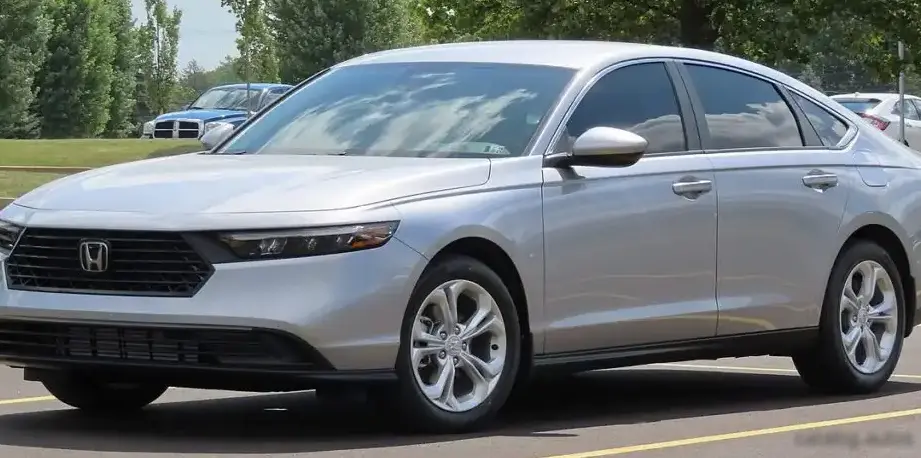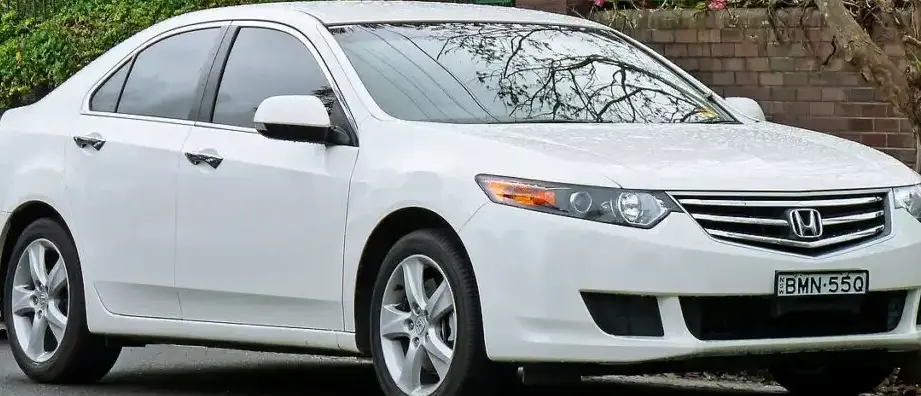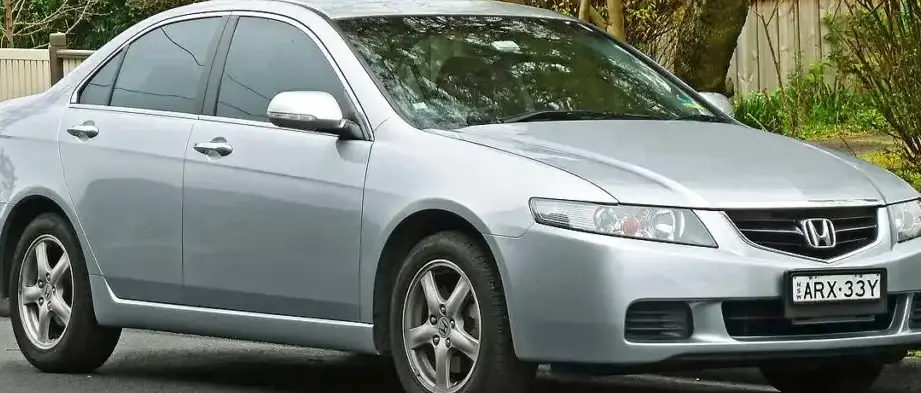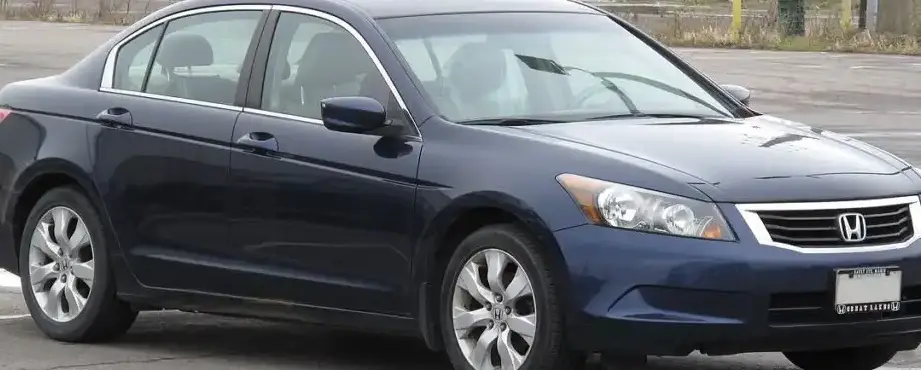
The Honda Accord VI Coupe 3.0 V6 24V, produced between 1998 and 2002, represented a significant offering in Honda’s lineup during the sixth generation (1997-2002) of the Accord. This two-door coupe variant, distinguished by its sporty styling and more powerful engine option, aimed to attract buyers seeking a blend of performance and practicality. Positioned as the premium trim level within the Coupe range, it offered a substantial upgrade over the four-cylinder models, and even differentiated itself from the sedan variants. The 3.0 V6 model was primarily sold in North America, where larger displacement engines were favored, and served as a competitor to other sporty coupes like the Toyota Camry Solara and Ford Probe.
Technical Specifications
| Brand | Honda |
| Model | Accord |
| Generation | Accord VI Coupe |
| Type (Engine) | 3.0 V6 24V (200 Hp) |
| Start of production | 1998 |
| End of production | 2002 |
| Powertrain Architecture | Internal Combustion engine |
| Body type | Coupe |
| Seats | 4 |
| Doors | 2 |
| Fuel consumption (urban) | 15 l/100 km (15.7 US mpg) |
| Fuel consumption (extra urban) | 8.2 l/100 km (28.7 US mpg) |
| Fuel Type | Petrol (Gasoline) |
| Acceleration 0 – 100 km/h | 8.5 sec |
| Acceleration 0 – 62 mph | 8.5 sec |
| Acceleration 0 – 60 mph | 8.1 sec |
| Maximum speed | 225 km/h (139.81 mph) |
| Weight-to-power ratio | 7.7 kg/Hp |
| Weight-to-torque ratio | 5.8 kg/Nm |
| Power | 200 Hp @ 5500 rpm |
| Power per litre | 66.7 Hp/l |
| Torque | 265 Nm @ 4800 rpm (195.45 lb.-ft. @ 4800 rpm) |
| Engine layout | Front, Transverse |
| Engine Model/Code | J30 |
| Engine displacement | 2997 cm3 (182.89 cu. in.) |
| Number of cylinders | 6 |
| Engine configuration | V-engine |
| Cylinder Bore | 86 mm (3.39 in.) |
| Piston Stroke | 86 mm (3.39 in.) |
| Compression ratio | 9.4:1 |
| Number of valves per cylinder | 4 |
| Fuel injection system | Multi-port manifold injection |
| Engine aspiration | Naturally aspirated engine |
| Valvetrain | DOHC |
| Engine oil capacity | 4.4 l (4.65 US qt | 3.87 UK qt) |
| Coolant capacity | 5.5 l (5.81 US qt | 4.84 UK qt) |
| Kerb Weight | 1530 kg (3373.07 lbs.) |
| Max. weight | 1920 kg (4232.88 lbs.) |
| Max load | 390 kg (859.8 lbs.) |
| Trunk (boot) space – minimum | 467 l (16.49 cu. ft.) |
| Fuel tank capacity | 65 l (17.17 US gal | 14.3 UK gal) |
| Length | 4765 mm (187.6 in.) |
| Width | 1785 mm (70.28 in.) |
| Height | 1405 mm (55.31 in.) |
| Wheelbase | 2670 mm (105.12 in.) |
| Front track | 1555 mm (61.22 in.) |
| Rear (Back) track | 1535 mm (60.43 in.) |
| Drivetrain Architecture | The Internal combustion engine (ICE) drives the front wheels of the vehicle. |
| Drive wheel | Front wheel drive |
| Number of gears and type of gearbox | 4 gears, automatic transmission |
| Front suspension | Double wishbone |
| Rear suspension | Several levers and rods |
| Front brakes | Ventilated discs |
| Rear brakes | Disc |
| Assisting systems | ABS (Anti-lock braking system) |
| Steering type | Steering rack and pinion |
| Power steering | Hydraulic Steering |
| Tires size | 205/55 R16 |
| Wheel rims size | 16 |
Powertrain & Engine Architecture
The heart of the Accord VI Coupe 3.0 V6 was the J30 engine, a 2.997-liter (182.89 cubic inch) naturally aspirated V6. This engine featured a 60-degree V-angle, contributing to a smoother power delivery and reduced vibrations. The J30 utilized a multi-port fuel injection system, delivering fuel directly to each intake port for optimized combustion. Its double overhead camshaft (DOHC) valvetrain, with four valves per cylinder, maximized airflow and contributed to the engine’s 200 horsepower output at 5500 rpm and 265 Nm (195.45 lb-ft) of torque at 4800 rpm. The engine was transversely mounted, driving the front wheels. Paired with the J30 was a four-speed automatic transmission, chosen for its convenience and ease of use, although it wasn’t as sporty as the available five-speed manual. The automatic transmission featured typical torque converter technology for smooth shifts, but lacked the responsiveness of more modern transmissions.
Driving Characteristics
The 3.0 V6 automatic Accord Coupe offered a noticeable step up in performance compared to the base four-cylinder models. Acceleration to 60 mph took approximately 8.1 seconds, and it could reach a top speed of 139.81 mph. While not a dedicated sports car, the V6 provided ample power for highway merging and passing maneuvers. The automatic transmission, while smooth, did result in some power loss compared to the manual version. Gear ratios were tuned for a balance of fuel economy and acceleration, with the first gear being relatively short for quick off-the-line response, and higher gears optimized for cruising. The power delivery was linear and predictable, making it an easy car to drive for both novice and experienced drivers. However, the automatic transmission sometimes felt hesitant during quick downshifts, and didn’t offer the driver much control over gear selection.
Equipment & Trim Levels
The 3.0 V6 Coupe typically came well-equipped, representing the top-of-the-line trim level. Standard features included air conditioning, power windows and locks, a premium sound system, and alloy wheels. Interior upholstery was typically cloth, although leather options were available. The dashboard featured a straightforward layout with easy-to-read gauges. Optional extras included a sunroof, upgraded sound system with a CD changer, and traction control. The V6 model also often included features like cruise control and a tilt steering wheel as standard equipment.
Chassis & Braking
The Accord VI Coupe utilized a front-engine, front-wheel-drive layout. The front suspension employed a double wishbone design, providing a comfortable ride and good handling characteristics. The rear suspension utilized a multi-link setup, further enhancing ride quality and stability. Braking duties were handled by ventilated discs at the front and solid discs at the rear. An Anti-lock Braking System (ABS) was standard, improving braking performance and control, especially in adverse conditions. The steering was rack and pinion, providing precise and responsive steering feel. The car rode on 205/55 R16 tires, offering a good balance of grip and ride comfort.
Market Reception & Comparison
The Accord VI Coupe 3.0 V6 was generally well-received by automotive critics. It was praised for its smooth engine, comfortable ride, and spacious interior. However, some critics noted that the automatic transmission detracted from the overall driving experience. Compared to the four-cylinder models, the V6 offered significantly more power and refinement. Fuel economy was understandably lower with the V6, averaging around 15.7 mpg in the city and 28.7 mpg on the highway. Reliability was generally good, consistent with Honda’s reputation, although the V6 engine did require more frequent maintenance than the four-cylinder variants.
Legacy
The Honda Accord VI Coupe 3.0 V6 24V remains a popular choice among enthusiasts and used car buyers. The J30 engine is known for its durability and relatively simple maintenance requirements. While not as sought-after as some other performance coupes of the era, the Accord Coupe offers a compelling combination of practicality, reliability, and performance. Well-maintained examples are becoming increasingly rare, and values have been steadily increasing in recent years. The car represents a high point in Honda’s coupe design, and its smooth V6 engine continues to provide a satisfying driving experience.