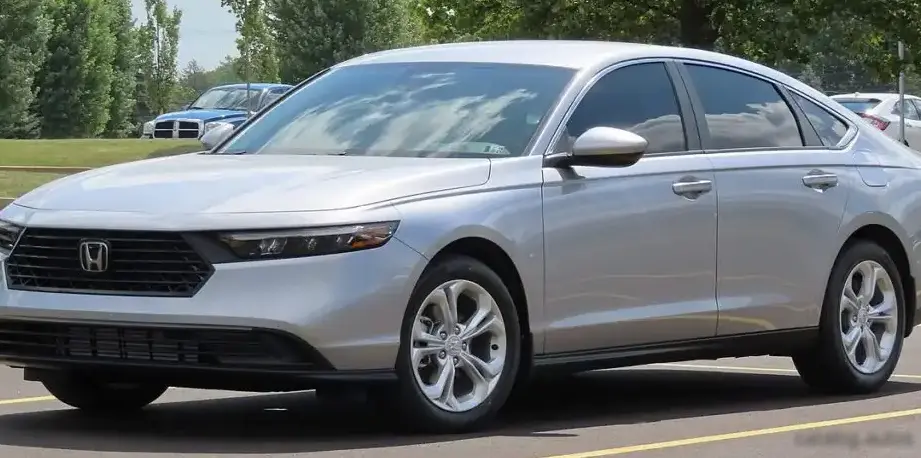
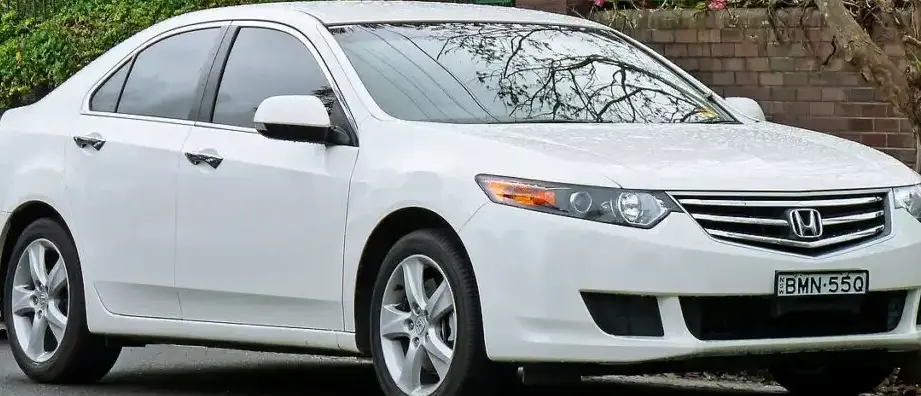
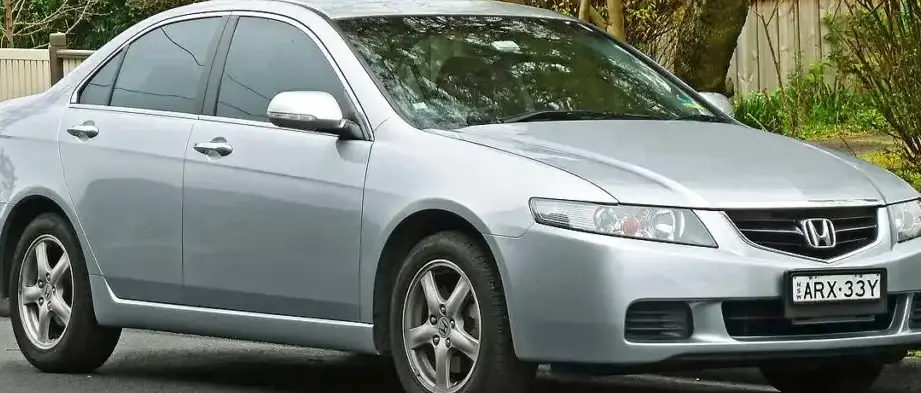
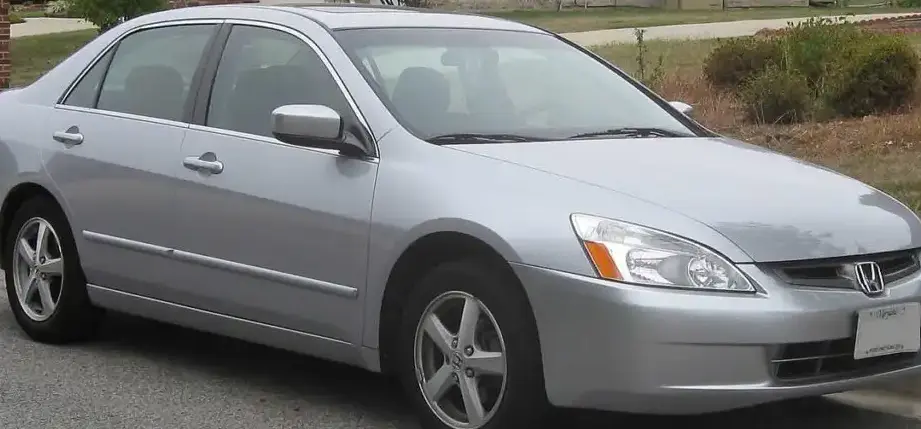
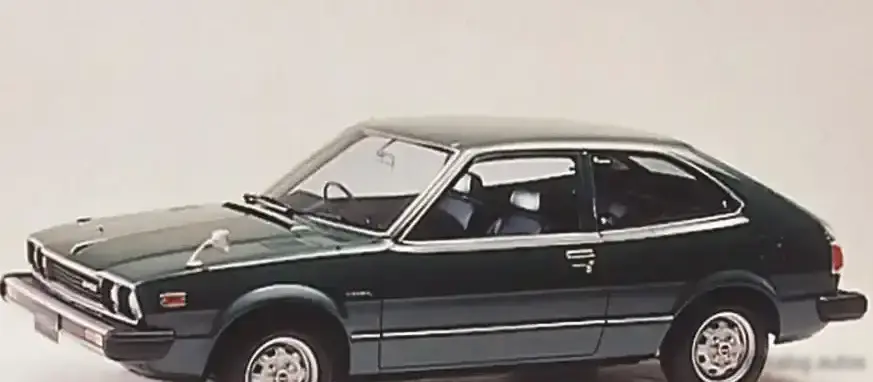
The Honda Accord VI Hatchback 2.0i 16V, produced between 1998 and 2002, represented a significant evolution in Honda’s popular Accord line. This variant, part of the sixth generation (CD/CH/CL chassis codes), was primarily marketed in Europe and other international markets, offering a practical and relatively sporty option within the compact family car segment. It sat in the mid-range of the Accord VI lineup, positioned above the base 1.6L models and below the more performance-oriented variants. The hatchback body style, less common in the North American market, provided increased cargo versatility compared to the sedan. This particular configuration, with the 2.0-liter 16-valve engine and a five-speed manual transmission, aimed to balance fuel efficiency with respectable performance.
Technical Specifications
| Brand | Honda |
| Model | Accord |
| Generation | Accord VI Hatchback |
| Type (Engine) | 2.0i 16V (147 Hp) |
| Start of production | 1998 |
| End of production | 2002 |
| Powertrain Architecture | Internal Combustion engine |
| Body type | Hatchback |
| Seats | 5 |
| Doors | 5 |
| Fuel consumption (urban) | 12 l/100 km (19.6 US mpg) |
| Fuel consumption (extra urban) | 6.9 l/100 km (34.1 US mpg) |
| Fuel consumption (combined) | 8.8 l/100 km (26.7 US mpg) |
| Fuel Type | Petrol (Gasoline) |
| Acceleration 0 – 100 km/h | 10.6 sec |
| Acceleration 0 – 62 mph | 10.6 sec |
| Acceleration 0 – 60 mph | 10.1 sec |
| Maximum speed | 210 km/h (130.49 mph) |
| Weight-to-power ratio | 9.5 kg/Hp |
| Weight-to-torque ratio | 7.6 kg/Nm |
| Power | 147 Hp @ 6000 rpm |
| Torque | 184 Nm @ 4800 rpm (135.71 lb.-ft. @ 4800 rpm) |
| Engine layout | Front, Transverse |
| Engine Model/Code | F20 |
| Engine displacement | 1997 cm3 (121.86 cu. in.) |
| Number of cylinders | 4 |
| Engine configuration | Inline |
| Cylinder Bore | 85 mm (3.35 in.) |
| Piston Stroke | 88 mm (3.46 in.) |
| Compression ratio | 10:1 |
| Number of valves per cylinder | 4 |
| Fuel injection system | Multi-port manifold injection |
| Engine aspiration | Naturally aspirated |
| Valvetrain | OHC |
| Engine oil capacity | 4.3 l (4.54 US qt | 3.78 UK qt) |
| Coolant capacity | 5.8 l (6.13 US qt | 5.1 UK qt) |
| Kerb Weight | 1400 kg (3086.47 lbs.) |
| Max. weight | 1930 kg (4254.92 lbs.) |
| Max load | 530 kg (1168.45 lbs.) |
| Trunk (boot) space – minimum | 450 l (15.89 cu. ft.) |
| Fuel tank capacity | 65 l (17.17 US gal | 14.3 UK gal) |
| Length | 4595 mm (180.91 in.) |
| Width | 1750 mm (68.9 in.) |
| Height | 1430 mm (56.3 in.) |
| Wheelbase | 2670 mm (105.12 in.) |
| Front track | 1495 mm (58.86 in.) |
| Rear track | 1504 mm (59.21 in.) |
| Drivetrain Architecture | Front wheel drive |
| Number of gears | 5 |
| Gearbox type | Manual transmission |
| Front suspension | Double wishbone |
| Rear suspension | Several levers and rods |
| Front brakes | Ventilated discs |
| Rear brakes | Disc |
| Assisting systems | ABS (Anti-lock braking system) |
| Steering type | Steering rack and pinion |
| Power steering | Hydraulic |
| Tires size | 195/60 R15 |
| Wheel rims size | 15 |
Powertrain & Engine Architecture
The heart of the Accord VI 2.0i 16V is the F20DOHC engine, a naturally aspirated 2.0-liter inline-four cylinder. This engine utilizes a single overhead camshaft (SOHC) design, with four valves per cylinder, contributing to its relatively high output for its displacement. The F20 featured multi-point fuel injection, delivering precise fuel metering for improved efficiency and responsiveness. The engine’s 147 horsepower at 6,000 rpm and 184 Nm (136 lb-ft) of torque at 4,800 rpm provided adequate performance for everyday driving. The five-speed manual transmission offered precise shifts and allowed drivers to fully utilize the engine’s power band. This transmission was chosen for its balance of cost-effectiveness and driver engagement, unlike the optional four-speed automatic available on some trims.
Driving Characteristics
The 2.0i 16V offered a noticeably more engaging driving experience than the base 1.6L models. While not a sports car, the engine provided sufficient power for confident overtaking and highway cruising. The five-speed manual transmission allowed for precise control over the engine’s revs, maximizing acceleration. The gear ratios were well-spaced, providing good acceleration in each gear. Compared to the automatic transmission equipped models, the manual version felt more responsive and offered better fuel economy. The chassis, while comfortable, wasn’t particularly sporty, prioritizing ride quality over sharp handling. Steering was light and precise, making it easy to maneuver in urban environments.
Equipment & Trim Levels
The 2.0i 16V typically came equipped with a reasonable level of standard features. These included power windows, central locking, power steering, and an anti-lock braking system (ABS). Interior upholstery was typically cloth, with a functional and durable design. Optional extras included air conditioning, a sunroof, and upgraded audio systems. The dashboard layout was straightforward and user-friendly, prioritizing practicality over aesthetic flair. Trim levels varied slightly depending on the specific market, but generally, the 2.0i 16V represented a step up in terms of features and refinement compared to the entry-level models.
Chassis & Braking
The Accord VI Hatchback utilized a front-engine, front-wheel-drive layout. The front suspension employed a double wishbone design, providing a comfortable ride and decent handling characteristics. The rear suspension utilized a multi-link setup, further enhancing ride quality. Braking duties were handled by ventilated discs at the front and solid discs at the rear, providing adequate stopping power for the vehicle’s weight and performance. The ABS system helped to maintain steering control during emergency braking situations. The chassis was designed to balance comfort and handling, prioritizing a smooth ride over sporty dynamics.
Market Reception & Comparison
The Accord VI 2.0i 16V was generally well-received by automotive critics. It was praised for its reliability, practicality, and fuel efficiency. However, some critics noted that the engine lacked the outright performance of some of its rivals. Compared to the 1.6L models, the 2.0i 16V offered a significant improvement in performance, making it a more appealing option for drivers who frequently traveled on highways or carried passengers. Compared to the more expensive and performance-focused variants, the 2.0i 16V offered a good balance of price and performance. Fuel economy was competitive for its class, averaging around 26.7 US mpg in combined driving conditions.
Legacy
The Honda Accord VI 2.0i 16V has proven to be a remarkably durable and reliable vehicle. Many examples are still on the road today, testament to Honda’s engineering quality. The F20 engine is known for its longevity and relatively low maintenance costs. In the used car market, these Accords are often sought after for their affordability, practicality, and reputation for reliability. While not a collector’s item, the 2.0i 16V represents a well-rounded and dependable family car that continues to provide reliable transportation for many owners. Parts availability remains good, making maintenance and repairs relatively straightforward.