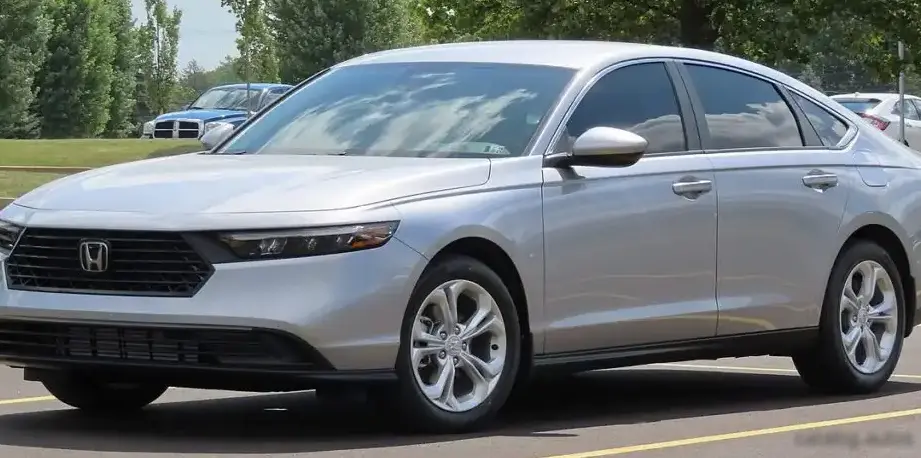
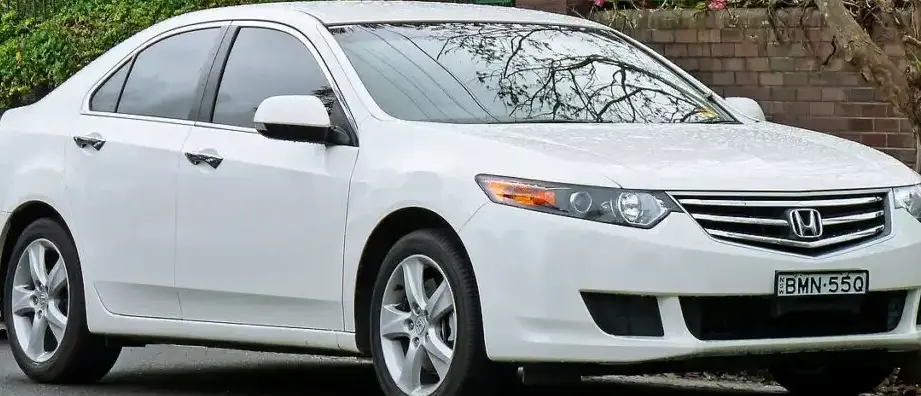
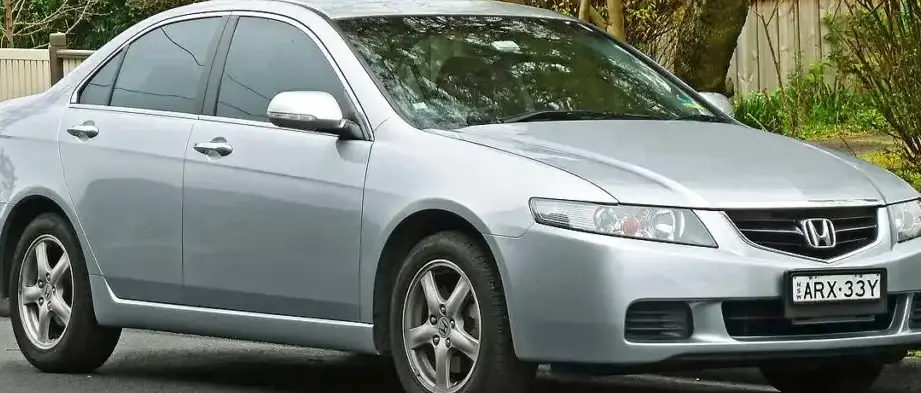
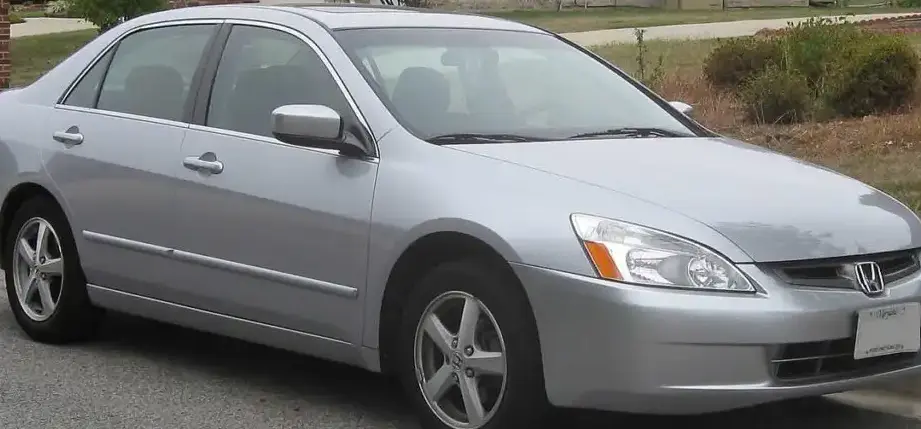
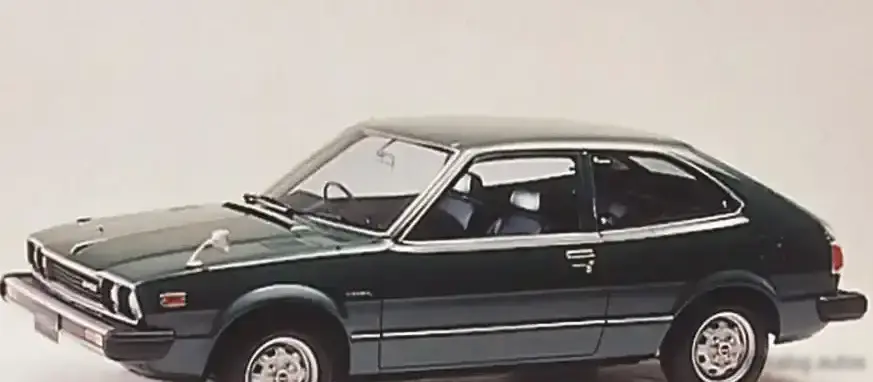
The Honda Accord VI Hatchback 2.0i 16V Automatic, produced between 1998 and 2002, represents a significant iteration of Honda’s globally successful Accord line. This variant, part of the sixth generation (CD/CH/CL chassis codes), was primarily aimed at the European market, where hatchbacks were – and continue to be – a popular body style. Positioned as a mid-range offering within the Accord VI lineup, it provided a balance between performance, fuel efficiency, and comfort, appealing to families and drivers seeking a practical yet refined vehicle. It was built on the Honda 1HX0/A3 platform, shared with other Honda models of the era.
Technical Specifications
| Brand | Honda |
| Model | Accord |
| Generation | Accord VI Hatchback |
| Type (Engine) | 2.0i 16V (147 Hp) Automatic |
| Start of production | 1998 |
| End of production | 2002 |
| Powertrain Architecture | Internal Combustion engine |
| Body type | Hatchback |
| Seats | 5 |
| Doors | 5 |
| Fuel consumption (urban) | 12.7 l/100 km (18.5 US mpg, 22.2 UK mpg, 7.9 km/l) |
| Fuel consumption (extra urban) | 7.1 l/100 km (33.1 US mpg, 39.8 UK mpg, 14.1 km/l) |
| Fuel consumption (combined) | 9.2 l/100 km (25.6 US mpg, 30.7 UK mpg, 10.9 km/l) |
| Fuel Type | Petrol (Gasoline) |
| Acceleration 0 – 100 km/h | 11.1 sec |
| Acceleration 0 – 62 mph | 11.1 sec |
| Acceleration 0 – 60 mph | 10.5 sec |
| Maximum speed | 205 km/h (127.38 mph) |
| Weight-to-power ratio | 9.5 kg/Hp, 105 Hp/tonne |
| Weight-to-torque ratio | 7.6 kg/Nm, 131.4 Nm/tonne |
| Power | 147 Hp @ 6000 rpm |
| Power per litre | 73.6 Hp/l |
| Torque | 184 Nm @ 4800 rpm (135.71 lb.-ft. @ 4800 rpm) |
| Engine layout | Front, Transverse |
| Engine Model/Code | F20 |
| Engine displacement | 1997 cm3 (121.86 cu. in.) |
| Number of cylinders | 4 |
| Engine configuration | Inline |
| Cylinder Bore | 85 mm (3.35 in.) |
| Piston Stroke | 88 mm (3.46 in.) |
| Compression ratio | 10:1 |
| Number of valves per cylinder | 4 |
| Fuel injection system | Multi-port manifold injection |
| Engine aspiration | Naturally aspirated engine |
| Valvetrain | OHC |
| Engine oil capacity | 4.3 l (4.54 US qt | 3.78 UK qt) |
| Coolant capacity | 5.8 l (6.13 US qt | 5.1 UK qt) |
| Kerb Weight | 1400 kg (3086.47 lbs.) |
| Max. weight | 1930 kg (4254.92 lbs.) |
| Max load | 530 kg (1168.45 lbs.) |
| Trunk (boot) space – minimum | 450 l (15.89 cu. ft.) |
| Fuel tank capacity | 65 l (17.17 US gal | 14.3 UK gal) |
| Length | 4595 mm (180.91 in.) |
| Width | 1750 mm (68.9 in.) |
| Height | 1430 mm (56.3 in.) |
| Wheelbase | 2670 mm (105.12 in.) |
| Front track | 1495 mm (58.86 in.) |
| Rear (Back) track | 1504 mm (59.21 in.) |
| Drivetrain Architecture | The Internal combustion engine (ICE) drives the front wheels of the vehicle. |
| Drive wheel | Front wheel drive |
| Number of gears and type of gearbox | 4 gears, automatic transmission |
| Front suspension | Double wishbone |
| Rear suspension | Several levers and rods |
| Front brakes | Ventilated discs |
| Rear brakes | Disc |
| Assisting systems | ABS (Anti-lock braking system) |
| Steering type | Steering rack and pinion |
| Power steering | Hydraulic Steering |
| Tires size | 195/60 R15 |
| Wheel rims size | 15 |
Powertrain & Engine Architecture
At the heart of the Accord VI 2.0i Automatic lies the F20DOHC inline-four cylinder engine. This 1997cc (121.86 cubic inches) engine utilizes a single overhead camshaft (SOHC) design, although it features four valves per cylinder (16V) for improved breathing. The F20 engine benefits from Honda’s proven multi-point fuel injection system, delivering precise fuel metering for optimal combustion. The engine produces 147 horsepower at 6000 rpm and 184 Nm (135.71 lb-ft) of torque at 4800 rpm. Paired with this engine is a four-speed automatic transmission, designed for smooth and convenient operation. This transmission, while not offering the sportiness of a manual gearbox, prioritized ease of use and comfort, aligning with the target audience for this trim level.
Driving Characteristics
The 2.0i Automatic Accord VI delivers a comfortable and predictable driving experience. Acceleration from 0-60 mph takes approximately 10.5 seconds, and it reaches a top speed of 205 km/h (127.38 mph). Compared to the manual transmission version or higher-output variants, the automatic suffers a slight performance deficit. The four-speed automatic transmission, while reliable, has wider gear ratios than a modern automatic, resulting in noticeable shifts and a less responsive feel. However, for everyday driving, the automatic provides sufficient power for overtaking and merging onto highways. The engine is relatively quiet and refined, contributing to a pleasant cabin experience.
Equipment & Trim Levels
The 2.0i Automatic trim typically included features such as power windows, power steering, central locking, and an AM/FM radio with cassette player. Air conditioning was often standard, though sometimes offered as an option depending on the specific market. Interior upholstery was typically cloth, with a relatively simple dashboard layout. Optional extras could include alloy wheels, a sunroof, and upgraded audio systems. The overall interior ambiance was functional and well-built, reflecting Honda’s reputation for quality.
Chassis & Braking
The Accord VI Hatchback utilizes a front-engine, front-wheel-drive layout. Suspension consists of a double wishbone setup at the front and a multi-link arrangement at the rear, providing a comfortable ride and decent handling characteristics. Braking duties are handled by ventilated discs at the front and solid discs at the rear. Anti-lock Braking System (ABS) was standard, enhancing safety by preventing wheel lockup during hard braking. The chassis was designed to balance ride comfort with handling stability, making it suitable for both city driving and longer journeys.
Market Reception & Comparison
The Accord VI 2.0i Automatic was generally well-received by automotive critics. It was praised for its reliability, practicality, and comfortable ride. However, some reviewers noted that the automatic transmission detracted from the driving experience compared to the manual version. Fuel economy was considered reasonable for its class, averaging around 25.6 US mpg combined. Compared to other trims, such as the 1.8L models, the 2.0i offered more power and a slightly more refined driving experience, justifying its higher price point. Compared to the more performance-oriented variants, it prioritized comfort and ease of use.
Legacy
The F20 engine, when properly maintained, is known for its durability and longevity. The four-speed automatic transmission is also generally reliable, although it may require servicing as it ages. Today, the Accord VI Hatchback 2.0i Automatic is a relatively affordable and practical used car. Its reputation for reliability and Honda’s strong brand image continue to make it a popular choice among budget-conscious buyers. While not a particularly sought-after collector’s item, well-maintained examples are increasingly appreciated for their classic Honda engineering and understated style. Parts availability remains good, making maintenance relatively straightforward.