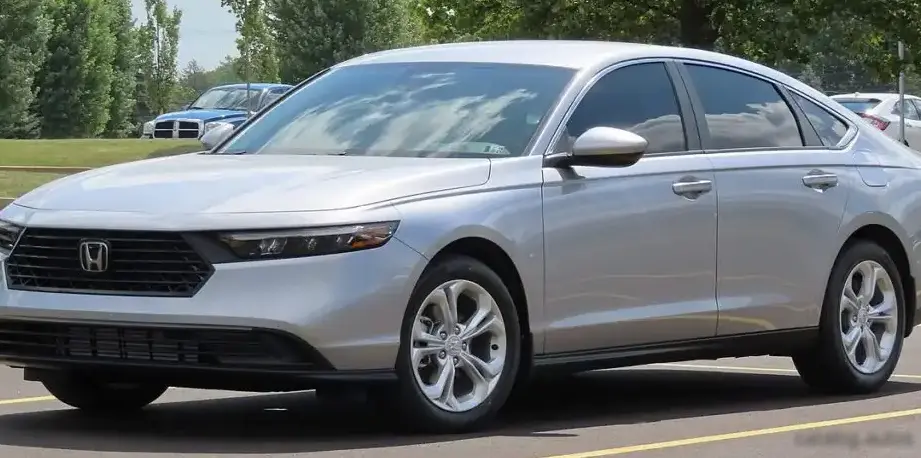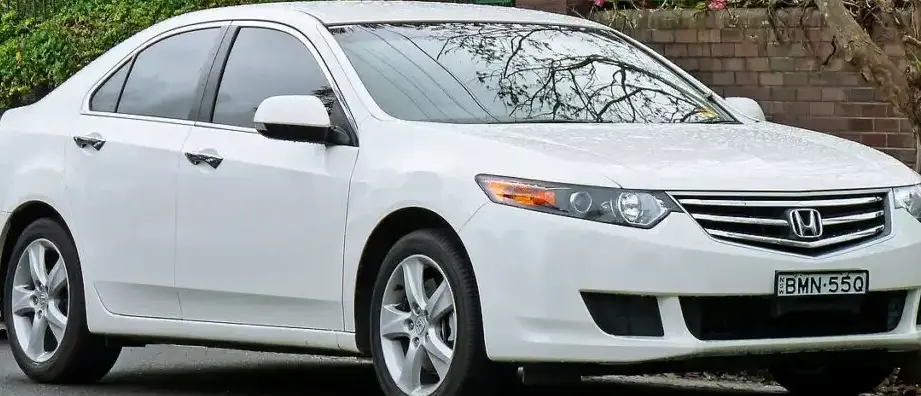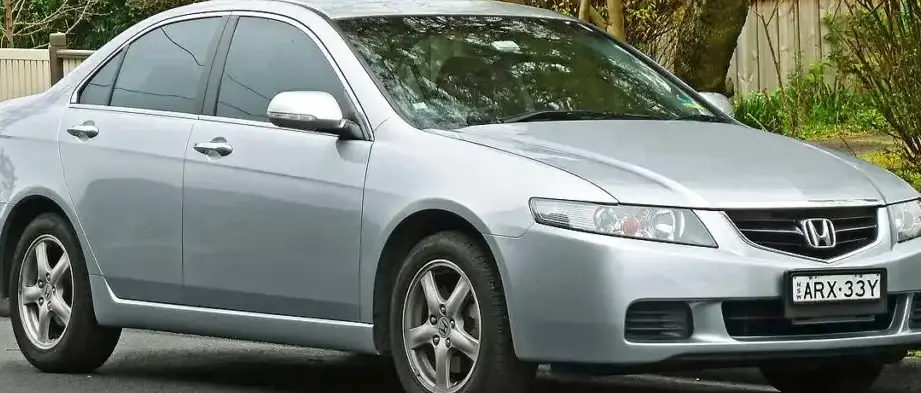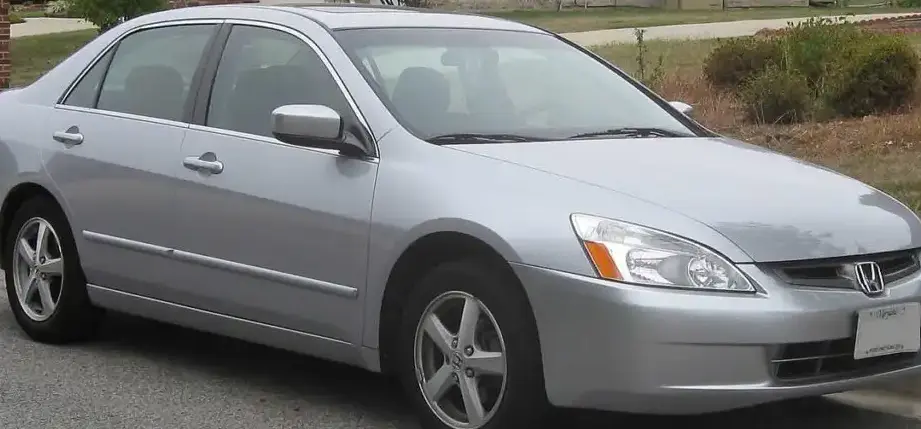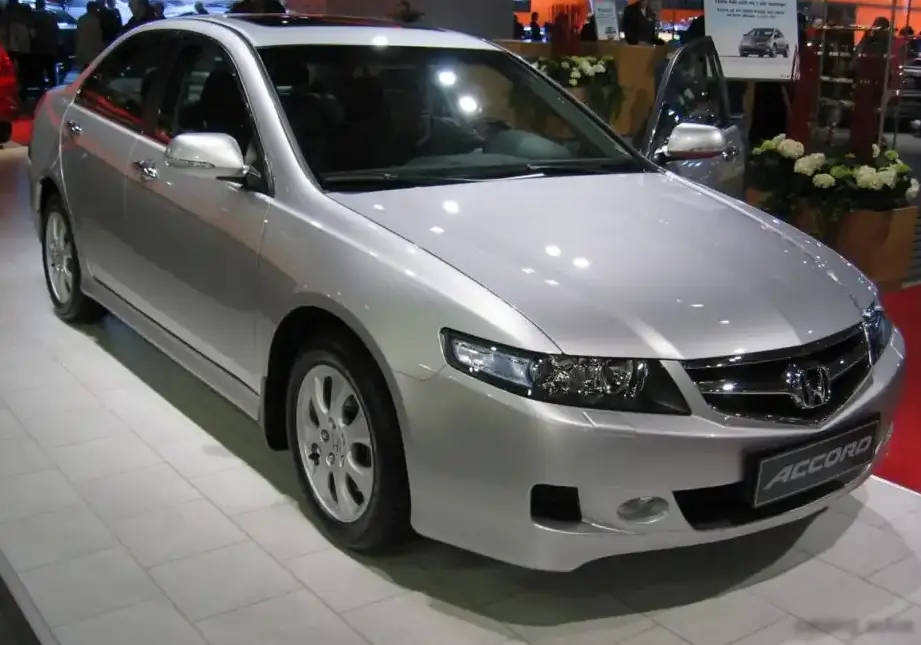
The Honda Accord VII, produced between 2002 and 2007, represented a significant evolution for Honda’s popular mid-size sedan. Within the seventh generation (internally designated as the CL7/CL8 for the Japanese market and largely similar globally), the 2.0 i-VTEC 16V variant, producing 155 horsepower, occupied a key position in the lineup. It served as a step up from the base 1.8L engine, offering a balance of performance and fuel efficiency aimed at buyers seeking a more engaging driving experience without the higher cost of the flagship V6 models. This model was primarily sold in European and Asian markets, with the North American Accord receiving different engine options.
Technical Specifications
| Brand | Honda |
| Model | Accord |
| Generation | Accord VII |
| Type (Engine) | 2.0 i-VTEC 16V (155 Hp) |
| Start of production | 2002 |
| End of production | 2007 |
| Powertrain Architecture | Internal Combustion engine |
| Body type | Sedan |
| Seats | 5 |
| Doors | 4 |
| Fuel consumption (urban) | 10.3 l/100 km (22.8 US mpg) |
| Fuel consumption (extra urban) | 6.2 l/100 km (37.9 US mpg) |
| Fuel consumption (combined) | 7.4 l/100 km (31.8 US mpg) |
| Fuel Type | Petrol (Gasoline) |
| Acceleration 0 – 100 km/h | 8.9 sec |
| Acceleration 0 – 62 mph | 8.9 sec |
| Acceleration 0 – 60 mph | 8.5 sec |
| Maximum speed | 217 km/h (134.84 mph) |
| Weight-to-power ratio | 8.5 kg/Hp |
| Weight-to-torque ratio | 6.9 kg/Nm |
| Power | 155 Hp @ 6000 rpm |
| Torque | 190 Nm @ 4500 rpm (140.14 lb.-ft. @ 4500 rpm) |
| Engine layout | Front, Transverse |
| Engine Model/Code | K20 |
| Engine displacement | 1998 cm3 (121.93 cu. in.) |
| Number of cylinders | 4 |
| Engine configuration | Inline |
| Cylinder Bore | 86 mm (3.39 in.) |
| Piston Stroke | 86 mm (3.39 in.) |
| Compression ratio | 9.8:1 |
| Number of valves per cylinder | 4 |
| Fuel injection system | Multi-port manifold injection |
| Engine aspiration | Naturally aspirated engine |
| Valvetrain | DOHC |
| Engine oil capacity | 4.2 l (4.44 US qt | 3.7 UK qt) |
| Coolant capacity | 4.5 l (4.76 US qt | 3.96 UK qt) |
| Kerb Weight | 1320 kg (2910.1 lbs.) |
| Max. weight | 1920 kg (4232.88 lbs.) |
| Max load | 600 kg (1322.77 lbs.) |
| Trunk (boot) space – minimum | 459 l (16.21 cu. ft.) |
| Fuel tank capacity | 65 l (17.17 US gal | 14.3 UK gal) |
| Length | 4665 mm (183.66 in.) |
| Width | 1760 mm (69.29 in.) |
| Height | 1445 mm (56.89 in.) |
| Wheelbase | 2670 mm (105.12 in.) |
| Front track | 1515 mm (59.65 in.) |
| Rear track | 1510 mm (59.45 in.) |
| Drivetrain Architecture | Front wheel drive |
| Number of gears | 5 |
| Gearbox type | Manual transmission |
| Front suspension | Double wishbone |
| Rear suspension | Several levers and rods |
| Front brakes | Ventilated discs |
| Rear brakes | Disc |
| Assisting systems | ABS (Anti-lock braking system) |
| Steering type | Steering rack and pinion |
| Power steering | Hydraulic Steering |
| Tires size | 195/65 R15 |
| Wheel rims size | 15 |
Powertrain & Engine Architecture
The heart of the Accord 2.0 i-VTEC was the K20 engine, a 1.998-liter inline-four cylinder powerplant. This engine was a key component of Honda’s K-series engine family, known for its high-revving nature and efficient design. The “i-VTEC” system (Intelligent Variable Valve Timing and Lift Electronic Control) was a sophisticated valvetrain technology that allowed the engine to switch between two distinct camshaft profiles. At lower engine speeds, a milder profile optimized fuel efficiency and drivability. As the engine speed increased, a more aggressive profile engaged, increasing valve lift and duration for improved high-end power. The K20 utilized multi-point fuel injection, delivering fuel directly into the intake ports. The engine’s transverse mounting and front-wheel-drive configuration were standard for this class of vehicle. The 5-speed manual transmission was well-matched to the engine’s characteristics, providing crisp shifts and allowing the driver to fully exploit the engine’s powerband.
Driving Characteristics
The 2.0 i-VTEC Accord offered a noticeably more spirited driving experience than the base 1.8L model. While not a sports sedan, the 155 horsepower and 190 Nm (140 lb-ft) of torque provided adequate acceleration for everyday driving and highway merging. The 0-60 mph time of around 8.5 seconds was respectable for its time. The manual transmission allowed for precise control, and the i-VTEC system provided a noticeable surge of power as the engine climbed into the higher RPM range. Compared to the later V6 models, the 2.0L felt less powerful, but it also offered better fuel economy and a lighter front end, contributing to more balanced handling. The gear ratios were tuned for a balance of acceleration and fuel efficiency, with a relatively tall fifth gear for comfortable highway cruising.
Equipment & Trim Levels
The 2.0 i-VTEC trim typically included features such as air conditioning, power windows and locks, a CD player, and alloy wheels. Higher trim levels added options like a sunroof, upgraded audio systems, and leather upholstery. Interior materials were generally of good quality for the price point, with a focus on durability and practicality. The dashboard layout was functional and easy to use, with clearly labeled controls. Safety features included dual front airbags and ABS brakes as standard equipment.
Chassis & Braking
The Accord VII utilized a front independent double wishbone suspension and a rear multi-link suspension. This setup provided a comfortable ride while maintaining good handling characteristics. The front brakes were ventilated discs, providing ample stopping power, while the rear brakes were solid discs. The hydraulic power steering offered a good balance of assistance and feedback. The chassis was relatively lightweight, contributing to the car’s agility. Stabilizer bars were fitted to both the front and rear suspension to reduce body roll during cornering.
Market Reception & Comparison
The Accord 2.0 i-VTEC was generally well-received by automotive critics. It was praised for its responsive engine, comfortable ride, and spacious interior. Compared to competitors like the Toyota Camry and Nissan Maxima, the Accord offered a more engaging driving experience. Fuel economy was competitive, averaging around 31.8 US mpg in combined driving. Reliability was also a strong point, with the K20 engine proving to be durable and long-lasting. However, some critics noted that the interior styling was somewhat conservative compared to some of its rivals.
Legacy
The Honda Accord VII 2.0 i-VTEC remains a popular choice in the used car market today. The K20 engine is known for its reliability and relatively low maintenance costs. Parts availability is generally good, and the car’s simple design makes it relatively easy to repair. While not a collector’s item, well-maintained examples of the 2.0 i-VTEC Accord are still sought after by buyers looking for a dependable and fuel-efficient mid-size sedan. The K20 engine’s reputation for performance and durability has cemented its place as a favorite among Honda enthusiasts.