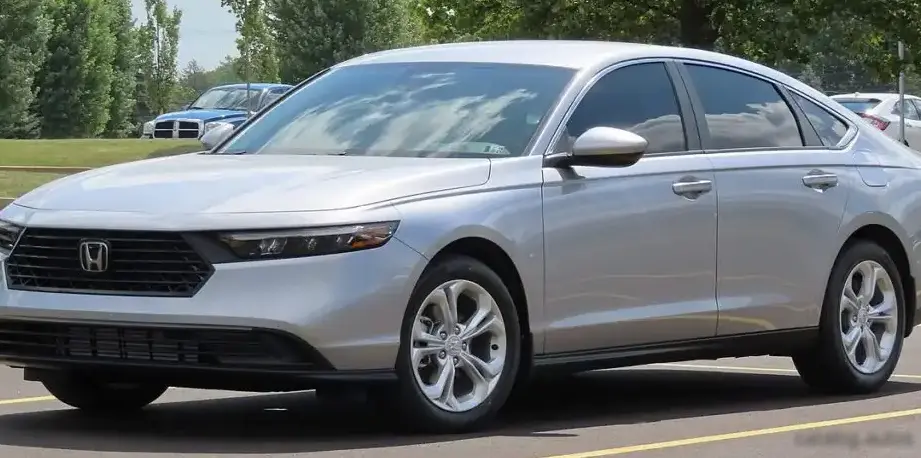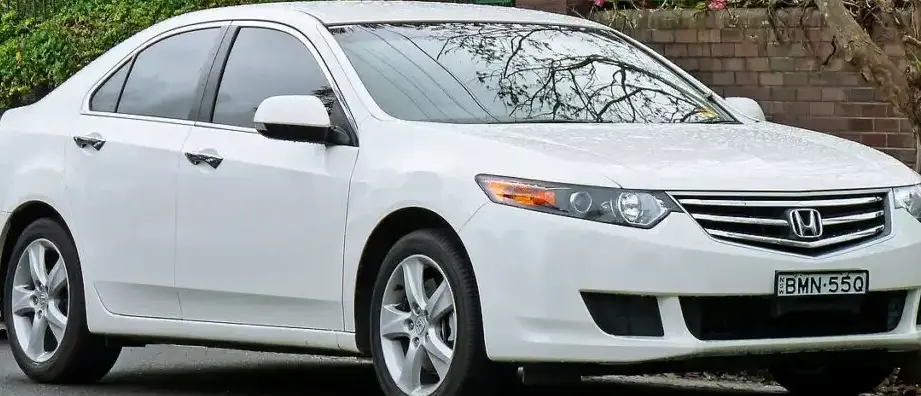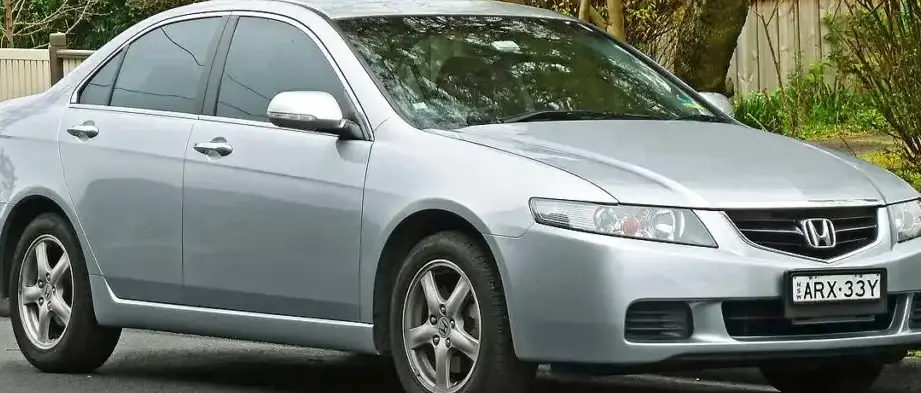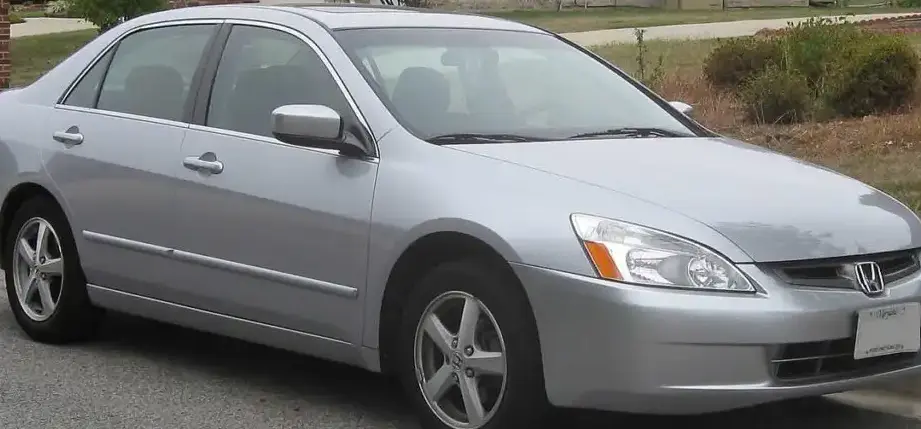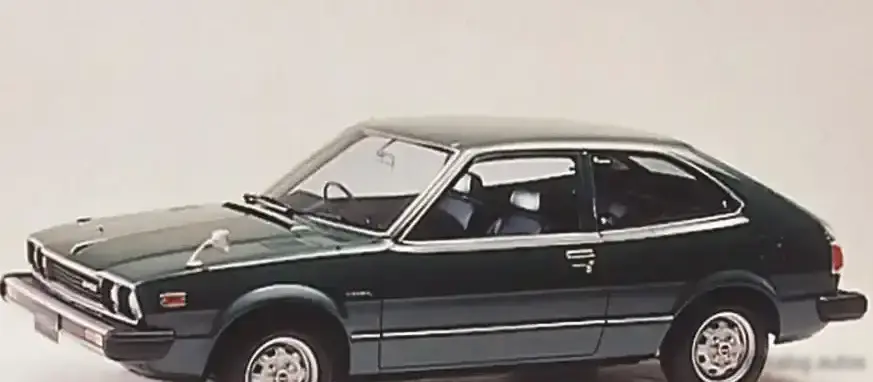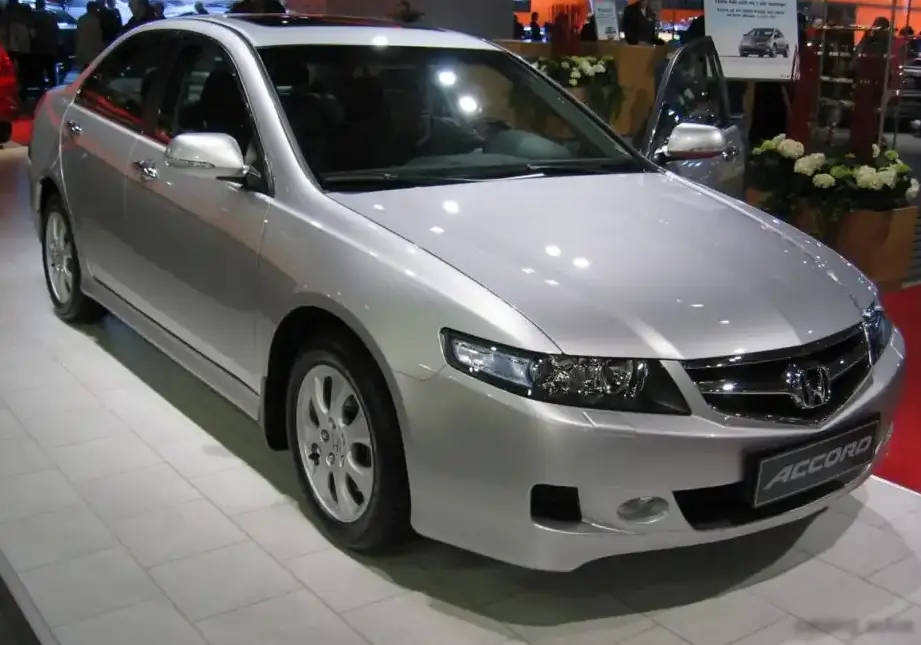
The Honda Accord VII, produced between 2002 and 2007, represented a significant evolution for Honda’s popular mid-size sedan. Within the seventh generation (internally designated as the CL7/CL8 for the Japanese market and largely similar globally), the 2.0 i-VTEC 16V variant with an automatic transmission occupied a middle ground in the lineup, offering a balance between performance and affordability. This model aimed to provide a comfortable and efficient driving experience for families and commuters, while still benefiting from Honda’s reputation for reliability. It was a key offering in North American and European markets, where the Accord competed directly with rivals like the Toyota Camry, Ford Mondeo, and Volkswagen Passat.
Technical Specifications
| Brand | Honda |
| Model | Accord |
| Generation | Accord VII |
| Type (Engine) | 2.0 i-VTEC 16V (155 Hp) Automatic |
| Start of production | 2002 |
| End of production | 2007 |
| Powertrain Architecture | Internal Combustion engine |
| Body type | Sedan |
| Seats | 5 |
| Doors | 4 |
| Fuel consumption (urban) | 11.6 l/100 km (20.3 US mpg) |
| Fuel consumption (extra urban) | 6.2 l/100 km (37.9 US mpg) |
| Fuel consumption (combined) | 8 l/100 km (29.4 US mpg) |
| Fuel Type | Petrol (Gasoline) |
| Acceleration 0 – 100 km/h | 10.5 sec |
| Acceleration 0 – 62 mph | 10.5 sec |
| Acceleration 0 – 60 mph | 10 sec |
| Maximum speed | 215 km/h (133.59 mph) |
| Weight-to-power ratio | 8.5 kg/Hp |
| Weight-to-torque ratio | 6.9 kg/Nm |
| Power | 155 Hp @ 6000 rpm |
| Torque | 190 Nm @ 4500 rpm (140.14 lb.-ft. @ 4500 rpm) |
| Engine layout | Front, Transverse |
| Engine Model/Code | K20 |
| Engine displacement | 1998 cm3 (121.93 cu. in.) |
| Number of cylinders | 4 |
| Engine configuration | Inline |
| Cylinder Bore | 86 mm (3.39 in.) |
| Piston Stroke | 86 mm (3.39 in.) |
| Compression ratio | 9.8:1 |
| Number of valves per cylinder | 4 |
| Fuel injection system | Multi-port manifold injection |
| Engine aspiration | Naturally aspirated engine |
| Valvetrain | DOHC |
| Engine oil capacity | 4.2 l (4.44 US qt | 3.7 UK qt) |
| Coolant capacity | 4.4 l (4.65 US qt | 3.87 UK qt) |
| Kerb Weight | 1320 kg (2910.1 lbs.) |
| Max. weight | 1920 kg (4232.88 lbs.) |
| Max load | 600 kg (1322.77 lbs.) |
| Trunk (boot) space – minimum | 459 l (16.21 cu. ft.) |
| Fuel tank capacity | 65 l (17.17 US gal | 14.3 UK gal) |
| Length | 4665 mm (183.66 in.) |
| Width | 1760 mm (69.29 in.) |
| Height | 1445 mm (56.89 in.) |
| Wheelbase | 2670 mm (105.12 in.) |
| Front track | 1515 mm (59.65 in.) |
| Rear (Back) track | 1510 mm (59.45 in.) |
| Drivetrain Architecture | Front wheel drive |
| Number of gears and type of gearbox | 5 gears, automatic transmission |
| Front suspension | Double wishbone |
| Rear suspension | Several levers and rods |
| Front brakes | Ventilated discs |
| Rear brakes | Disc |
| Assisting systems | ABS (Anti-lock braking system) |
| Steering type | Steering rack and pinion |
| Power steering | Hydraulic Steering |
| Tires size | 195/65 R15 |
| Wheel rims size | 15 |
Powertrain & Engine Architecture
The heart of the Accord VII 2.0 i-VTEC Automatic is the K20 engine, a 1.998-liter inline-four cylinder powerplant. This engine is a naturally aspirated design, utilizing Honda’s innovative i-VTEC (intelligent Variable Valve Timing and Lift Electronic Control) system. The i-VTEC system allows for variable control of both valve timing and lift, optimizing engine performance across a wider RPM range. At lower engine speeds, the system operates in an economy mode, prioritizing fuel efficiency. As the engine speed increases, the system switches to a high-performance mode, increasing valve lift and optimizing airflow for greater power output. Fuel delivery is managed by a multi-point fuel injection system. The engine’s 9.8:1 compression ratio contributes to its balance of power and efficiency. Paired with the K20 engine is a 5-speed automatic transmission. This transmission was designed for smooth shifting and comfortable cruising, prioritizing ease of use over outright performance. The automatic transmission featured Honda’s “Grade Logic Control,” which automatically selects the appropriate gear based on road incline and vehicle load.
Driving Characteristics
The 2.0 i-VTEC Automatic Accord offered a comfortable and refined driving experience. With 155 horsepower and 190 Nm (140 lb-ft) of torque, acceleration was adequate for everyday driving, with a 0-60 mph time of around 10 seconds. However, it wasn’t a particularly sporty configuration. Compared to the manual transmission version of the same engine, the automatic resulted in a slight performance decrease due to the inherent losses in the torque converter. The automatic transmission’s gear ratios were tuned for fuel economy and smooth operation, rather than aggressive acceleration. The power delivery was linear and predictable, making it easy to modulate the throttle. The suspension, tuned for comfort, absorbed bumps and imperfections in the road well, providing a stable and controlled ride. Steering was light and precise, making the car easy to maneuver in urban environments.
Equipment & Trim Levels
The 2.0 i-VTEC Automatic trim typically included standard features such as air conditioning, power windows and locks, a CD player, and ABS brakes. Higher trim levels, often denoted with designations like “EX” or “LX” (depending on the market), added features like alloy wheels, a sunroof, upgraded audio systems, and cruise control. Interior upholstery was typically cloth, with optional leather available on higher trims. The dashboard layout was functional and ergonomically designed, with easy-to-read gauges and intuitive controls. Optional extras included a navigation system, heated seats, and a premium sound system.
Chassis & Braking
The Accord VII utilized a front-engine, front-wheel-drive layout. The front suspension employed a double wishbone design, providing good handling and ride comfort. The rear suspension featured a multi-link setup, further enhancing ride quality and stability. Braking duties were handled by ventilated discs at the front and solid discs at the rear. ABS (Anti-lock Braking System) was standard, providing enhanced braking performance and control in emergency situations. The chassis was designed to provide a balance between rigidity and weight, contributing to the car’s overall handling characteristics.
Market Reception & Comparison
The Honda Accord VII 2.0 i-VTEC Automatic was generally well-received by automotive critics. It was praised for its reliability, fuel efficiency, and comfortable ride. However, some critics noted that the automatic transmission dulled the engine’s performance compared to the manual version. Compared to other trims in the Accord lineup, the 2.0 i-VTEC Automatic offered a more affordable entry point, making it attractive to budget-conscious buyers. The higher-output 2.4-liter engine offered more performance, while the diesel variants (available in Europe) provided superior fuel economy. In terms of reliability, the K20 engine proved to be exceptionally durable, with many examples exceeding 200,000 miles with proper maintenance.
Legacy
The Honda Accord VII 2.0 i-VTEC Automatic remains a popular choice in the used car market today. Its reputation for reliability and affordability makes it an attractive option for buyers seeking a dependable and economical mid-size sedan. The K20 engine is known for its longevity and relatively low maintenance costs. While not the sportiest version of the Accord VII, the 2.0 i-VTEC Automatic provides a comfortable and practical driving experience that continues to appeal to a wide range of drivers. Parts availability is generally good, and the car’s simple design makes it relatively easy to maintain and repair.