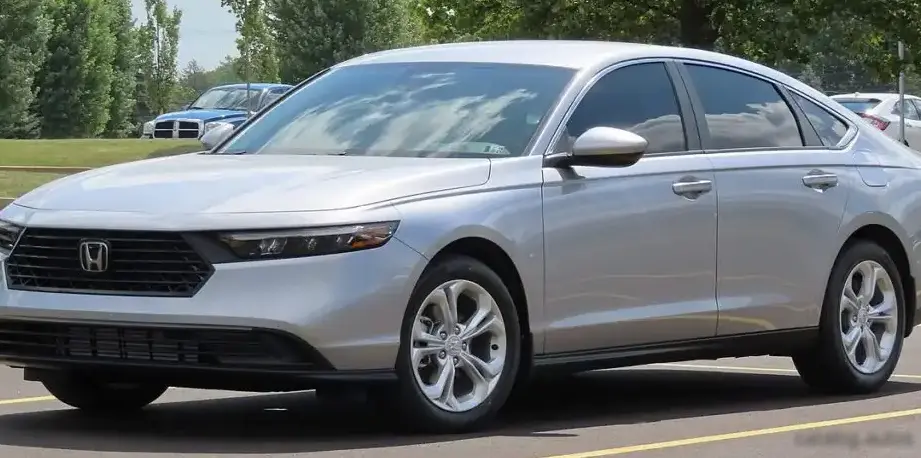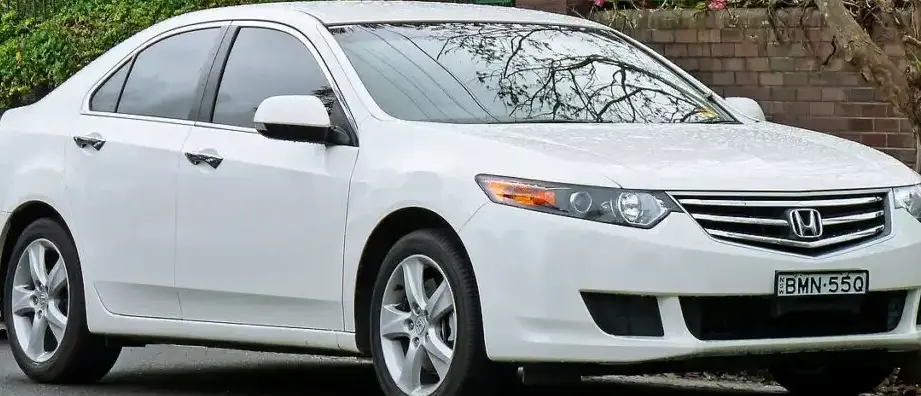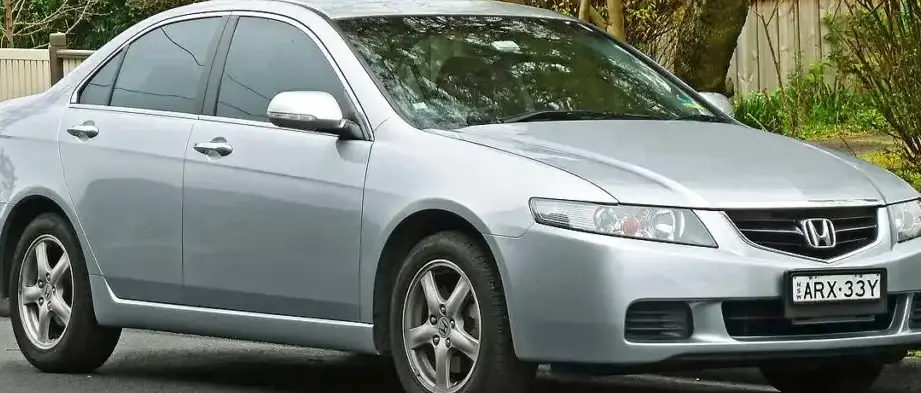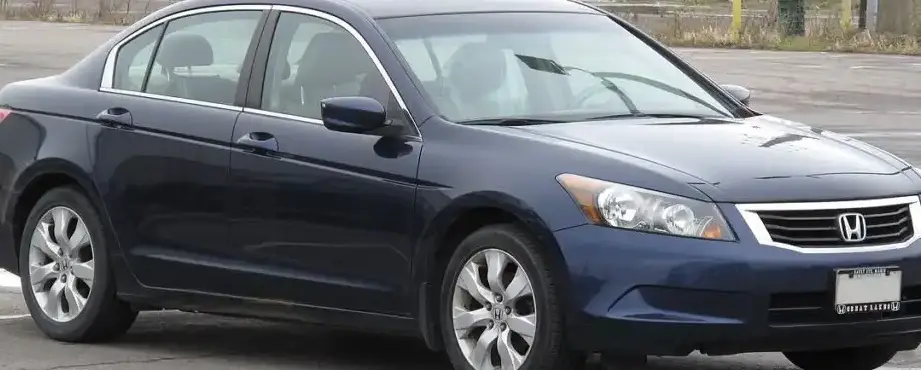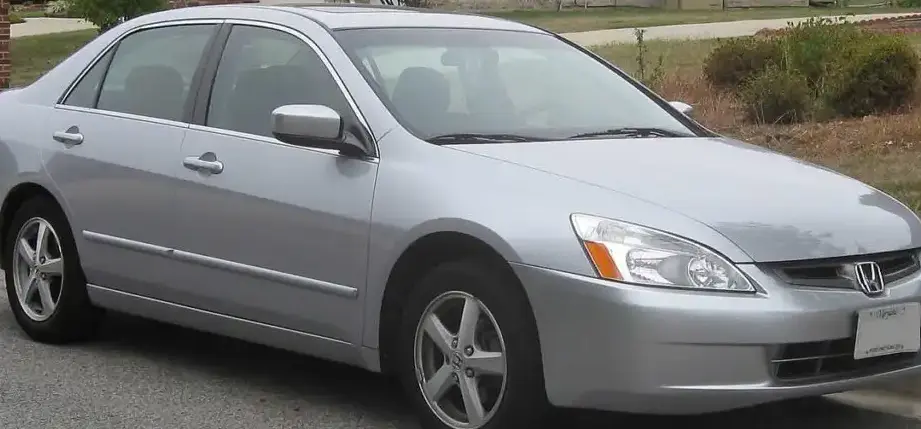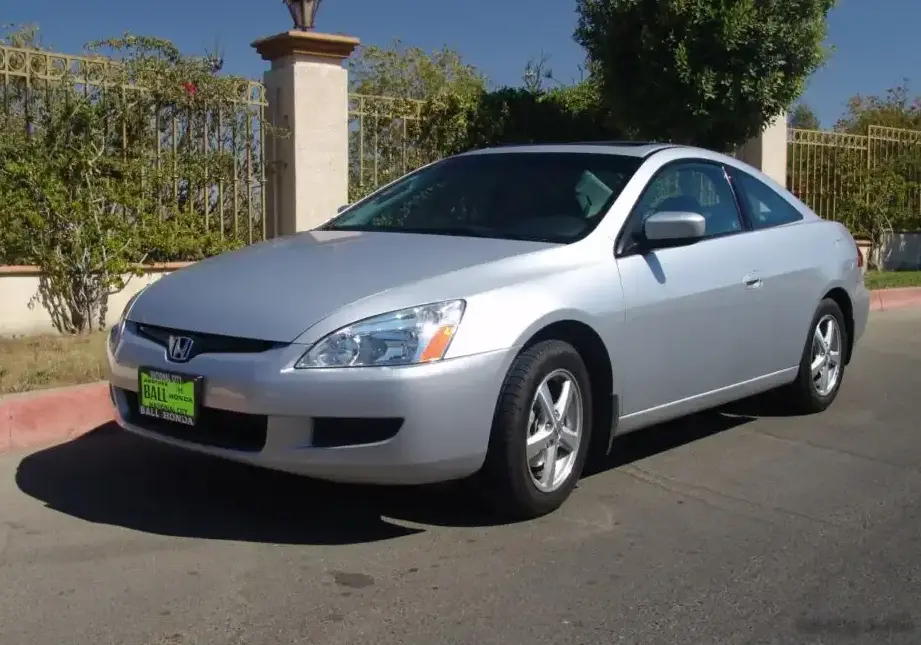
The Honda Accord VII Coupe 3.0 V6 VTEC Automatic, produced from July 2002 to August 2005, represented the performance-oriented pinnacle of the seventh-generation Accord Coupe lineup in North America. Positioned as the premium trim, it offered a significant step up in power and refinement compared to the four-cylinder models. This two-door variant, built on the Accord (CL) platform, aimed to blend sporty styling with Honda’s reputation for reliability and practicality. It was a direct competitor to vehicles like the Ford Mustang, Nissan Maxima, and Toyota Camry Solara, offering a more sophisticated alternative with a focus on a comfortable driving experience.
Technical Specifications
| Brand | Honda |
| Model | Accord |
| Generation | Accord VII Coupe |
| Type (Engine) | 3.0 V6 VTEC (240 Hp) Automatic |
| Start of production | July, 2002 |
| End of production | August, 2005 |
| Powertrain Architecture | Internal Combustion engine |
| Body type | Coupe |
| Seats | 5 |
| Doors | 2 |
| Fuel consumption (economy) – urban (EPA) | 11.2 l/100 km (21 US mpg) |
| Fuel consumption (economy) – extra urban (EPA) | 7.8 l/100 km (30.2 US mpg) |
| Fuel Type | Petrol (Gasoline) |
| Emission standard | LEV-2 ULEV |
| Weight-to-power ratio | 6.3 kg/Hp, 159.3 Hp/tonne |
| Weight-to-torque ratio | 5.3 kg/Nm, 190.4 Nm/tonne |
| Power | 240 Hp @ 6250 rpm |
| Power per litre | 80.1 Hp/l |
| Torque | 287 Nm @ 5000 rpm (211.68 lb.-ft. @ 5000 rpm) |
| Engine layout | Front, Transverse |
| Engine Model/Code | J30A4 |
| Engine displacement | 2997 cm3 (182.89 cu. in.) |
| Number of cylinders | 6 |
| Engine configuration | V-engine |
| Cylinder Bore | 86 mm (3.39 in.) |
| Piston Stroke | 86 mm (3.39 in.) |
| Compression ratio | 10:1 |
| Number of valves per cylinder | 4 |
| Fuel injection system | Multi-port manifold injection |
| Engine aspiration | Naturally aspirated engine |
| Valvetrain | SOHC, VTEC |
| Engine oil capacity | 4.3 l (4.54 US qt | 3.78 UK qt) |
| Coolant | 8.4 l (8.88 US qt | 7.39 UK qt) |
| Kerb Weight | 1507 kg (3322.37 lbs.) |
| Max. weight | 1950 kg (4299.01 lbs.) |
| Max load | 443 kg (976.65 lbs.) |
| Trunk (boot) space – minimum | 371 l (13.1 cu. ft.) |
| Fuel tank capacity | 64.7 l (17.09 US gal | 14.23 UK gal) |
| Length | 4766 mm (187.64 in.) |
| Width | 1810 mm (71.26 in.) |
| Height | 1415 mm (55.71 in.) |
| Wheelbase | 2670 mm (105.12 in.) |
| Front track | 1553 mm (61.14 in.) |
| Rear (Back) track | 1554 mm (61.18 in.) |
| Minimum turning circle (turning diameter) | 10.8 m (35.43 ft.) |
| Drivetrain Architecture | The Internal combustion engine (ICE) drives the front wheels of the vehicle. |
| Drive wheel | Front wheel drive |
| Number of gears and type of gearbox | 5 gears, automatic transmission |
| Front suspension | Coil spring, Double wishbone, Transverse stabilizer |
| Rear suspension | Independent multi-link spring suspension with stabilizer |
| Front brakes | Ventilated discs, 282 mm |
| Rear brakes | Disc, 259 mm |
| Assisting systems | ABS (Anti-lock braking system) |
| Steering type | Steering rack and pinion |
| Power steering | Hydraulic Steering |
| Tires size | 205/60 R16 |
| Wheel rims size | 6.5J x 16 |
Powertrain & Engine Architecture
The heart of the Accord VII Coupe 3.0 V6 was the J30A4 engine, a 3.0-liter, naturally aspirated V6. This engine featured Honda’s Variable Valve Timing and Lift Electronic Control (VTEC) system, which optimized valve timing for both low-end torque and high-rpm power. The J30A4 utilized a single overhead camshaft (SOHC) design per cylinder bank and multi-point fuel injection. The engine produced 240 horsepower at 6250 rpm and 287 Nm (211.68 lb-ft) of torque at 5000 rpm. The engine was transversely mounted, driving the front wheels. Paired with the J30A4 was a five-speed automatic transmission, chosen for its smooth operation and ease of use, catering to the American market’s preference for automatics. This transmission was not known for particularly sporty shift patterns, prioritizing comfort over aggressive downshifts.
Driving Characteristics
The 3.0 V6 Automatic Accord Coupe delivered brisk acceleration, capable of reaching 60 mph in around 7.2 seconds. While not a sports car, the engine provided ample power for highway passing and merging. The automatic transmission, while smooth, did result in some power loss compared to the available five-speed manual. The gear ratios were tuned for comfortable cruising, with a focus on fuel efficiency rather than maximizing performance. Compared to the base 2.4-liter four-cylinder models, the V6 offered a significantly more refined and powerful driving experience. The heavier V6 engine did slightly impact handling, making the car feel less nimble than its four-cylinder counterparts, but the upgraded suspension helped mitigate this.
Equipment & Trim Levels
The 3.0 V6 VTEC Automatic trim was the top-of-the-line Accord Coupe, and came standard with a generous list of features. These included leather upholstery, power-adjustable front seats, a premium sound system, automatic climate control, and alloy wheels. Optional extras included a sunroof, navigation system, and upgraded audio components. The interior featured a woodgrain trim and a generally upscale feel, differentiating it from the more basic Accord trims. Safety features such as ABS and front airbags were standard.
Chassis & Braking
The Accord Coupe utilized a MacPherson strut front suspension and an independent multi-link rear suspension. The V6 models received slightly stiffer springs and dampers compared to the four-cylinder versions to handle the increased weight and power. Braking duties were handled by ventilated discs at the front and solid discs at the rear. ABS was standard. The suspension setup provided a comfortable ride while maintaining reasonable handling characteristics. The steering was hydraulic power-assisted rack and pinion, offering a good balance of feel and ease of use.
Market Reception & Comparison
The Accord VII Coupe 3.0 V6 VTEC Automatic was generally well-received by automotive critics. It was praised for its powerful engine, comfortable ride, and spacious interior. However, some reviewers noted that the automatic transmission lacked the responsiveness of the manual gearbox. Fuel economy was considered average for its class, with EPA estimates of 21 mpg city and 30 mpg highway. Compared to the four-cylinder Accord Coupes, the V6 offered a significant performance upgrade but came at a higher price point and with slightly lower fuel efficiency. Reliability was a strong point, consistent with Honda’s reputation.
Legacy
The J30A4 engine, when properly maintained, proved to be a durable and reliable powerplant. The automatic transmission, while not known for being particularly exciting, also demonstrated good longevity. Today, the Accord VII Coupe 3.0 V6 VTEC Automatic remains a popular choice in the used car market, particularly among those seeking a comfortable and reliable coupe with a strong engine. Parts availability is generally good, and maintenance costs are reasonable. While not a collector’s item, well-maintained examples hold their value reasonably well, representing a solid and dependable choice for buyers looking for a classic early 2000s Honda.