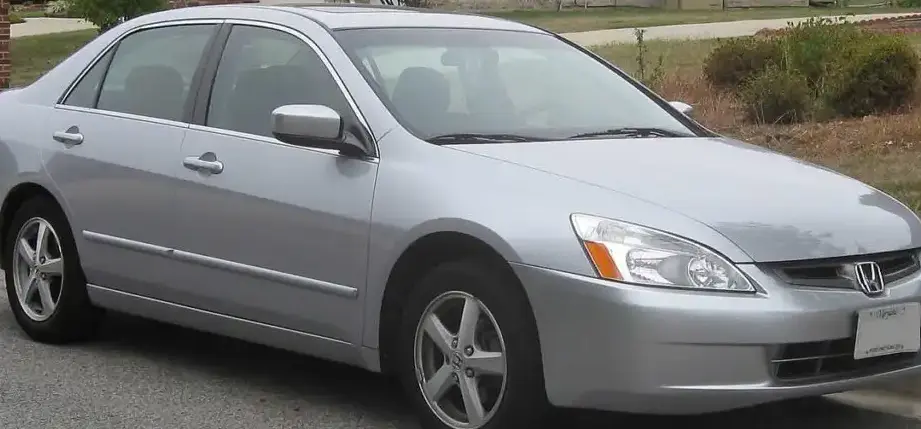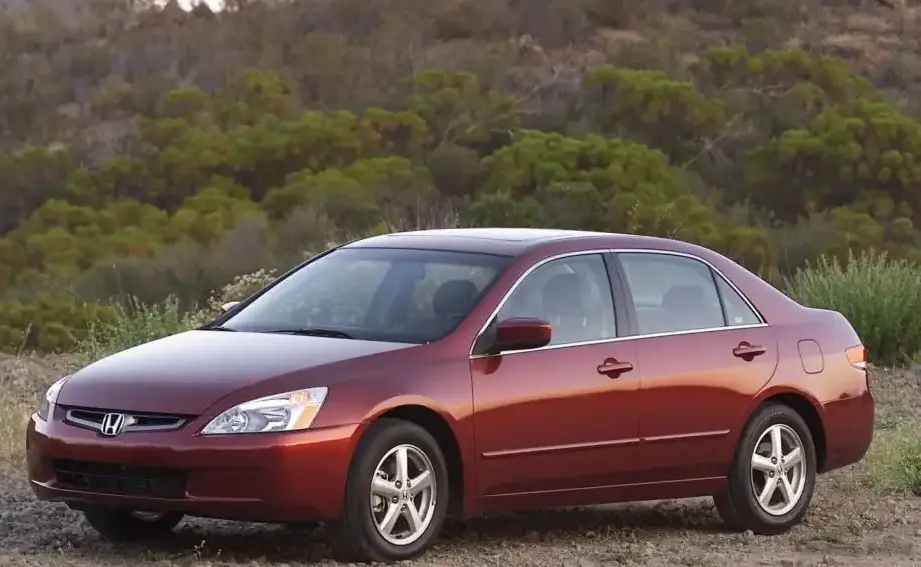
The Honda Accord VII North American market, specifically the 3.0 V6 i-VTEC (255 Hp) IMA Hybrid Automatic variant, represented a significant step forward in Honda’s commitment to fuel efficiency and performance. Produced for a limited time between December 2004 and August 2005, this model combined a traditional gasoline engine with Honda’s Integrated Motor Assist (IMA) hybrid technology. It occupied a premium position within the seventh-generation Accord lineup, offering a blend of power, refinement, and environmental consciousness not found in other trims. This vehicle was part of the broader Accord VII generation (2003-2007) designed primarily for the North American market, differing significantly from the European and Japanese models.
Technical Specifications
| Brand | Honda |
| Model | Accord |
| Generation | Accord VII (North America) |
| Type (Engine) | 3.0 V6 i-VTEC (255 Hp) IMA Hybrid Automatic |
| Start of production | December, 2004 |
| End of production | August, 2005 |
| Powertrain Architecture | MHEV (Mild Hybrid Electric Vehicle) |
| Body type | Sedan |
| Seats | 5 |
| Doors | 4 |
| Fuel consumption (urban) | 7.8 l/100 km (30.2 US mpg) |
| Fuel consumption (extra urban) | 6.4 l/100 km (36.8 US mpg) |
| Fuel Type | Petrol (Gasoline) |
| Emission standard | ULEV-2 |
| Weight-to-power ratio | 6.2 kg/Hp |
| Weight-to-torque ratio | 5 kg/Nm |
| Gross battery capacity | 0.9 kWh |
| Battery voltage | 144 V |
| Battery technology | Nickel-metal hydride (NiMH) |
| Electric motor power | 16 Hp @ 840 rpm |
| Electric motor Torque | 136 Nm @ 840 rpm (100.31 lb.-ft. @ 840 rpm) |
| System power | 255 Hp @ 6000 rpm |
| System torque | 315 Nm @ 5000 rpm (232.33 lb.-ft. @ 5000 rpm) |
| Engine Power | 240 Hp @ 6250 rpm |
| Engine Torque | 287 Nm @ 5000 rpm (211.68 lb.-ft. @ 5000 rpm) |
| Engine displacement | 2997 cm3 (182.89 cu. in.) |
| Number of cylinders | 6 |
| Engine configuration | V-engine |
| Cylinder Bore | 86 mm (3.39 in.) |
| Piston Stroke | 86 mm (3.39 in.) |
| Compression ratio | 10.5:1 |
| Fuel injection system | Multi-port manifold injection |
| Engine oil capacity | 4.3 l (4.54 US qt | 3.78 UK qt) |
| Coolant capacity | 8.4 l (8.88 US qt | 7.39 UK qt) |
| Kerb Weight | 1588 kg (3500.94 lbs.) |
| Max. weight | 2020 kg (4453.34 lbs.) |
| Trunk (boot) space | 317 l (11.19 cu. ft.) |
| Fuel tank capacity | 64.7 l (17.09 US gal | 14.23 UK gal) |
| Length | 4813 mm (189.49 in.) |
| Width | 1820 mm (71.65 in.) |
| Height | 1453 mm (57.2 in.) |
| Wheelbase | 2740 mm (107.87 in.) |
| Number of gears | 5 |
| Gearbox type | Automatic transmission |
Powertrain & Engine Architecture
At the heart of the Accord Hybrid was the JNA1 3.0-liter V6 engine, producing 240 horsepower and 211 lb-ft of torque. This engine featured Honda’s i-VTEC (Intelligent Variable Timing and Lift Electronic Control) technology, optimizing valve timing and lift for improved performance and fuel efficiency. The i-VTEC system allowed for a switch between two distinct camshaft profiles, providing both low-end torque and high-end power. The engine utilized a multi-port fuel injection system for precise fuel delivery. Integrated with the engine was Honda’s IMA system, consisting of a 16-horsepower electric motor and a 144-volt nickel-metal hydride battery pack. The battery was strategically located behind the rear seat, minimizing intrusion into the trunk space. The electric motor provided supplemental power during acceleration and allowed for regenerative braking, capturing energy normally lost during deceleration to recharge the battery. The combined system output was rated at 255 horsepower and 232 lb-ft of torque.
Driving Characteristics
The 3.0L V6 Hybrid Automatic Accord offered a unique driving experience. The electric motor provided instant torque, supplementing the gasoline engine during initial acceleration, resulting in a surprisingly responsive feel. While not as overtly sporty as the manual transmission or the V6 models without the hybrid system, the automatic transmission provided smooth and seamless gear changes. The five-speed automatic was tuned for efficiency, prioritizing fuel economy over aggressive shifting. The IMA system allowed for brief periods of electric-only driving at low speeds, further enhancing fuel efficiency. Compared to the standard 3.0L V6 automatic, the hybrid model offered similar overall performance but with a noticeable improvement in fuel economy.
Equipment & Trim Levels
The Accord Hybrid was typically offered in a well-equipped trim level, often positioned as a step above the base models but below the fully loaded trims. Standard features included leather upholstery, alloy wheels, a premium audio system, automatic climate control, and power-adjustable front seats. Optional extras often included a navigation system, sunroof, and upgraded sound system. The interior design was generally consistent with other Accord VII models, featuring a functional and comfortable layout. The hybrid-specific instrumentation included displays showing battery charge levels and power distribution between the engine and electric motor.
Chassis & Braking
The Accord Hybrid utilized a front-wheel-drive layout with a coil spring, double wishbone suspension in the front and an independent multi-link suspension in the rear. Both suspensions incorporated a transverse stabilizer bar to reduce body roll during cornering. The braking system consisted of ventilated discs in the front and solid discs in the rear. Anti-lock brakes (ABS) were standard equipment. The suspension tuning was geared towards providing a comfortable ride, prioritizing smoothness over outright handling prowess. The chassis was reinforced in certain areas to accommodate the added weight of the hybrid components.
Market Reception & Comparison
The Honda Accord Hybrid received generally positive reviews from automotive critics. It was praised for its fuel efficiency, smooth ride, and refined interior. However, some critics noted that the hybrid system added to the vehicle’s cost and complexity. Compared to the standard 3.0L V6 Accord, the hybrid model offered comparable performance with significantly improved fuel economy. Against competitors like the Toyota Camry Hybrid, the Accord Hybrid offered a more engaging driving experience, but the Camry often had a slight edge in fuel economy. The ULEV-2 emission standard demonstrated Honda’s commitment to reducing emissions.
Legacy
The Honda Accord VII Hybrid, while produced for a relatively short period, played a crucial role in establishing Honda as a leader in hybrid technology. The powertrain proved to be reasonably reliable, with the primary concerns revolving around the longevity of the nickel-metal hydride battery pack. In the used car market today, these Accords are sought after by buyers looking for a fuel-efficient and reliable mid-size sedan. The IMA system, while not as sophisticated as later hybrid technologies, represented a significant step forward in automotive engineering and paved the way for Honda’s continued development of hybrid and electric vehicles. Proper maintenance, particularly regarding the battery cooling system, is key to ensuring the long-term health of these vehicles.