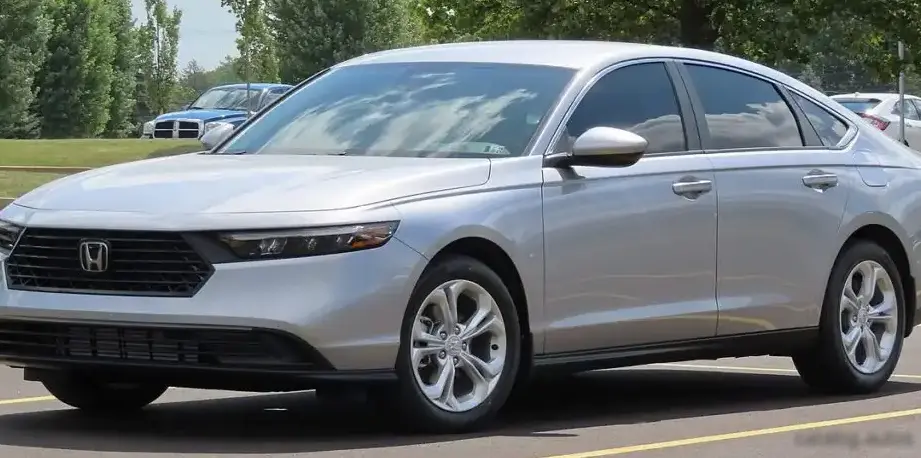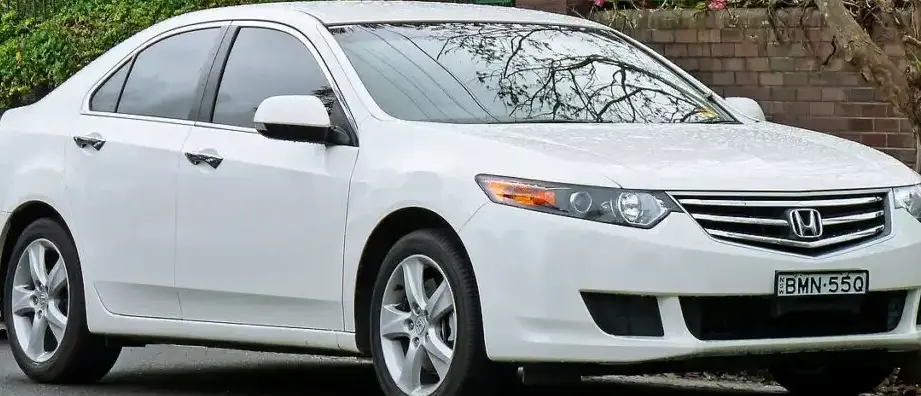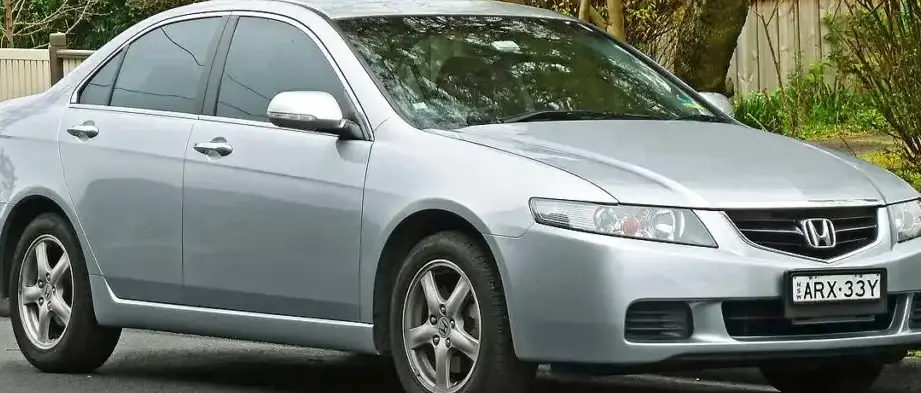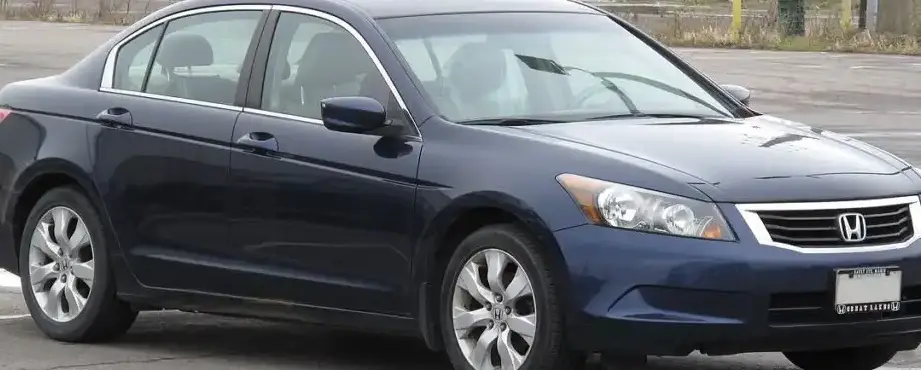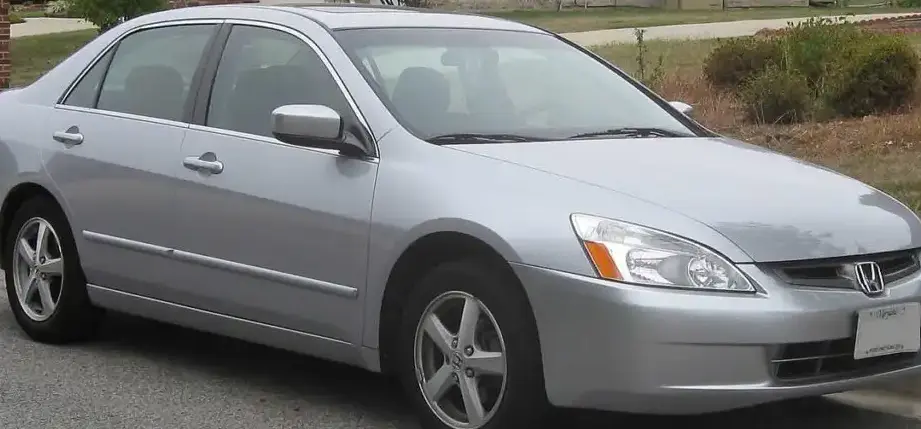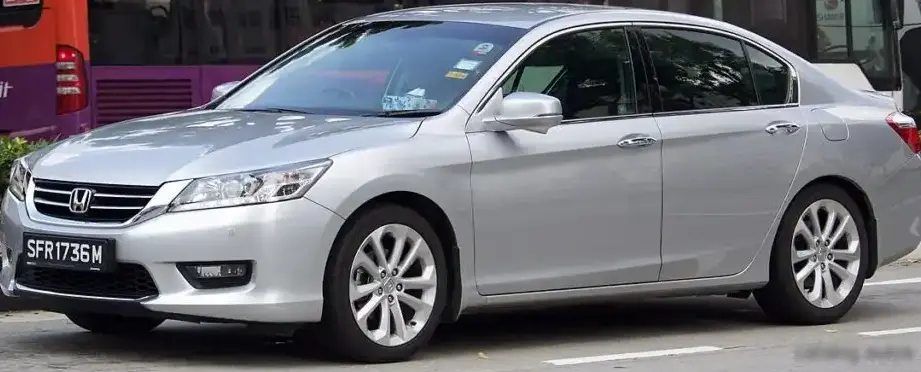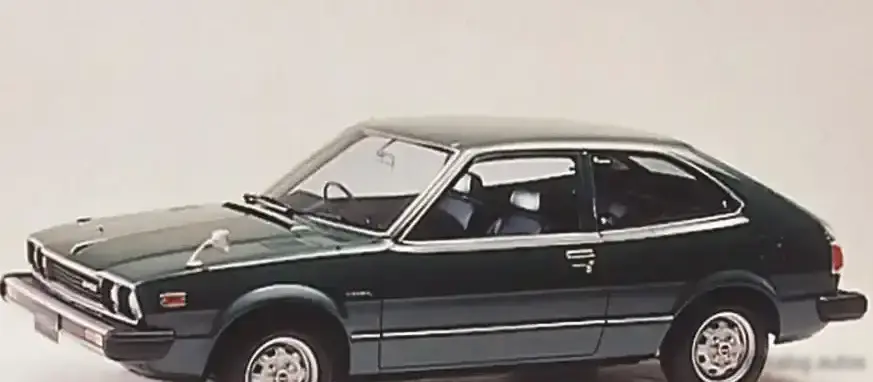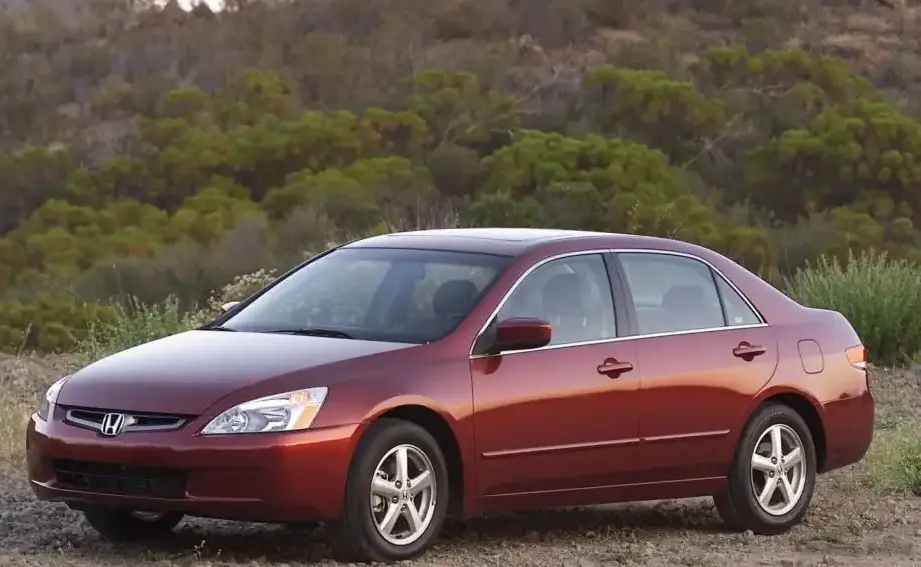
The Honda Accord VII North American market, produced from July 2002 to August 2005, represented a significant evolution for Honda’s mid-size sedan. Within the seventh generation (2003-2007), the 3.0 V6 VTEC Automatic variant occupied the premium position in the lineup, offering a substantial performance upgrade over the four-cylinder models and the lower-trim V6 options. This model was designed to appeal to buyers seeking a blend of comfort, refinement, and spirited driving dynamics, competing directly with offerings from Toyota, Nissan, and Ford in the highly competitive American family sedan segment.
Technical Specifications
| Brand | Honda |
| Model | Accord |
| Generation | Accord VII (North America) |
| Type (Engine) | 3.0 V6 VTEC (240 Hp) Automatic |
| Start of production | July, 2002 |
| End of production | August, 2005 |
| Powertrain Architecture | Internal Combustion engine |
| Body type | Sedan |
| Seats | 5 |
| Doors | 4 |
| Fuel consumption (economy) – urban (EPA) | 11.2 l/100 km (21 US mpg) |
| Fuel consumption (economy) – extra urban (EPA) | 7.8 l/100 km (30.2 US mpg) |
| Fuel Type | Petrol (Gasoline) |
| Emission standard | LEV-2 ULEV |
| Weight-to-power ratio | 6.3 kg/Hp |
| Weight-to-torque ratio | 5.2 kg/Nm |
| Power | 240 Hp @ 6250 rpm |
| Power per litre | 80.1 Hp/l |
| Torque | 287 Nm @ 5000 rpm (211.68 lb.-ft. @ 5000 rpm) |
| Engine layout | Front, Transverse |
| Engine Model/Code | J30A4 |
| Engine displacement | 2997 cm3 (182.89 cu. in.) |
| Number of cylinders | 6 |
| Engine configuration | V-engine |
| Cylinder Bore | 86 mm (3.39 in.) |
| Piston Stroke | 86 mm (3.39 in.) |
| Compression ratio | 10:1 |
| Number of valves per cylinder | 4 |
| Fuel injection system | Multi-port manifold injection |
| Engine aspiration | Naturally aspirated engine |
| Valvetrain | SOHC, VTEC |
| Engine oil capacity | 4.3 l (4.54 US qt | 3.78 UK qt) |
| Coolant | 8.4 l (8.88 US qt | 7.39 UK qt) |
| Kerb Weight | 1504-1536 kg (3315.75 – 3386.3 lbs.) |
| Max. weight | 1950 kg (4299.01 lbs.) |
| Max load | 414-446 kg (912.71 – 983.26 lbs.) |
| Trunk (boot) space – minimum | 396 l (13.98 cu. ft.) |
| Fuel tank capacity | 64.7 l (17.09 US gal | 14.23 UK gal) |
| Length | 4813 mm (189.49 in.) |
| Width | 1814 mm (71.42 in.) |
| Height | 1449 mm (57.05 in.) |
| Wheelbase | 2740 mm (107.87 in.) |
| Front track | 1553 mm (61.14 in.) |
| Rear (Back) track | 1554 mm (61.18 in.) |
| Minimum turning circle (turning diameter) | 11 m (36.09 ft.) |
| Drivetrain Architecture | The Internal combustion engine (ICE) drives the front wheels of the vehicle. |
| Drive wheel | Front wheel drive |
| Number of gears and type of gearbox | 5 gears, automatic transmission |
| Front suspension | Coil spring, Double wishbone, Transverse stabilizer |
| Rear suspension | Independent multi-link spring suspension with stabilizer |
| Front brakes | Ventilated discs, 282 mm |
| Rear brakes | Disc, 259 mm |
| Assisting systems | ABS (Anti-lock braking system) |
| Steering type | Steering rack and pinion |
| Power steering | Hydraulic Steering |
| Tires size | 205/60 R16 |
| Wheel rims size | 6.5J x 16 |
Powertrain & Engine Architecture
The heart of the 3.0 V6 VTEC Automatic Accord was the J30A4 engine, a 2,997 cc (182.89 cubic inches) naturally aspirated V6. This engine utilized Honda’s Variable Valve Timing and Lift Electronic Control (VTEC) system on both the intake and exhaust valves, allowing for optimized performance across the rev range. The VTEC system switched between two distinct camshaft profiles – a lower-lift, lower-duration profile for fuel efficiency at low speeds, and a higher-lift, longer-duration profile for increased power at higher RPMs. Fuel delivery was managed by a multi-port fuel injection system. The engine featured a single overhead camshaft (SOHC) design. Paired with the J30A4 was a five-speed automatic transmission, chosen for its smooth operation and ease of use, catering to the American preference for automatic gearboxes. This transmission was specifically tuned to complement the V6’s power delivery, offering relatively quick shifts but prioritizing comfort over outright performance.
Driving Characteristics
The 3.0 V6 Automatic Accord delivered a noticeably more engaging driving experience than its four-cylinder counterparts. With 240 horsepower and 211.68 lb-ft of torque, acceleration was brisk, allowing for confident merging and overtaking maneuvers. While not a sports car, the V6 provided ample power for everyday driving and even some spirited driving on winding roads. The automatic transmission, while smooth, did result in some power loss compared to the available manual transmission. Gear ratios were optimized for a balance of acceleration and fuel economy, with a relatively tall final drive. Compared to the later V6 models with more aggressive tuning, the 2002-2005 version prioritized a more refined and comfortable ride.
Equipment & Trim Levels
The 3.0 V6 VTEC Automatic typically came equipped as a higher trim level, often designated as the EX or EX-L. Standard features included power windows, power locks, power mirrors, a premium sound system, cruise control, and air conditioning. The EX-L trim added leather upholstery, a sunroof, and heated front seats. Optional extras included a navigation system, upgraded audio, and alloy wheels. Interior materials were generally of high quality for the segment, with a focus on comfort and durability. The dashboard layout was functional and user-friendly, with logically placed controls.
Chassis & Braking
The Accord VII utilized a front-wheel-drive layout with a fully independent suspension system. The front suspension featured coil springs, double wishbones, and a transverse stabilizer bar, while the rear suspension employed an independent multi-link setup with a stabilizer bar. This suspension configuration provided a comfortable ride while maintaining good handling characteristics. Braking duties were handled by ventilated discs at the front and solid discs at the rear. An Anti-lock Braking System (ABS) was standard, enhancing safety and control during hard braking. The chassis was designed to provide a balance of rigidity and weight reduction, contributing to the car’s overall handling and performance.
Market Reception & Comparison
The 3.0 V6 VTEC Automatic Accord was generally well-received by automotive critics. It was praised for its smooth engine, comfortable ride, spacious interior, and overall refinement. Fuel economy, while not exceptional, was considered acceptable for a V6-powered sedan. Compared to the four-cylinder Accords, the V6 offered a significant performance boost, but at a higher price point. Compared to competitors like the Toyota Camry and Nissan Maxima, the Accord was often seen as offering a more engaging driving experience and a more modern interior design. Reliability was also a strong point, with the J30A4 engine proving to be durable and long-lasting.
Legacy
The Honda Accord VII 3.0 V6 VTEC Automatic has maintained a solid reputation for reliability and durability in the used car market. The J30A4 engine is known for its longevity, and with proper maintenance, can easily exceed 200,000 miles. While not as sought after as some of the more performance-oriented models, the 3.0 V6 Accord remains a popular choice for buyers seeking a comfortable, reliable, and well-equipped mid-size sedan. Parts availability is generally good, and maintenance costs are reasonable, making it a practical and affordable option for many drivers. The model represents a high point in Honda’s commitment to building quality and dependable vehicles.