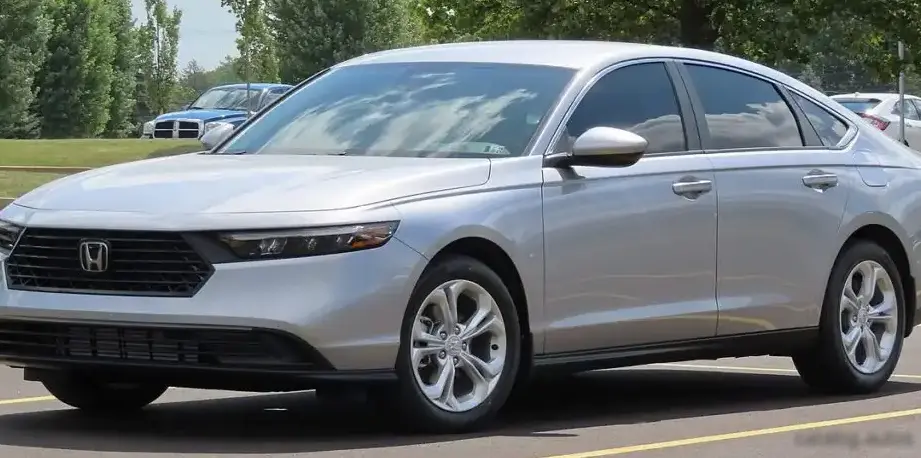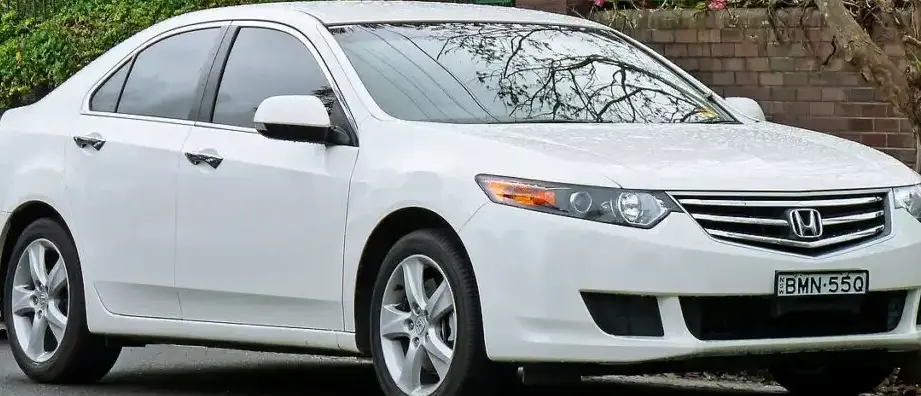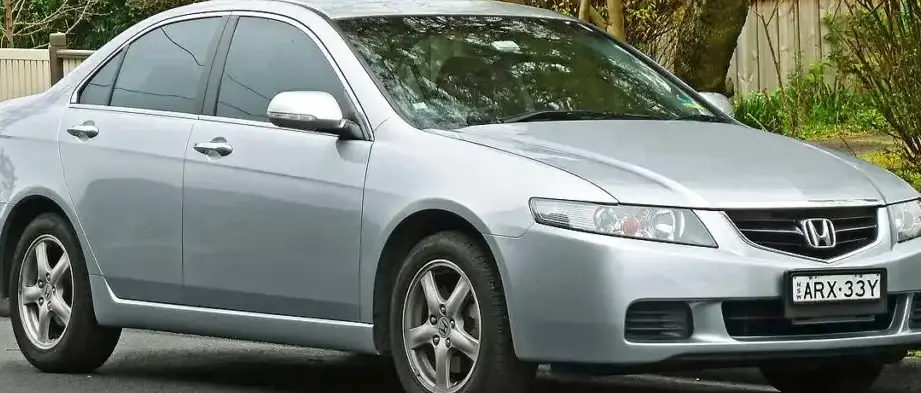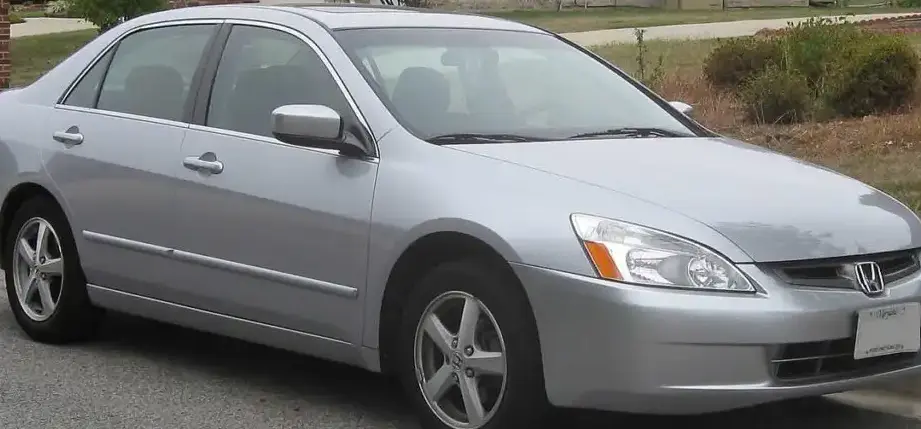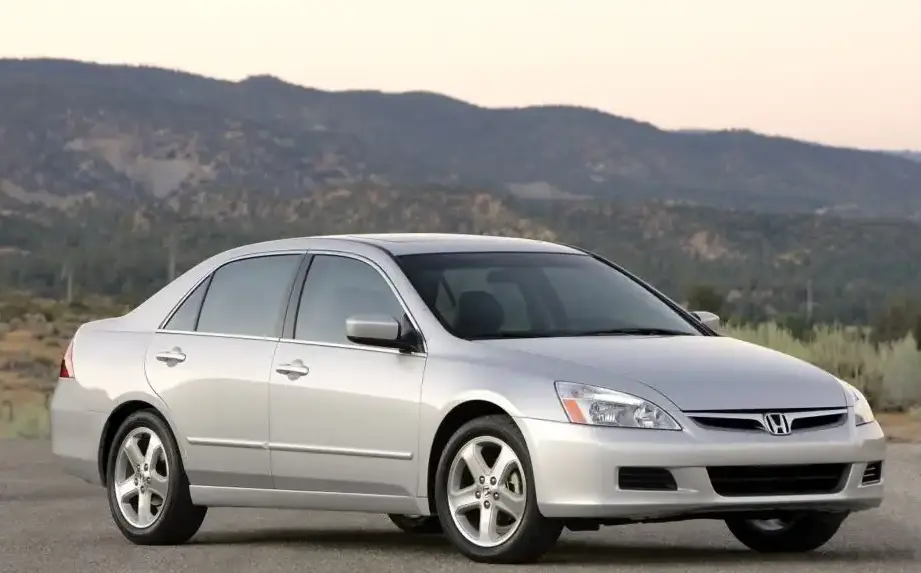
The Honda Accord VII facelift, produced from September 2005 to August 2007 for the North American market, marked a significant advancement in hybrid technology for Honda. This variant, featuring a 3.0-liter V6 i-VTEC engine coupled with Honda’s Integrated Motor Assist (IMA) hybrid system and a 5-speed automatic transmission, was positioned as a premium offering within the seventh-generation Accord lineup. It aimed to deliver a balance of robust performance and enhanced fuel economy, appealing to buyers seeking a sophisticated and environmentally conscious sedan. This model year represented a refresh of the seventh-generation Accord, incorporating updated styling and improved features.
Technical Specifications
| Brand | Honda |
| Model | Accord |
| Generation | Accord VII (North America, facelift 2005) |
| Type (Engine) | 3.0 V6 i-VTEC (253 Hp) IMA Hybrid Automatic |
| Start of production | September, 2005 |
| End of production | August, 2007 |
| Powertrain Architecture | MHEV (Mild Hybrid Electric Vehicle) |
| Body type | Sedan |
| Seats | 5 |
| Doors | 4 |
| Fuel consumption (urban) | 8.4 l/100 km (28 US mpg) |
| Fuel consumption (extra urban) | 6.7 l/100 km (35.1 US mpg) |
| Fuel Type | Petrol (Gasoline) |
| Emission standard | AT-PZEV |
| Weight-to-power ratio | 6.3 kg/Hp |
| Weight-to-torque ratio | 5.1 kg/Nm |
| Gross battery capacity | 0.9 kWh |
| Battery voltage | 144 V |
| Battery technology | Nickel-metal hydride (NiMH) |
| Electric motor power | 16 Hp @ 840 rpm |
| Electric motor Torque | 136 Nm @ 840 rpm (100.31 lb.-ft. @ 840 rpm) |
| System power | 253 Hp @ 6000 rpm |
| System torque | 315 Nm @ 5000 rpm (232.33 lb.-ft. @ 5000 rpm) |
| Engine Power | 240 Hp @ 6250 rpm |
| Engine Torque | 287 Nm @ 5000 rpm (211.68 lb.-ft. @ 5000 rpm) |
| Engine displacement | 2997 cm3 (182.89 cu. in.) |
| Number of cylinders | 6 |
| Cylinder Bore | 86 mm (3.39 in.) |
| Piston Stroke | 86 mm (3.39 in.) |
| Compression ratio | 10.5:1 |
| Engine oil capacity | 4.3 l (4.54 US qt | 3.78 UK qt) |
| Coolant capacity | 8.4 l (8.88 US qt | 7.39 UK qt) |
| Kerb Weight | 1599-1635 kg (3525.19 – 3604.56 lbs.) |
| Max. weight | 2070 kg (4563.57 lbs.) |
| Trunk (boot) space | 317 l (11.19 cu. ft.) |
| Fuel tank capacity | 64.7 l (17.09 US gal | 14.23 UK gal) |
| Length | 4813 mm (189.49 in.) |
| Width | 1814 mm (71.42 in.) |
| Height | 1449 mm (57.05 in.) |
| Wheelbase | 2740 mm (107.87 in.) |
| Tires size | 215/60 R16 |
| Number of gears | 5 |
| Gearbox type | automatic transmission |
Powertrain & Engine Architecture
The 2005-2007 Honda Accord Hybrid was powered by the JNA1 3.0-liter V6 engine. This engine incorporated Honda’s i-VTEC (Intelligent Variable Timing and Lift Electronic Control) technology, optimizing valve timing and lift to enhance both performance and fuel efficiency throughout the engine’s operational range. The engine utilized multi-port fuel injection and a naturally aspirated design. The 60-degree V-configuration of the engine contributed to smoother power delivery and reduced vibrations. The IMA system featured an electric motor positioned between the engine and the transmission. This motor provided supplementary power during acceleration and enabled regenerative braking, capturing energy typically lost during deceleration to recharge the nickel-metal hydride (NiMH) battery pack, which was located behind the rear seat. The 5-speed automatic transmission was specifically calibrated to work in harmony with both the engine and the electric motor, delivering smooth and efficient gear changes.
Driving Characteristics
The 3.0L V6 IMA Hybrid Accord offered a distinctive driving experience. The combined output of 253 horsepower and 315 lb-ft of torque provided brisk acceleration, noticeably quicker than the standard 2.4L four-cylinder Accord. The electric motor filled in torque gaps, resulting in a more linear and responsive power delivery. While the automatic transmission wasn’t as sporty as the available manual transmission, it offered smooth shifts and contributed to the car’s overall refinement. The hybrid system allowed for short periods of electric-only driving at low speeds, further improving fuel economy. Compared to the higher-performance V6 models without the hybrid system, this variant prioritized efficiency without sacrificing a substantial amount of power.
Equipment & Trim Levels
The Accord Hybrid typically came well-equipped, often representing the higher trim levels of the seventh-generation Accord. Standard features generally included power windows, power locks, air conditioning, a CD player, and alloy wheels. Higher trims added features such as a sunroof, leather upholstery, heated front seats, and a premium audio system. The interior design was generally conservative, emphasizing functionality and comfort. Optional extras included a navigation system and upgraded sound systems.
Chassis & Braking
The Accord Hybrid utilized a front-engine, front-wheel-drive layout. The suspension consisted of coil springs, double wishbones at the front, and an independent multi-link setup at the rear, both incorporating a transverse stabilizer bar. This configuration provided a comfortable ride while maintaining reasonable handling characteristics. Braking was handled by ventilated discs at the front and solid discs at the rear. The anti-lock braking system (ABS) was standard, enhancing safety and control during hard braking situations. The steering system was a rack-and-pinion setup with electric power steering, providing a responsive and precise feel.
Market Reception & Comparison
The Honda Accord Hybrid was generally well-received by automotive critics, who praised its fuel efficiency and smooth driving experience. However, some reviewers pointed out that the hybrid system increased the vehicle’s cost and complexity. Compared to the standard V6 Accord, the hybrid offered comparable performance with significantly improved fuel economy. Against competitors like the Toyota Camry Hybrid, the Accord Hybrid offered a more engaging driving experience, while the Camry often prioritized fuel efficiency. Reliability was generally good, although the hybrid system components could be more expensive to repair than traditional engine parts.
Legacy
The 2005-2007 Honda Accord Hybrid represented a crucial step in Honda’s development of hybrid technology. While not a massive sales success, it demonstrated the potential for combining strong performance with improved fuel efficiency. Today, these Accords are relatively common in the used car market. The powertrain, while aging, has proven to be reasonably reliable, although the NiMH battery pack may require replacement after many years of service. The Accord Hybrid remains a viable option for buyers seeking a fuel-efficient and well-equipped mid-size sedan with a unique powertrain.