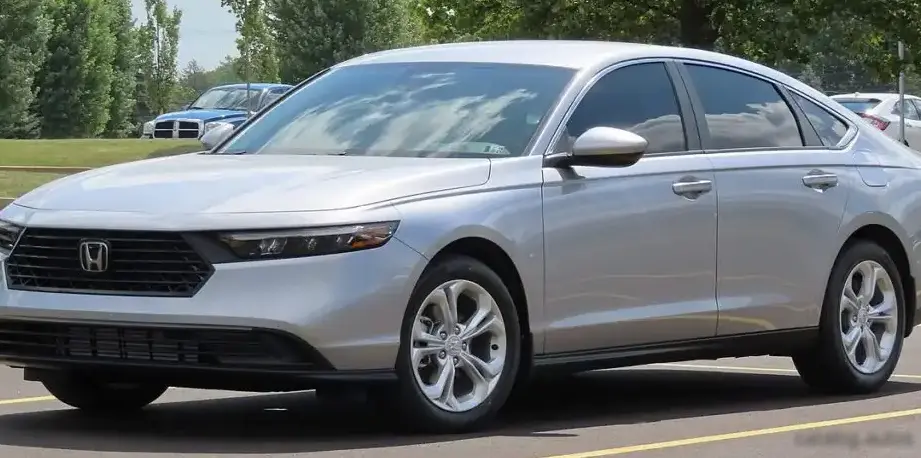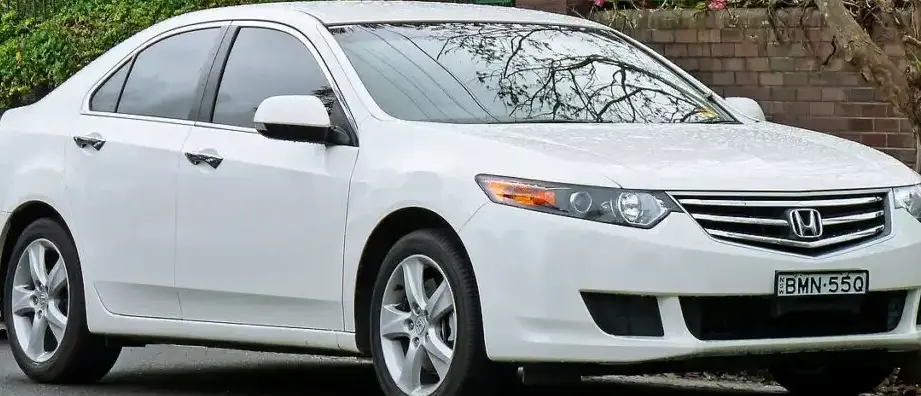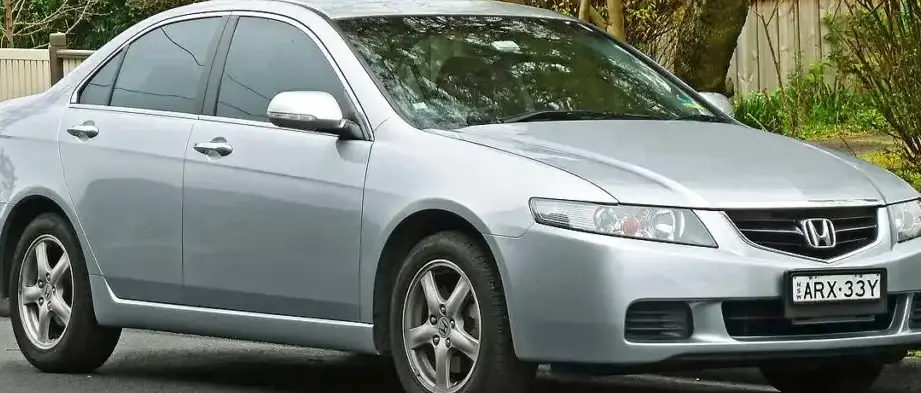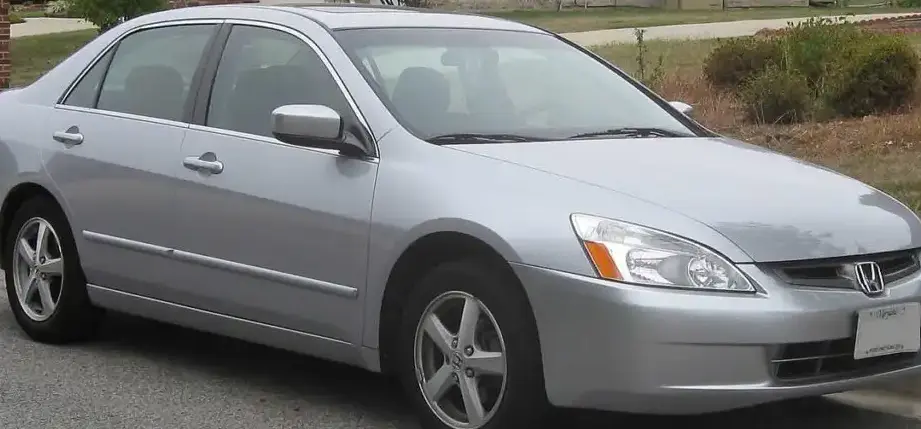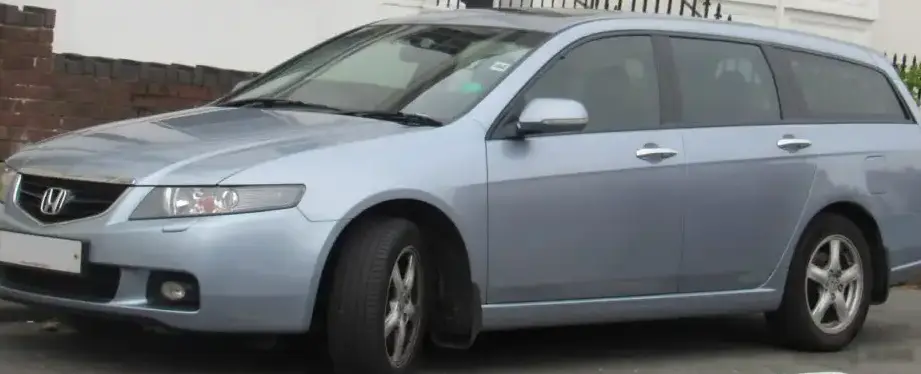
The Honda Accord VII Wagon 2.4 i-VTEC 16V, produced between 2003 and 2008, represents a significant iteration of Honda’s popular Accord line, specifically tailored for the European market where station wagons (or estates, as they are commonly known) held considerable appeal. This variant, powered by the K24 engine, offered a blend of practicality, performance, and Honda’s renowned reliability. It sat within the seventh generation Accord (1997-2003) lineup as a more versatile alternative to the sedan, appealing to families and those requiring substantial cargo space. While the Accord was a mainstay in the US market, the wagon body style was not officially offered, making this version a relatively rare sight in North America, typically imported as a grey market vehicle.
Technical Specifications
| Brand | Honda |
| Model | Accord |
| Generation | Accord VII Wagon |
| Type (Engine) | 2.4 i-VTEC 16V (190 Hp) |
| Start of production | 2003 |
| End of production | 2008 |
| Powertrain Architecture | Internal Combustion engine |
| Body type | Station wagon (estate) |
| Seats | 5 |
| Doors | 5 |
| Fuel consumption (urban) | 13.4 l/100 km (17.6 US mpg) |
| Fuel consumption (extra urban) | 7.7 l/100 km (30.5 US mpg) |
| Fuel Type | Petrol (Gasoline) |
| Acceleration 0 – 100 km/h | 8.4 sec |
| Acceleration 0 – 62 mph | 8.4 sec |
| Acceleration 0 – 60 mph | 8 sec |
| Maximum speed | 220 km/h (136.7 mph) |
| Weight-to-power ratio | 8.1 kg/Hp |
| Weight-to-torque ratio | 7 kg/Nm |
| Power | 190 Hp @ 6800 rpm |
| Torque | 220 Nm @ 4500 rpm (162.26 lb.-ft. @ 4500 rpm) |
| Engine layout | Front, Transverse |
| Engine Model/Code | K24 |
| Engine displacement | 2354 cm3 (143.65 cu. in.) |
| Number of cylinders | 4 |
| Engine configuration | Inline |
| Cylinder Bore | 87 mm (3.43 in.) |
| Piston Stroke | 99 mm (3.9 in.) |
| Compression ratio | 10.5:1 |
| Number of valves per cylinder | 4 |
| Fuel injection system | Multi-port manifold injection |
| Engine aspiration | Naturally aspirated engine |
| Valvetrain | DOHC |
| Engine oil capacity | 4.2 l (4.44 US qt | 3.7 UK qt) |
| Coolant capacity | 5.1 l (5.39 US qt | 4.49 UK qt) |
| Kerb Weight | 1540 kg (3395.12 lbs.) |
| Max. weight | 2060 kg (4541.52 lbs.) |
| Max load | 520 kg (1146.4 lbs.) |
| Trunk (boot) space – minimum | 572 l (20.2 cu. ft.) |
| Trunk (boot) space – maximum | 1657 l (58.52 cu. ft.) |
| Fuel tank capacity | 65 l (17.17 US gal | 14.3 UK gal) |
| Length | 4750 mm (187.01 in.) |
| Width | 1760 mm (69.29 in.) |
| Height | 1470 mm (57.87 in.) |
| Wheelbase | 2720 mm (107.09 in.) |
| Front track | 1515 mm (59.65 in.) |
| Rear track | 1530 mm (60.24 in.) |
| Drivetrain Architecture | Front wheel drive |
| Number of gears | 6 |
| Gearbox type | Manual transmission |
| Front suspension | Double wishbone |
| Rear suspension | Wishbone |
| Front brakes | Ventilated discs |
| Rear brakes | Disc |
| Assisting systems | ABS (Anti-lock braking system) |
| Steering type | Steering rack and pinion |
| Tires size | 205/55 R16 |
| Wheel rims size | 16 |
INTRODUCTION
The Accord VII Wagon 2.4 i-VTEC 16V was introduced as part of Honda’s strategy to cater to the diverse needs of the European car market. Unlike the North American market, which largely favored sedan and SUV body styles, European consumers maintained a strong preference for practical station wagons. This model offered a compelling combination of space, comfort, and Honda’s reputation for build quality. The “i-VTEC” designation signifies Honda’s variable valve timing and lift electronic control system, a key technology aimed at improving both performance and fuel efficiency. This particular variant, with its 2.4-liter engine and six-speed manual transmission, represented a mid-range offering within the Accord wagon lineup, positioned above the lower-displacement models but below any potential high-performance trims.
Powertrain & Engine Architecture
At the heart of the Accord VII Wagon 2.4 i-VTEC is the K24 engine, a 2.4-liter inline-four cylinder powerplant. This engine is a naturally aspirated design, meaning it doesn’t utilize forced induction like a turbocharger or supercharger. The K24 is known for its robust construction and relatively simple design, contributing to its reliability. The i-VTEC system is a crucial element, employing variable valve timing and lift to optimize engine performance across the rev range. At lower engine speeds, the system prioritizes fuel efficiency and smooth operation. As the engine speed increases, the valve timing and lift are adjusted to maximize power output. The engine utilizes multi-point fuel injection, delivering fuel directly into the intake ports. The six-speed manual transmission provides precise gear changes and allows the driver to fully exploit the engine’s power. The transmission’s gear ratios are tuned to balance acceleration and fuel economy, with a relatively tall sixth gear for efficient cruising on highways.
Driving Characteristics
The 2.4-liter i-VTEC engine delivers a respectable 190 horsepower, providing brisk acceleration. The 0-60 mph time of around 8 seconds is competitive for its class. Compared to lower-powered Accord wagon variants (such as the 1.8L or 2.0L models), the 2.4L offers noticeably more punch, particularly when overtaking or climbing hills. However, it doesn’t possess the outright performance of a potential high-performance version, if one had been offered. The six-speed manual transmission enhances the driving experience, allowing for precise control and engaging gear changes. The gear ratios are well-spaced, providing ample torque in each gear. The Accord’s suspension provides a comfortable ride, absorbing bumps and imperfections in the road effectively. Steering is accurate and responsive, providing good feedback to the driver.
Equipment & Trim Levels
The Accord VII Wagon 2.4 i-VTEC typically came equipped with a comprehensive list of standard features. These included air conditioning, power windows and mirrors, central locking, an integrated audio system, and ABS brakes. Interior upholstery was typically cloth, although leather options were available as upgrades. Dashboard configuration was functional and ergonomically designed, with easy-to-read gauges and intuitive controls. Optional extras included a sunroof, upgraded audio system, alloy wheels, and a navigation system. Trim levels varied slightly depending on the specific European market, but generally, the 2.4 i-VTEC represented a well-equipped mid-range offering.
Chassis & Braking
The Accord VII Wagon utilizes a front-engine, front-wheel-drive layout. The front suspension employs a double wishbone design, providing excellent handling and ride comfort. The rear suspension utilizes a wishbone setup, contributing to stability and control. Braking duties are handled by ventilated discs at the front and solid discs at the rear. ABS (Anti-lock Braking System) is standard, enhancing braking performance and safety. The chassis is robust and well-engineered, providing a solid foundation for the vehicle’s handling characteristics. Stabilizer bars are fitted to both the front and rear axles to reduce body roll during cornering.
Market Reception & Comparison
The Accord VII Wagon 2.4 i-VTEC was generally well-received by automotive critics. It was praised for its spacious interior, comfortable ride, and reliable engine. The i-VTEC technology was also lauded for its ability to deliver both performance and fuel efficiency. Compared to other wagons in its class, such as the Ford Mondeo Estate or the Volkswagen Passat Variant, the Accord offered a compelling blend of practicality and refinement. Fuel economy was competitive, although not class-leading. Reliability was a strong point, with the K24 engine proving to be exceptionally durable.
Legacy
The Honda Accord VII Wagon 2.4 i-VTEC has proven to be a durable and reliable vehicle, maintaining a good reputation in the used car market. The K24 engine is known for its longevity, and with proper maintenance, can easily exceed 200,000 miles. Parts availability is generally good, although some components may be more difficult to source in North America due to the vehicle’s limited official presence. Today, these wagons are appreciated by enthusiasts for their practicality, reliability, and engaging driving experience. They represent a unique offering in the US market, appealing to those seeking a versatile and dependable vehicle with a touch of European flair.