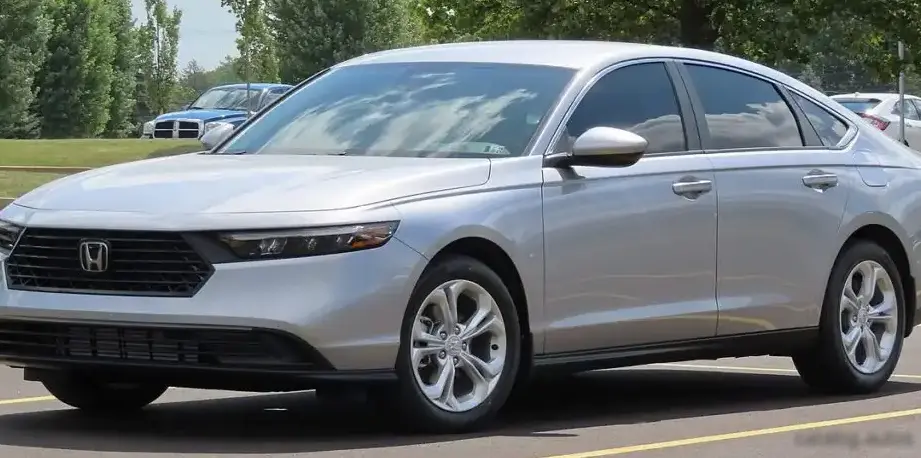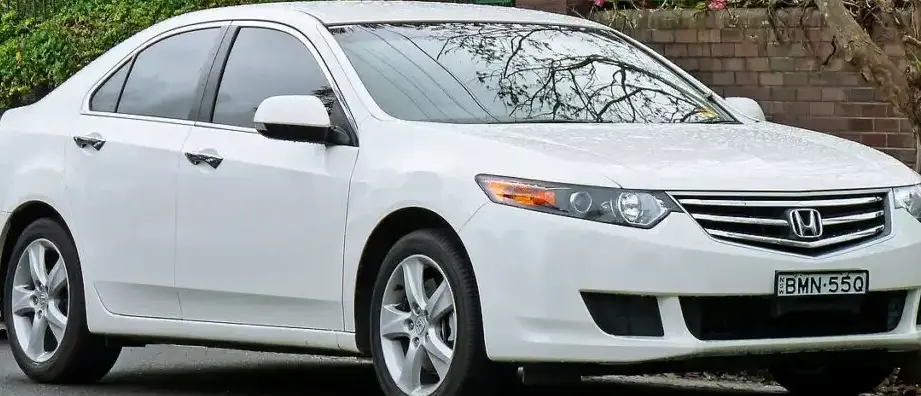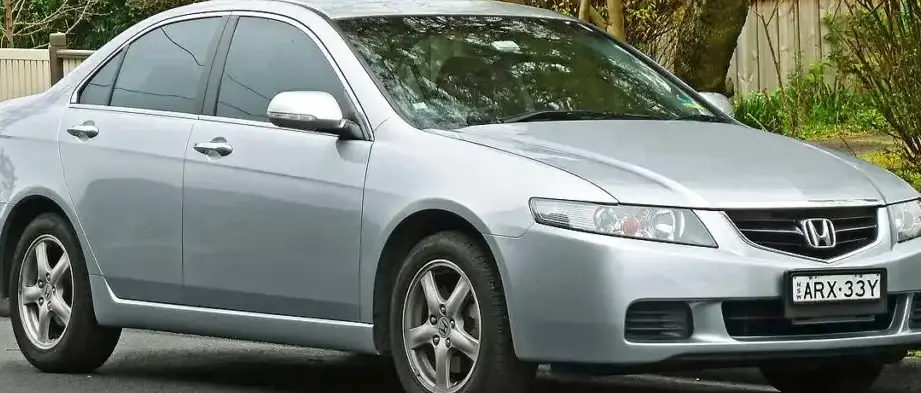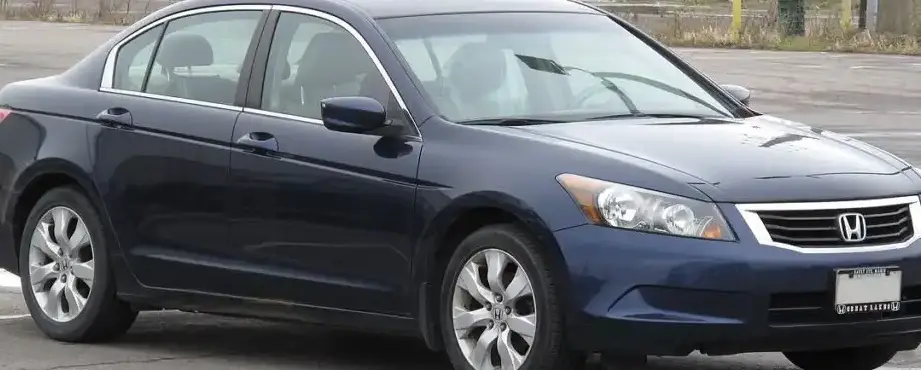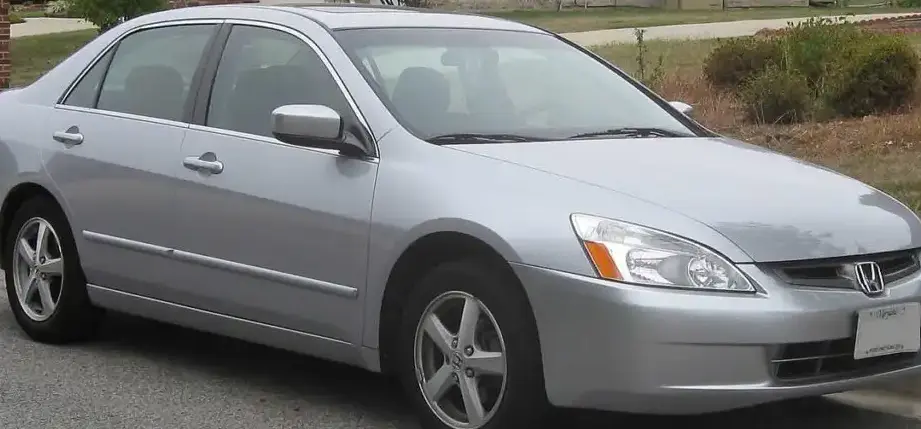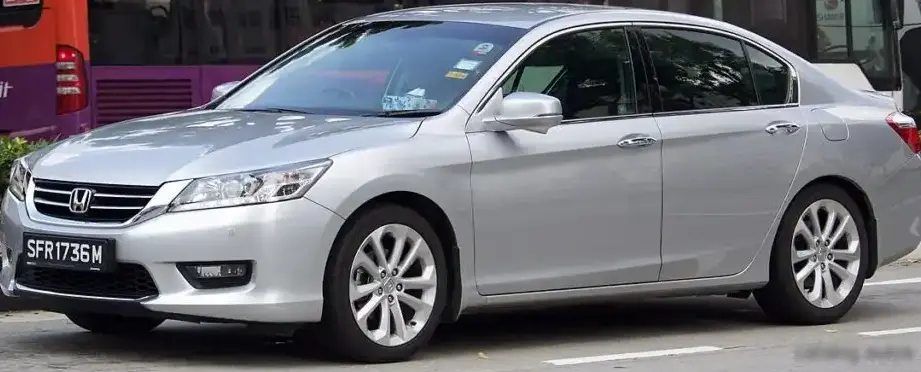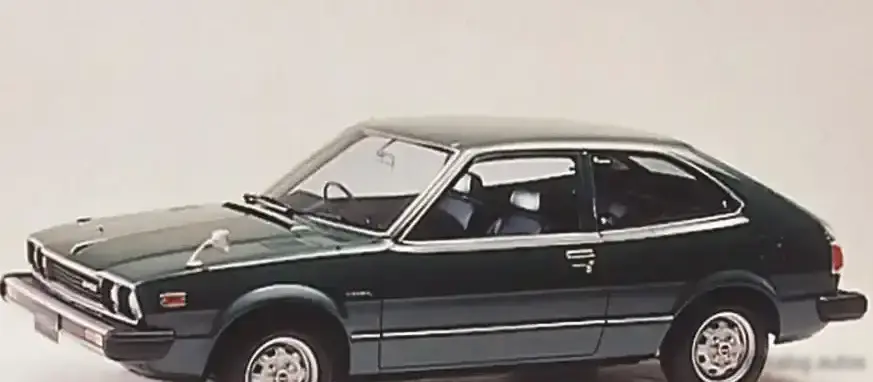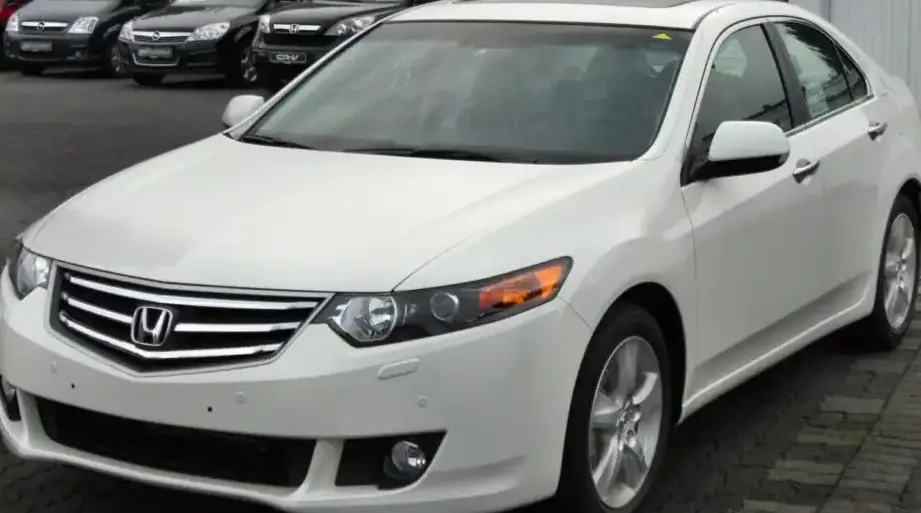
The Honda Accord VIII, produced between 2007 and 2011, represented a significant evolution for Honda’s mid-size sedan. The 2.0 i-VTEC 16V (155 hp) Automatic variant occupied a key position in the lineup, offering a balance between fuel efficiency, affordability, and comfortable driving. This model, built on the Honda Accord platform, was primarily aimed at the North American and European markets, where fuel economy and practicality were highly valued. It served as a stepping stone between the base model and the more powerful, performance-oriented trims.
Technical Specifications
| Brand | Honda |
| Model | Accord |
| Generation | Accord VIII |
| Type (Engine) | 2.0 i-VTEC 16V (155 Hp) Automatic |
| Start of production | 2007 |
| End of production | 2011 |
| Powertrain Architecture | Internal Combustion engine |
| Body type | Sedan |
| Seats | 5 |
| Doors | 4 |
| Fuel consumption (urban) | 10.4 l/100 km (22.6 US mpg) |
| Fuel consumption (extra urban) | 6 l/100 km (39.2 US mpg) |
| Fuel consumption (combined) | 7.7 l/100 km (30.5 US mpg) |
| Fuel Type | Petrol (Gasoline) |
| Acceleration 0 – 100 km/h | 10.9 sec |
| Acceleration 0 – 62 mph | 10.9 sec |
| Acceleration 0 – 60 mph | 10.4 sec |
| Maximum speed | 212 km/h (131.73 mph) |
| Emission standard | Euro 4 |
| Weight-to-power ratio | 10 kg/Hp |
| Weight-to-torque ratio | 8.1 kg/Nm |
| Power | 155 Hp @ 6000 rpm |
| Torque | 190 Nm @ 4500 rpm (140.14 lb.-ft. @ 4500 rpm) |
| Engine layout | Front, Transverse |
| Engine Model/Code | R20A3 |
| Engine displacement | 1998 cm3 (121.93 cu. in.) |
| Number of cylinders | 4 |
| Engine configuration | Inline |
| Cylinder Bore | 86 mm (3.39 in.) |
| Piston Stroke | 86 mm (3.39 in.) |
| Compression ratio | 9.8:1 |
| Number of valves per cylinder | 4 |
| Fuel injection system | Multi-port manifold injection |
| Engine aspiration | Naturally aspirated engine |
| Valvetrain | DOHC |
| Engine oil capacity | 3.7 l (3.91 US qt | 3.26 UK qt) |
| Coolant capacity | 5.4 l (5.71 US qt | 4.75 UK qt) |
| Kerb Weight | 1544 kg (3403.94 lbs.) |
| Max. weight | 1960 kg (4321.06 lbs.) |
| Max load | 416 kg (917.12 lbs.) |
| Trunk (boot) space – minimum | 467 l (16.49 cu. ft.) |
| Fuel tank capacity | 65 l (17.17 US gal | 14.3 UK gal) |
| Length | 4726 mm (186.06 in.) |
| Width | 1840 mm (72.44 in.) |
| Height | 1440 mm (56.69 in.) |
| Wheelbase | 2705 mm (106.5 in.) |
| Front track | 1589 mm (62.56 in.) |
| Rear (Back) track | 1588 mm (62.52 in.) |
| Minimum turning circle | 11.5 m (37.73 ft.) |
| Drivetrain Architecture | Front wheel drive |
| Number of gears | 5 |
| Gearbox type | Automatic transmission |
| Front brakes | Ventilated discs |
| Rear brakes | Disc |
| Tires size | 205/60 R16 |
| Wheel rims size | 16 |
Powertrain & Engine Architecture
The heart of the Accord VIII 2.0 i-VTEC Automatic is the R20A3 engine, a 2.0-liter inline-four cylinder powerplant. This engine utilizes Honda’s Intelligent Variable Valve Timing and Lift Electronic Control (i-VTEC) system, which optimizes valve timing and lift based on engine speed and load. This technology enhances both fuel efficiency and performance. The R20A3 employs multi-point fuel injection, delivering fuel directly to each cylinder. The engine’s 9.8:1 compression ratio strikes a balance between power output and fuel economy. Paired with the engine is a five-speed automatic transmission, designed for smooth and comfortable shifts. This transmission featured Honda’s Grade Logic Control, which adapts shift patterns based on driving conditions and throttle input.
Driving Characteristics
The 2.0L i-VTEC Automatic Accord delivered a comfortable and predictable driving experience. While not as sporty as the V6 models, it provided adequate acceleration for everyday driving. The 155 horsepower and 190 Nm (140 lb-ft) of torque allowed for reasonably quick merging and highway passing. The automatic transmission, while smooth, did exhibit some typical torque converter lag, especially during initial acceleration. Compared to the six-speed manual transmission available on some Accord models, the automatic resulted in slightly slower acceleration times (0-60 mph in approximately 10.4 seconds). The gear ratios were tuned for fuel efficiency, prioritizing comfortable cruising over aggressive performance.
Equipment & Trim Levels
The 2.0 i-VTEC Automatic trim typically included standard features such as air conditioning, power windows and locks, a CD player with auxiliary input, and basic cloth upholstery. Safety features included ABS brakes, front airbags, and side airbags. Optional extras often included a sunroof, upgraded audio system, alloy wheels, and leather upholstery. The specific trim level (LX, EX, or EX-L in the US market) determined the level of standard equipment. The EX trim, for example, often added features like a power driver’s seat and cruise control.
Chassis & Braking
The Accord VIII utilized a MacPherson strut front suspension and a multi-link rear suspension, providing a comfortable ride and predictable handling. The front suspension featured a stabilizer bar to reduce body roll during cornering. Braking duties were handled by ventilated discs at the front and solid discs at the rear. ABS (Anti-lock Braking System) was standard, enhancing braking performance and stability. The suspension tuning was geared towards comfort and refinement, rather than outright sportiness. The Accord’s chassis was designed to minimize noise, vibration, and harshness (NVH), contributing to a quiet and comfortable cabin environment.
Market Reception & Comparison
The 2.0 i-VTEC Automatic Accord was generally well-received by automotive critics. It was praised for its fuel efficiency, comfortable ride, and spacious interior. However, some reviewers noted that the engine lacked the punch of the V6 models, and the automatic transmission could feel somewhat sluggish. Compared to competitors like the Toyota Camry and Nissan Altima, the Accord offered a more engaging driving experience and a reputation for reliability. Fuel economy figures of around 30.5 US mpg combined were competitive for its class. The 1.8L engine found in some competing models offered slightly better fuel economy, but at the expense of performance.
Legacy
The R20A3 engine, when properly maintained, proved to be a reliable and durable powerplant. The five-speed automatic transmission also demonstrated good longevity. Common maintenance items included regular oil changes, timing belt replacement (typically around 100,000 miles), and spark plug replacement. Today, used Honda Accord VIII 2.0 i-VTEC Automatic models are considered a good value, offering a blend of practicality, reliability, and affordability. They remain popular choices for budget-conscious buyers seeking a dependable mid-size sedan. While not a collector’s item, well-maintained examples continue to provide years of service.