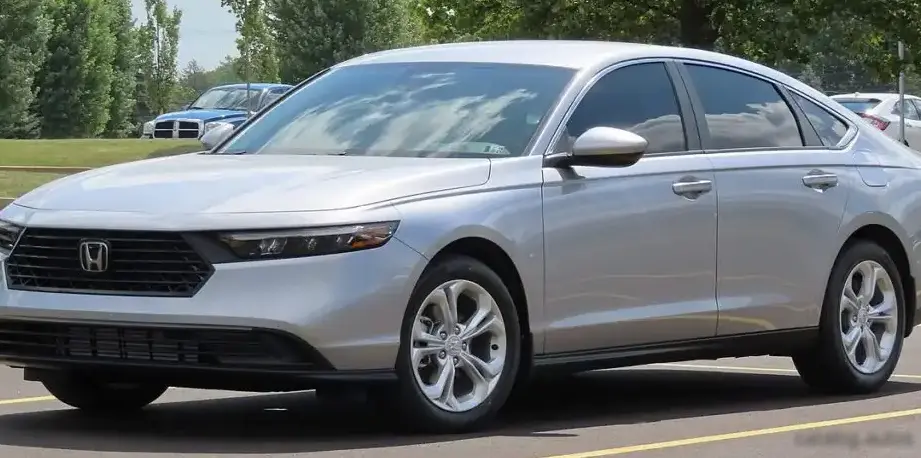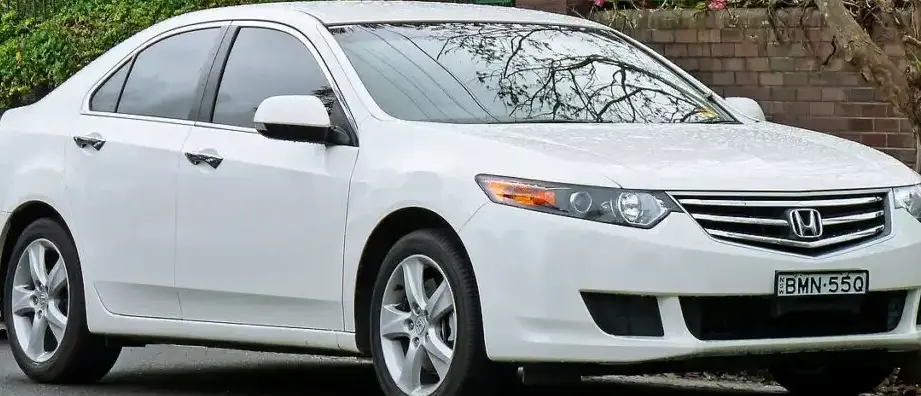
The Honda Accord VIII, produced between 2007 and 2011, represented a significant evolution for Honda’s mid-size sedan. This generation, sold primarily in North America, Europe, and Asia, aimed to blend sporty handling with increased refinement and practicality. Within the Accord VIII lineup, the 2.4i variant, equipped with the K24Z2 engine producing 177 horsepower, occupied a middle ground, offering a balance between performance and fuel efficiency. It served as a step up from the base 2.0-liter models, while remaining more accessible than the range-topping V6 options. This particular configuration was widely available with both a five-speed manual and a five-speed automatic transmission, catering to a broad range of driver preferences.
Technical Specifications
| Brand | Honda |
| Model | Accord |
| Generation | Accord VIII |
| Type (Engine) | 2.4i (177 Hp) |
| Start of production | 2007 |
| End of production | 2011 |
| Powertrain Architecture | Internal Combustion engine |
| Body type | Sedan |
| Seats | 5 |
| Doors | 4 |
| Fuel Type | Petrol (Gasoline) |
| Emission standard | Euro 4 |
| Weight-to-power ratio | 8.4 kg/Hp, 119.6 Hp/tonne |
| Weight-to-torque ratio | 6.7 kg/Nm, 148.6 Nm/tonne |
| Power | 177 Hp @ 6500 rpm |
| Power per litre | 75.2 Hp/l |
| Torque | 220 Nm @ 4300 rpm, 162.26 lb.-ft. @ 4300 rpm |
| Engine layout | Front, Transverse |
| Engine Model/Code | K24Z2 |
| Engine displacement | 2354 cm3, 143.65 cu. in. |
| Number of cylinders | 4 |
| Engine configuration | Inline |
| Cylinder Bore | 87 mm, 3.43 in. |
| Piston Stroke | 99 mm, 3.9 in. |
| Compression ratio | 10.5:1 |
| Number of valves per cylinder | 4 |
| Fuel injection system | Multi-port manifold injection |
| Engine aspiration | Naturally aspirated engine |
| Valvetrain | DOHC |
| Engine oil capacity | 4.2 l, 4.44 US qt | 3.7 UK qt |
| Coolant | 6 l, 6.34 US qt | 5.28 UK qt |
| Kerb Weight | 1480 kg, 3262.84 lbs |
| Trunk (boot) space – minimum | 464 l, 16.39 cu. ft |
| Fuel tank capacity | 65 l, 17.17 US gal | 14.3 UK gal |
| Length | 4726 mm, 186.06 in |
| Width | 1840 mm, 72.44 in |
| Height | 1440 mm, 56.69 in |
| Wheelbase | 2705 mm, 106.5 in |
| Front track | 1580 mm, 62.2 in |
| Rear (Back) track | 1580 mm, 62.2 in |
| Minimum turning circle (turning diameter) | 11.5 m, 37.73 ft |
| Drivetrain Architecture | The Internal combustion engine (ICE) drives the front wheels of the vehicle. |
| Drive wheel | Front wheel drive |
| Number of gears and type of gearbox | 5 gears, manual transmission |
| Front brakes | Ventilated discs |
| Rear brakes | Disc |
| Assisting systems | ABS (Anti-lock braking system) |
| Steering type | Steering rack and pinion |
| Tires size | 215/60 R16 |
| Wheel rims size | 6.5J x 16 |
Powertrain & Engine Architecture
The heart of the 2.4i Accord was the K24Z2 engine, a 2.4-liter inline-four cylinder powerplant. This engine was part of Honda’s K-series family, known for its robust construction and relatively high output for its displacement. The K24Z2 featured a cast iron block and an aluminum cylinder head, incorporating a double overhead camshaft (DOHC) valvetrain with four valves per cylinder. Fuel delivery was handled by a multi-point fuel injection system, providing precise fuel metering for optimal combustion. The engine’s 10.5:1 compression ratio contributed to its respectable power output. When paired with the five-speed automatic transmission, the K24Z2 offered smooth and predictable shifts, although it wasn’t as responsive as the available manual gearbox. The automatic transmission was designed for comfort and efficiency, with gear ratios optimized for everyday driving conditions.
Driving Characteristics
The 2.4i automatic Accord delivered a comfortable and composed driving experience. While not overtly sporty, the engine provided adequate power for merging onto highways and passing slower traffic. The automatic transmission, while smooth, did result in a slight reduction in acceleration compared to the manual version. The gear ratios were tuned for fuel economy, meaning the engine sometimes felt strained during aggressive acceleration. Steering was light and precise, contributing to easy maneuverability. The suspension, tuned for comfort, absorbed bumps and imperfections in the road well, providing a stable and predictable ride. Compared to the V6 models, the 2.4i offered a more economical driving experience, but at the expense of outright performance.
Equipment & Trim Levels
The 2.4i trim level typically included standard features such as air conditioning, power windows and locks, a CD player with auxiliary input, and cruise control. Higher trim levels, such as the EX and EX-L, added features like a sunroof, leather upholstery, heated front seats, and a premium audio system. Safety features included anti-lock brakes (ABS) and front airbags. Optional extras included navigation systems and upgraded wheels. The interior design was functional and well-built, with a focus on ergonomics and ease of use. The dashboard layout was straightforward, with clearly labeled controls.
Chassis & Braking
The Accord VIII utilized a MacPherson strut front suspension and a multi-link rear suspension, providing a good balance between ride comfort and handling. The front suspension featured a stabilizer bar to reduce body roll during cornering. The braking system consisted of ventilated discs at the front and solid discs at the rear, providing adequate stopping power for most driving situations. ABS was standard, enhancing braking performance in slippery conditions. The chassis was designed to be rigid, contributing to the car’s overall stability and handling characteristics.
Market Reception & Comparison
The Honda Accord VIII 2.4i was generally well-received by automotive critics. It was praised for its comfortable ride, spacious interior, and reliable powertrain. However, some critics noted that the automatic transmission could feel sluggish at times, and the interior design was somewhat conservative. Compared to other mid-size sedans, such as the Toyota Camry and Nissan Altima, the Accord offered a more engaging driving experience and a reputation for long-term reliability. Fuel economy was competitive, averaging around 21 mpg city and 30 mpg highway. The 2.4i variant offered a compelling value proposition, providing a good balance of features, performance, and fuel efficiency.
Legacy
The K24Z2 engine, found in the Accord VIII 2.4i, has proven to be a remarkably durable and reliable powerplant. With proper maintenance, these engines can easily exceed 200,000 miles. The Accord VIII, in general, has earned a reputation for longevity and low running costs. In the used car market, the 2.4i automatic variant remains a popular choice due to its affordability and practicality. While not as sought after as the manual transmission versions or the V6 models, it represents a sensible and dependable option for buyers seeking a reliable mid-size sedan. The Accord VIII solidified Honda’s position as a leader in the mid-size sedan segment, and the 2.4i variant played a significant role in its success.