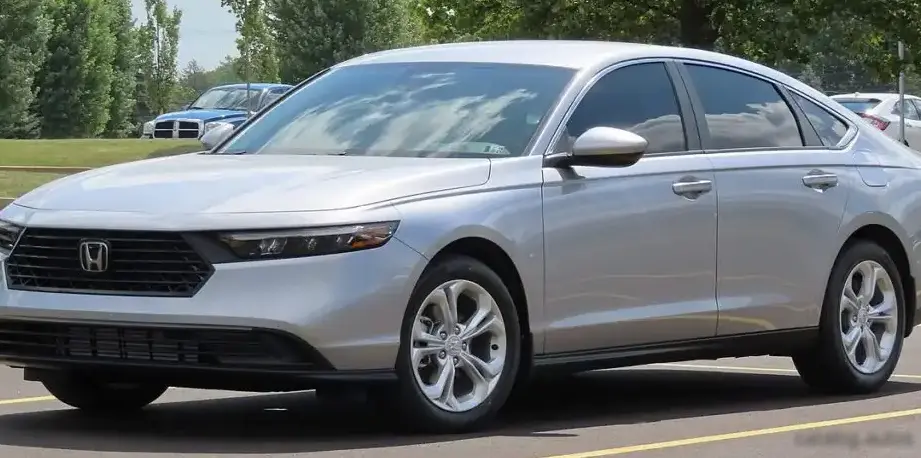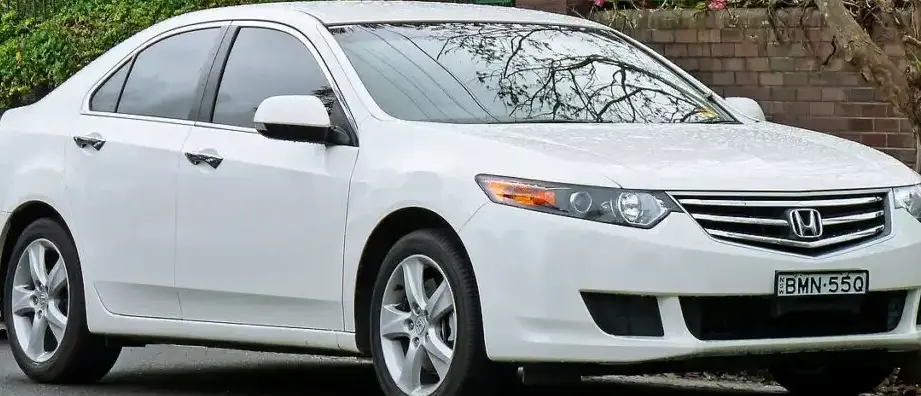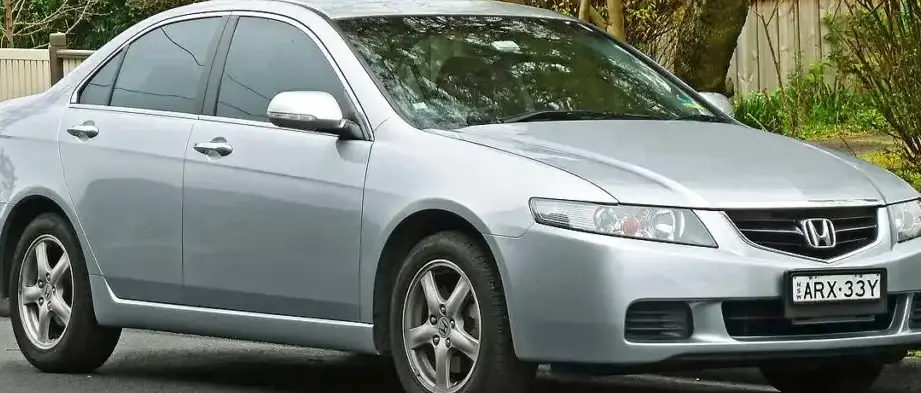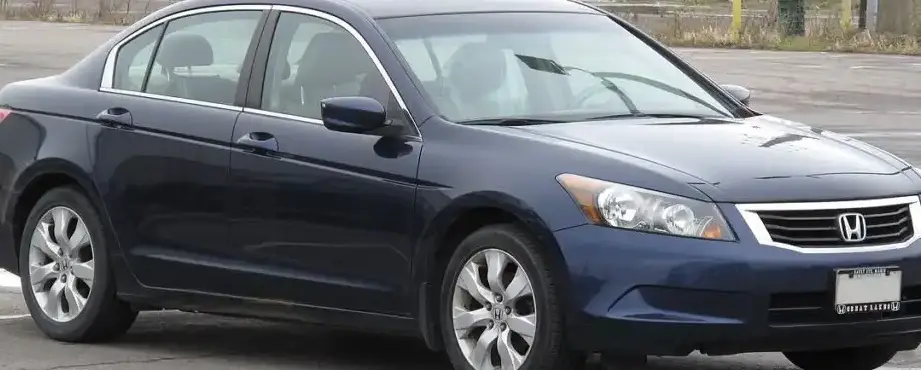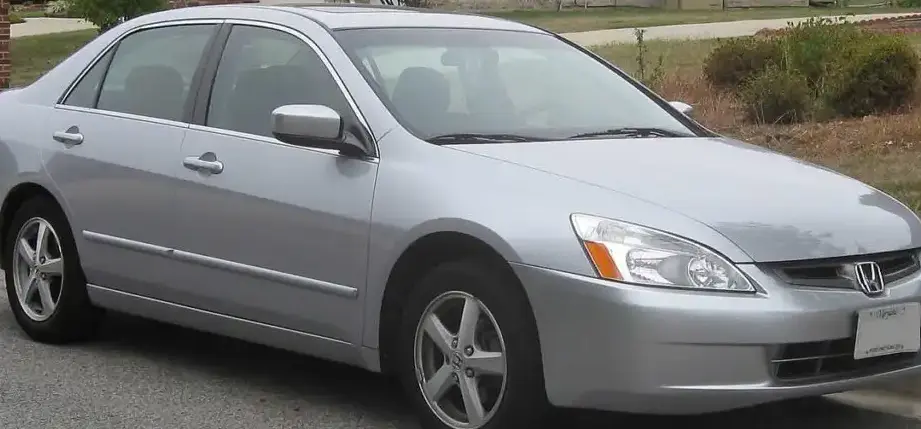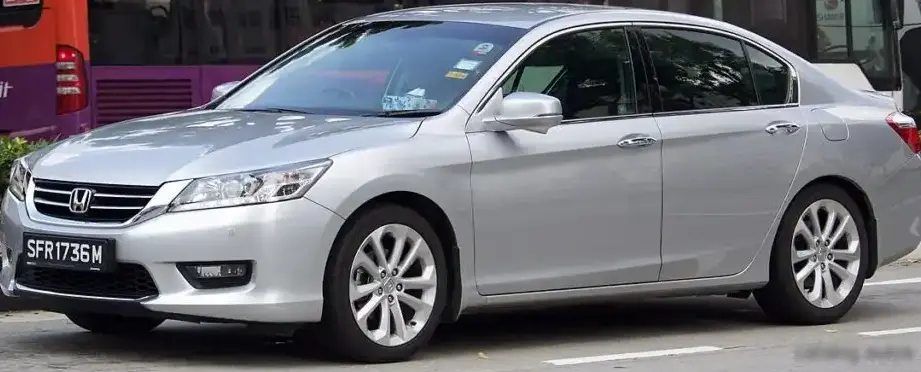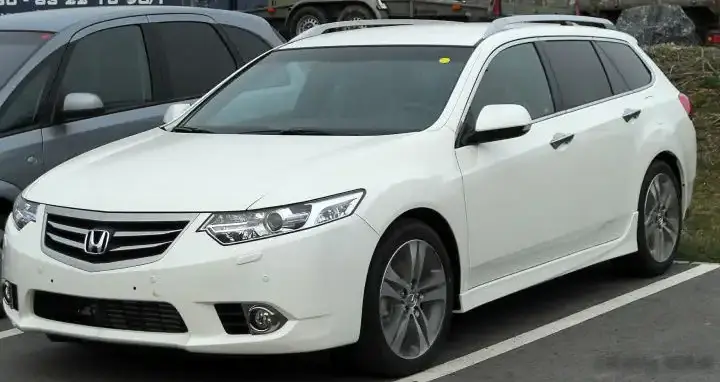
The Honda Accord VIII facelift wagon, specifically the 2.0 i-VTEC variant with an automatic transmission, was produced for a limited time between 2011 and 2012. This model represented a mid-cycle refresh of the eighth-generation Accord (2008-2012), offering a practical wagon body style primarily aimed at the European market where estates remained popular. In the US, the Accord wagon was not offered during this generation. This particular configuration, with its 156 horsepower engine and automatic gearbox, occupied a mid-range position within the Accord lineup, balancing affordability with reasonable performance and convenience. It served as a step up from the base 1.8-liter engine, while remaining more accessible than the more powerful 2.4-liter options.
Technical Specifications
| Brand | Honda |
| Model | Accord |
| Generation | Accord VIII (facelift 2011) Wagon |
| Type (Engine) | 2.0 i-VTEC (156 Hp) Automatic |
| Start of production | 2011 |
| End of production | 2012 |
| Powertrain Architecture | Internal Combustion engine |
| Body type | Station wagon (estate) |
| Seats | 5 |
| Doors | 5 |
| Fuel consumption (urban) | 10.2 l/100 km (23.1 US mpg, 27.7 UK mpg, 9.8 km/l) |
| Fuel consumption (extra urban) | 5.7-5.9 l/100 km (41.3 – 39.9 US mpg, 49.6 – 47.9 UK mpg, 17.5 – 16.9 km/l) |
| Fuel consumption (combined) | 7.3-7.5 l/100 km (32.2 – 31.4 US mpg, 38.7 – 37.7 UK mpg, 13.7 – 13.3 km/l) |
| CO2 emissions | 170-173 g/km |
| Fuel Type | Petrol (Gasoline) |
| Acceleration 0 – 100 km/h | 11.1-11.5 sec |
| Acceleration 0 – 62 mph | 11.1-11.5 sec |
| Acceleration 0 – 60 mph | 10.5 sec |
| Maximum speed | 210 km/h (130.49 mph) |
| Emission standard | Euro 5 |
| Weight-to-power ratio | 10 kg/Hp, 99.7 Hp/tonne |
| Weight-to-torque ratio | 8.2 kg/Nm, 122.7 Nm/tonne |
| Power | 156 Hp @ 6300 rpm |
| Torque | 192 Nm @ 4100-5000 rpm (141.61 lb.-ft. @ 4100-5000 rpm) |
| Engine layout | Front, Transverse |
| Engine Model/Code | R20A3 |
| Engine displacement | 1997 cm3 (121.86 cu. in.) |
| Number of cylinders | 4 |
| Engine configuration | Inline |
| Compression ratio | 10.6:1 |
| Number of valves per cylinder | 4 |
| Fuel injection system | Multi-port manifold injection |
| Engine aspiration | Naturally aspirated engine |
| Engine oil capacity | 3.7 l (3.91 US qt | 3.26 UK qt) |
| Coolant capacity | 5.4 l (5.71 US qt | 4.75 UK qt) |
| Kerb Weight | 1565 kg (3450.23 lbs.) |
| Trunk (boot) space – minimum | 406 l (14.34 cu. ft.) |
| Trunk (boot) space – maximum | 1183 l (41.78 cu. ft.) |
| Fuel tank capacity | 65 l (17.17 US gal | 14.3 UK gal) |
| Length | 4750 mm (187.01 in.) |
| Width | 1840 mm (72.44 in.) |
| Height | 1470 mm (57.87 in.) |
| Wheelbase | 2705 mm (106.5 in.) |
| Minimum turning circle | 11.7 m (38.39 ft.) |
| Drivetrain Architecture | ICE, Front wheel drive |
| Number of gears and type of gearbox | 5 gears, automatic transmission |
| Front suspension | Double wishbone |
| Rear suspension | Independent multi-link suspension |
| Front brakes | Ventilated discs |
| Rear brakes | Disc |
| Assisting systems | ABS (Anti-lock braking system) |
| Steering type | Steering rack and pinion |
| Tires size | 205/60 R16; 225/50 R17 |
| Wheel rims size | 16; 17 |
Powertrain & Engine Architecture
The heart of this Accord wagon is the R20A3 2.0-liter inline-four cylinder engine. This engine is part of Honda’s K20 family, though it differs from the higher-performance K20Z found in models like the Civic Si. The R20A3 utilizes a single overhead camshaft (SOHC) design with four valves per cylinder, and Honda’s i-VTEC (intelligent Variable valve Timing and lift Electronic Control) system. This system allows for variable valve timing and lift, optimizing performance and fuel efficiency across the engine’s operating range. Fuel delivery is managed by a multi-point fuel injection system. The engine produces 156 horsepower at 6300 rpm and 192 Nm (141.61 lb-ft) of torque between 4100 and 5000 rpm. The engine is transversely mounted, driving the front wheels. Paired with the engine is a five-speed automatic transmission, chosen for its convenience and ease of use. This transmission features standard torque converter technology and is geared towards smooth, comfortable shifts rather than outright performance.
Driving Characteristics
The 2.0 i-VTEC automatic Accord wagon offered a comfortable and refined driving experience. Acceleration from 0-60 mph took around 10.5 seconds, and 0-100 km/h in 11.1-11.5 seconds, which was adequate for everyday driving but not particularly sporty. The automatic transmission, while smooth, did detract from the engine’s responsiveness compared to the available manual transmission. The gear ratios were optimized for fuel economy and cruising, meaning the engine often felt strained during hard acceleration. Compared to the higher-output 2.4-liter engine, this variant felt noticeably less powerful, especially when fully loaded with passengers and cargo. However, the 2.0-liter engine provided a better balance between performance and fuel efficiency than the base 1.8-liter option.
Equipment & Trim Levels
The 2.0 i-VTEC automatic trim typically included standard features such as air conditioning, power windows and locks, a CD player with auxiliary input, and alloy wheels. Safety features included ABS brakes, front and side airbags, and electronic stability control. Higher trim levels offered options like leather upholstery, a sunroof, a navigation system, and upgraded audio systems. Interior upholstery was generally cloth, with a functional and durable design. The dashboard layout was typical of Honda Accords of the era, with a clear and easy-to-read instrument cluster.
Chassis & Braking
The Accord wagon featured a double wishbone front suspension and an independent multi-link rear suspension, providing a comfortable ride and good handling characteristics. The front brakes were ventilated discs, while the rear brakes were solid discs. ABS (Anti-lock Braking System) was standard, enhancing braking performance and safety. The suspension was tuned for comfort, prioritizing ride quality over sporty handling. Stabilizer bars were fitted to both the front and rear axles to reduce body roll during cornering.
Market Reception & Comparison
The 2.0 i-VTEC automatic Accord wagon was generally well-received by automotive critics. It was praised for its spacious interior, comfortable ride, and good fuel economy. However, some critics noted that the automatic transmission dulled the engine’s performance and that the car lacked the sporty feel of some of its competitors. Compared to the 1.8-liter version, the 2.0-liter offered a noticeable improvement in performance, making it a more appealing option for drivers who frequently carried passengers or cargo. The 2.4-liter engine provided even more power, but at a higher price point.
Legacy
The R20A3 engine, when properly maintained, is known for its reliability and longevity. The five-speed automatic transmission is also generally considered to be durable. However, like any vehicle, regular maintenance is crucial to prevent issues. Common issues include oil leaks and occasional sensor failures. In the used car market, these Accord wagons are often sought after for their practicality, reliability, and affordability. They represent a good value for buyers looking for a spacious and dependable estate car. While not a performance icon, the 2.0 i-VTEC automatic Accord wagon remains a competent and well-rounded vehicle that continues to provide reliable transportation for many years.