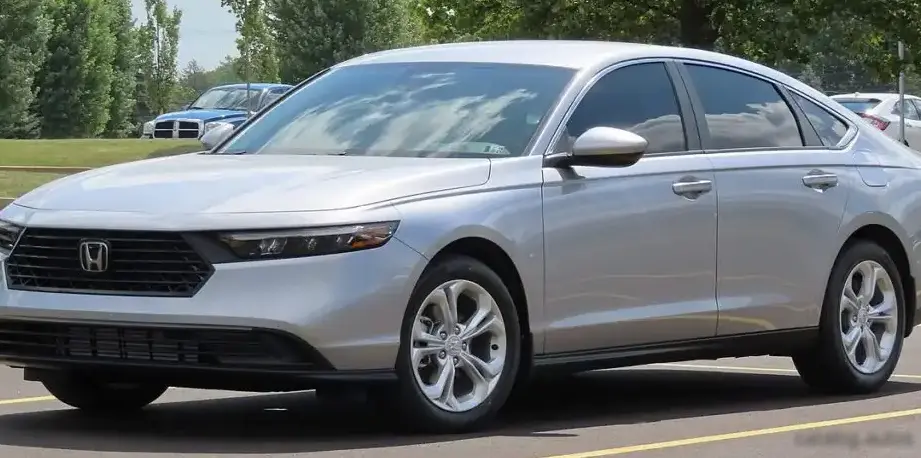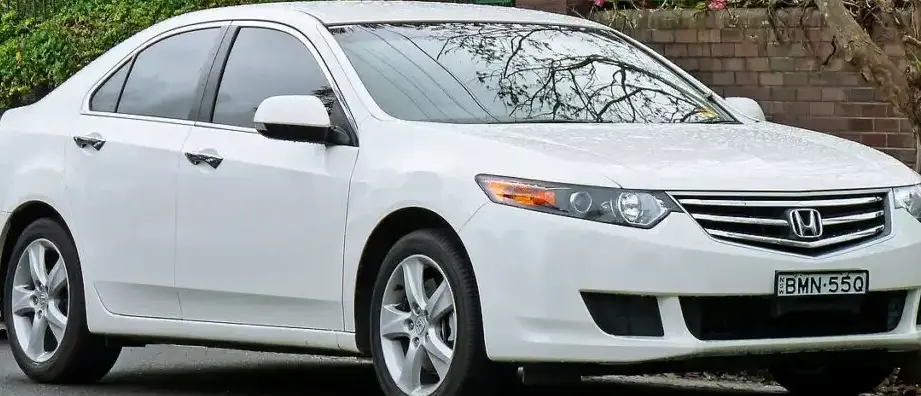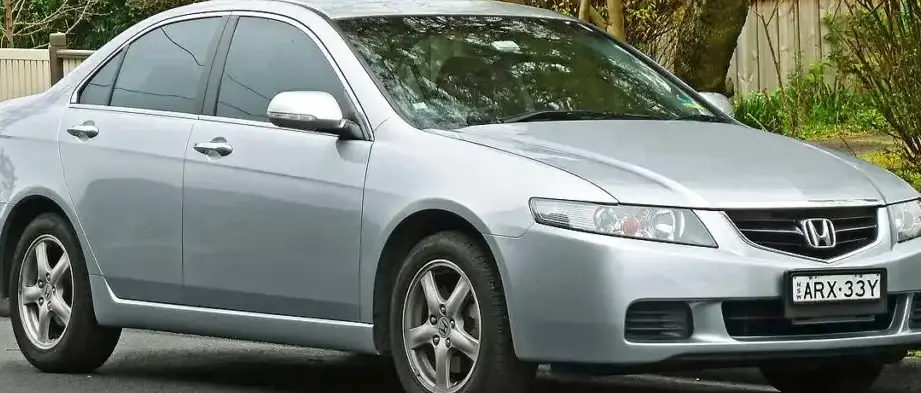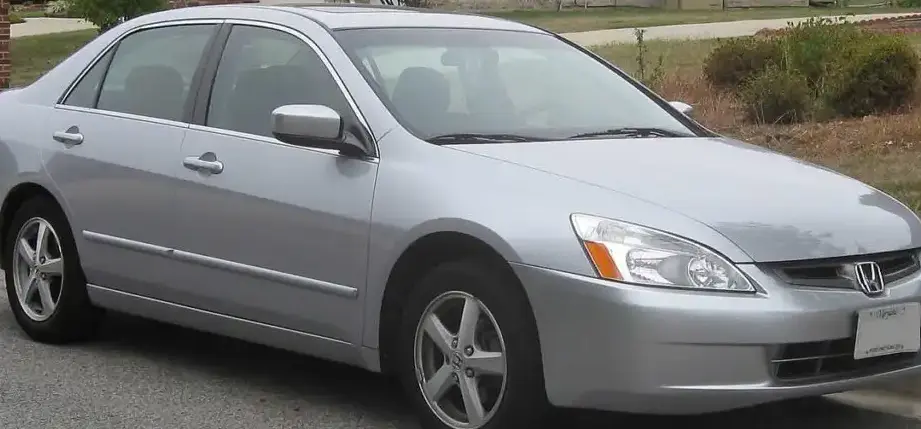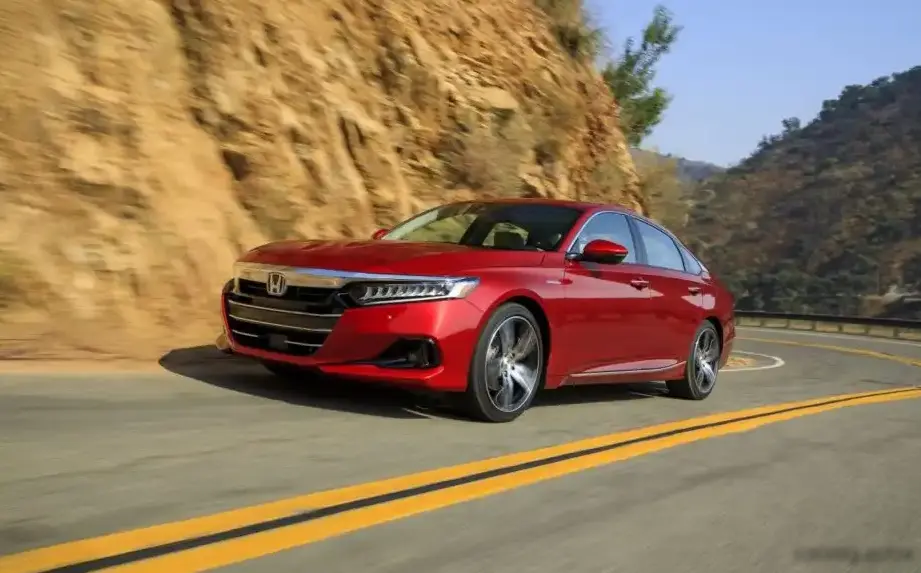
The Honda Accord X, specifically the facelifted version introduced in October 2020 and continuing through November 2022, represented a significant evolution of Honda’s mid-size sedan. The 2.0 (212 Hp) Hybrid e-CVT variant occupied a premium position within the tenth-generation Accord lineup, offering a blend of fuel efficiency and responsive performance. This model was primarily targeted towards buyers seeking a sophisticated and technologically advanced sedan with a focus on environmental responsibility. It was a key offering in the North American market, where the Accord consistently ranks among the best-selling vehicles in its class.
Technical Specifications
| Brand | Honda |
| Model | Accord |
| Generation | Accord X (facelift 2020) |
| Type (Engine) | 2.0 (212 Hp) Hybrid e-CVT |
| Start of production | October, 2020 |
| End of production | November, 2022 |
| Powertrain Architecture | FHEV (Full Hybrid Electric Vehicle) |
| Body type | Sedan |
| Seats | 5 |
| Doors | 4 |
| Fuel consumption (urban) | 4.9-5.3 l/100 km (48 – 44.4 US mpg) |
| Fuel consumption (extra urban) | 4.9-5.7 l/100 km (48 – 41.3 US mpg) |
| Fuel consumption (combined) | 4.9-5.5 l/100 km (48 – 42.8 US mpg) |
| Fuel Type | Petrol (Gasoline) |
| Emission standard | LEV3-SULEV30 |
| Weight-to-power ratio | 7.1 kg/Hp, 140.5 Hp/tonne |
| Weight-to-torque ratio | 8.6 kg/Nm, 116 Nm/tonne |
| Battery technology | Lithium-ion (Li-Ion) |
| Battery location | Under the rear seats |
| Electric motor power | 181 Hp @ 5000-6000 rpm (315 Nm @ 0-2000 rpm / 232.33 lb.-ft. @ 0-2000 rpm) |
| Electric motor location | Integrated into the transmission |
| System power | 212 Hp @ 6200 rpm |
| Internal combustion engine power | 143 Hp @ 6200 rpm |
| Power per litre | 71.8 Hp/l |
| Engine torque | 175 Nm @ 3500 rpm (129.07 lb.-ft. @ 3500 rpm) |
| Maximum engine speed | 6400 rpm |
| Engine layout | Front, Transverse |
| Engine Model/Code | LFB2 |
| Engine displacement | 1993 cm3 (121.62 cu. in.) |
| Number of cylinders | 4 |
| Engine configuration | Inline |
| Cylinder Bore | 81 mm (3.19 in.) |
| Piston Stroke | 96.7 mm (3.81 in.) |
| Compression ratio | 13.5:1 |
| Number of valves per cylinder | 4 |
| Fuel injection system | Multi-port manifold injection |
| Engine aspiration | Naturally aspirated engine |
| Valvetrain | DOHC, i-VTEC |
| Engine oil capacity | 3.8 l (4.02 US qt | 3.34 UK qt) |
| Coolant capacity | 4.88 l (5.16 US qt | 4.29 UK qt) |
| Kerb Weight | 1509-1563 kg (3326.78 – 3445.83 lbs.) |
| Trunk (boot) space | 473 l (16.7 cu. ft.) |
| Fuel tank capacity | 48 l (12.68 US gal | 10.56 UK gal) |
| Length | 4981 mm (196.1 in.) |
| Width | 1862 mm (73.31 in.) |
| Height | 1450 mm (57.09 in.) |
| Wheelbase | 2830 mm (111.42 in.) |
| Front track | 1600 mm (62.99 in.) |
| Rear track | 1610 mm (63.39 in.) |
| Minimum turning circle | 11.6-11.7 m (38.06 – 38.39 ft.) |
| Drivetrain Architecture | Front wheel drive. FHEV. ICE and electric motor drive front wheels. |
| Number of gears | e-CVT automatic transmission |
| Front suspension | Independent, McPherson with coil spring and anti-roll bar |
| Rear suspension | Independent multi-link with stabilizer |
| Front brakes | Ventilated discs, 312.42 mm |
| Rear brakes | Disc, 281.94 mm |
| Assisting systems | ABS (Anti-lock braking system) |
| Steering type | Steering rack and pinion |
| Power steering | Electric |
| Tires size | 225/50 R17 94V; 235/40 R19 96V |
| Wheel rims size | 17; 19 |
Powertrain & Engine Architecture
The 2020-2022 Honda Accord Hybrid 2.0L utilizes Honda’s Intelligent Multi-Mode Drive (i-MMD) system, a sophisticated full hybrid powertrain. At its core is the LFB2 1.993-liter inline-four cylinder engine, naturally aspirated and employing direct injection. This engine produces 143 horsepower at 6200 rpm and 129 lb-ft of torque at 3500 rpm. However, the system’s total output is 212 horsepower. The electric motor, integrated within the e-CVT, delivers 181 horsepower and a substantial 232 lb-ft of torque. The lithium-ion battery pack, positioned under the rear seats, provides energy storage for the electric motor. The e-CVT isn’t a traditional continuously variable transmission; it’s an electronically controlled system that seamlessly blends power from the engine and electric motor, offering a smooth and efficient driving experience. The i-MMD system can operate in EV mode, hybrid mode, or engine mode, automatically switching between them based on driving conditions and battery charge.
Driving Characteristics
The Accord Hybrid 2.0L e-CVT delivers a refined and surprisingly responsive driving experience. The electric motor’s instant torque provides brisk acceleration, particularly from a standstill. While not as overtly sporty as the 2.0T turbocharged Accord, the hybrid offers ample power for everyday driving and highway merging. The e-CVT operates smoothly and quietly, eliminating the rubber-band feel often associated with traditional CVTs. The hybrid system prioritizes fuel efficiency, and the Accord consistently achieves impressive gas mileage. Compared to the standard 1.5L turbocharged engine, the hybrid offers a noticeable improvement in fuel economy, albeit with a slightly higher initial cost. The steering is precise and well-weighted, and the suspension provides a comfortable ride without feeling overly soft.
Equipment & Trim Levels
The 2.0L Hybrid e-CVT was typically offered in higher trim levels, such as Sport, EX-L, and Touring. Standard features generally included Honda Sensing suite of safety technologies (including adaptive cruise control, lane keeping assist, and automatic emergency braking), a touchscreen infotainment system with Apple CarPlay and Android Auto compatibility, LED headlights, and a rearview camera. Higher trims added features like leather upholstery, a premium audio system, a sunroof, and ventilated front seats. The interior design was modern and spacious, with high-quality materials and a user-friendly layout.
Chassis & Braking
The Accord Hybrid utilizes a MacPherson strut front suspension and a multi-link rear suspension, providing a comfortable and controlled ride. The hybrid model’s added weight due to the battery pack and electric motor necessitated slightly stiffer spring rates compared to the non-hybrid Accord. Braking duties are handled by ventilated discs up front and solid discs at the rear. The regenerative braking system captures energy during deceleration, helping to recharge the battery and improve fuel efficiency. Anti-lock brakes (ABS) and electronic stability control (ESC) are standard safety features.
Market Reception & Comparison
The Honda Accord Hybrid 2.0L e-CVT was well-received by automotive critics and consumers alike. It was praised for its fuel efficiency, smooth ride, and refined driving experience. Compared to other hybrid sedans in its class, such as the Toyota Camry Hybrid, the Accord offered a more engaging driving experience and a more stylish interior. However, the Camry Hybrid often had a slight edge in terms of overall fuel economy. The Accord Hybrid’s reliability was also generally considered to be excellent, consistent with Honda’s reputation for building durable vehicles.
Legacy
The Honda Accord X Hybrid 2.0L e-CVT represents a significant step forward in hybrid technology. Its sophisticated powertrain and refined driving experience set a new standard for mid-size hybrid sedans. The i-MMD system proved to be both efficient and reliable, and the Accord Hybrid continues to be a popular choice in the used car market. Its combination of fuel economy, practicality, and reliability ensures that it will remain a desirable vehicle for years to come. The powertrain, while complex, has demonstrated good long-term durability, with many examples exceeding 100,000 miles without major issues, provided they receive regular maintenance.