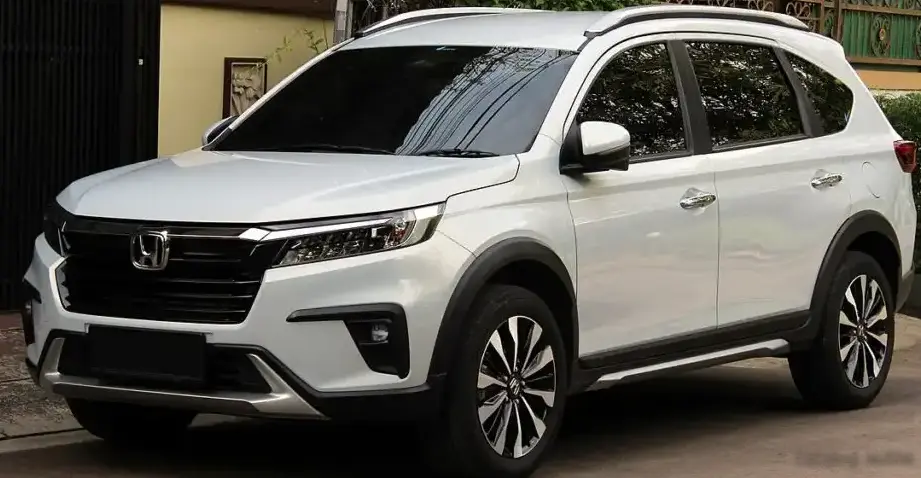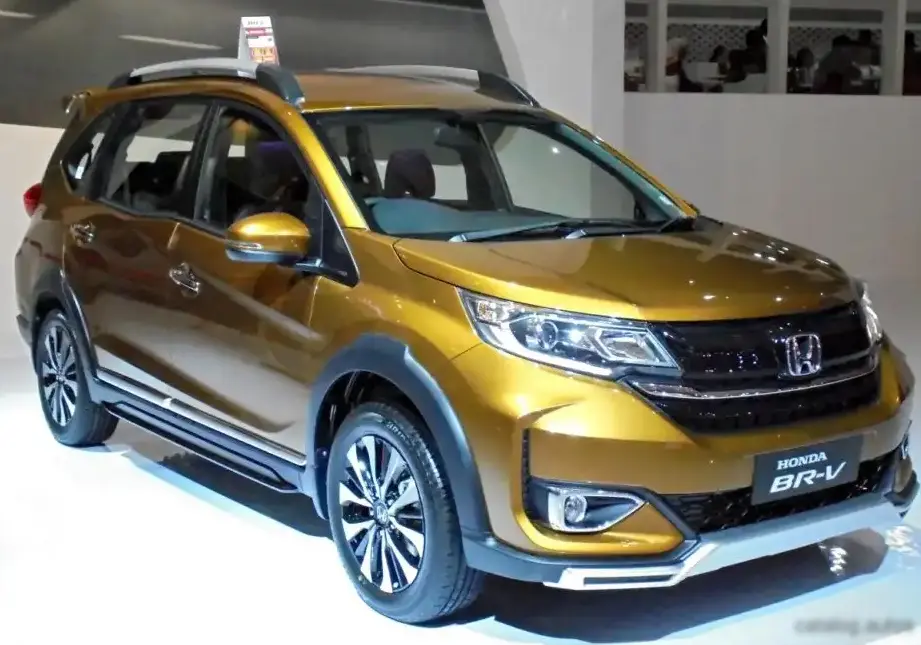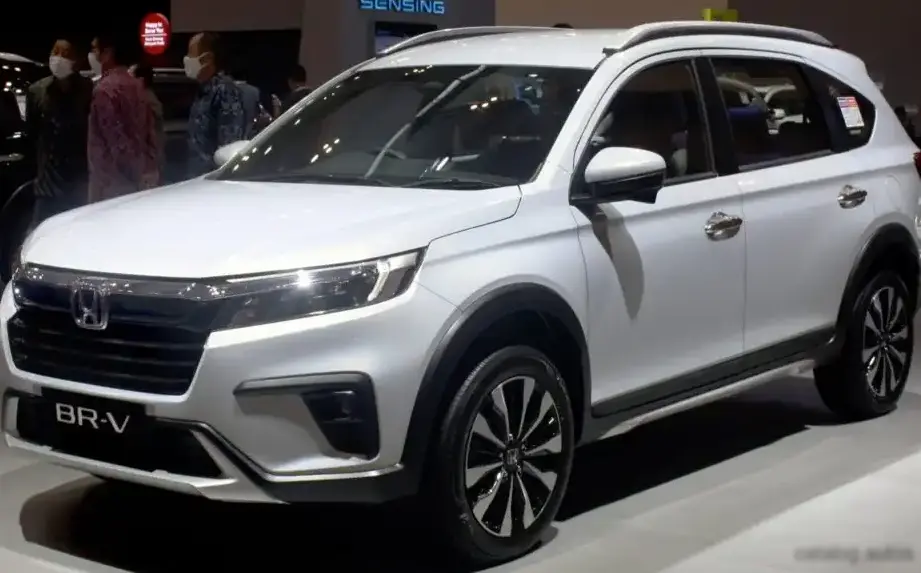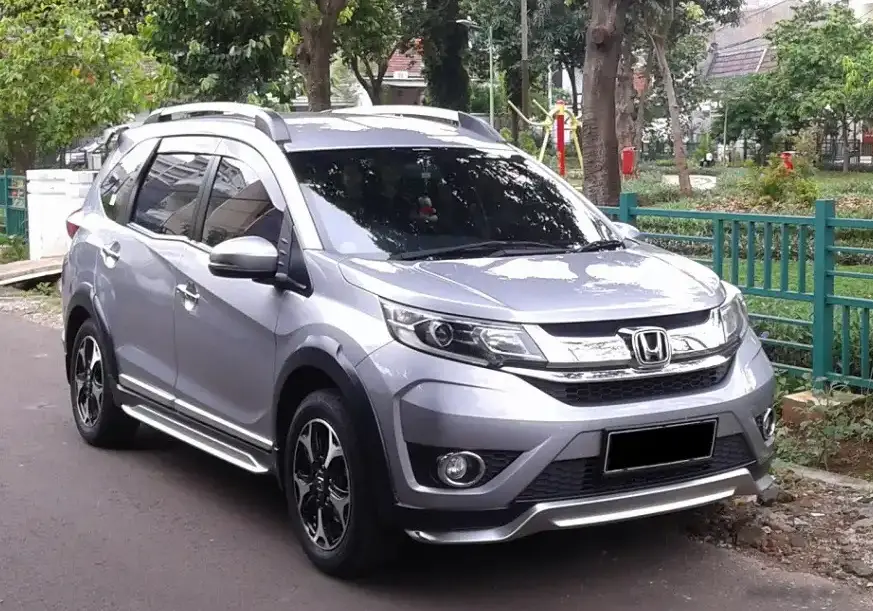
The Honda BR-V 1.5, produced from 2015 to 2019, represents Honda’s entry into the compact, seven-seat SUV segment, primarily targeted towards emerging markets in Asia, South America, and Africa. While not officially sold in the United States during its initial production run, the BR-V offered a practical and affordable family vehicle option. This specific 1.5-liter, 119 horsepower variant served as the mainstay of the BR-V lineup in many regions, balancing fuel efficiency with adequate performance for everyday driving. It was built on the versatile Brio platform, sharing components with other Honda models like the Mobilio.
Technical Specifications
| Brand | Honda |
| Model | BR-V |
| Generation | BR-V I |
| Type (Engine) | 1.5 (119 Hp) |
| Start of production | 2015 |
| End of production | 2019 |
| Powertrain Architecture | Internal Combustion engine |
| Body type | SUV |
| Seats | 7 |
| Doors | 5 |
| Fuel consumption (combined) | 6.4 l/100 km (36.8 US mpg, 44.1 UK mpg, 15.6 km/l) |
| Fuel Type | Petrol (Gasoline) |
| Weight-to-power ratio | 10.1 kg/Hp, 99.2 Hp/tonne |
| Weight-to-torque ratio | 8.3 kg/Nm, 120.9 Nm/tonne |
| Power | 119 Hp @ 6600 rpm |
| Power per litre | 79.5 Hp/l |
| Torque | 145 Nm @ 4600 rpm (106.95 lb.-ft. @ 4600 rpm) |
| Engine layout | Front, Transverse |
| Engine Model/Code | L15Z1 |
| Engine displacement | 1497 cm3 (91.35 cu. in.) |
| Number of cylinders | 4 |
| Engine configuration | Inline |
| Number of valves per cylinder | 4 |
| Fuel injection system | Multi-port manifold injection |
| Engine aspiration | Naturally aspirated engine |
| Valvetrain | SOHC, i-VTEC |
| Engine oil capacity | 3.6 l (3.8 US qt | 3.17 UK qt) |
| Coolant | 3.9 l (4.12 US qt | 3.43 UK qt) |
| Kerb Weight | 1199-1235 kg (2643.34 – 2722.71 lbs.) |
| Fuel tank capacity | 42 l (11.1 US gal | 9.24 UK gal) |
| Length | 4453 mm (175.31 in.) |
| Width | 1735 mm (68.31 in.) |
| Height | 1666 mm (65.59 in.) |
| Wheelbase | 2662 mm (104.8 in.) |
| Minimum turning circle | 10.6 m (34.78 ft.) |
| Drivetrain Architecture | Front wheel drive, Internal Combustion engine (ICE) |
| Number of gears and type of gearbox | 6 gears, manual transmission |
| Front suspension | Independent type McPherson |
| Rear suspension | Torsion |
| Front brakes | Disc |
| Rear brakes | Drum |
| Assisting systems | ABS (Anti-lock braking system) |
| Steering type | Steering rack and pinion |
| Power steering | Electric Steering |
| Tires size | 195/60 R16 |
| Wheel rims size | 16 |
Powertrain & Engine Architecture
The heart of the BR-V 1.5 is the L15Z1 engine, a 1.5-liter inline-four cylinder gasoline engine. This engine is part of Honda’s L-series engine family, known for its reliability and fuel efficiency. The L15Z1 utilizes a single overhead camshaft (SOHC) configuration coupled with Honda’s intelligent Variable Valve Timing and Lift Electronic Control (i-VTEC) system. This technology optimizes valve timing for improved performance and fuel economy across the engine’s operating range. Fuel delivery is managed by a multi-point fuel injection system. The engine produces 119 horsepower at 6,600 rpm and 145 Nm (106.95 lb-ft) of torque at 4,600 rpm. The standard transmission for this variant was a six-speed manual gearbox, providing direct control over the engine’s power. A Continuously Variable Transmission (CVT) was offered in some markets as an optional upgrade.
Driving Characteristics
The BR-V 1.5 with the manual transmission offers a reasonably engaging driving experience, particularly considering its focus on practicality and affordability. Acceleration is adequate for daily commuting and highway merging, though it’s not a particularly sporty vehicle. The six-speed manual gearbox is well-matched to the engine’s characteristics, allowing drivers to keep the engine in its optimal power band. The gear ratios are tuned for fuel efficiency, meaning that the engine can feel somewhat strained when fully loaded with passengers and cargo. Compared to potential higher-spec variants (which were not widely available), the 1.5L manual offers a more connected feel, while sacrificing some outright performance. The CVT option, while smoother, tends to exhibit the typical “rubber band” effect associated with this type of transmission, and can feel less responsive.
Equipment & Trim Levels
The BR-V 1.5 typically came with a fairly basic level of standard equipment, reflecting its position as the entry-level trim. Standard features generally included air conditioning, power windows, power steering, and a basic audio system with USB connectivity. Safety features included dual front airbags and ABS (Anti-lock Braking System). Higher trim levels, available in some markets, added features such as alloy wheels, a touchscreen infotainment system, rear parking sensors, and a reverse camera. Interior upholstery was typically cloth, with a functional and durable design. The dashboard layout was straightforward and easy to use, prioritizing practicality over luxury.
Chassis & Braking
The BR-V utilizes a front-wheel-drive configuration with an independent McPherson strut suspension in the front and a torsion beam suspension in the rear. This suspension setup provides a comfortable ride quality, suitable for a variety of road conditions. The front brakes are disc brakes, while the rear brakes are drum brakes – a cost-saving measure common in this segment. The steering is electrically assisted, providing light and easy steering feel. The tires are typically 195/60 R16 size, offering a good balance between comfort and handling.
Market Reception & Comparison
The Honda BR-V 1.5 was generally well-received in the markets where it was sold, praised for its spacious interior, seven-seat capability, and fuel efficiency. Critics noted that the 1.5-liter engine could feel underpowered when the vehicle was fully loaded, especially on inclines. Compared to other compact SUVs in its class, the BR-V offered a compelling value proposition, particularly for families seeking an affordable and practical vehicle. Its fuel economy of around 36.8 US mpg was competitive with other vehicles in its segment. Reliability was also a strong point, consistent with Honda’s reputation for building durable vehicles.
Legacy
The Honda BR-V, particularly the 1.5-liter variant, has proven to be a reliable and durable vehicle in the used car market. The L15Z1 engine is known for its longevity, and routine maintenance is relatively straightforward and affordable. While not a performance-oriented vehicle, the BR-V 1.5 provides a practical and economical transportation solution for families. Its seven-seat capability remains a significant selling point, and its compact size makes it easy to maneuver in urban environments. As of today, well-maintained examples of the BR-V 1.5 continue to be a popular choice for budget-conscious buyers seeking a versatile and dependable SUV.