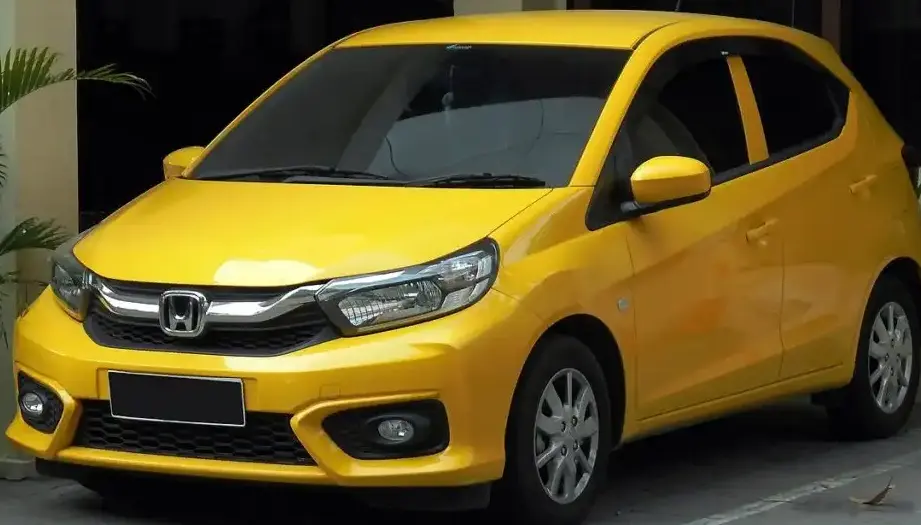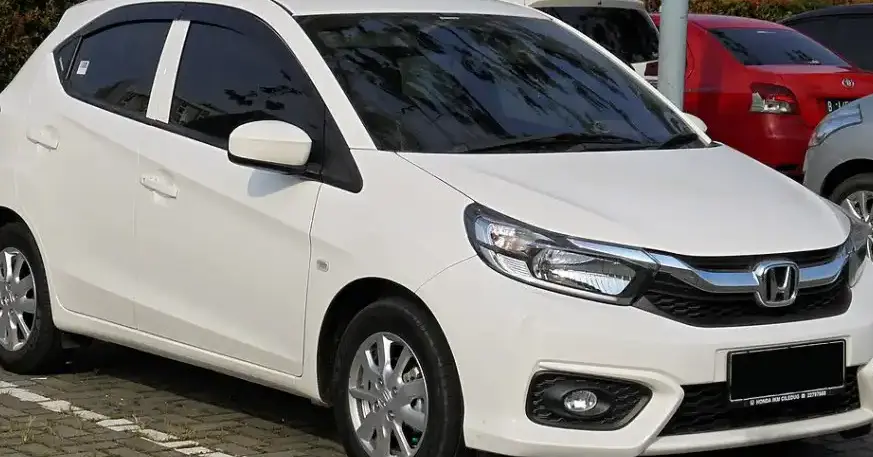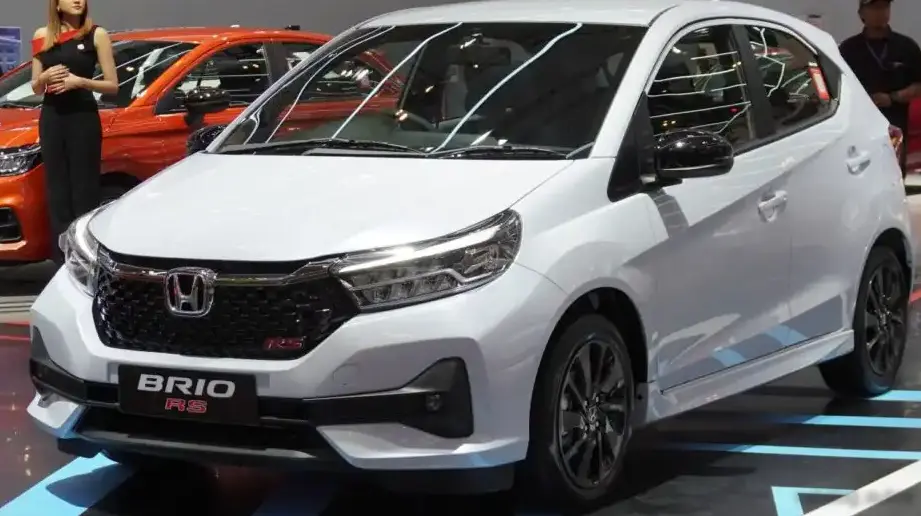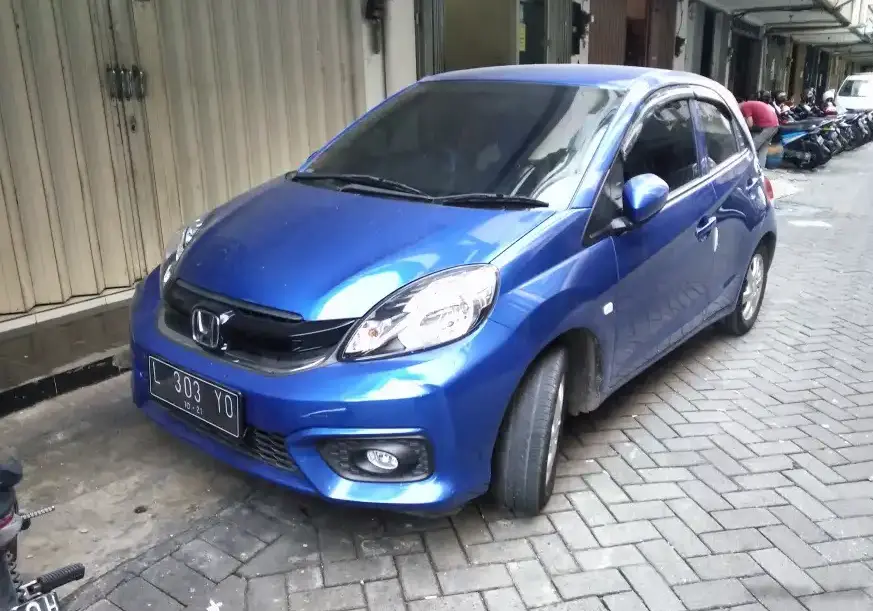
The Honda Brio I (facelift 2016) 1.2 i-VTEC (88 hp) Automatic represents a significant variant within the first generation of Honda’s Brio hatchback, produced from 2016 to 2018. Designed primarily for the Southeast Asian and Indian markets, the Brio aimed to provide an affordable and practical entry point into Honda ownership. This particular configuration, pairing the 1.2-liter i-VTEC engine with a five-speed automatic transmission, was positioned as a convenient and accessible option for urban commuters. It occupied a middle ground in the Brio range, balancing the simplicity of the manual transmission models with the added features of the higher trims.
Technical Specifications
| Brand | Honda |
| Model | Brio |
| Generation | Brio I (facelift 2016) |
| Type (Engine) | 1.2 i-VTEC (88 Hp) Automatic |
| Start of production | 2016 |
| End of production | 2018 |
| Powertrain Architecture | Internal Combustion engine |
| Body type | Hatchback |
| Seats | 5 |
| Doors | 5 |
| Fuel Type | Petrol (Gasoline) |
| Weight-to-power ratio | 11 kg/Hp, 90.7 Hp/tonne |
| Weight-to-torque ratio | 8.9 kg/Nm, 112.4 Nm/tonne |
| Power | 88 Hp @ 6000 rpm |
| Power per litre | 73.5 Hp/l |
| Torque | 109 Nm @ 4500 rpm (80.39 lb.-ft. @ 4500 rpm) |
| Engine layout | Front, Transverse |
| Engine displacement | 1198 cm3 (73.11 cu. in.) |
| Number of cylinders | 4 |
| Engine configuration | Inline |
| Number of valves per cylinder | 4 |
| Fuel injection system | Multi-port manifold injection |
| Engine aspiration | Naturally aspirated engine |
| Valvetrain | SOHC |
| Kerb Weight | 970 kg (2138.48 lbs) |
| Fuel tank capacity | 35 l (9.25 US gal | 7.7 UK gal) |
| Length | 3610 mm (142.13 in) |
| Width | 1680 mm (66.14 in) |
| Height | 1500 mm (59.06 in) |
| Wheelbase | 2345 mm (92.32 in) |
| Minimum turning circle | 9.4 m (30.84 ft) |
| Drivetrain Architecture | The Internal combustion engine (ICE) drives the front wheels of the vehicle. |
| Drive wheel | Front wheel drive |
| Number of gears and type of gearbox | 5 gears, automatic transmission |
| Front suspension | Independent type McPherson |
| Rear suspension | Semi-independent, coil spring |
| Front brakes | Disc |
| Rear brakes | Drum |
| Assisting systems | ABS (Anti-lock braking system) |
| Steering type | Steering rack and pinion |
| Power steering | Electric Steering |
| Tires size | 175/65 R14 |
| Wheel rims size | 14 |
Powertrain & Engine Architecture
The core of this Brio variant is the Honda S07A 1.2-liter inline-four cylinder engine. This engine is part of Honda’s ‘Earth Dreams’ technology series, emphasizing efficiency and reduced emissions. The S07A features a single overhead camshaft (SOHC) valvetrain with four valves per cylinder, coupled with a multi-point fuel injection system. The engine produces 88 horsepower at 6000 rpm and 109 Nm (80.39 lb-ft) of torque at 4500 rpm – figures that are adequate for city driving. The five-speed automatic transmission is a conventional torque converter type, prioritizing smooth shifts over outright performance. Its relatively simple design contributes to the Brio’s affordability and ease of maintenance.
Driving Characteristics
The 1.2L i-VTEC Automatic Brio provides a comfortable, though not particularly sporty, driving experience. The automatic transmission is tuned for fuel economy, with relatively early upshifts to maintain the engine within its optimal efficiency range. Acceleration is sufficient for urban environments, but overtaking requires planning. The gear ratios are optimized for fuel economy rather than rapid acceleration. Compared to the five-speed manual version, the automatic sacrifices some responsiveness in favor of convenience. The higher-output 1.3-liter engine, available in some markets, offered noticeably more performance, but at a higher price. The Brio’s light weight (970 kg / 2138.48 lbs) helps to offset the relatively modest horsepower.
Equipment & Trim Levels
The 1.2 i-VTEC Automatic trim typically included standard features such as air conditioning, power windows, and central locking. Safety features generally included dual front airbags and an Anti-lock Braking System (ABS). Interior upholstery was typically cloth, with a functional, if basic, dashboard layout. Optional extras could include a stereo system with USB connectivity, alloy wheels, and body-colored door handles and mirrors. Higher trim levels added features like a more sophisticated audio system, rear power windows, and a multi-function steering wheel.
Chassis & Braking
The Brio utilizes a McPherson strut independent suspension setup at the front, providing a reasonable level of ride comfort. The rear suspension employs a semi-independent torsion beam configuration, a cost-effective solution for compact hatchbacks. Braking is handled by disc brakes at the front and drum brakes at the rear. The ABS system enhances safety by preventing wheel lockup during hard braking. The steering is rack and pinion with electric power assistance, offering light and easy steering feel, ideal for navigating congested city streets. The 14-inch wheels are fitted with 175/65 R14 tires, balancing ride comfort and fuel efficiency.
Market Reception & Comparison
The Honda Brio, and specifically this 1.2L Automatic variant, was generally well-received in its target markets. Critics praised its fuel efficiency, compact size, and Honda’s reputation for reliability. However, some reviewers noted the engine’s lack of substantial power and the somewhat basic interior appointments. Compared to competitors like the Suzuki Swift and Hyundai i10, the Brio offered a competitive package, particularly in terms of fuel economy and build quality. The automatic transmission, while convenient, was sometimes criticized for being slightly sluggish in its responses. Real-world fuel economy typically ranged from 5.5 to 6.5 liters per 100 kilometers (approximately 43-36 mpg US).
Legacy
The Honda Brio, while discontinued in many markets, remains a popular choice in the used car market, particularly for first-time car buyers and those seeking an affordable and reliable city car. The 1.2L i-VTEC engine and automatic transmission combination has proven to be relatively durable, with many examples exceeding 150,000 kilometers without major mechanical issues. Routine maintenance, including regular oil changes and timing belt replacements, is crucial for long-term reliability. The Brio’s simple design and readily available parts contribute to its relatively low cost of ownership. While not a performance icon, the Brio I (facelift 2016) 1.2 i-VTEC Automatic served as a practical and dependable transportation solution for a wide range of drivers.