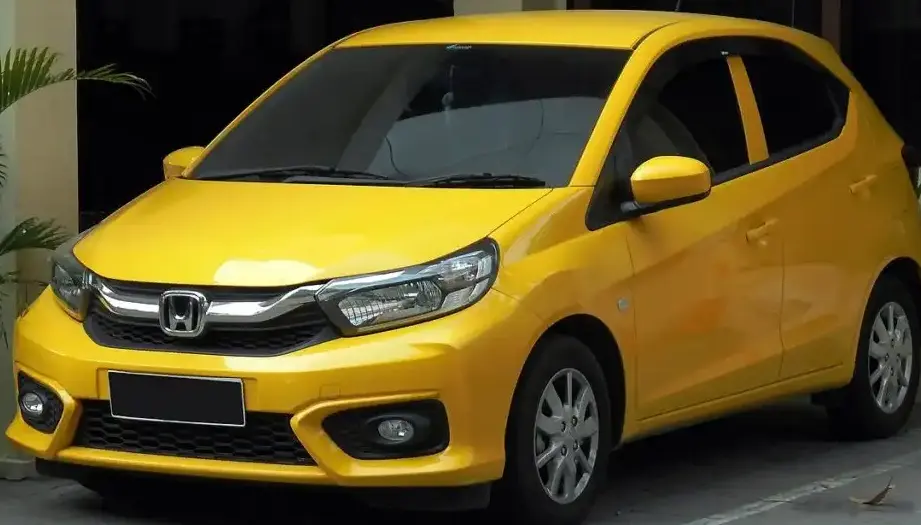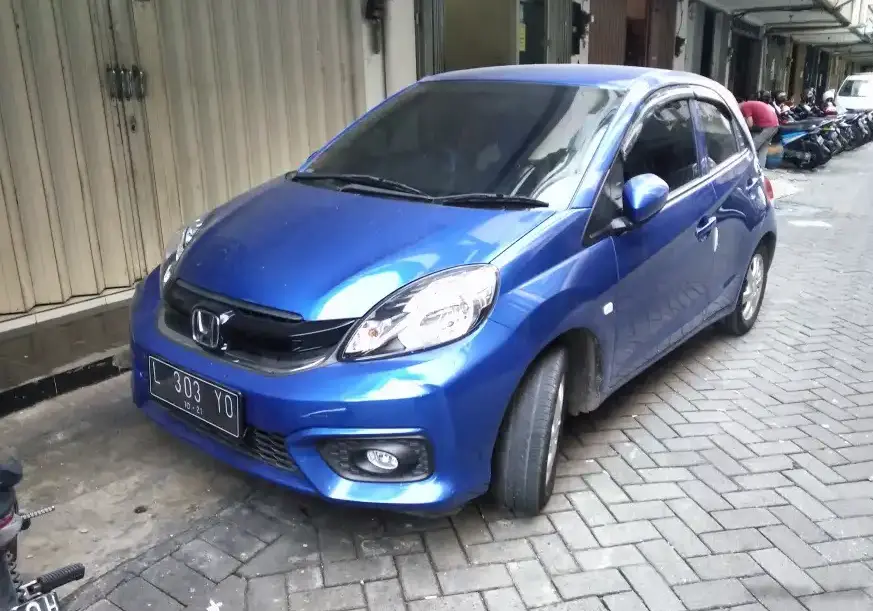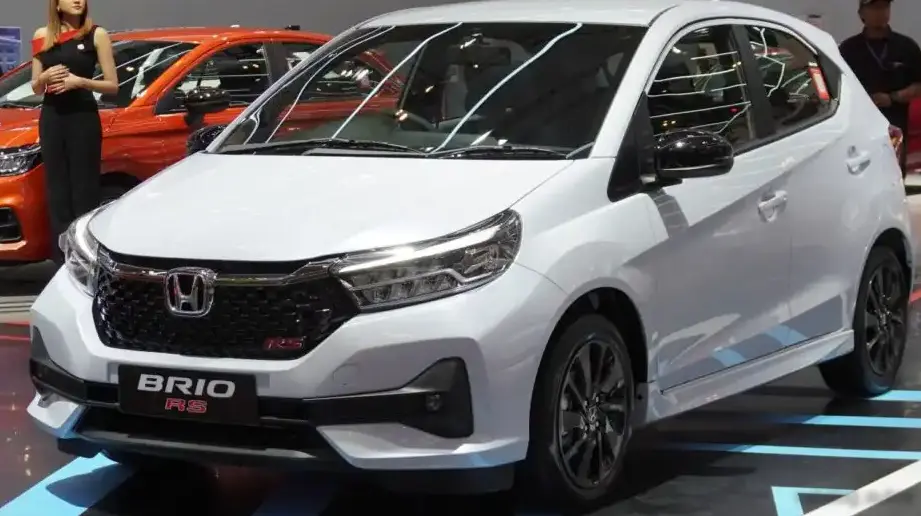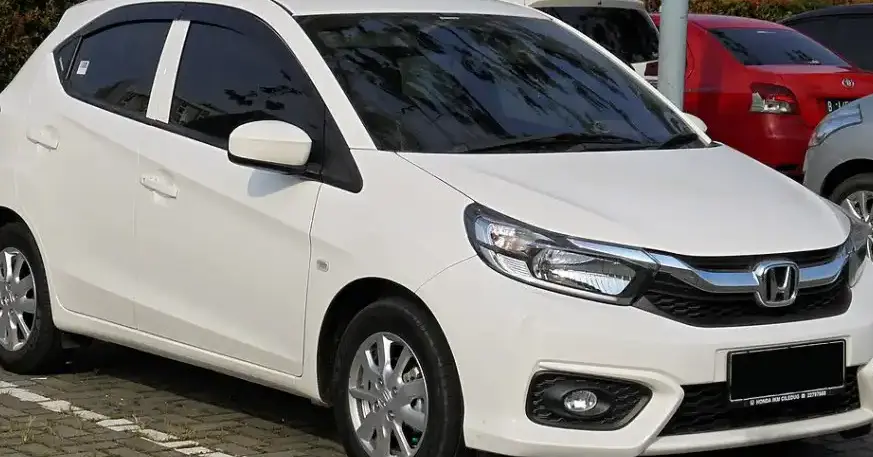
The Honda Brio II 1.2 i-VTEC (90 hp) CVT, produced from 2018 to 2023, represents an entry-level offering within the second generation of Honda’s Brio hatchback. Designed primarily for the Asian market, particularly India, Thailand, and South Africa, the Brio II aimed to provide affordable and fuel-efficient transportation in densely populated urban environments. This specific variant, equipped with the 1.2-liter i-VTEC engine and a Continuously Variable Transmission (CVT), was positioned as the most accessible trim level, prioritizing economy and ease of use over outright performance. It sat below higher-spec Brio II models that offered manual transmissions or more features.
Technical Specifications
| Brand | Honda |
| Model | Brio |
| Generation | Brio II |
| Type (Engine) | 1.2 i-VTEC (90 Hp) CVT |
| Start of production | August, 2018 |
| End of production | 2023 |
| Powertrain Architecture | Internal Combustion engine |
| Body type | Hatchback |
| Seats | 5 |
| Doors | 5 |
| Fuel consumption (urban) | 6.6 l/100 km (35.6 US mpg, 42.8 UK mpg, 15.2 km/l) |
| Fuel consumption (extra urban) | 4.7 l/100 km (50 US mpg, 60.1 UK mpg, 21.3 km/l) |
| Fuel consumption (combined) | 5.4 l/100 km (43.6 US mpg, 52.3 UK mpg, 18.5 km/l) |
| Fuel Type | Petrol (Gasoline) |
| Emission standard | Euro 4 |
| Weight-to-power ratio | 10.8 kg/Hp, 92.9 Hp/tonne |
| Weight-to-torque ratio | 8.8 kg/Nm, 113.5 Nm/tonne |
| Power | 90 Hp @ 6000 rpm |
| Power per litre | 75.1 Hp/l |
| Torque | 110 Nm @ 4800 rpm (81.13 lb.-ft. @ 4800 rpm) |
| Engine layout | Front, Transverse |
| Engine Model/Code | L12B3 |
| Engine displacement | 1199 cm3 (73.17 cu. in.) |
| Number of cylinders | 4 |
| Engine configuration | Inline |
| Cylinder Bore | 73 mm (2.87 in.) |
| Piston Stroke | 71.6 mm (2.82 in.) |
| Compression ratio | 10.1:1 |
| Number of valves per cylinder | 4 |
| Fuel injection system | Multi-port manifold injection |
| Engine aspiration | Naturally aspirated engine |
| Valvetrain | SOHC, i-VTEC |
| Kerb Weight | 969-972 kg (2136.28 – 2142.89 lbs.) |
| Max. weight | 1375 kg (3031.36 lbs.) |
| Max load | 403-406 kg (888.46 – 895.08 lbs.) |
| Trunk (boot) space – minimum | 258 l (9.11 cu. ft.) |
| Trunk (boot) space – maximum | 710 l (25.07 cu. ft.) |
| Fuel tank capacity | 35 l (9.25 US gal | 7.7 UK gal) |
| Length | 3800 mm (149.61 in.) |
| Width | 1680 mm (66.14 in.) |
| Height | 1485 mm (58.46 in.) |
| Wheelbase | 2405 mm (94.69 in.) |
| Front track | 1480 mm (58.27 in.) |
| Rear (Back) track | 1465 mm (57.68 in.) |
| Ride height (ground clearance) | 154 mm (6.06 in.) |
| Minimum turning circle (turning diameter) | 9.2 m (30.18 ft.) |
| Drivetrain Architecture | The Internal combustion engine (ICE) drives the front wheels of the vehicle. |
| Drive wheel | Front wheel drive |
| Number of gears and type of gearbox | automatic transmission CVT |
| Front suspension | Independent, type McPherson with coil spring and anti-roll bar |
| Rear suspension | Torsion |
| Front brakes | Ventilated discs |
| Rear brakes | Drum |
| Assisting systems | ABS (Anti-lock braking system) |
| Steering type | Steering rack and pinion |
| Power steering | Electric Steering |
| Tires size | 175/65 R14 |
| Wheel rims size | 5J x 14 |
Powertrain & Engine Architecture
The heart of the Brio II 1.2 i-VTEC CVT is the L12B3 engine, a 1.2-liter inline-four cylinder gasoline engine. This engine is part of Honda’s Earth Dreams Technology series, focusing on efficiency and reduced emissions. It utilizes a single overhead camshaft (SOHC) configuration and Honda’s intelligent Variable Valve Timing and Lift Electronic Control (i-VTEC) system. The i-VTEC system allows for variable valve timing and lift, optimizing engine performance across a wider range of engine speeds. Fuel delivery is managed by a multi-point fuel injection system. The engine produces 90 horsepower at 6000 rpm and 110 Nm (81.13 lb-ft) of torque at 4800 rpm. Paired with this engine is a Continuously Variable Transmission (CVT), offering smooth, stepless gear changes designed to maximize fuel efficiency. Unlike traditional automatic transmissions with fixed gear ratios, the CVT allows the engine to operate at its most efficient rpm for any given speed.
Driving Characteristics
The 90 hp output and CVT pairing result in a driving experience geared towards urban practicality rather than spirited performance. Acceleration is adequate for city driving, but overtaking maneuvers on highways require careful planning. The CVT contributes to a smooth and linear power delivery, lacking the distinct shift points of a traditional automatic. While this enhances comfort, it can also feel somewhat disconnected and less engaging for drivers accustomed to more conventional transmissions. The CVT’s programming prioritizes fuel economy, meaning the engine often operates at lower rpm, which can sometimes feel sluggish under hard acceleration. Compared to the manual transmission versions of the Brio II, the CVT model offers less driver involvement but greater ease of use, particularly in stop-and-go traffic.
Equipment & Trim Levels
The 1.2 i-VTEC CVT trim typically included standard features such as air conditioning, power windows, power steering, and a basic audio system with USB connectivity. Safety features generally included dual front airbags and ABS (Anti-lock Braking System). Interior upholstery was typically cloth, with a functional but basic dashboard layout. Optional extras, depending on the market, could include alloy wheels, a more advanced audio system with Bluetooth connectivity, and rear parking sensors. This trim level was generally considered the base model, offering essential features at an affordable price point.
Chassis & Braking
The Brio II utilizes a front-wheel-drive layout with a McPherson strut suspension in the front and a torsion beam suspension in the rear. The front suspension incorporates a stabilizer bar to reduce body roll during cornering. Braking duties are handled by ventilated discs in the front and drum brakes in the rear. This configuration was chosen to balance cost and performance for the vehicle’s weight class. The relatively simple suspension setup prioritizes ride comfort over sporty handling, making it well-suited for navigating uneven road surfaces commonly found in urban environments.
Market Reception & Comparison
The Honda Brio II 1.2 i-VTEC CVT was generally well-received as an affordable and fuel-efficient city car. Critics praised its compact size, ease of maneuverability, and good fuel economy. However, the engine’s limited power output and the CVT’s sometimes-lackluster performance were common criticisms. Compared to other trims in the Brio II lineup, such as those with manual transmissions, the CVT model offered less driver engagement but greater convenience. Against competitors like the Maruti Suzuki Swift and Hyundai Grand i10, the Brio II offered a competitive package in terms of fuel efficiency and reliability, but often lagged behind in terms of interior space and features.
Legacy
The Honda Brio II, including the 1.2 i-VTEC CVT variant, has proven to be a relatively reliable vehicle. The L12B3 engine is known for its durability and low maintenance costs. The CVT transmission, while not as robust as a traditional automatic, has generally held up well with proper maintenance. In the used car market, the Brio II 1.2 i-VTEC CVT remains a popular choice for budget-conscious buyers seeking a fuel-efficient and dependable city car. Its compact size and ease of parking make it particularly well-suited for urban environments, and its relatively low running costs contribute to its ongoing appeal.