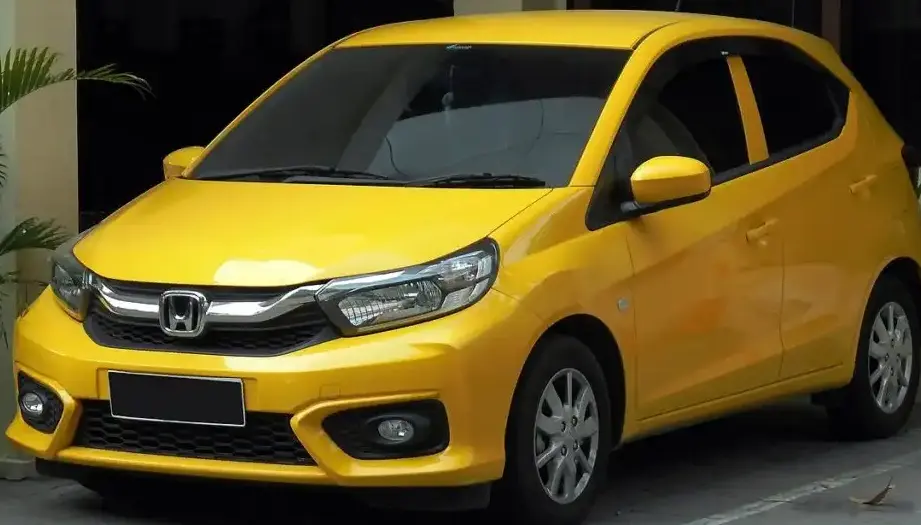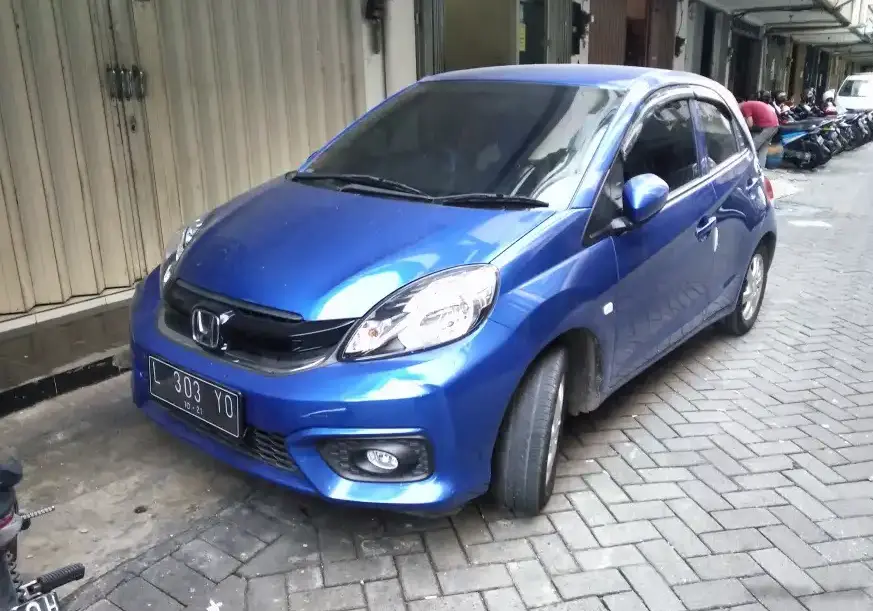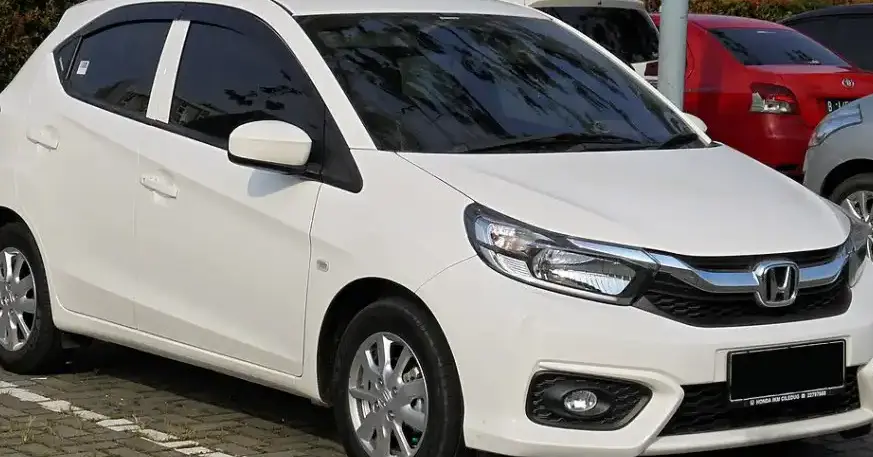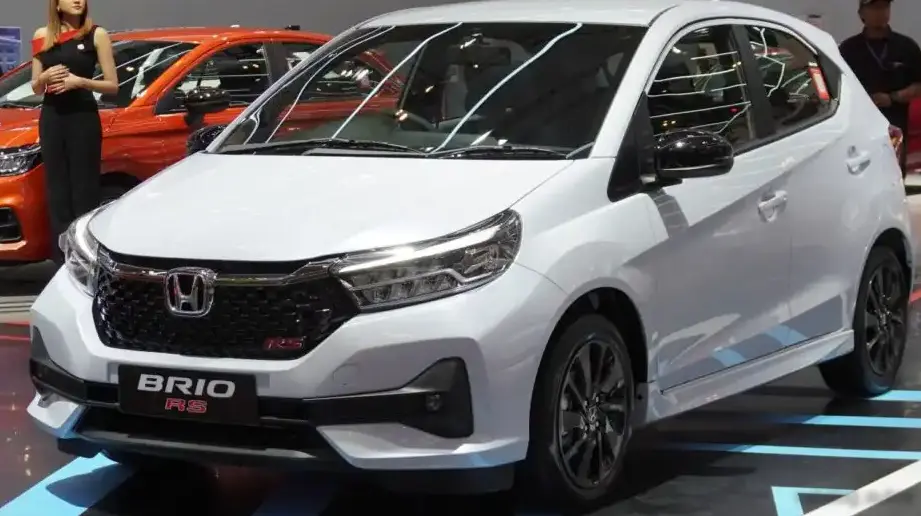
The Honda Brio II (facelift 2023) 1.2, producing 90 horsepower, represents an entry-level offering within the second generation of Honda’s Brio hatchback. Introduced in May 2023, this variant is primarily targeted towards the Southeast Asian market, where fuel efficiency and affordability are key purchasing considerations. The Brio II, built upon the same platform as the Honda Amaze sedan, aims to provide a practical and economical transportation solution in a competitive segment. This specific 1.2L engine and transmission combination serves as the base model, offering a balance between cost and functionality.
Technical Specifications
| Brand | Honda |
| Model | Brio |
| Generation | Brio II (facelift 2023) |
| Type (Engine) | 1.2 (90 Hp) |
| Start of production | May, 2023 |
| Powertrain Architecture | Internal Combustion engine |
| Body type | Hatchback |
| Seats | 5 |
| Doors | 5 |
| Fuel Type | Petrol (Gasoline) |
| Emission standard | Euro 4 |
| Weight-to-power ratio | 10.6 kg/Hp, 94.3 Hp/tonne |
| Weight-to-torque ratio | 8.7 kg/Nm, 115.3 Nm/tonne |
| Power | 90 Hp @ 6000 rpm |
| Power per litre | 75.1 Hp/l |
| Torque | 110 Nm @ 4800 rpm (81.13 lb.-ft. @ 4800 rpm) |
| Engine layout | Front, Transverse |
| Engine Model/Code | L12B3 |
| Engine displacement | 1199 cm3 (73.17 cu. in.) |
| Number of cylinders | 4 |
| Engine configuration | Inline |
| Cylinder Bore | 73 mm (2.87 in.) |
| Piston Stroke | 71.6 mm (2.82 in.) |
| Compression ratio | 10.1:1 |
| Number of valves per cylinder | 4 |
| Fuel injection system | Multi-port manifold injection |
| Engine aspiration | Naturally aspirated engine |
| Valvetrain | SOHC |
| Kerb Weight | 954 kg (2103.21 lbs.) |
| Trunk (boot) space – minimum | 258 l (9.11 cu. ft.) |
| Trunk (boot) space – maximum | 851 l (30.05 cu. ft.) |
| Fuel tank capacity | 35 l (9.25 US gal | 7.7 UK gal) |
| Length | 3810 mm (150 in.) |
| Width | 1680 mm (66.14 in.) |
| Height | 1485 mm (58.46 in.) |
| Wheelbase | 2405 mm (94.69 in.) |
| Front track | 1475 mm (58.07 in.) |
| Rear (Back) track | 1460 mm (57.48 in.) |
| Minimum turning circle (turning diameter) | 9.4 m (30.84 ft.) |
| Drivetrain Architecture | The Internal combustion engine (ICE) drives the front wheels of the vehicle. |
| Drive wheel | Front wheel drive |
| Number of gears and type of gearbox | 5 gears, manual transmission |
| Front suspension | Independent, type McPherson with coil spring and anti-roll bar |
| Rear suspension | Torsion |
| Front brakes | Ventilated discs |
| Rear brakes | Drum |
| Assisting systems | ABS (Anti-lock braking system) |
| Steering type | Steering rack and pinion |
| Power steering | Electric Steering |
| Tires size | 175/65 R14; 185/55 R15 |
| Wheel rims size | 5J x 14; 6J x 15 |
Powertrain & Engine Architecture
The heart of the Brio II 1.2 is the L12B3 engine, a 1.2-liter inline-four cylinder gasoline engine. This engine utilizes a single overhead camshaft (SOHC) valvetrain and a multi-point fuel injection system. The L12B3 is known for its relatively simple design, contributing to its reliability and ease of maintenance. The engine produces 90 horsepower at 6000 rpm and 110 Nm (81.13 lb-ft) of torque at 4800 rpm. This engine is paired with a 5-speed manual transmission, which is the standard offering for this trim level. The engine’s design prioritizes fuel efficiency over outright performance, making it well-suited for urban driving conditions.
Driving Characteristics
The 90 hp output and 5-speed manual transmission provide adequate, though not exhilarating, performance. Acceleration is best described as modest, with a focus on smooth and predictable power delivery. The gear ratios are tuned for fuel economy, meaning the engine needs to be revved to access its peak power. Compared to higher-spec Brio models equipped with larger engines, this variant feels noticeably less responsive, particularly when fully loaded or tackling inclines. However, the light weight of the Brio (954 kg) helps mitigate the effects of the smaller engine. The manual transmission offers a more engaging driving experience than an automatic, allowing drivers to maintain control over the engine’s power band.
Equipment & Trim Levels
The Brio II 1.2 typically serves as the entry point to the Brio lineup. Standard equipment generally includes basic features such as air conditioning, power steering, and a basic audio system. Safety features typically include dual front airbags and ABS (Anti-lock Braking System). Interior upholstery is usually a simple cloth material. Optional extras, depending on the market, may include power windows, central locking, and a more advanced audio system. The trim level is designed to appeal to budget-conscious buyers who prioritize functionality and reliability over luxury features.
Chassis & Braking
The Brio II utilizes a McPherson strut suspension setup at the front, providing a comfortable ride quality for everyday driving. The rear suspension employs a torsion beam, a cost-effective and space-saving solution. The front brakes are ventilated discs, offering adequate stopping power, while the rear brakes are drums. This combination is typical for vehicles in this price segment. The electric power steering provides light and easy steering, making it maneuverable in urban environments. The relatively small tires (175/65 R14 or 185/55 R15) contribute to ride comfort but limit grip during more spirited driving.
Market Reception & Comparison
The Honda Brio II 1.2 has generally been well-received in its target markets as an affordable and reliable city car. Critics have praised its fuel efficiency and practicality, but have noted its lack of outright performance. Compared to other trims in the Brio lineup, such as those equipped with larger engines, the 1.2L variant offers a more economical option, but at the expense of driving excitement. Its fuel economy is a key selling point, often exceeding competitors in its class. Reliability is also a strong suit, benefiting from Honda’s reputation for building durable vehicles.
Legacy
The L12B3 engine, while not a high-performance unit, has proven to be a reliable and durable powertrain. The Brio II 1.2, as a result, holds its value reasonably well in the used car market. Maintenance costs are generally low, thanks to the engine’s simple design and the widespread availability of spare parts. While not a collector’s item, the Brio II 1.2 represents a practical and economical choice for those seeking a dependable city car. Its enduring appeal lies in its ability to provide basic transportation without compromising on reliability or fuel efficiency.