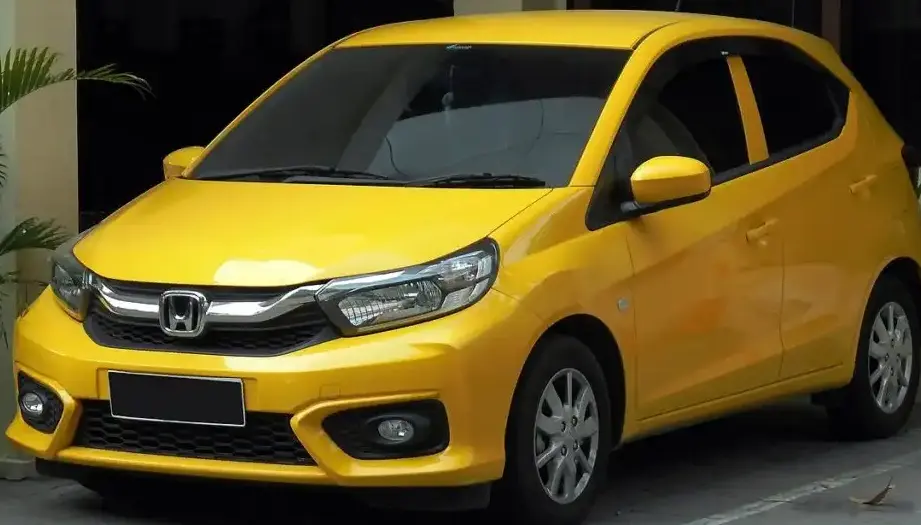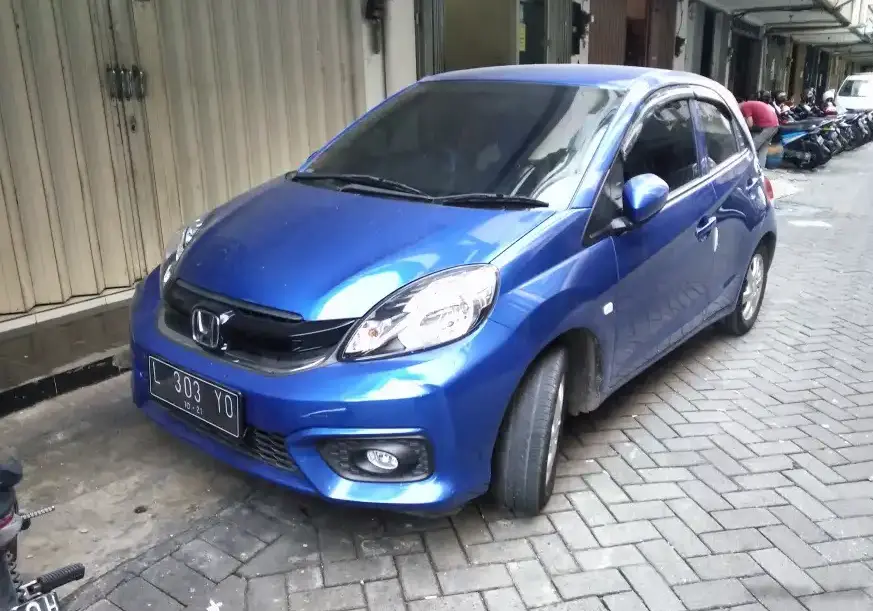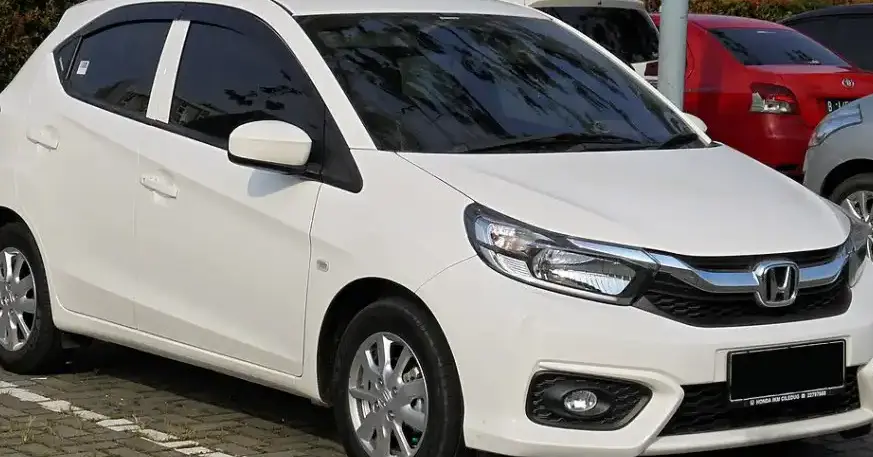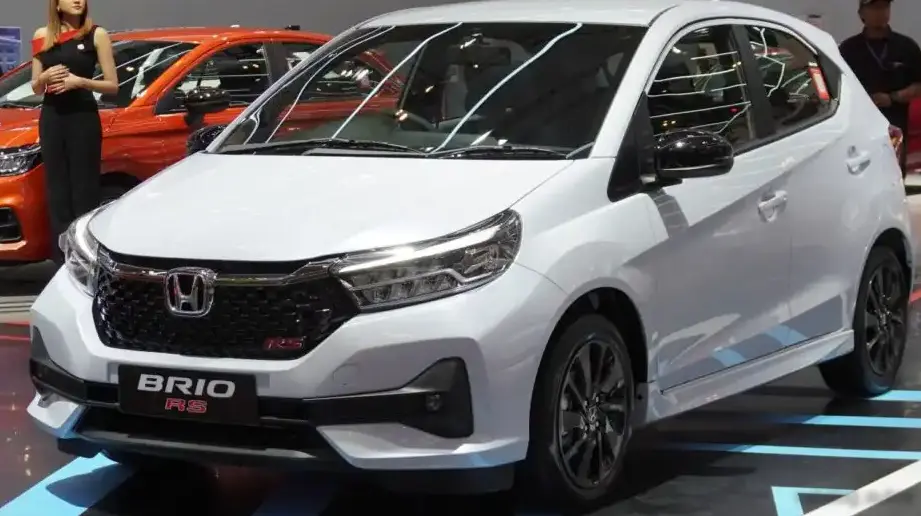
The Honda Brio II (facelift 2023) 1.2 (90 Hp) CVT represents an entry-level offering within the second generation of Honda’s Brio hatchback. Introduced in May 2023, this variant is primarily targeted towards urban commuters seeking an affordable and fuel-efficient vehicle. It slots into the Brio lineup as the base engine and transmission combination, offering a more accessible price point compared to potential higher-trim levels with more powerful engines or manual transmissions (if offered in specific markets). The Brio II, in general, is a subcompact hatchback designed to compete in the rapidly growing segment of small, economical cars, particularly in emerging markets like India and Southeast Asia, though it is also available in select Latin American countries.
Technical Specifications
| Brand | Honda |
| Model | Brio |
| Generation | Brio II (facelift 2023) |
| Type (Engine) | 1.2 (90 Hp) CVT |
| Start of production | May, 2023 |
| Powertrain Architecture | Internal Combustion engine |
| Body type | Hatchback |
| Seats | 5 |
| Doors | 5 |
| Fuel consumption (economy) – combined | 5.1 l/100 km (46.1 US mpg, 55.4 UK mpg, 19.6 km/l) |
| Fuel Type | Petrol (Gasoline) |
| Emission standard | Euro 4 |
| Weight-to-power ratio | 10.8 kg/Hp, 92.9 Hp/tonne |
| Weight-to-torque ratio | 8.8 kg/Nm, 113.5 Nm/tonne |
| Power | 90 Hp @ 6000 rpm |
| Power per litre | 75.1 Hp/l |
| Torque | 110 Nm @ 4800 rpm (81.13 lb.-ft. @ 4800 rpm) |
| Engine layout | Front, Transverse |
| Engine Model/Code | L12B3 |
| Engine displacement | 1199 cm3 (73.17 cu. in.) |
| Number of cylinders | 4 |
| Engine configuration | Inline |
| Cylinder Bore | 73 mm (2.87 in.) |
| Piston Stroke | 71.6 mm (2.82 in.) |
| Compression ratio | 10.1:1 |
| Number of valves per cylinder | 4 |
| Fuel injection system | Multi-port manifold injection |
| Engine aspiration | Naturally aspirated engine |
| Valvetrain | SOHC |
| Kerb Weight | 969-995 kg (2136.28 – 2193.6 lbs.) |
| Trunk (boot) space – minimum | 258 l (9.11 cu. ft.) |
| Trunk (boot) space – maximum | 851 l (30.05 cu. ft.) |
| Fuel tank capacity | 35 l (9.25 US gal | 7.7 UK gal) |
| Length | 3810 mm (150 in.) |
| Width | 1680 mm (66.14 in.) |
| Height | 1485 mm (58.46 in.) |
| Wheelbase | 2405 mm (94.69 in.) |
| Front track | 1475 mm (58.07 in.) |
| Rear (Back) track | 1460 mm (57.48 in.) |
| Minimum turning circle (turning diameter) | 9.4 m (30.84 ft.) |
| Drivetrain Architecture | The Internal combustion engine (ICE) drives the front wheels of the vehicle. |
| Drive wheel | Front wheel drive |
| Number of gears and type of gearbox | automatic transmission CVT |
| Front suspension | Independent, type McPherson with coil spring and anti-roll bar |
| Rear suspension | Torsion |
| Front brakes | Ventilated discs |
| Rear brakes | Drum |
| Assisting systems | ABS (Anti-lock braking system) |
| Steering type | Steering rack and pinion |
| Power steering | Electric Steering |
| Tires size | 175/65 R14; 185/55 R15 |
| Wheel rims size | 5J x 14; 6J x 15 |
Powertrain & Engine Architecture
The heart of the Brio II 1.2 CVT is Honda’s L12B3 engine, a 1.2-liter inline-four cylinder gasoline engine. This engine utilizes a single overhead camshaft (SOHC) valvetrain and multi-point fuel injection. The L12B3 is a naturally aspirated engine, meaning it doesn’t employ turbocharging or supercharging. This design prioritizes simplicity and reliability. The engine produces 90 horsepower at 6000 rpm and 110 Nm (81.13 lb-ft) of torque at 4800 rpm. The Continuously Variable Transmission (CVT) is a key component of this variant, designed to maximize fuel efficiency and provide smooth acceleration. Unlike traditional automatic transmissions with fixed gear ratios, a CVT uses a belt and pulley system to offer an infinite number of gear ratios within its operating range. This allows the engine to operate at its most efficient rpm for any given speed.
Driving Characteristics
The 90 hp output and CVT pairing result in a driving experience geared towards efficiency rather than outright performance. Acceleration is adequate for city driving and merging onto highways, but it won’t provide the briskness of higher-powered Brio variants, if available. The CVT contributes to a smooth, linear power delivery, minimizing noticeable gear shifts. However, some drivers may find the CVT’s operation to be less engaging than a traditional automatic or manual transmission. The CVT is programmed to prioritize fuel economy, which can sometimes result in the engine “droning” at higher engine speeds during hard acceleration. The weight-to-power ratio of 10.8 kg/Hp indicates a modest power-to-weight balance, reflecting the car’s focus on economy.
Equipment & Trim Levels
The 1.2 CVT trim typically includes standard features such as air conditioning, power windows, central locking, and basic audio system with USB connectivity. Safety features generally include dual front airbags and ABS (Anti-lock Braking System). Higher trim levels, if offered, may add features like alloy wheels, a touchscreen infotainment system, rear parking sensors, and additional safety equipment. Interior upholstery is typically cloth, with a functional and durable design. The dashboard layout is straightforward and user-friendly, prioritizing ease of use.
Chassis & Braking
The Brio II utilizes a McPherson strut suspension setup at the front, providing a comfortable ride and predictable handling. The rear suspension employs a torsion beam, a cost-effective and space-saving design. The front brakes are ventilated discs, offering good stopping power, while the rear brakes are drums, a common cost-saving measure in this segment. The electric power steering provides light and easy steering, making it well-suited for urban maneuvering. Tire sizes typically range from 175/65 R14 to 185/55 R15, depending on the specific trim level.
Market Reception & Comparison
The Honda Brio II 1.2 CVT is generally well-regarded for its fuel efficiency and affordability. Critics often praise its practicality and ease of driving in congested urban environments. Compared to other subcompact hatchbacks in its class, the Brio offers a competitive fuel economy figure of 5.1 l/100 km. However, some reviewers note that the interior materials and overall refinement are not as high as some of its rivals. Compared to a potential higher-powered Brio variant, the 1.2 CVT sacrifices performance for improved fuel economy and a lower price point. Against a manual transmission version of the same engine, the CVT offers convenience and ease of use, but may slightly reduce fuel economy and responsiveness.
Legacy
The Honda L12B3 engine, while not known for groundbreaking performance, has a reputation for reliability and durability. The CVT transmission, when properly maintained, is also generally considered reliable. In the used car market, the Brio II 1.2 CVT is likely to appeal to buyers seeking an economical and dependable city car. Its relatively simple mechanical design and readily available parts should contribute to lower maintenance costs over the long term. The Brio’s enduring appeal lies in its practicality and affordability, making it a popular choice for first-time car buyers and those seeking a no-frills transportation solution.