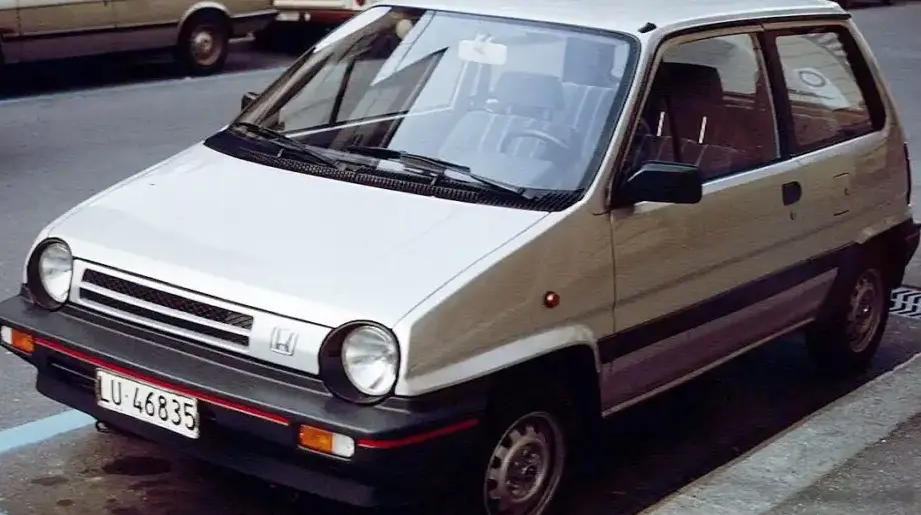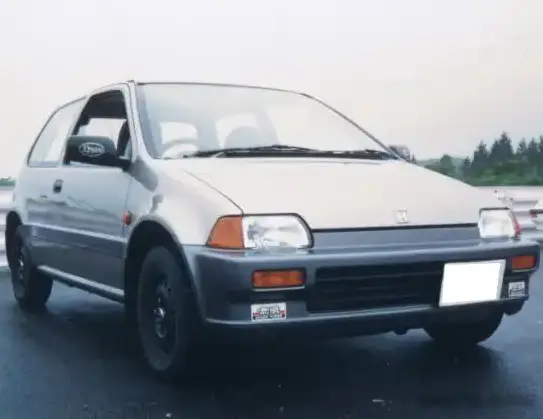
The Honda City II 1.3, producing 82 horsepower, was a key variant within the second generation of the Honda City, manufactured from 1986 to 1994. This model represented Honda’s continued effort to provide an affordable and practical subcompact car, particularly popular in Asian markets and gaining traction in other regions. The City II, built on the AA platform, offered a blend of fuel efficiency, maneuverability, and reliability, making it a popular choice for urban commuters and first-time car buyers. The 1.3-liter engine option, while not the most powerful in the lineup, served as the entry point to the City range, prioritizing economy and ease of driving.
Technical Specifications
| Brand | Honda |
| Model | City |
| Generation | City II |
| Type (Engine) | 1.3 (82 Hp) |
| Start of production | 1986 |
| End of production | 1994 |
| Powertrain Architecture | Internal Combustion engine |
| Body type | Hatchback |
| Seats | 5 |
| Doors | 3 |
| Fuel consumption (urban) | 10 l/100 km (23.5 US mpg) |
| Fuel consumption (extra urban) | 6 l/100 km (39.2 US mpg) |
| Fuel Type | Petrol (Gasoline) |
| Maximum speed | 180 km/h (111.85 mph) |
| Weight-to-power ratio | 9.8 kg/Hp |
| Weight-to-torque ratio | 7.8 kg/Nm |
| Power | 82 Hp @ 6500 rpm |
| Power per litre | 63.3 Hp/l |
| Torque | 103 Nm @ 4000 rpm (75.97 lb.-ft. @ 4000 rpm) |
| Engine layout | Front, Transverse |
| Engine displacement | 1296 cm3 (79.09 cu. in.) |
| Number of cylinders | 4 |
| Engine configuration | Inline |
| Cylinder Bore | 73.7 mm (2.9 in.) |
| Piston Stroke | 76 mm (2.99 in.) |
| Compression ratio | 9.6:1 |
| Number of valves per cylinder | 2 |
| Fuel injection system | Carburettor |
| Engine aspiration | Naturally aspirated |
| Kerb Weight | 800 kg (1763.7 lbs.) |
| Fuel tank capacity | 40 l (10.57 US gal | 8.8 UK gal) |
| Length | 3605 mm (141.93 in.) |
| Width | 1620 mm (63.78 in.) |
| Height | 1335 mm (52.56 in.) |
| Wheelbase | 2400 mm (94.49 in.) |
| Front track | 1400 mm (55.12 in.) |
| Rear track | 1410 mm (55.51 in.) |
| Minimum turning circle | 9.2 m (30.18 ft.) |
| Drivetrain Architecture | Front wheel drive |
| Number of gears | 5 |
| Gearbox type | Manual transmission |
| Front suspension | Coil spring |
| Rear suspension | Coil spring |
| Front brakes | Disc |
| Rear brakes | Drum |
| Assisting systems | ABS (Anti-lock braking system) |
| Steering type | Steering rack and pinion |
| Power steering | Hydraulic |
| Tires size | 175/60 R13 |
Powertrain & Engine Architecture
The heart of the City II 1.3 was the 1296cc (79.09 cubic inches) inline-four cylinder engine. Designated within Honda’s engine family, this engine utilized a relatively simple carbureted fuel injection system, a common feature for vehicles of this era aiming for affordability. The engine featured a single overhead camshaft (SOHC) valvetrain with two valves per cylinder. This configuration, while not offering the performance of more sophisticated multi-valve designs, contributed to the engine’s reliability and ease of maintenance. The 9.6:1 compression ratio was a compromise between performance and fuel efficiency. The engine was transversely mounted, a space-saving design common in front-wheel-drive vehicles. The 5-speed manual transmission was the standard offering, providing a reasonable balance between acceleration and fuel economy. The transmission’s gear ratios were tuned for everyday driving, prioritizing smooth shifts and efficient cruising rather than outright performance.
Driving Characteristics
The 82 horsepower and 76 lb-ft of torque produced by the 1.3-liter engine translated to adequate, but not exhilarating, performance. Acceleration was modest, with a 0-60 mph time estimated around 12-14 seconds. The car felt most comfortable in city driving, where its nimble handling and light steering made maneuvering through traffic easy. On the highway, the engine could feel strained when overtaking or climbing hills. Compared to the more powerful 1.5-liter versions of the City II, the 1.3 offered a noticeably less responsive driving experience. However, the 1.3’s lighter weight and simpler engine contributed to better fuel economy. The 5-speed manual transmission allowed drivers to keep the engine in its optimal power band, but the gear ratios were relatively tall, emphasizing fuel efficiency over rapid acceleration.
Equipment & Trim Levels
The City II 1.3 typically served as the base model, offering a relatively spartan but functional equipment list. Standard features generally included cloth upholstery, a basic instrument cluster, and manual windows and door locks. Air conditioning was often an optional extra, as were features like a radio/cassette player. The interior design was simple and practical, prioritizing durability and ease of use. Higher trim levels of the City II, such as those equipped with the 1.5-liter engine, offered more luxurious features like power windows, upgraded upholstery, and a more comprehensive instrument panel. The 1.3 model was aimed at budget-conscious buyers who prioritized affordability and reliability over creature comforts.
Chassis & Braking
The City II featured a relatively simple chassis design. Front suspension utilized coil springs and independent MacPherson struts, while the rear suspension employed a coil-sprung torsion beam axle. This setup provided a comfortable ride quality, although it wasn’t particularly sporty. The braking system consisted of disc brakes on the front wheels and drum brakes on the rear. While adequate for the car’s weight and performance, the drum brakes on the rear were less effective than disc brakes, particularly in wet conditions. Power-assisted steering was standard, making the car easy to maneuver at low speeds. The 175/60 R13 tires provided a reasonable balance between grip and ride comfort.
Market Reception & Comparison
The Honda City II 1.3 was generally well-received as an affordable and reliable subcompact car. Critics praised its fuel efficiency, maneuverability, and build quality. However, the engine’s lack of power was a common criticism. Compared to other subcompact cars of the era, such as the Toyota Corolla and Nissan Sentra, the City II offered a similar level of practicality and reliability, but often at a slightly lower price point. The 1.5-liter versions of the City II offered significantly better performance, but came at a higher cost. The 1.3-liter model appealed to buyers who prioritized economy and ease of driving over outright performance.
Legacy
The Honda City II 1.3, while not a performance icon, has proven to be a remarkably durable and reliable vehicle. Many examples are still on the road today, a testament to Honda’s engineering and build quality. The simple engine design and readily available parts make it relatively easy and affordable to maintain. In the used car market, the City II 1.3 remains a popular choice for those seeking a dependable and economical transportation option. Its reputation for reliability and low running costs has ensured its continued relevance even decades after its production ended. The 1.3L engine, while not the most powerful, is known for its longevity and relatively simple maintenance requirements, making it a favorite among enthusiasts and budget-minded drivers alike.