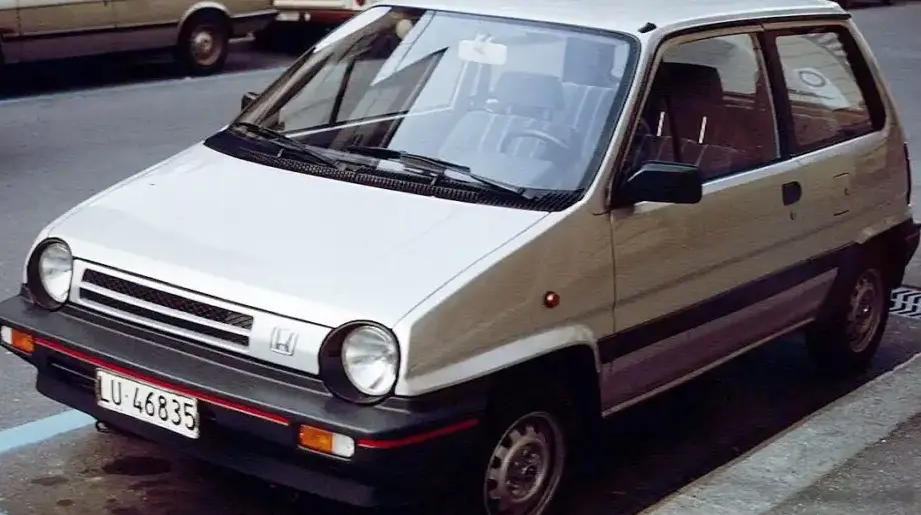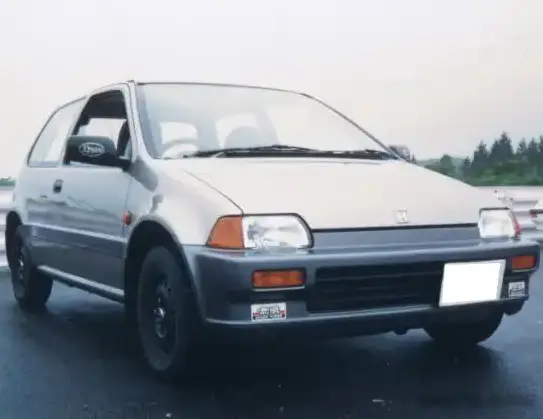
The Honda City II 1.3 i (100 hp) was a subcompact hatchback produced between 1986 and 1993, representing the second generation of Honda’s City model. Positioned as an entry-level vehicle, it was primarily marketed in Japan, Asia, and parts of Europe. The City II aimed to provide affordable and fuel-efficient transportation, capitalizing on the growing demand for small, practical cars. This particular 1.3-liter variant, with its 100 horsepower output, occupied a middle ground within the City II lineup, offering a balance between performance and economy. It was a key player in Honda’s strategy to broaden its appeal in the increasingly competitive subcompact segment.
Technical Specifications
| Brand | Honda |
| Model | City |
| Generation | City II |
| Type (Engine) | 1.3 i (100 Hp) |
| Start of production | 1986 |
| End of production | 1993 |
| Powertrain Architecture | Internal Combustion engine |
| Body type | Hatchback |
| Seats | 5 |
| Doors | 3 |
| Fuel consumption (urban) | 10 l/100 km (23.5 US mpg) |
| Fuel consumption (extra urban) | 6 l/100 km (39.2 US mpg) |
| Fuel Type | Petrol (Gasoline) |
| Maximum speed | 180 km/h (111.85 mph) |
| Weight-to-power ratio | 8.2 kg/Hp |
| Weight-to-torque ratio | 7.2 kg/Nm |
| Power | 100 Hp @ 6500 rpm |
| Power per litre | 77.2 Hp/l |
| Torque | 114 Nm @ 5500 rpm (84.08 lb.-ft. @ 5500 rpm) |
| Engine layout | Front, Transverse |
| Engine displacement | 1296 cm3 (79.09 cu. in.) |
| Number of cylinders | 4 |
| Engine configuration | Inline |
| Cylinder Bore | 73.7 mm (2.9 in.) |
| Piston Stroke | 76 mm (2.99 in.) |
| Compression ratio | 9.6:1 |
| Fuel injection system | Single-point injection |
| Engine aspiration | Naturally aspirated |
| Kerb Weight | 820 kg (1807.79 lbs.) |
| Fuel tank capacity | 40 l (10.57 US gal | 8.8 UK gal) |
| Length | 3605 mm (141.93 in.) |
| Width | 1620 mm (63.78 in.) |
| Height | 1335 mm (52.56 in.) |
| Wheelbase | 2400 mm (94.49 in.) |
| Front track | 1400 mm (55.12 in.) |
| Rear track | 1410 mm (55.51 in.) |
| Minimum turning circle | 9.2 m (30.18 ft.) |
| Drivetrain Architecture | Front wheel drive |
| Number of gears | 5 |
| Gearbox type | Manual transmission |
| Front suspension | Coil spring |
| Rear suspension | Coil spring |
| Front brakes | Disc |
| Rear brakes | Drum |
| Assisting systems | ABS (Anti-lock braking system) |
| Steering type | Steering rack and pinion |
| Power steering | Hydraulic |
| Tires size | 175/60 R13 |
Powertrain & Engine Architecture
The heart of the City II 1.3 i was the D13B engine, a 1.3-liter, inline-four cylinder gasoline engine. This engine featured a single overhead camshaft (SOHC) valvetrain and utilized single-point fuel injection. The single-point injection system, while simpler and less expensive than multi-point injection, provided adequate fuel delivery for the engine’s modest power output. The engine’s 9.6:1 compression ratio contributed to its efficiency and responsiveness. The D13B produced 100 horsepower at 6500 rpm and 114 Nm (84.08 lb-ft) of torque at 5500 rpm. The engine was transversely mounted in the front of the vehicle, driving the front wheels. The standard transmission was a five-speed manual, which was the most common configuration.
Driving Characteristics
The 1.3-liter engine, paired with the five-speed manual transmission, provided adequate performance for urban driving and light highway use. Acceleration was not particularly brisk, but the engine was willing to rev and offered a reasonably linear power delivery. The gear ratios were tuned for fuel efficiency, with a relatively tall fifth gear for comfortable cruising. Compared to the more powerful 1.5-liter variants, the 1.3 i felt noticeably less responsive, especially when fully loaded or climbing hills. However, the lighter weight of the 1.3 i, compared to some of the higher-spec models, helped to mitigate the power deficit. The steering was light and precise, making the City II easy to maneuver in tight spaces.
Equipment & Trim Levels
The City II 1.3 i was typically equipped with basic but functional features. Standard equipment included cloth upholstery, a simple dashboard layout, and manual windows and door locks. Air conditioning was often an optional extra, as were power windows and a more sophisticated audio system. The interior was designed with practicality in mind, offering ample headroom and legroom for its size. Trim levels varied depending on the market, but generally, the 1.3 i represented the entry point to the City II range. Higher trim levels offered features like upgraded upholstery, alloy wheels, and a more comprehensive instrument cluster.
Chassis & Braking
The City II utilized a relatively simple chassis design, featuring coil springs and a torsion beam rear suspension. The front suspension consisted of MacPherson struts, providing a comfortable ride quality. Braking duties were handled by disc brakes at the front and drum brakes at the rear. ABS (Anti-lock Braking System) was available as an option on some models, enhancing safety and control during hard braking. The steering system employed a rack-and-pinion setup with hydraulic power assistance, providing light and precise steering feel. The 175/60 R13 tires offered a good balance between grip and fuel efficiency.
Market Reception & Comparison
The Honda City II 1.3 i was generally well-received by critics for its fuel efficiency, practicality, and affordability. It was often praised for its reliability and ease of maintenance. However, some reviewers noted that the 1.3-liter engine lacked the power and refinement of its larger counterparts. Compared to the 1.5-liter models, the 1.3 i offered lower running costs but compromised on performance. Against competitors like the Toyota Starlet and Nissan Micra, the City II 1.3 i held its own, offering a compelling package of features and value. Its fuel economy was competitive, and its reputation for reliability was a significant selling point.
Legacy
The Honda City II 1.3 i has proven to be a remarkably durable and reliable vehicle. Many examples are still on the road today, testament to Honda’s engineering quality. The D13B engine is known for its longevity and relatively simple maintenance requirements. In the used car market, the City II 1.3 i remains a popular choice for budget-conscious buyers seeking a dependable and fuel-efficient vehicle. While not a performance icon, it represents a significant chapter in Honda’s history, demonstrating the company’s commitment to providing affordable and practical transportation to a wide range of customers. Its simple design and robust construction have ensured its continued relevance in the classic and used car markets.