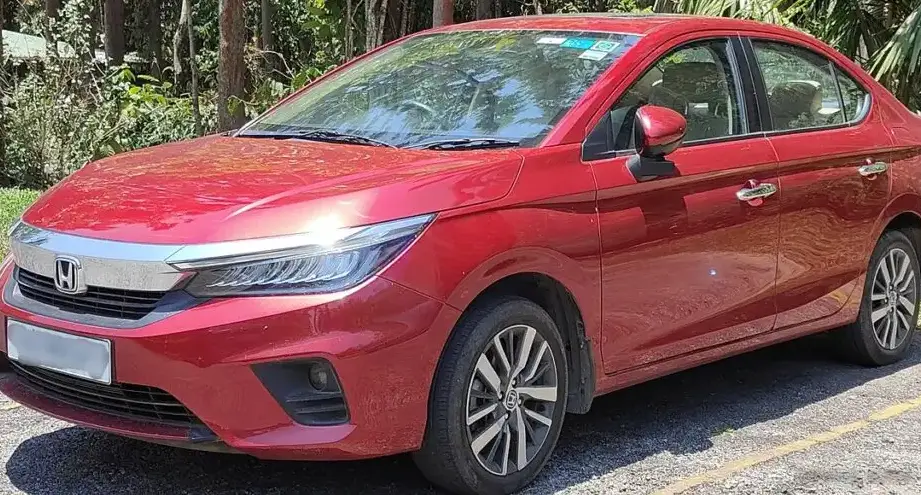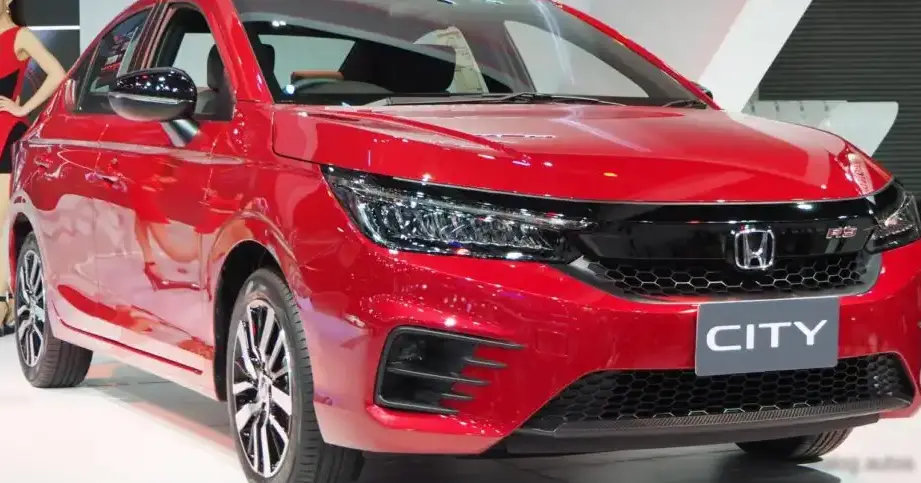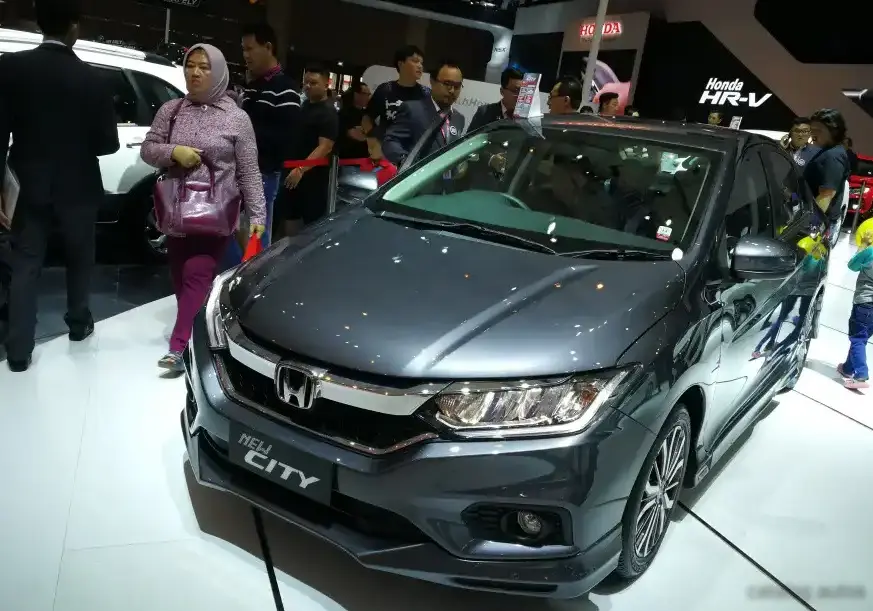
The Honda City VI (facelift 2017) 1.5d, producing 99 horsepower, represents a significant iteration of Honda’s globally successful compact sedan. Introduced in 2017 and continuing through 2019, this variant was primarily aimed at markets where diesel engines were favored, offering a balance of fuel efficiency and reasonable performance. It falls within the sixth generation of the City (internally designated as the GM2/GM3 platform), benefitting from the 2017 facelift which included cosmetic and minor mechanical updates. This particular diesel configuration occupied a mid-range position in the City VI lineup, slotting below the more powerful petrol variants and often serving as a more economical alternative.
Technical Specifications
| Brand | Honda |
| Model | City |
| Generation | City VI (facelift 2017) |
| Type (Engine) | 1.5d (99 Hp) |
| Start of production | 2017 |
| End of production | 2019 |
| Powertrain Architecture | Internal Combustion engine |
| Body type | Sedan |
| Seats | 5 |
| Doors | 4 |
| Fuel consumption (combined) | 9.2-9.4 l/100 km (25.6 – 25 US mpg, 30.7 – 30.1 UK mpg, 10.9 – 10.6 km/l) |
| Fuel Type | Diesel |
| Weight-to-power ratio | 11.6 kg/Hp, 86.3 Hp/tonne |
| Weight-to-torque ratio | 5.7 kg/Nm, 174.4 Nm/tonne |
| Power | 99 Hp @ 3600 rpm |
| Power per litre | 66.1 Hp/l |
| Torque | 200 Nm @ 1750 rpm (147.51 lb.-ft. @ 1750 rpm) |
| Engine layout | Front, Transverse |
| Engine Model/Code | N15A1 |
| Engine displacement | 1498 cm3 (91.41 cu. in.) |
| Number of cylinders | 4 |
| Engine configuration | Inline |
| Number of valves per cylinder | 4 |
| Fuel injection system | Diesel Commonrail |
| Engine aspiration | Turbocharger, Intercooler |
| Valvetrain | DOHC, i-DTEC |
| Engine oil capacity | 4.4 l (4.65 US qt | 3.87 UK qt) |
| Kerb Weight | 1147-1175 kg (2528.7 – 2590.43 lbs.) |
| Max. weight | 1522-1550 kg (3355.44 – 3417.17 lbs.) |
| Max load | 375 kg (826.73 lbs.) |
| Trunk (boot) space – minimum | 510 l (18.01 cu. ft.) |
| Fuel tank capacity | 40 l (10.57 US gal | 8.8 UK gal) |
| Length | 4440 mm (174.8 in.) |
| Width | 1695 mm (66.73 in.) |
| Height | 1495 mm (58.86 in.) |
| Wheelbase | 2600 mm (102.36 in.) |
| Front track | 1475-1490 mm (58.07 – 58.66 in.) |
| Rear (Back) track | 1465-1480 mm (57.68 – 58.27 in.) |
| Minimum turning circle | 10.6 m (34.78 ft.) |
| Drivetrain Architecture | Front wheel drive |
| Number of gears and type of gearbox | 7 gears, manual transmission |
| Front suspension | Independent type McPherson |
| Rear suspension | Torsion |
| Front brakes | Ventilated discs |
| Rear brakes | Drum |
| Assisting systems | ABS (Anti-lock braking system) |
| Steering type | Steering rack and pinion |
| Power steering | Electric Steering |
| Tires size | 175/65 R15; 185/55 R16 |
| Wheel rims size | 5.5J x 15; 6J x 16 |
Powertrain & Engine Architecture
The heart of the City VI 1.5d is the N15A1 diesel engine, a 1.5-liter inline-four cylinder unit. This engine utilizes a common rail direct injection system, delivering fuel directly into the combustion chamber at extremely high pressure for improved efficiency and reduced emissions. A turbocharger with an intercooler is employed to boost power output, mitigating the typical torque deficit often associated with smaller displacement diesel engines. The engine also features Honda’s i-DTEC technology, which optimizes combustion and further enhances fuel economy. The engine’s DOHC (Double Overhead Camshaft) valvetrain contributes to efficient gas exchange. The 7-speed manual transmission was the only transmission option available with this engine, providing a balance between fuel efficiency and driver control.
Driving Characteristics
The 99 horsepower and 200 Nm (147.51 lb-ft) of torque offered by the 1.5d powertrain resulted in adequate, though not exhilarating, performance. Acceleration was reasonable for everyday driving, but noticeably slower than the petrol-powered variants. The turbocharger provided a noticeable boost in power at lower RPMs, making it suitable for city driving and overtaking maneuvers. The 7-speed manual transmission allowed drivers to keep the engine in its optimal power band, but required more driver involvement compared to an automatic. Compared to the higher-output petrol engines, the diesel variant prioritized fuel economy over outright speed, making it a popular choice for drivers covering long distances.
Equipment & Trim Levels
The 1.5d trim level of the City VI typically included standard features such as air conditioning, power windows, power steering, and a basic audio system. Safety features included ABS (Anti-lock Braking System) and dual airbags. Higher trim levels within the 1.5d range offered additional features like alloy wheels, a more advanced audio system with Bluetooth connectivity, and automatic climate control. Interior upholstery was generally cloth, with higher trims offering upgraded fabric or partial leather options. The dashboard layout was functional and straightforward, prioritizing usability over luxury.
Chassis & Braking
The City VI 1.5d utilized a McPherson strut independent suspension system at the front, providing a comfortable ride and decent handling characteristics. The rear suspension employed a torsion beam setup, which was a cost-effective solution that offered adequate stability. The braking system consisted of ventilated discs at the front and drum brakes at the rear. While adequate for normal driving conditions, the rear drum brakes were a cost-saving measure and didn’t offer the same stopping power as disc brakes. The electric power steering provided light and easy steering, making it convenient for maneuvering in urban environments.
Market Reception & Comparison
The Honda City VI 1.5d was generally well-received in markets where diesel engines were popular, particularly in regions like India and Thailand. Critics praised its fuel efficiency and reasonable performance, but noted that it lacked the refinement and power of some of its competitors. Compared to the petrol variants of the City VI, the 1.5d offered significantly better fuel economy but at the expense of acceleration and overall driving excitement. Against competitors like the Maruti Suzuki Ciaz diesel and Hyundai Verna diesel, the City 1.5d often held an edge in terms of build quality and brand reputation.
Legacy
The N15A1 diesel engine, while not without its complexities, proved to be a relatively reliable powertrain when properly maintained. Common issues included turbocharger wear and potential problems with the fuel injection system. However, with regular servicing and adherence to manufacturer recommendations, these engines could provide years of dependable service. In the used car market, the City VI 1.5d remains a popular choice for buyers seeking a fuel-efficient and reliable compact sedan. Its reputation for durability and Honda’s strong brand image contribute to its continued demand.