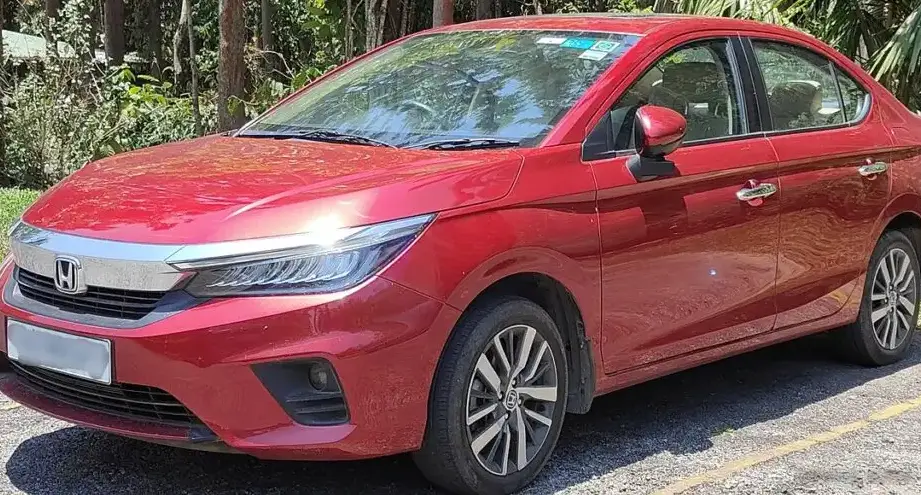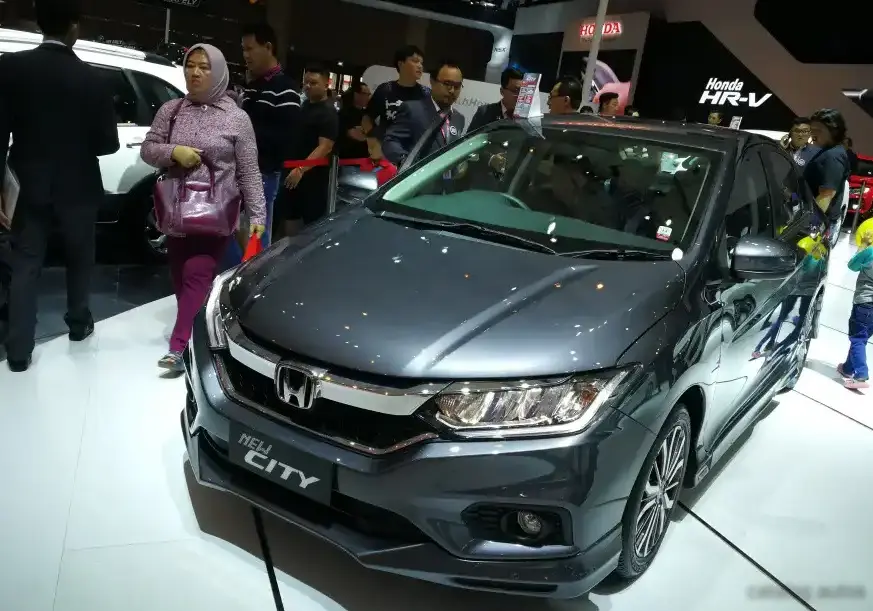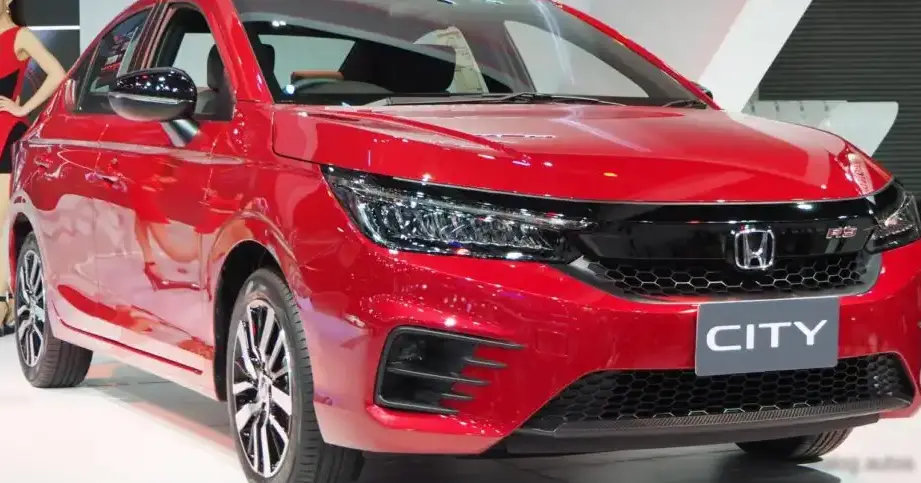
The Honda City VII 1.0 Turbo CVT, launched in 2019, marked a notable advancement in Honda’s globally successful subcompact sedan line. As part of the seventh generation (internally designated GM2/GP2), this variant was primarily targeted towards markets in Asia, Latin America, and select European regions where fuel efficiency and affordability are paramount. It occupies a mid-range position within the City VII lineup, bridging the gap between the base 1.5-liter naturally aspirated models and potentially higher-specification trims offering more extensive features. The 1.0 Turbo CVT aimed to deliver a harmonious blend of performance and economy, appealing to urban commuters and drivers seeking a modern, practical vehicle.
Technical Specifications
| Brand | Honda |
| Model | City |
| Generation | City VII |
| Type (Engine) | 1.0 Turbo (122 Hp) CVT |
| Start of production | 2019 |
| Powertrain Architecture | Internal Combustion engine |
| Body type | Sedan |
| Seats | 5 |
| Doors | 4 |
| Fuel Type | Petrol (Gasoline) |
| Weight-to-power ratio | 9.4 kg/Hp, 106.1 Hp/tonne |
| Weight-to-torque ratio | 6.6 kg/Nm, 150.4 Nm/tonne |
| Power | 122 Hp @ 5500 rpm |
| Power per litre | 123.5 Hp/l |
| Torque | 173 Nm @ 2000-4500 rpm (127.6 lb.-ft. @ 2000-4500 rpm) |
| Engine layout | Front, Transverse |
| Engine displacement | 988 cm3 (60.29 cu. in.) |
| Number of cylinders | 3 |
| Engine configuration | Inline |
| Cylinder Bore | 73 mm (2.87 in.) |
| Piston Stroke | 78.7 mm (3.1 in.) |
| Compression ratio | 10:1 |
| Number of valves per cylinder | 4 |
| Fuel injection system | Direct injection |
| Engine aspiration | Turbocharger, Intercooler |
| Valvetrain | DOHC |
| Kerb Weight | 1150-1165 kg (2535.32 – 2568.39 lbs.) |
| Fuel tank capacity | 40 l (10.57 US gal | 8.8 UK gal) |
| Length | 4553 mm (179.25 in.) |
| Width | 1748 mm (68.82 in.) |
| Height | 1467 mm (57.76 in.) |
| Wheelbase | 2589 mm (101.93 in.) |
| Front track | 1497 mm (58.94 in.) |
| Rear track | 1483 mm (58.39 in.) |
| Ride height (ground clearance) | 135 mm (5.31 in.) |
| Minimum turning circle | 10 m (32.81 ft.) |
| Drivetrain Architecture | The Internal combustion engine (ICE) drives the front wheels of the vehicle. |
| Drive wheel | Front wheel drive |
| Number of gears and type of gearbox | automatic transmission CVT |
| Front suspension | Independent, type McPherson with coil spring and anti-roll bar |
| Rear suspension | Torsion |
| Front brakes | Ventilated discs |
| Rear brakes | Drum |
| Assisting systems | ABS (Anti-lock braking system) |
| Tires size | 185/60 R15; 185/55 R16 |
| Wheel rims size | 6J x 15; 6J x 16 |
Powertrain & Engine Architecture
The City VII 1.0 Turbo CVT’s powertrain centers around the P10A3 engine, a 988cc inline-three cylinder gasoline engine. This engine incorporates direct injection technology and is paired with a single-scroll turbocharger and intercooler to enhance power output. The direct injection system enables precise fuel delivery, improving combustion efficiency and minimizing emissions. The engine features a double overhead camshaft (DOHC) valvetrain with four valves per cylinder, optimizing airflow for improved performance. The Continuously Variable Transmission (CVT) is a crucial component, engineered to maximize fuel efficiency by maintaining the engine within its optimal power range. Unlike conventional automatic transmissions with fixed gear ratios, a CVT offers a seamless and stepless gear change, contributing to smoother acceleration and enhanced fuel economy.
Driving Characteristics
The 1.0 Turbo CVT delivers a noticeable performance improvement compared to the base 1.5-liter City VII models. While not designed for sporty driving, the turbocharger provides a useful torque boost, making it responsive in typical driving scenarios. The CVT, while prioritizing efficiency, can sometimes feel less engaging than traditional automatic or manual transmissions, exhibiting a slight “rubber band” effect during hard acceleration. The CVT’s programming includes simulated gear shifts to provide a more conventional driving experience. The vehicle’s relatively light weight (approximately 1150-1165 kg) helps to compensate for the modest horsepower, resulting in adequate acceleration for both city and highway driving. Compared to a City VII equipped with a manual transmission, the CVT prioritizes ease of use and fuel economy over outright performance.
Equipment & Trim Levels
The 1.0 Turbo CVT trim generally included standard features such as air conditioning, power windows, power door locks, and a basic audio system with Bluetooth connectivity. Higher trim levels, often designated with suffixes like “V” or “S”, added features like alloy wheels, a touchscreen infotainment system, a rearview camera, and enhanced safety features like Vehicle Stability Assist (VSA). Interior upholstery was typically cloth, with higher trims offering leather options. Optional extras could include a sunroof, upgraded audio systems, and various cosmetic enhancements.
Chassis & Braking
The City VII utilizes a McPherson strut front suspension combined with a torsion beam rear suspension. This configuration provides a comfortable ride quality suitable for everyday driving. The front brakes are ventilated discs, offering good stopping power, while the rear brakes are drums, a cost-saving measure common in this vehicle segment. An Anti-lock Braking System (ABS) is standard, enhancing safety during emergency braking. Stabilizer bars are incorporated to reduce body roll during cornering, improving handling stability. The suspension tuning prioritizes ride comfort over sporty handling characteristics.
Market Reception & Comparison
The 1.0 Turbo CVT variant of the City VII received generally positive reviews from automotive critics in its target markets. Reviewers commended its fuel efficiency and responsive engine, noting its effective balance of performance and economy. However, some criticized the CVT for its lack of driver engagement and the use of rear drum brakes. Compared to the 1.5-liter naturally aspirated models, the 1.0 Turbo offered a significant performance upgrade with only a slight reduction in fuel economy. In comparison to diesel variants (where available), the 1.0 Turbo provided a quieter and smoother driving experience, although typically with slightly lower fuel economy.
Legacy
The Honda City VII 1.0 Turbo CVT has proven to be a relatively reliable powertrain. The engine, despite being turbocharged, is generally robust and well-engineered. The CVT, when maintained with regular fluid changes, has also demonstrated good durability. In the used car market, these models are often sought after for their fuel efficiency and modern features. Maintenance costs are generally reasonable, and parts availability remains good. The City VII 1.0 Turbo CVT represents a successful effort by Honda to deliver a compelling subcompact sedan that effectively balances performance, economy, and practicality.