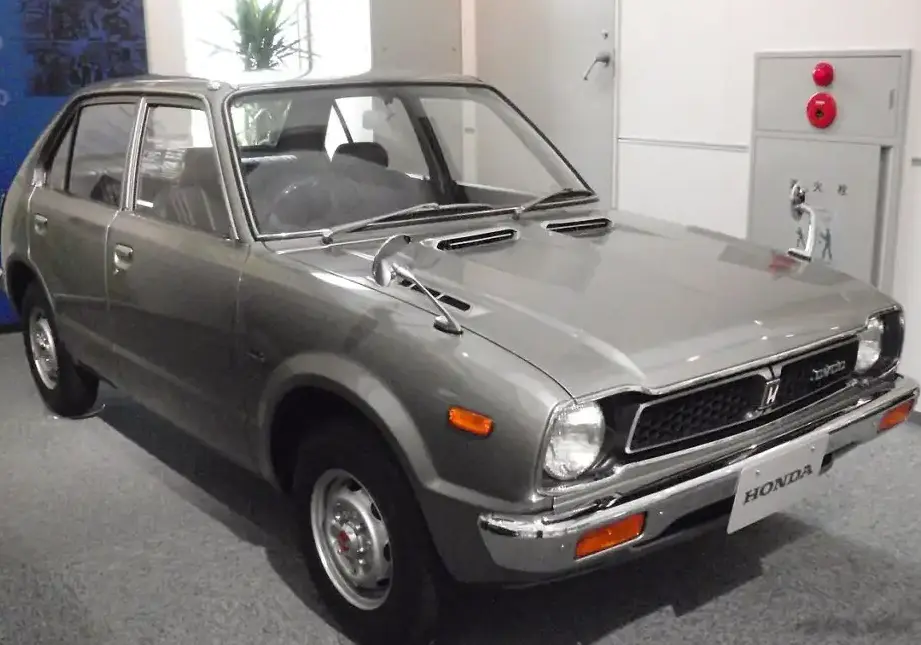
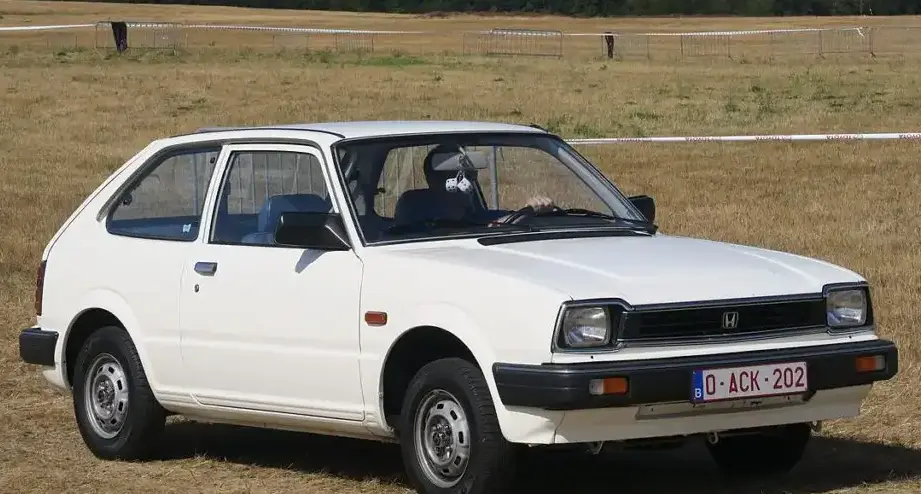
The Honda Civic I 1.2, produced between 1972 and 1979, represents the initial foray of Honda into the compact car market. This model, designated as the first generation Civic, was pivotal in establishing Honda’s reputation for fuel efficiency, reliability, and accessible transportation. The 1.2-liter variant, producing 60 horsepower, served as the entry point into the Civic lineup during its production run, primarily aimed at buyers seeking economical and practical transportation. It was a key component of Honda’s strategy to gain a foothold in the burgeoning global automotive market, particularly in the United States where fuel economy was becoming increasingly important.
Technical Specifications
| Brand | Honda |
| Model | Civic |
| Generation | Civic I |
| Type (Engine) | 1.2 (60 Hp) |
| Start of Production | 1972 |
| End of Production | 1979 |
| Powertrain Architecture | Internal Combustion Engine |
| Body Type | Sedan |
| Fuel Type | Petrol (Gasoline) |
| Power | 60 Hp |
| Engine Aspiration | Naturally Aspirated |
Powertrain & Engine Architecture
The Honda Civic I 1.2 utilized a 1169cc, inline-four cylinder engine. This engine, internally designated as the E07, was a simple, yet robust design. It featured a single overhead camshaft (SOHC) operating two valves per cylinder. Fuel delivery was managed by a Keihin carburetor, a common technology for the era, prioritizing simplicity and cost-effectiveness over the more advanced fuel injection systems that would appear later. The engine block was cast iron, providing durability, while the cylinder head was aluminum, contributing to weight reduction. The 1.2-liter engine produced 60 horsepower at 5,000 rpm and approximately 66 lb-ft of torque at 3,000 rpm. The transmission offered with this engine was typically a four-speed manual, but a two-speed Hondamatic automatic transmission was also available, though less common. The Hondamatic was a continuously variable transmission (CVT) utilizing a belt and pulley system, a relatively innovative feature for the early 1970s. It provided smooth, stepless acceleration, but at the expense of some power delivery efficiency.
Driving Characteristics
The 1.2-liter Civic I, particularly when equipped with the two-speed Hondamatic transmission, offered a driving experience focused on economy and ease of use rather than outright performance. Acceleration was modest, with 0-60 mph times estimated to be around 16-18 seconds. The engine felt relatively strained at higher speeds, and highway passing required careful planning. The Hondamatic transmission, while smooth, lacked the responsiveness of a manual gearbox and contributed to a noticeable power loss. The manual transmission version offered a more engaging driving experience, allowing the driver to better utilize the engine’s limited power band. The Civic’s light weight (around 1,600-1,800 lbs) helped to mitigate the effects of the low horsepower output, making it feel reasonably nimble in city driving. Steering was light and precise, and the suspension, while basic, provided a comfortable ride on most road surfaces.
Equipment & Trim Levels
The Civic I 1.2 was offered with a relatively sparse equipment list, reflecting its position as an entry-level vehicle. Standard features typically included basic vinyl upholstery, a simple dashboard with analog gauges, and a two-spoke steering wheel. Radio was often an optional extra, as were features like a heater and defroster. Trim levels were limited, with most Civics being fairly basic. Later models saw the introduction of slightly more upscale trims with features like upgraded upholstery and additional chrome trim. The focus was on providing a functional and affordable vehicle, rather than luxury or extensive features. The interior was designed with practicality in mind, offering reasonable space for passengers and a usable trunk.
Chassis & Braking
The Civic I utilized a front-engine, front-wheel-drive layout, a configuration that was becoming increasingly common in the compact car segment. The suspension consisted of independent MacPherson struts at the front and a torsion beam rear suspension. This setup provided a good balance of ride comfort and handling. Braking was initially accomplished with drum brakes on all four wheels. Later models saw the introduction of front disc brakes, improving stopping performance. Steering was a recirculating ball system, providing light and easy steering effort. The chassis was a unibody construction, contributing to the car’s relatively light weight and structural rigidity.
Market Reception & Comparison
The Honda Civic I 1.2 was generally well-received by critics and consumers alike. It was praised for its fuel efficiency, reliability, and affordability. Compared to its competitors, such as the Volkswagen Beetle and the Ford Pinto, the Civic offered a more modern design and a more refined driving experience. The 1.2-liter engine, while not particularly powerful, was considered adequate for city driving and commuting. The Hondamatic transmission, while innovative, was often criticized for its lack of responsiveness and power loss. The Civic’s fuel economy was a major selling point, particularly during the oil crises of the 1970s. Compared to the slightly more powerful 1.5-liter Civic variants, the 1.2-liter model offered a lower price point, making it accessible to a wider range of buyers. However, it lacked the performance and refinement of its larger-engined siblings.
Legacy
The Honda Civic I 1.2 laid the foundation for the Civic’s enduring success. It established Honda as a serious player in the global automotive market and demonstrated the company’s commitment to fuel efficiency and reliability. While the 1.2-liter engine is no longer in production, the Civic continues to be a popular and respected compact car. Today, well-maintained examples of the Civic I 1.2 are sought after by collectors and enthusiasts. The powertrain, while simple, proved to be remarkably durable, and many examples are still on the road today. The 1.2-liter Civic represents a significant milestone in automotive history, marking the beginning of Honda’s journey to becoming one of the world’s leading automakers. Finding parts can be challenging, but a dedicated community of enthusiasts helps to keep these early Civics running.