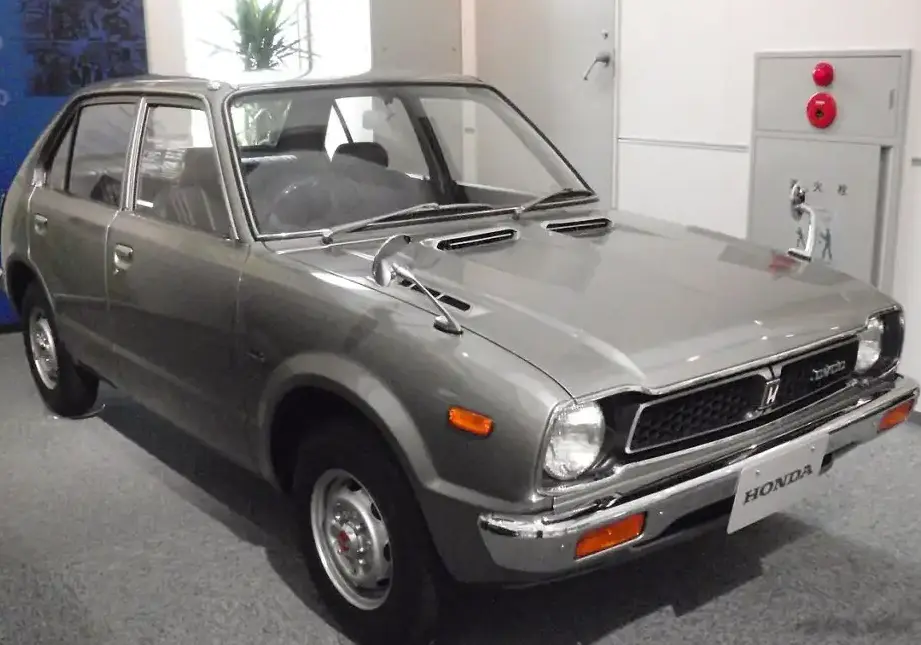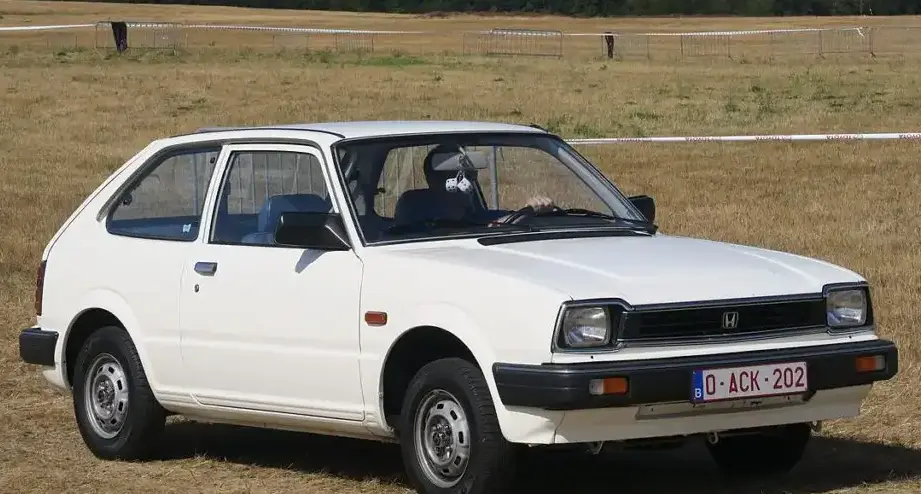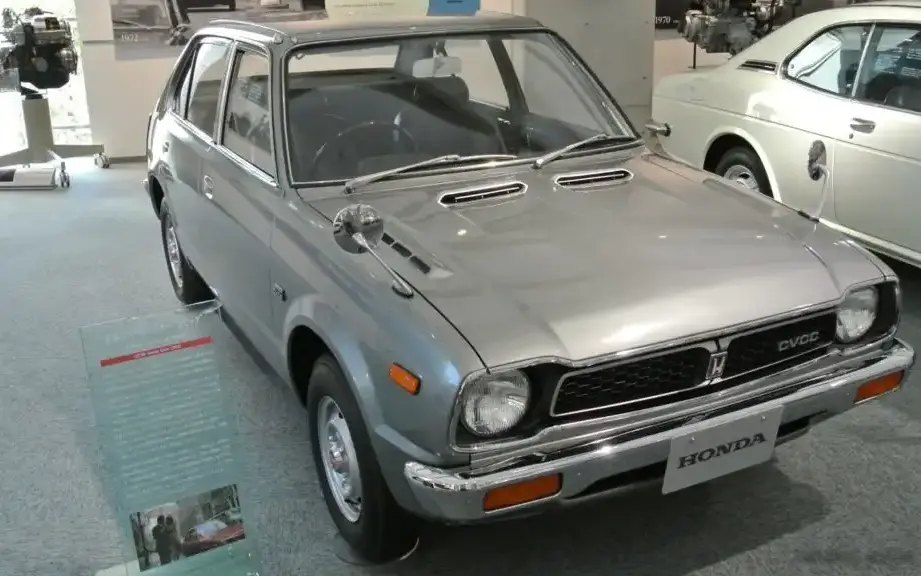
The Honda Civic I Hatchback 1.2, produced between 1972 and 1979, represents the initial foray of Honda into the compact car market, and crucially, the American market. This first-generation Civic (internally designated as the first series) was a pivotal model for Honda, establishing the brand’s reputation for fuel efficiency, reliability, and affordability. The 1.2-liter variant, producing 60 horsepower, served as the entry point into the Civic lineup, particularly in markets outside of North America where smaller displacement engines were favored due to taxation and fuel costs. It was a direct response to the growing demand for economical transportation in the wake of the 1973 oil crisis, and played a significant role in establishing Honda as a major automotive player globally.
Technical Specifications
| Brand | Honda |
| Model | Civic |
| Generation | Civic I Hatchback |
| Type (Engine) | 1.2 (60 Hp) |
| Start of production | 1972 |
| End of production | 1979 |
| Powertrain Architecture | Internal Combustion Engine |
| Body Type | Hatchback |
| Fuel Type | Petrol (Gasoline) |
| Power | 60 Hp |
| Engine Aspiration | Naturally Aspirated |
Powertrain & Engine Architecture
The Civic I Hatchback 1.2 was powered by the Honda S60 engine, a 1169cc inline-four cylinder engine. This engine utilized a single overhead camshaft (SOHC) design, a relatively modern feature for its time, contributing to its smooth operation and reasonable power output. The S60 featured a two-barrel carburetor for fuel delivery, a common setup for engines of this era. While not particularly powerful by modern standards, the S60 was known for its durability and simplicity. The engine block was cast iron, while the cylinder head was aluminum, helping to reduce weight. The transmission offered with the 1.2-liter engine was typically a four-speed manual, though a two-speed Hondamatic automatic transmission was also available, albeit less common. The Hondamatic was a continuously variable transmission (CVT) – a pioneering technology for the early 1970s – utilizing a belt and pulley system. This early CVT design, while innovative, wasn’t known for its performance, prioritizing fuel economy and smooth operation over acceleration. The engine’s relatively low compression ratio (around 8.8:1) further emphasized fuel efficiency and allowed it to run reliably on the lower octane fuels available at the time.
Driving Characteristics
The 1.2-liter Civic Hatchback offered modest performance. With 60 horsepower and approximately 72 lb-ft of torque, acceleration was leisurely, particularly with the Hondamatic transmission. The four-speed manual offered a more engaging driving experience, allowing drivers to extract the most from the engine’s limited power. The gear ratios were relatively tall, geared towards maximizing fuel economy at cruising speeds. Handling was generally considered good for a car of its class, thanks to its lightweight construction and front-wheel-drive layout. The suspension consisted of independent front suspension with torsion bars and a rear trailing arm suspension. The steering was light and responsive, making it easy to maneuver in urban environments. Compared to the later 1.5-liter versions of the Civic, the 1.2-liter felt noticeably slower, especially when fully loaded with passengers or cargo. However, the 1.2-liter’s lighter weight did contribute to slightly better fuel economy and nimbler handling in certain situations.
Equipment & Trim Levels
The Civic I Hatchback 1.2 was typically offered in a relatively basic trim level, reflecting its position as the entry-level model. Standard features included cloth upholstery, vinyl floor covering, and basic instrumentation consisting of a speedometer, fuel gauge, and temperature gauge. A two-spoke steering wheel was standard. Optional extras were limited but could include a radio, heater, and upgraded seat upholstery. The interior design was functional and minimalist, prioritizing practicality over luxury. The dashboard was constructed from durable plastic and featured simple, easy-to-use controls. The hatchback configuration provided a reasonable amount of cargo space for its size, further enhancing its practicality. Trim levels varied slightly depending on the market, with some regions offering a slightly more equipped version with features like a cigarette lighter and a passenger-side mirror.
Chassis & Braking
The Civic I Hatchback featured a monocoque body construction, providing a good balance of strength and lightness. The front suspension utilized independent torsion bar springs, while the rear suspension employed a trailing arm design. This setup provided a comfortable ride, although it wasn’t particularly sporty. Braking was initially accomplished with drum brakes on all four wheels. Later models, particularly those sold in markets with stricter safety regulations, were upgraded with front disc brakes, offering improved stopping power. The steering system was a rack-and-pinion setup, providing precise and responsive steering. The car’s relatively low weight contributed to its good handling characteristics. Stabilizer bars were not typically fitted to the 1.2-liter models, further emphasizing comfort over performance.
Market Reception & Comparison
The Honda Civic I Hatchback 1.2 was generally well-received by critics and consumers alike. It was praised for its fuel efficiency, reliability, and affordability. However, its modest performance was often noted. Compared to other small cars of the era, such as the Volkswagen Beetle and the Ford Pinto, the Civic offered a more modern and refined driving experience. The Hondamatic transmission, while innovative, received mixed reviews, with some critics finding it sluggish and unresponsive. The 1.5-liter Civic models offered significantly more power and performance, but at a higher price point. The 1.2-liter model appealed to buyers who prioritized fuel economy and practicality over outright speed. Fuel economy figures were impressive for the time, often exceeding 40 miles per gallon on the highway.
Legacy
The Honda Civic I Hatchback 1.2 laid the foundation for the Civic’s enduring success. The S60 engine proved to be remarkably durable, and many examples are still on the road today. The car’s simple design and readily available parts make it relatively easy to maintain. In the used car market, the 1.2-liter Civic Hatchback is often sought after by enthusiasts and collectors who appreciate its historical significance and simplicity. While not the most powerful or luxurious car of its era, the Civic I Hatchback 1.2 remains a testament to Honda’s commitment to quality, reliability, and fuel efficiency. It represents a pivotal moment in automotive history, marking Honda’s arrival as a serious competitor in the global automotive market and establishing the Civic as a benchmark for compact car design.