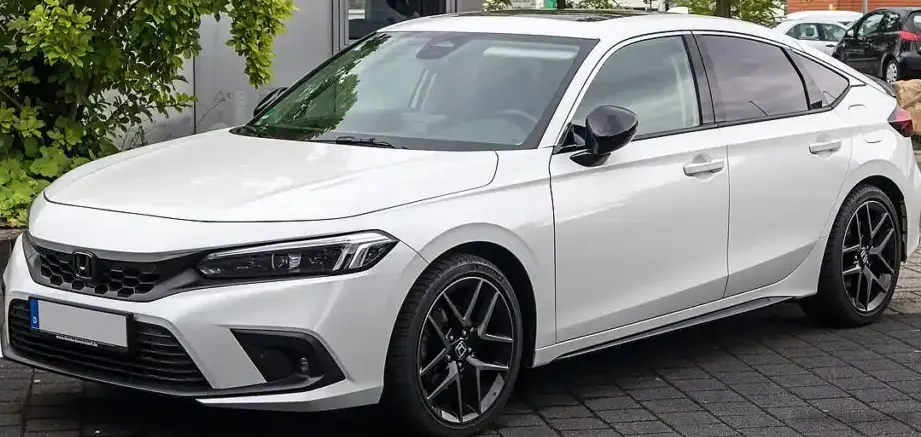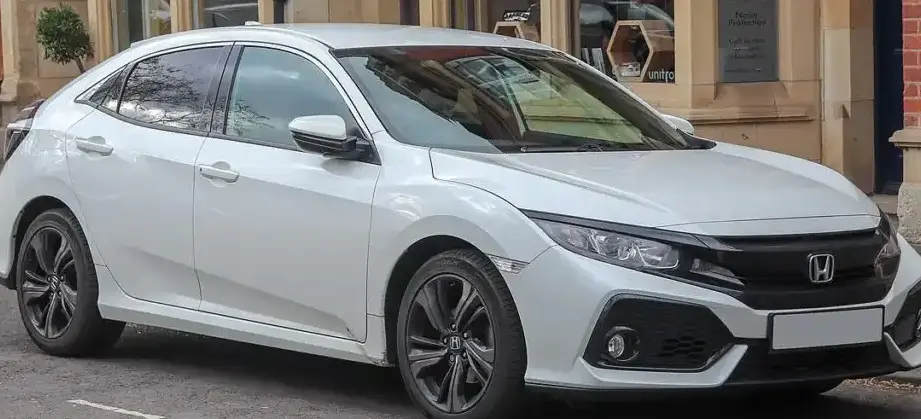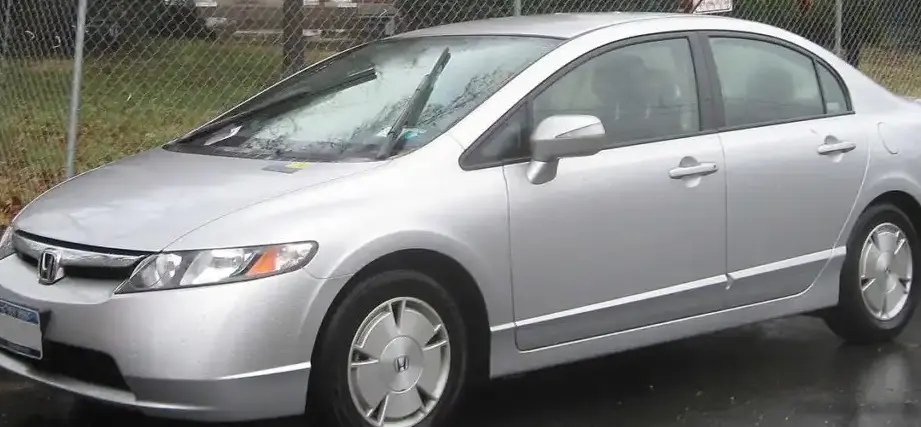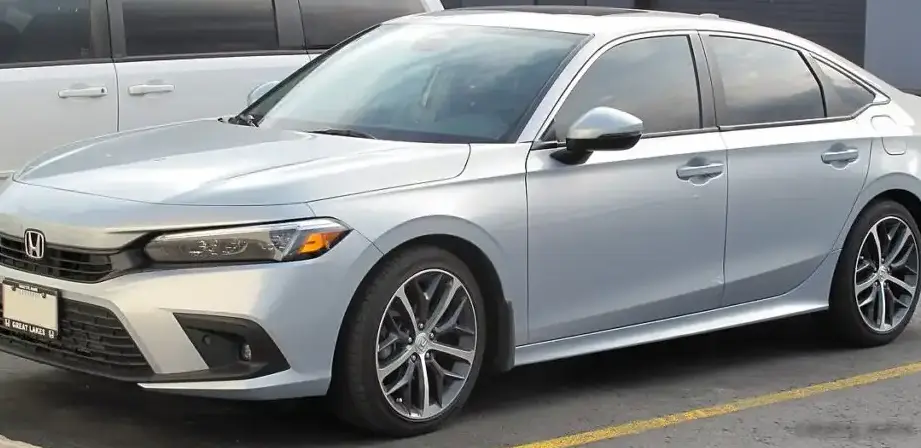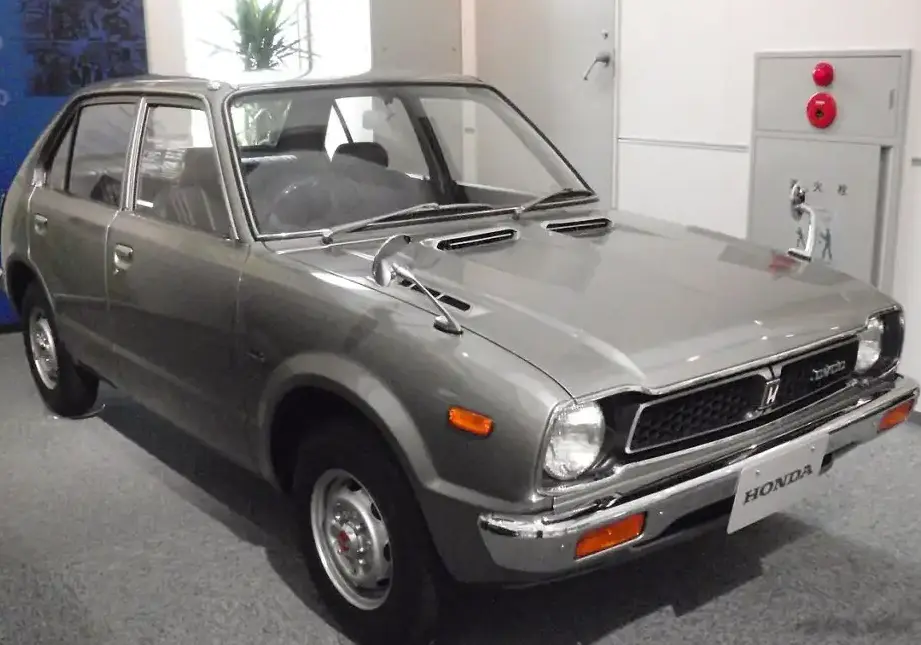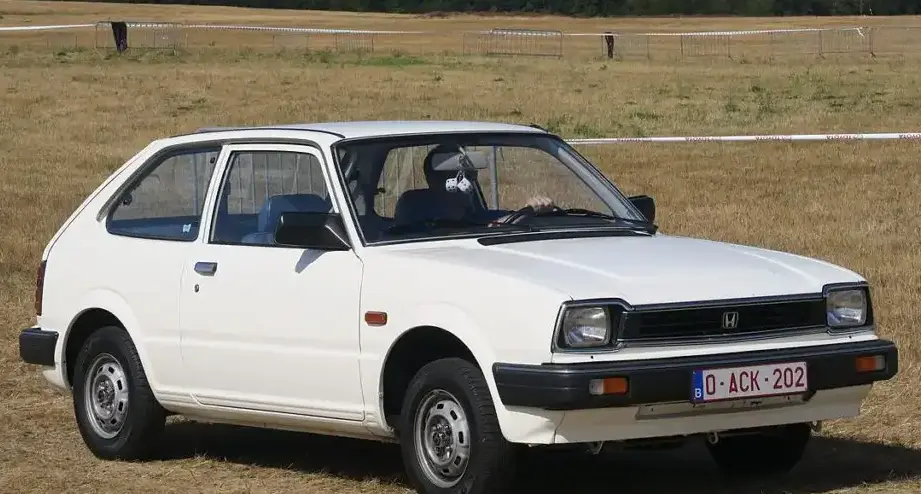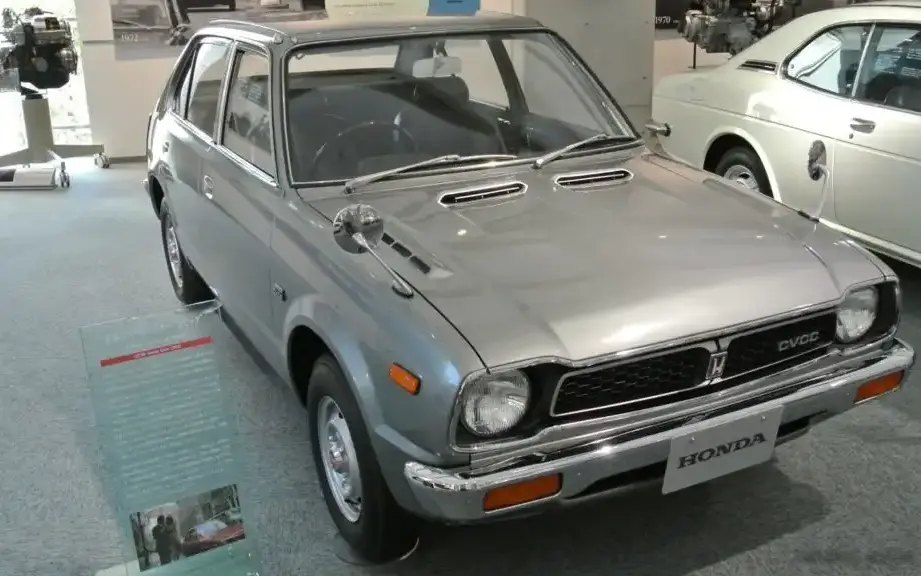
The Honda Civic I Hatchback 1.3, produced between 1972 and 1979, represents the initial foray of Honda into the compact car market, and crucially, the American market. This first-generation Civic (internally designated as the first series) was a pivotal model for Honda, establishing the brand’s reputation for fuel efficiency, reliability, and affordability. The 1.3-liter variant, producing 63 horsepower, served as the entry point into the Civic lineup, targeting budget-conscious buyers and those prioritizing economy over outright performance. It was a direct response to the growing demand for smaller, more efficient vehicles spurred by the oil crises of the 1970s. The Civic I Hatchback was a significant departure from larger, heavier American cars of the era, and its success paved the way for Honda’s continued expansion in the United States.
Technical Specifications
| Brand | Honda |
| Model | Civic |
| Generation | Civic I Hatchback |
| Type (Engine) | 1.3 (63 Hp) |
| Start of production | 1972 |
| End of production | 1979 |
| Powertrain Architecture | Internal Combustion Engine |
| Body Type | Hatchback |
| Fuel Type | Petrol (Gasoline) |
| Power | 63 Hp |
| Engine Aspiration | Naturally Aspirated |
Powertrain & Engine Architecture
The heart of the Civic I Hatchback 1.3 is a 1335cc (81.4 cubic inch) inline-four cylinder engine. This engine, designated as the A10 series, is a simple, yet robust design featuring a single overhead camshaft (SOHC) operating two valves per cylinder. The engine block is cast iron, while the cylinder head is aluminum, contributing to a relatively lightweight construction. Fuel delivery is managed by a single Mikuni or Keihin carburetor, a common setup for vehicles of this era. The carburetor’s tuning was critical for achieving optimal fuel economy and emissions control. The engine’s modest 63 horsepower at 5,500 rpm and 74 lb-ft of torque at 3,000 rpm were sufficient for propelling the lightweight Civic, but it wasn’t designed for rapid acceleration. The transmission offered was typically a four-speed manual, but a two-speed Hondamatic automatic transmission was also available, though less common. The Hondamatic was a continuously variable transmission (CVT) – a relatively innovative feature for the time – offering smooth, stepless gear changes. However, it was known to be less efficient and slightly slower in acceleration compared to the manual gearbox.
Driving Characteristics
The 1.3-liter Civic I Hatchback offered a driving experience focused on practicality and fuel efficiency. Acceleration was modest, with 0-60 mph times estimated around 14-16 seconds. The four-speed manual transmission allowed drivers to maximize the engine’s limited power, while the Hondamatic, though smoother, resulted in a noticeable performance decrease. The Civic’s lightweight construction (around 1,600-1,800 lbs) helped to offset the engine’s lack of power, making it feel reasonably nimble in city driving. The steering was light and responsive, and the suspension, consisting of independent front suspension with torsion bars and a rear trailing arm setup, provided a comfortable ride, though it wasn’t particularly sporty. The gear ratios in the manual transmission were relatively tall, prioritizing fuel economy at cruising speeds. The automatic transmission, with its CVT design, maintained the engine within its optimal power band, but at the expense of engine noise during acceleration.
Equipment & Trim Levels
The Civic I Hatchback 1.3 was offered with a fairly basic level of equipment, reflecting its position as the entry-level model. Standard features typically included cloth upholstery, vinyl floor covering, basic instrumentation (speedometer, fuel gauge, and temperature gauge), and a two-spoke steering wheel. Optional extras were limited but could include a radio, heater, and upgraded seat upholstery. Trim levels were relatively simple; the 1.3 model generally represented the base trim. Later in the production run, minor cosmetic updates and additional features were introduced, such as improved interior trim and exterior badging. The overall interior design was functional and utilitarian, prioritizing space and durability over luxury.
Chassis & Braking
The Civic I Hatchback utilized a unibody construction, contributing to its lightweight design. The front suspension featured independent torsion bar springs, providing a comfortable ride and decent handling. The rear suspension employed a trailing arm setup, which was simple and effective. Braking was initially accomplished with drum brakes on all four wheels. Later models saw the introduction of front disc brakes as standard equipment, improving stopping performance. The braking system was relatively basic, lacking power assistance in most models. Steering was a manual rack-and-pinion system, providing precise and responsive control. The car’s relatively small size and light weight contributed to its maneuverability and ease of parking.
Market Reception & Comparison
The Civic I Hatchback 1.3 was well-received by critics and consumers alike, particularly in the context of the 1970s energy crisis. It was praised for its exceptional fuel economy (often exceeding 40 mpg), reliability, and affordability. Compared to other subcompact cars of the time, such as the Volkswagen Beetle and the Ford Pinto, the Civic offered a more modern design, better build quality, and a more refined driving experience. The 1.3-liter engine, while not powerful, was considered adequate for its intended purpose. The Hondamatic automatic transmission, while innovative, was often criticized for its sluggish performance and lower fuel economy compared to the manual gearbox. The Civic’s success helped to establish Honda as a major player in the American automotive market.
Legacy
The Honda Civic I Hatchback 1.3 laid the foundation for the Civic’s enduring legacy as a reliable, fuel-efficient, and affordable compact car. The A10 engine, while simple in design, proved to be remarkably durable and long-lasting. Today, well-maintained examples of the Civic I Hatchback are sought after by collectors and enthusiasts. The 1.3-liter engine, while not the most desirable variant, remains relatively easy to maintain and repair due to its simplicity. The availability of spare parts is generally good, although some components may be difficult to find. The Civic I Hatchback 1.3 represents a significant milestone in automotive history, marking Honda’s successful entry into the global automotive market and establishing the Civic as a benchmark for compact car design and engineering.