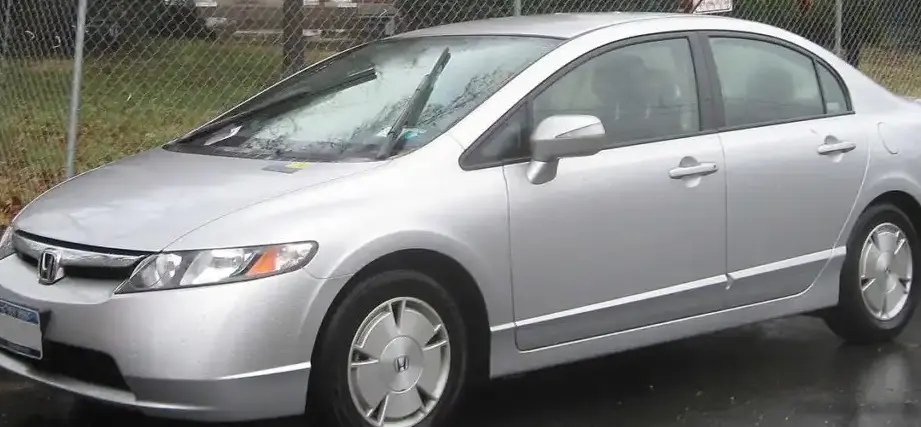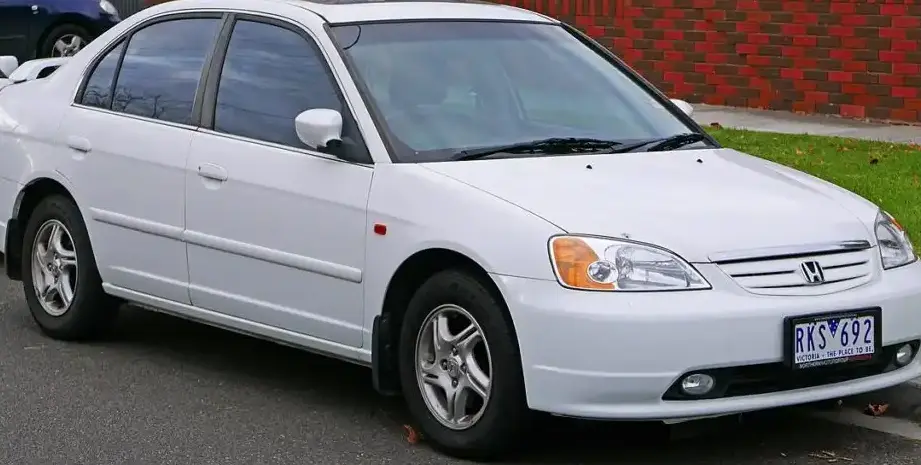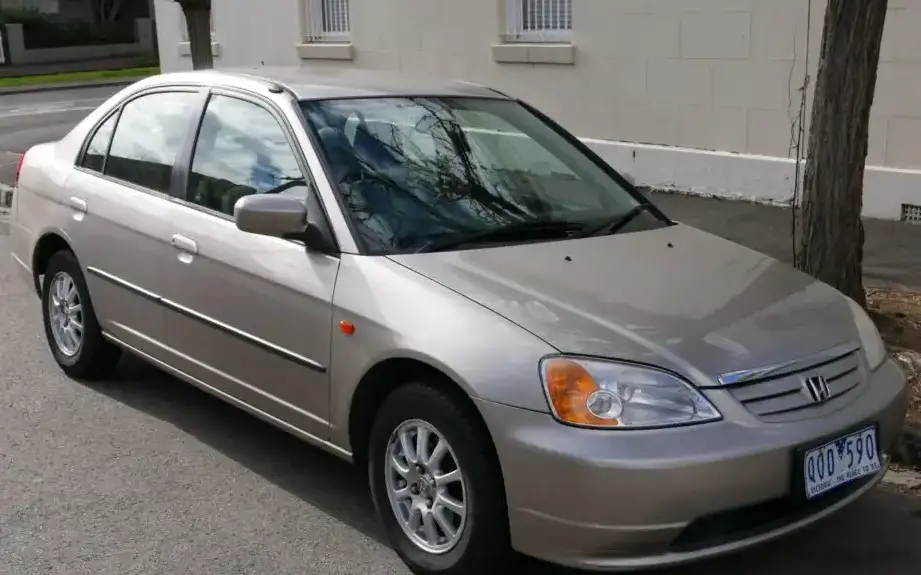
The Honda Civic VII Sedan 1.6i 16V Automatic, produced between 2001 and 2006, represented a notable evolution in Honda’s popular compact car line. Part of the seventh generation Civic (internally designated as the ES platform), this variant aimed to provide a comfortable and economical transportation option for families and commuters. Positioned as a mid-range offering within the Civic Sedan lineup, it slotted between the base 1.4L models and the more performance-oriented 1.7L variants. The 1.6i 16V Automatic was primarily sold in European, Asian, and Latin American markets, where fuel efficiency and practicality were highly valued. While the Civic VII was offered in North America, this specific 1.6L configuration was not a common sight in that market.
Technical Specifications
| Brand | Honda |
| Model | Civic |
| Generation | Civic VII Sedan |
| Type (Engine) | 1.6i 16V (110 Hp) Automatic |
| Start of production | 2001 |
| End of production | 2006 |
| Powertrain Architecture | Internal Combustion engine |
| Body type | Sedan |
| Seats | 5 |
| Doors | 4 |
| Fuel consumption (urban) | 9.3 l/100 km (25.3 US mpg) |
| Fuel consumption (extra urban) | 5.6 l/100 km (42 US mpg) |
| Fuel Type | Petrol (Gasoline) |
| Acceleration 0 – 100 km/h | 11.7 sec |
| Acceleration 0 – 62 mph | 11.7 sec |
| Acceleration 0 – 60 mph | 11.1 sec |
| Maximum speed | 192 km/h (119.3 mph) |
| Weight-to-power ratio | 10 kg/Hp |
| Weight-to-torque ratio | 7.3 kg/Nm |
| Power | 110 Hp @ 5600 rpm |
| Torque | 152 Nm @ 4300 rpm (112.11 lb.-ft. @ 4300 rpm) |
| Engine layout | Front, Transverse |
| Engine Model/Code | D16V1 |
| Engine displacement | 1590 cm3 (97.03 cu. in.) |
| Number of cylinders | 4 |
| Engine configuration | Inline |
| Cylinder Bore | 75 mm (2.95 in.) |
| Piston Stroke | 90 mm (3.54 in.) |
| Compression ratio | 10.4:1 |
| Number of valves per cylinder | 4 |
| Fuel injection system | Multi-port manifold injection |
| Engine aspiration | Naturally aspirated |
| Engine oil capacity | 3.5 l (3.7 US qt | 3.08 UK qt) |
| Coolant capacity | 4 l (4.23 US qt | 3.52 UK qt) |
| Kerb Weight | 1105 kg (2436.11 lbs.) |
| Max. weight | 1570 kg (3461.26 lbs.) |
| Max load | 465 kg (1025.15 lbs.) |
| Trunk (boot) space – minimum | 450 l (15.89 cu. ft.) |
| Fuel tank capacity | 50 l (13.21 US gal | 11 UK gal) |
| Length | 4458 mm (175.51 in.) |
| Width | 1715 mm (67.52 in.) |
| Height | 1440 mm (56.69 in.) |
| Wheelbase | 2620 mm (103.15 in.) |
| Front track | 1468 mm (57.8 in.) |
| Rear track | 1462 mm (57.56 in.) |
| Drivetrain Architecture | Front wheel drive |
| Number of gears | 4 |
| Gearbox type | Automatic transmission |
| Front suspension | Spring Strut |
| Rear suspension | Double wishbone |
| Front brakes | Ventilated discs |
| Rear brakes | Disc |
| Assisting systems | ABS (Anti-lock braking system) |
| Steering type | Steering rack and pinion |
| Tires size | 195/60 R15 |
| Wheel rims size | 15 |
Powertrain & Engine Architecture
The heart of the Civic VII 1.6i Automatic is the D16V1 engine, a 1.6-liter inline-four cylinder gasoline engine. This engine utilizes a single overhead camshaft (SOHC) design with four valves per cylinder (16V), contributing to its relatively efficient operation. The D16V1 employs multi-point fuel injection, delivering fuel directly to each intake port for improved combustion and reduced emissions. The engine’s 110 horsepower output at 5600 rpm and 152 Nm (112 lb-ft) of torque at 4300 rpm were achieved through careful tuning of the engine management system and valve timing. Paired with the engine is a four-speed automatic transmission, designed for smooth and convenient operation. This transmission featured typical torque converter technology and electronic control for optimized shift points.
Driving Characteristics
The 1.6i Automatic Civic offered a comfortable, if not particularly sporty, driving experience. The four-speed automatic transmission, while providing ease of use, did result in slightly slower acceleration compared to the five-speed manual versions. The 0-60 mph time of around 11.1 seconds reflects this. The automatic transmission’s gear ratios were geared towards fuel economy and smooth cruising rather than aggressive acceleration. Power delivery was linear, but the engine felt somewhat strained when pushed hard, especially when fully loaded. The automatic transmission did offer a ‘hold’ function, allowing the driver to prevent upshifts for more control in situations like climbing hills or overtaking.
Equipment & Trim Levels
The 1.6i Automatic trim typically included features such as power windows, power door locks, and a basic audio system. Air conditioning was often standard, though its availability could vary depending on the specific market. Interior upholstery was typically cloth, with a relatively simple dashboard layout. Optional extras included alloy wheels, a sunroof, and an upgraded audio system with a CD player. Safety features included dual front airbags and ABS (Anti-lock Braking System) as standard equipment, a significant improvement over earlier Civic generations.
Chassis & Braking
The Civic VII Sedan utilized a front independent suspension with MacPherson struts and a rear independent double wishbone suspension. This setup provided a comfortable ride quality and reasonable handling characteristics. The front brakes were ventilated discs, offering good stopping power, while the rear brakes were solid discs. The ABS system helped to maintain steering control during hard braking. The chassis was designed to balance rigidity with weight reduction, contributing to the car’s overall handling and fuel efficiency. Stabilizer bars were fitted to both the front and rear axles to reduce body roll during cornering.
Market Reception & Comparison
The Civic VII 1.6i Automatic was generally well-received by critics as a practical and reliable family car. It was praised for its fuel efficiency, comfortable ride, and spacious interior. However, some reviewers noted that the engine lacked outright power and the automatic transmission could feel sluggish at times. Compared to the 1.7L VTEC models, the 1.6i Automatic offered significantly less performance but at a lower price point. Against competitors like the Ford Focus and Volkswagen Golf, the Civic offered a compelling combination of reliability, fuel economy, and practicality. The 1.6L engine also proved to be more economical to maintain than the more complex VTEC engines.
Legacy
The D16V1 engine, when properly maintained, is known for its durability and longevity. The four-speed automatic transmission, while not the most advanced, is also generally reliable. Today, the Civic VII 1.6i Automatic can be found as an affordable and dependable used car. Parts availability is generally good, and maintenance costs are relatively low. While not a collector’s item, it remains a popular choice for those seeking a practical and economical mode of transportation. The Civic VII generation, as a whole, cemented Honda’s reputation for building reliable and fuel-efficient vehicles, and the 1.6i Automatic variant played a significant role in that success.