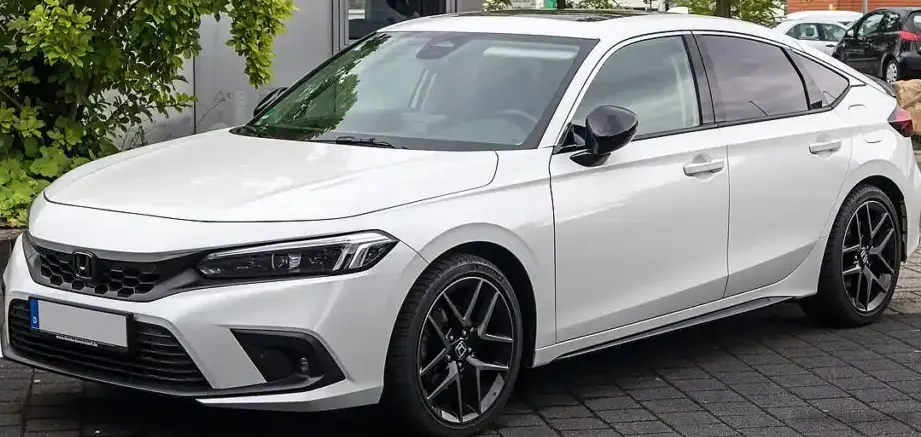
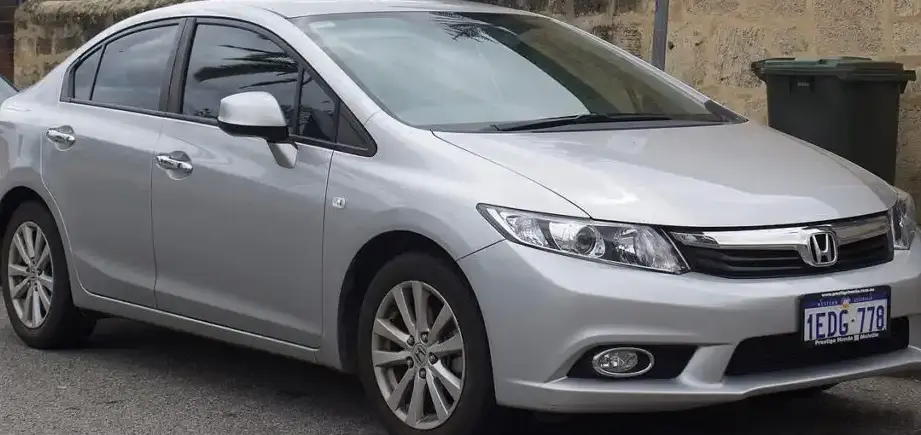
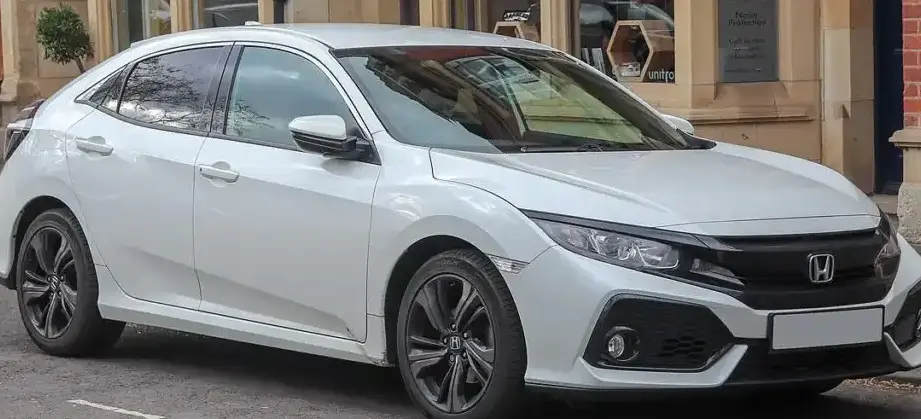
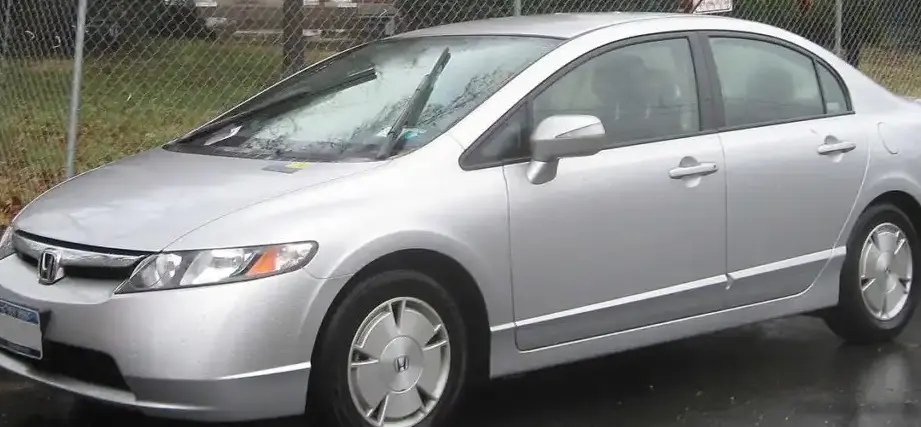
The Honda Civic X Edition 1.6 i-DTEC (120 hp) was a European market specification of the tenth-generation Honda Civic, produced from 2016 to 2019. Positioned as a fuel-efficient option within the Civic X range, it aimed to appeal to drivers prioritizing economy and lower running costs. This variant utilized a diesel engine paired with a six-speed manual transmission, offering a balance between performance and efficiency. It was a key offering in markets where diesel fuel was prevalent and incentivized, such as much of Western Europe.
Technical Specifications
| Brand | Honda |
| Model | Civic |
| Generation | Civic X Edition |
| Type (Engine) | 1.6 i-DTEC (120 Hp) |
| Start of production | 2016 |
| End of production | 2019 |
| Powertrain Architecture | Internal Combustion engine |
| Body type | Hatchback |
| Seats | 5 |
| Doors | 5 |
| Fuel consumption (urban) | 4 l/100 km (58.8 US mpg, 70.6 UK mpg, 25 km/l) |
| Fuel consumption (extra urban) | 3.6 l/100 km (65.3 US mpg, 78.5 UK mpg, 27.8 km/l) |
| Fuel consumption (combined) | 3.7 l/100 km (63.6 US mpg, 76.3 UK mpg, 27 km/l) |
| CO2 emissions | 98 g/km |
| Fuel Type | Diesel |
| Acceleration 0 – 100 km/h | 10.5 sec |
| Acceleration 0 – 62 mph | 10.5 sec |
| Acceleration 0 – 60 mph | 10 sec |
| Maximum speed | 207 km/h (128.62 mph) |
| Emission standard | Euro 6 |
| Weight-to-power ratio | 10.9 kg/Hp, 92.1 Hp/tonne |
| Weight-to-torque ratio | 4.3 kg/Nm, 230.2 Nm/tonne |
| Power | 120 Hp @ 4000 rpm |
| Power per litre | 75.1 Hp/l |
| Torque | 300 Nm @ 2000 rpm (221.27 lb.-ft. @ 2000 rpm) |
| Engine layout | Front, Transverse |
| Engine Model/Code | N16A1 |
| Engine displacement | 1597 cm3 (97.45 cu. in.) |
| Number of cylinders | 4 |
| Engine configuration | Inline |
| Cylinder Bore | 76 mm (2.99 in.) |
| Piston Stroke | 88 mm (3.46 in.) |
| Compression ratio | 16:1 |
| Number of valves per cylinder | 4 |
| Fuel injection system | Diesel Commonrail |
| Engine aspiration | Turbocharger, Intercooler |
| Valvetrain | DOHC |
| Engine oil capacity | 4.5 l (4.76 US qt | 3.96 UK qt) |
| Coolant capacity | 5.18 l (5.47 US qt | 4.56 UK qt) |
| Kerb Weight | 1303 kg (2872.62 lbs.) |
| Max. weight | 1870 kg (4122.64 lbs.) |
| Max load | 567 kg (1250.02 lbs.) |
| Trunk (boot) space – minimum | 477 l (16.85 cu. ft.) |
| Trunk (boot) space – maximum | 1378 l (48.66 cu. ft.) |
| Fuel tank capacity | 50 l (13.21 US gal | 11 UK gal) |
| Max. roof load | 75 kg (165.35 lbs.) |
| Permitted trailer load with brakes (12%) | 1400 kg (3086.47 lbs.) |
| Permitted trailer load without brakes | 500 kg (1102.31 lbs.) |
| Permitted towbar download | 75 kg (165.35 lbs.) |
| Length | 4370 mm (172.05 in.) |
| Width | 1770 mm (69.69 in.) |
| Width including mirrors | 2065 mm (81.3 in.) |
| Height | 1470 mm (57.87 in.) |
| Wheelbase | 2595 mm (102.17 in.) |
| Front track | 1540 mm (60.63 in.) |
| Rear track | 1540 mm (60.63 in.) |
| Ride height (ground clearance) | 140 mm (5.51 in.) |
| Minimum turning circle | 11.86 m (38.91 ft.) |
| Drivetrain Architecture | Front wheel drive |
| Number of gears and type of gearbox | 6 gears, manual transmission |
| Front suspension | Independent, type McPherson with coil spring and anti-roll bar |
| Rear suspension | Semi-independent, coil spring |
| Front brakes | Ventilated discs |
| Rear brakes | Disc |
| Assisting systems | ABS (Anti-lock braking system) |
| Steering type | Steering rack and pinion |
| Power steering | Electric Steering |
| Tires size | 225/45 R17 |
| Wheel rims size | 7J x 17 |
INTRODUCTION
The Honda Civic X Edition 1.6 i-DTEC (120 hp) represented Honda’s effort to provide a highly fuel-efficient option within the popular Civic hatchback range. Introduced in 2016 and continuing through 2019, this variant was specifically tailored for the European market, where diesel engines held a significant share due to favorable taxation and fuel economy. Built on the global Honda Civic platform (internally designated as the 1HX0/A3), the X Edition aimed to broaden the Civic’s appeal to cost-conscious buyers without sacrificing the model’s reputation for reliability and practicality. It sat in the lower-mid range of the Civic X lineup, offering a more affordable entry point than the higher-powered petrol or diesel variants.
Powertrain & Engine Architecture
At the heart of the Civic X Edition 1.6 i-DTEC was the N16A1 engine, a 1.6-liter inline-four cylinder diesel. This engine was part of Honda’s Earth Dreams Technology series, designed for improved efficiency and reduced emissions. The N16A1 featured a common-rail direct injection system, delivering fuel at extremely high pressure for optimized combustion. A turbocharger with an intercooler was employed to boost power output and improve torque across a wider rev range. The engine utilized a double overhead camshaft (DOHC) valvetrain with four valves per cylinder, enhancing breathing and contributing to its performance. The engine’s high 16:1 compression ratio was a key factor in its efficiency. The engine was paired with a six-speed manual transmission, chosen for its efficiency and driver engagement. This transmission featured relatively long gear ratios, prioritizing fuel economy over outright acceleration.
Driving Characteristics
The 120 hp and 300 Nm (221 lb-ft) of torque produced by the 1.6 i-DTEC engine provided adequate, though not exhilarating, performance. Acceleration from 0-100 km/h (0-62 mph) took approximately 10.5 seconds. The engine’s torque peak at 2000 rpm meant that it felt reasonably responsive in everyday driving situations, particularly for overtaking maneuvers. However, compared to the 1.5L petrol turbo or the higher-output 1.6 i-DTEC variants, the 120 hp version felt noticeably less powerful. The long gearing of the six-speed manual transmission further emphasized fuel economy, but also meant that the engine often needed to be worked harder to maintain speed on inclines or when fully loaded. The overall driving experience was characterized by its refinement and quietness, typical of modern diesel engines, and its predictable handling.
Equipment & Trim Levels
The Civic X Edition 1.6 i-DTEC typically came equipped with a reasonable level of standard features. Interior upholstery was generally cloth, with a functional and durable design. Standard equipment included air conditioning, power windows, power door locks, and a basic audio system with USB connectivity. Safety features such as ABS, electronic stability control, and multiple airbags were also standard. Optional extras included alloy wheels, a touchscreen infotainment system with navigation, rear parking sensors, and a sunroof. The “Edition” trim level generally represented a step up from the base model, offering a slightly more comprehensive equipment list.
Chassis & Braking
The Civic X Edition 1.6 i-DTEC utilized a McPherson strut front suspension with a coil spring and anti-roll bar, providing a comfortable and controlled ride. The rear suspension was a semi-independent torsion beam setup, which was a cost-effective solution that offered a good balance between ride quality and handling. The braking system consisted of ventilated discs at the front and solid discs at the rear, providing adequate stopping power for the vehicle’s weight and performance. Electric power steering was standard, offering light and precise steering feel.
Market Reception & Comparison
The Civic X Edition 1.6 i-DTEC was generally well-received by automotive critics for its impressive fuel economy and low running costs. However, some reviewers noted that the engine lacked the outright performance of its petrol counterparts. Compared to the 1.5L petrol turbo, the diesel offered superior fuel economy but less power. Against the higher-output 1.6 i-DTEC variants, the 120 hp version was more affordable but significantly slower. Its main competitors included diesel-powered versions of the Volkswagen Golf, Ford Focus, and Peugeot 308, all of which offered similar levels of fuel efficiency and practicality.
Legacy
The Honda Civic X Edition 1.6 i-DTEC has proven to be a reliable and durable vehicle in the used car market. The N16A1 engine, while not known for being particularly exciting, is generally considered to be robust and long-lasting, provided it receives regular maintenance. Common issues are relatively rare, although potential buyers should be aware of the typical wear and tear associated with diesel engines, such as diesel particulate filter (DPF) maintenance and potential injector issues. Today, these Civics represent a good value proposition for buyers seeking a fuel-efficient and reliable hatchback, particularly those who prioritize economy over outright performance.