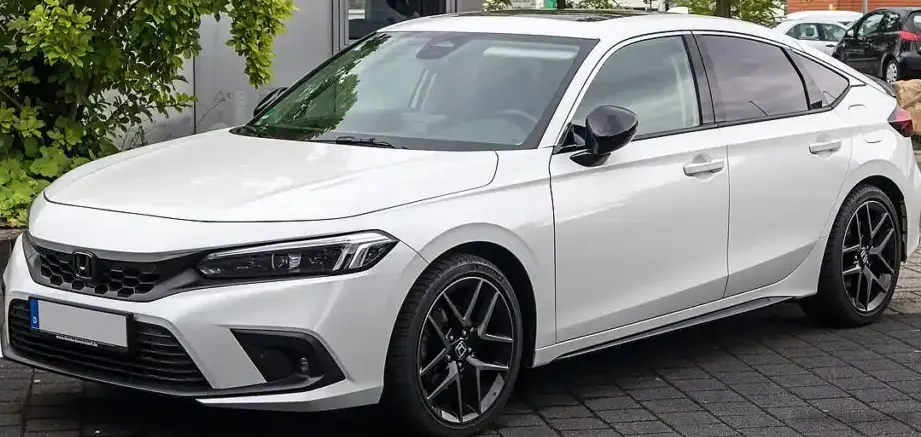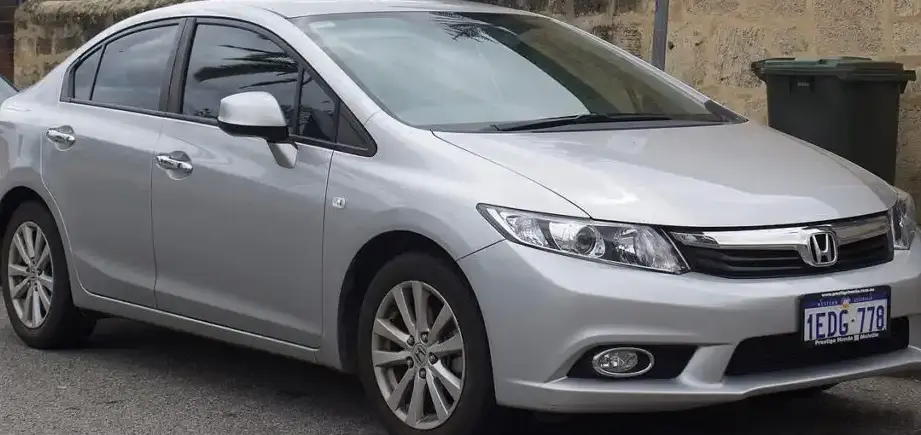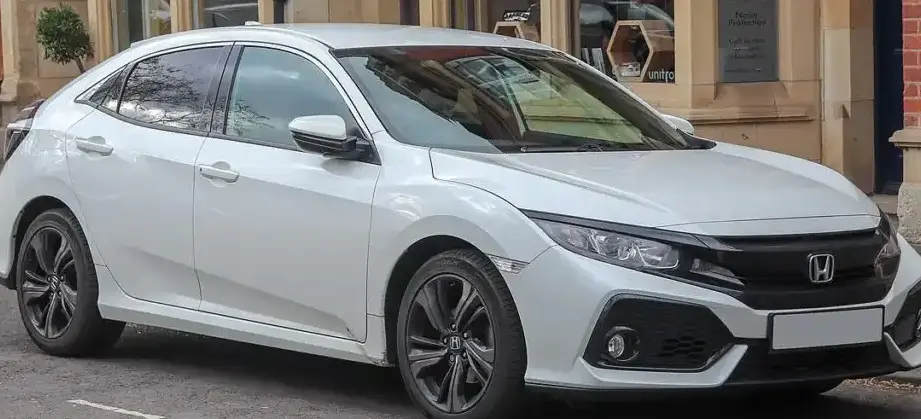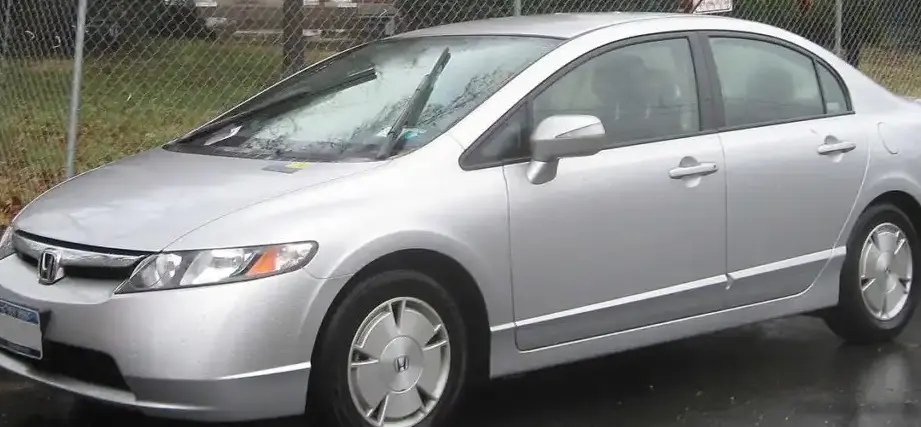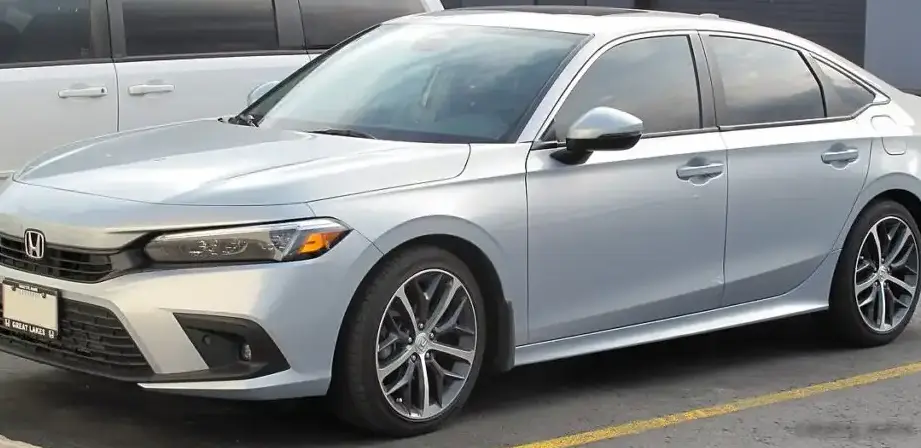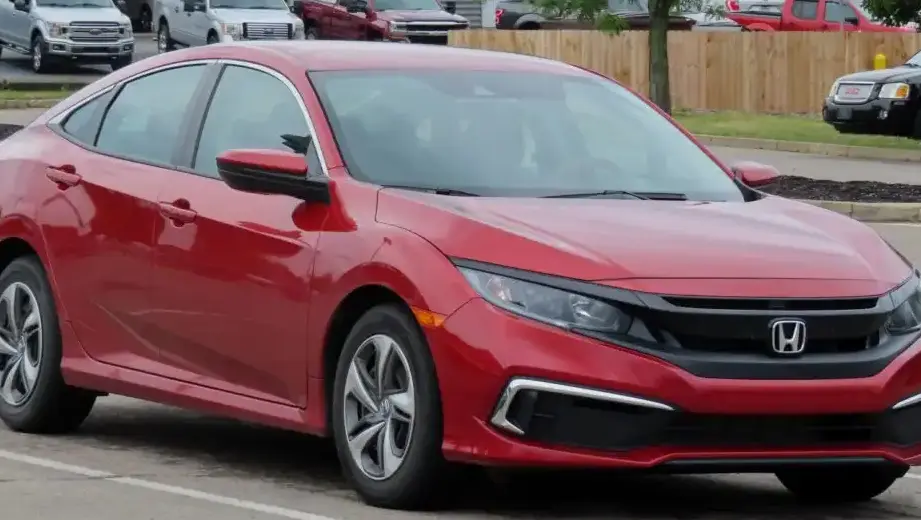
The Honda Civic X Sedan, specifically the 2.0 i-VTEC variant introduced with the 2018 facelift, represented a significant offering in the compact car segment. Produced from 2018 through 2021, this model year marked a mid-cycle refresh for the tenth-generation Civic, bringing updated styling, enhanced safety features, and refinements to the powertrain. The 2.0-liter engine, producing 158 horsepower, positioned this trim as a step up from the base 1.5-liter turbocharged engine, appealing to drivers seeking a more engaging driving experience without the premium price tag of the higher-performance trims. It was a key component of Honda’s strategy to offer a diverse Civic lineup catering to a wide range of consumer preferences.
Technical Specifications
| Brand | Honda |
| Model | Civic |
| Generation | Civic X Sedan (facelift 2018) |
| Type (Engine) | 2.0 i-VTEC (158 Hp) |
| Start of production | 2018 |
| End of production | 2021 |
| Powertrain Architecture | Internal Combustion engine |
| Body type | Sedan |
| Seats | 5 |
| Doors | 4 |
| Fuel consumption (economy) – urban (EPA) | 9.4 l/100 km (25 US mpg) |
| Fuel consumption (economy) – extra urban (EPA) | 6.5 l/100 km (36.2 US mpg) |
| Fuel consumption (economy) – combined (EPA) | 8.1 l/100 km (29 US mpg) |
| Fuel Type | Petrol (Gasoline) |
| Emission standard | LEV3-ULEV125; LEV3-SULEV30 |
| Weight-to-power ratio | 7.9 kg/Hp, 126.2 Hp/tonne |
| Weight-to-torque ratio | 6.7 kg/Nm, 149.4 Nm/tonne |
| Power | 158 Hp @ 6500 rpm |
| Power per litre | 79.2 Hp/l |
| Torque | 187 Nm @ 4200 rpm (137.92 lb.-ft. @ 4200 rpm) |
| Maximum engine speed | 6700 rpm |
| Engine layout | Front, Transverse |
| Engine Model/Code | K20C2 |
| Engine displacement | 1996 cm3 (121.8 cu. in.) |
| Number of cylinders | 4 |
| Engine configuration | Inline |
| Cylinder Bore | 86 mm (3.39 in.) |
| Piston Stroke | 85.9 mm (3.38 in.) |
| Compression ratio | 10.8:1 |
| Number of valves per cylinder | 4 |
| Fuel injection system | Multi-port manifold injection |
| Engine aspiration | Naturally aspirated engine |
| Valvetrain | DOHC, i-VTEC |
| Engine oil capacity | 4.2 l (4.44 US qt | 3.7 UK qt) |
| Coolant | 5.32 l (5.62 US qt | 4.68 UK qt) |
| Kerb Weight | 1252-1287 kg (2760.19 – 2837.35 lbs.) |
| Trunk (boot) space – minimum | 428 l (15.11 cu. ft.) |
| Fuel tank capacity | 47 l (12.42 US gal | 10.34 UK gal) |
| Length | 4641 mm (182.72 in.) |
| Width | 1801 mm (70.91 in.) |
| Width with mirrors folded | 1878 mm (73.94 in.) |
| Width including mirrors | 2076 mm (81.73 in.) |
| Height | 1415 mm (55.71 in.) |
| Wheelbase | 2700 mm (106.3 in.) |
| Front track | 1547 mm (60.91 in.) |
| Rear (Back) track | 1563 mm (61.54 in.) |
| Ride height (ground clearance) | 125 mm (4.92 in.) |
| Minimum turning circle (turning diameter) | 10.8-11.4 m (35.43 – 37.4 ft.) |
| Drivetrain Architecture | The Internal combustion engine (ICE) drives the front wheels of the vehicle. |
| Drive wheel | Front wheel drive |
| Number of gears and type of gearbox | 6 gears, manual transmission |
| Front suspension | Independent, type McPherson with coil spring and anti-roll bar |
| Rear suspension | Independent multi-link spring suspension with stabilizer |
| Front brakes | Ventilated discs, 282 mm |
| Rear brakes | Disc, 259 mm |
| Assisting systems | ABS (Anti-lock braking system) |
| Steering type | Steering rack and pinion |
| Power steering | Electric Steering |
| Tires size | 215/55 R16; 235/40 R18 |
| Wheel rims size | 7J x 16; 8J x 18 |
Powertrain & Engine Architecture
The heart of this Civic variant is the K20C2 2.0-liter inline-four cylinder engine. This naturally aspirated engine utilizes Honda’s i-VTEC (intelligent Variable valve Timing and lift Electronic Control) system, which allows for variable control of both valve timing and lift, optimizing performance and fuel efficiency across the engine’s operating range. The K20C2 employs multi-point fuel injection, delivering fuel directly into the intake ports. The engine’s design prioritizes responsiveness and a linear power delivery, making it well-suited for everyday driving. The 6-speed manual transmission was standard, providing drivers with direct control over the engine’s power. The transmission’s gear ratios were tuned to balance acceleration and fuel economy, offering a reasonably engaging driving experience.
Driving Characteristics
The 2.0 i-VTEC Civic Sedan offered a noticeable step up in performance compared to the base 1.5-liter turbocharged model. While not as quick as the Si trim, the 158 horsepower and 137.92 lb-ft of torque provided ample power for merging onto highways and passing other vehicles. The manual transmission allowed for precise gear selection, and the engine responded eagerly to throttle inputs. The gear ratios were well-matched to the engine’s powerband, providing good acceleration in each gear. Compared to the turbocharged engine, the 2.0-liter felt more predictable and linear in its power delivery, appealing to drivers who preferred a more traditional driving experience. However, it lacked the low-end torque of the turbo engine, requiring slightly higher engine speeds for optimal acceleration.
Equipment & Trim Levels
The 2.0 i-VTEC trim typically included standard features such as automatic climate control, a multi-angle rearview camera, and Honda’s LaneWatch blind spot display. Infotainment was provided by a 7-inch touchscreen display with Apple CarPlay and Android Auto compatibility. Interior upholstery was typically cloth, with options for upgraded materials available. Higher trim levels within the Civic X Sedan range, such as the EX and Touring, added features like leather upholstery, a sunroof, and a premium audio system. The 2.0 i-VTEC served as a solid base for these upgrades, offering a good balance of features and affordability.
Chassis & Braking
The Civic X Sedan utilized a MacPherson strut front suspension and a multi-link rear suspension, providing a comfortable and controlled ride. The suspension was tuned to balance handling and ride quality, making it suitable for both city driving and highway cruising. The braking system consisted of ventilated discs at the front and solid discs at the rear, providing adequate stopping power for the vehicle’s weight and performance. Anti-lock brakes (ABS) were standard, enhancing safety and control during emergency braking situations.
Market Reception & Comparison
Critics generally praised the 2.0 i-VTEC Civic Sedan for its responsive engine, engaging driving dynamics, and comfortable interior. It was often seen as a more appealing option for drivers who preferred a naturally aspirated engine and a manual transmission. Fuel economy was respectable, averaging around 29 mpg in combined driving. Compared to the 1.5-liter turbocharged model, the 2.0 i-VTEC offered a more rewarding driving experience but slightly lower fuel efficiency. The 2.0L was often seen as a sweet spot in the lineup, offering a good balance of performance, features, and price.
Legacy
The K20C2 engine has proven to be a reliable and durable powerplant. The Civic X Sedan, in general, has maintained a good reputation for reliability, and the 2.0 i-VTEC variant is no exception. On the used car market, these models are often sought after by enthusiasts who appreciate the simplicity and responsiveness of a naturally aspirated engine. With proper maintenance, these Civics are expected to provide many years of reliable service, making them a practical and enjoyable choice for budget-conscious buyers.