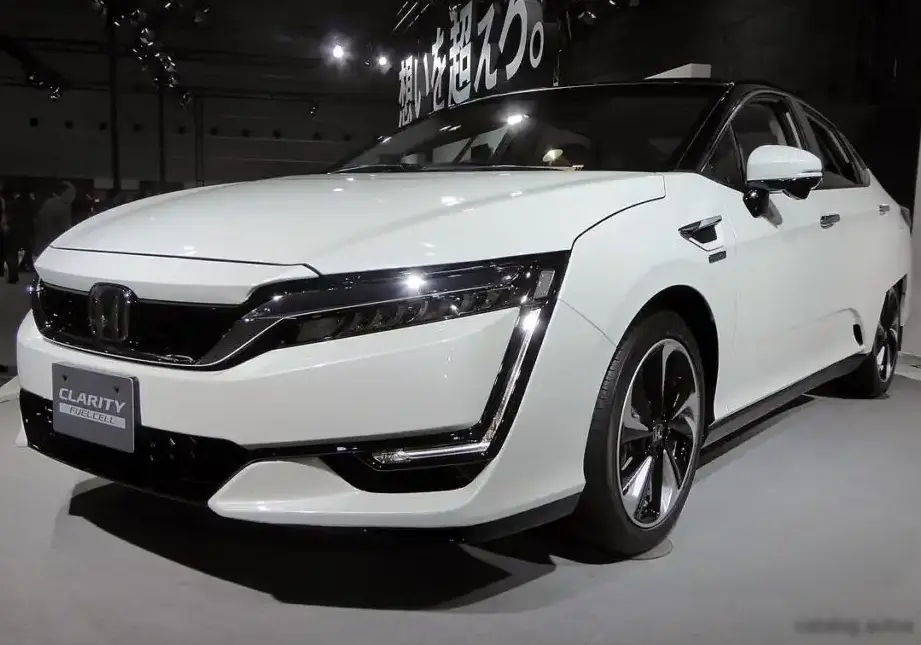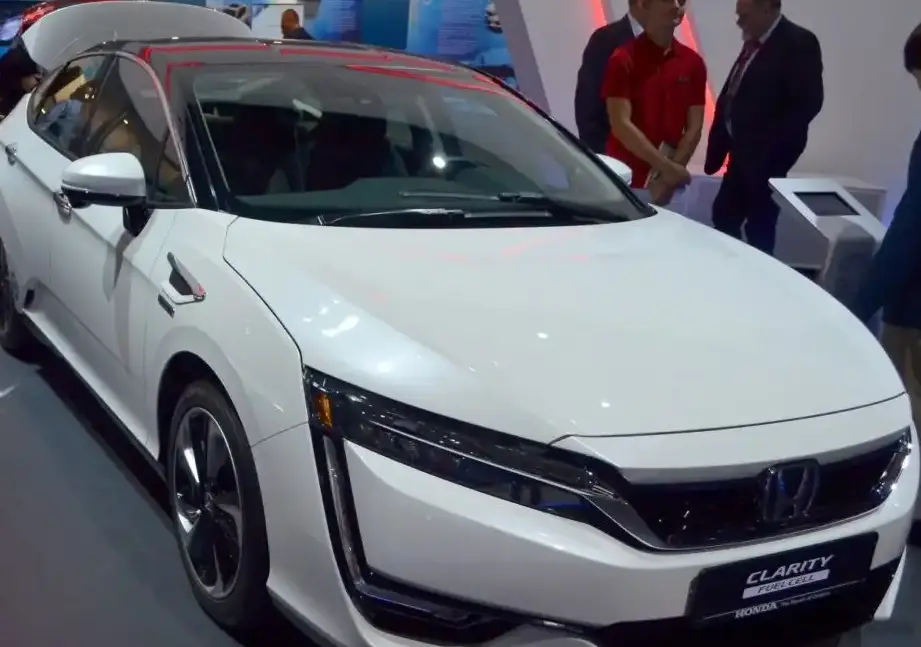
The Honda Clarity Electric, specifically the 25.5 kWh variant producing 163 horsepower, represented Honda’s initial foray into the fully electric vehicle (EV) market in the United States. Produced from 2016 to 2019, it was part of the larger Clarity series, which also included plug-in hybrid and fuel cell variants. The Clarity Electric was primarily offered in California and Oregon, states with stricter emissions standards and greater EV adoption incentives. It aimed to provide a practical, five-passenger sedan with a usable all-electric range, competing with early offerings from Tesla, Nissan, and BMW.
Technical Specifications
| Brand | Honda |
| Model | Clarity |
| Generation | Clarity |
| Type (Engine) | 25.5 kWh (163 Hp) Electric Automatic |
| Start of production | 2016 |
| End of production | 2019 |
| Powertrain Architecture | BEV (Electric Vehicle) |
| Body type | Sedan |
| Seats | 5 |
| Doors | 4 |
| Fuel Type | Electricity |
| Weight-to-power ratio | 11.2 kg/Hp |
| Hp/tonne | 89.3 Hp/tonne |
| Gross battery capacity | 25.5 kWh |
| All-electric range | 143 km (88.86 mi) |
| Electric motor power | 163 Hp @ 4000-9500 rpm |
| Electric motor Torque | 300 Nm @ 0-3500 rpm (221.27 lb.-ft. @ 0-3500 rpm) |
| System power | 163 Hp @ 4000-9500 rpm |
| Kerb Weight | 1825 kg (4023.44 lbs) |
| Trunk (boot) space – minimum | 405 l (14.3 cu. ft) |
| Length | 4895 mm (192.72 in) |
| Width | 1877 mm (73.9 in) |
| Height | 1478 mm (58.19 in) |
| Wheelbase | 2751 mm (108.31 in) |
| Front track | 1580 mm (62.2 in) |
| Rear (Back) track | 1587 mm (62.48 in) |
| Drivetrain Architecture | One electric motor drives the front wheels |
| Drive wheel | Front wheel drive |
| Number of gears and type of gearbox | 1 gears, automatic transmission SBW |
| Front suspension | Independent type McPherson |
| Rear suspension | Independent multi-link suspension |
| Front brakes | Ventilated discs |
| Rear brakes | Disc |
| Assisting systems | ABS (Anti-lock braking system) |
| Steering type | Steering rack and pinion |
| Power steering | Electric Steering |
| Tires size | 235/45 R18 |
| Wheel rims size | 8J x 18 |
Powertrain & Engine Architecture
The Clarity Electric utilizes a 25.5 kWh lithium-ion battery pack, providing a usable capacity for its intended range. The electric motor, positioned at the front of the vehicle, delivers 163 horsepower and 300 Nm (221 lb-ft) of torque. Power is delivered to the front wheels via a single-speed automatic transmission – a characteristic of most electric vehicles, as the electric motor provides instant torque across a wide RPM range, negating the need for multiple gears. The Clarity Electric employs a regenerative braking system, capturing kinetic energy during deceleration to recharge the battery, increasing overall efficiency. The motor operates within a range of 4000-9500 rpm, though the sensation of RPMs is different than in an internal combustion engine.
Driving Characteristics
The Clarity Electric offered a smooth and quiet driving experience, typical of electric vehicles. Acceleration was brisk, particularly from a standstill, due to the instant torque delivery. While not a performance-oriented EV, it provided adequate power for everyday driving situations. The single-speed transmission meant there was no gear shifting, contributing to the seamless acceleration. Compared to the Clarity Plug-in Hybrid, the Electric version offered a more immediate and responsive driving experience, lacking the engine engagement of the hybrid. However, the limited range of 88.86 miles meant range anxiety was a concern for some drivers, especially on longer journeys. The weight distribution, with the battery pack located low in the chassis, contributed to a stable and planted feel.
Equipment & Trim Levels
The Clarity Electric was relatively well-equipped, even in its base trim. Standard features included automatic climate control, a touchscreen infotainment system with Honda Sensing suite of safety features (including adaptive cruise control and lane keeping assist), and a rearview camera. Interior upholstery was typically cloth, with available upgrades to leather. Optional extras included a premium audio system, navigation, and heated front seats. The dashboard layout was clean and modern, with a focus on usability. The Clarity Electric was positioned as a mid-range offering in the EV market, offering a good balance of features and price.
Chassis & Braking
The Clarity Electric features an independent McPherson strut suspension in the front and an independent multi-link suspension in the rear, providing a comfortable ride quality. Ventilated disc brakes were used on the front wheels, while solid disc brakes were used on the rear. The inclusion of ABS (Anti-lock Braking System) was standard. The electric power steering provided light and precise steering feel. The vehicle’s relatively heavy weight (4023.44 lbs) due to the battery pack necessitated a robust suspension and braking system. The tire size was 235/45 R18, mounted on 8J x 18 inch alloy wheels.
Market Reception & Comparison
The Honda Clarity Electric received generally positive reviews from critics, who praised its comfortable ride, spacious interior, and standard safety features. However, its limited range compared to competitors like the Tesla Model 3 and Nissan LEAF was a common criticism. Fuel economy, measured in MPGe (miles per gallon equivalent), was competitive for its time. Reliability was generally good, with few reported issues specific to the electric powertrain. Compared to the Clarity Plug-in Hybrid, the Electric version offered zero tailpipe emissions but lacked the flexibility of the hybrid’s gasoline engine for extended range. The Clarity Fuel Cell, utilizing hydrogen, was even more limited in availability and infrastructure support.
Legacy
The Honda Clarity Electric, while a relatively short-lived model, played an important role in Honda’s transition to electric vehicles. It provided valuable data and experience that informed the development of subsequent EVs, such as the Honda Prologue. On the used car market, the Clarity Electric remains a viable option for buyers seeking an affordable and reliable EV, particularly in regions with established charging infrastructure. The longevity of the battery pack is a key consideration for potential buyers, with battery health varying depending on usage and charging habits. While its range may seem limited by today’s standards, it remains sufficient for many daily commutes and errands. The Clarity Electric represents an early step in the widespread adoption of electric vehicles, and its contribution to the EV landscape should not be overlooked.