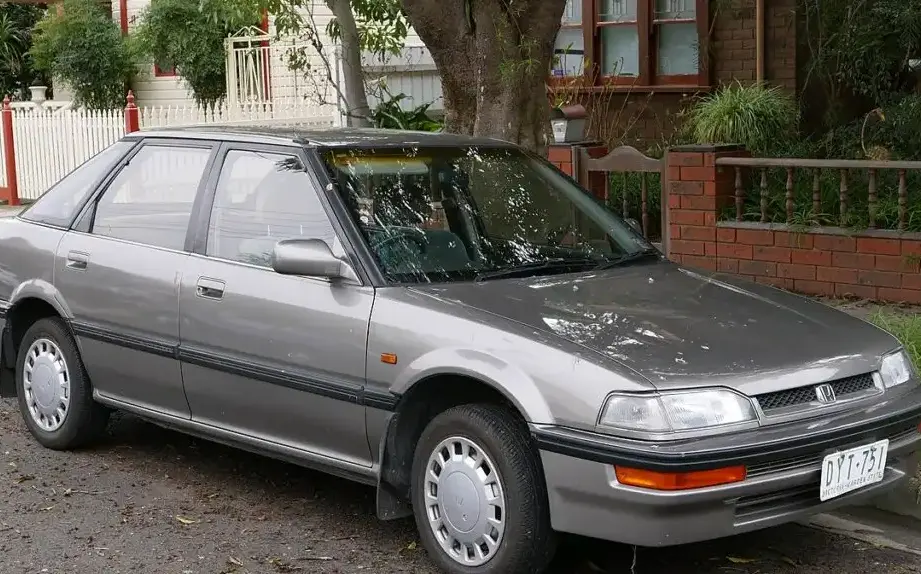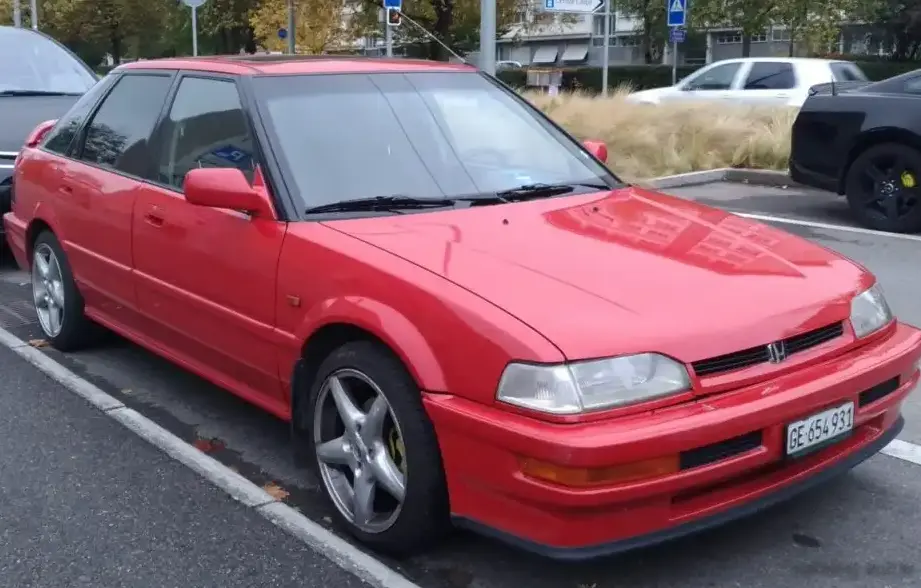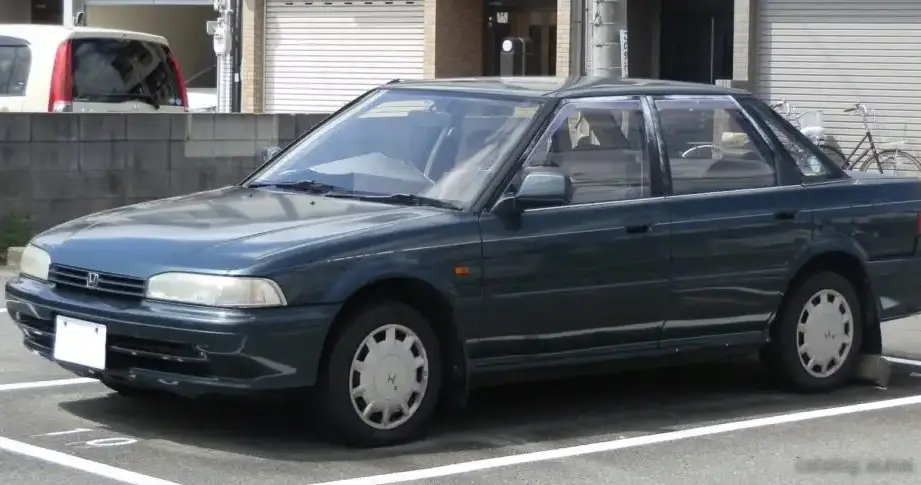
The Honda Concerto 1.6i 16V, produced between 1989 and 1995, represented a significant offering in Honda’s lineup during the late 1980s and early 1990s. Part of the HW generation, this variant aimed to provide a balance between performance and practicality within the compact sedan segment. Positioned as a step up from the base models, the 1.6i 16V offered increased horsepower and a more refined driving experience. It was primarily marketed in Europe and Japan, where compact, fuel-efficient sedans were highly sought after. The Concerto shared its platform with the Rover 200/400 series, a result of Honda’s collaboration with British Leyland (later Rover Group).
Technical Specifications
| Brand | Honda |
| Model | Concerto |
| Generation | Concerto (HW) |
| Type (Engine) | 1.6i 16V (112 Hp) |
| Start of production | 1989 |
| End of production | 1995 |
| Powertrain Architecture | Internal Combustion engine |
| Body type | Sedan |
| Seats | 5 |
| Doors | 4 |
| Fuel consumption (urban) | 9.8 l/100 km (24 US mpg, 28.8 UK mpg) |
| Fuel consumption (extra urban) | 7.1 l/100 km (33.1 US mpg, 39.8 UK mpg) |
| Fuel consumption (combined) | 9.1 l/100 km (25.8 US mpg, 31 UK mpg) |
| Fuel Type | Petrol (Gasoline) |
| Acceleration 0 – 100 km/h | 10.6 sec |
| Acceleration 0 – 62 mph | 10.6 sec |
| Acceleration 0 – 60 mph | 10.1 sec |
| Maximum speed | 185 km/h (114.95 mph) |
| Weight-to-power ratio | 9.6 kg/Hp |
| Weight-to-torque ratio | 7.9 kg/Nm |
| Power | 112 Hp @ 6300 rpm |
| Power per litre | 70.4 Hp/l |
| Torque | 137 Nm @ 5200 rpm (101.05 lb.-ft. @ 5200 rpm) |
| Engine layout | Front, Transverse |
| Engine Model/Code | D16Z2 |
| Engine displacement | 1590 cm3 (97.03 cu. in.) |
| Number of cylinders | 4 |
| Engine configuration | Inline |
| Cylinder Bore | 75 mm (2.95 in.) |
| Piston Stroke | 90 mm (3.54 in.) |
| Compression ratio | 9.1:1 |
| Number of valves per cylinder | 4 |
| Fuel injection system | Multi-port manifold injection |
| Engine aspiration | Naturally aspirated engine |
| Valvetrain | OHC |
| Engine oil capacity | 3.5 l (3.7 US qt | 3.08 UK qt) |
| Kerb Weight | 1080 kg (2380.99 lbs.) |
| Max. weight | 1580 kg (3483.3 lbs.) |
| Max load | 500 kg (1102.31 lbs.) |
| Trunk (boot) space – minimum | 420 l (14.83 cu. ft.) |
| Fuel tank capacity | 55 l (14.53 US gal | 12.1 UK gal) |
| Length | 4415 mm (173.82 in.) |
| Width | 1690 mm (66.54 in.) |
| Height | 1395 mm (54.92 in.) |
| Wheelbase | 2550 mm (100.39 in.) |
| Front track | 1450 mm (57.09 in.) |
| Rear (Back) track | 1455 mm (57.28 in.) |
| Drivetrain Architecture | The Internal combustion engine (ICE) drives the front wheels of the vehicle. |
| Drive wheel | Front wheel drive |
| Number of gears and type of gearbox | 5 gears, manual transmission |
| Front suspension | Coil spring |
| Rear suspension | Coil spring |
| Front brakes | Ventilated discs |
| Rear brakes | Drum |
| Assisting systems | ABS (Anti-lock braking system) |
| Steering type | Steering rack and pinion |
| Power steering | Hydraulic Steering |
| Tires size | 175/70 R13 |
Powertrain & Engine Architecture
The heart of the Concerto 1.6i 16V was the D16Z2 engine, a 1.6-liter inline-four cylinder powerplant. This engine featured a single overhead camshaft (SOHC) valvetrain with four valves per cylinder, contributing to its improved breathing and higher output compared to earlier Honda engines. The D16Z2 utilized multi-port fuel injection, a significant advancement over carburetor systems, allowing for precise fuel delivery and enhanced efficiency. The engine’s 9.1:1 compression ratio was a compromise between performance and the ability to run on readily available fuel grades. The five-speed manual transmission was the standard offering, providing drivers with good control over the engine’s power band. The transmission was known for its relatively smooth shifts and durability.
Driving Characteristics
The 1.6i 16V Concerto offered a noticeable step up in performance compared to the lower-spec models. With 112 horsepower, it could accelerate from 0 to 60 mph in approximately 10.1 seconds and reach a top speed of 115 mph. While not a sports car, the 1.6i 16V provided adequate power for everyday driving and comfortable highway cruising. The five-speed manual transmission allowed drivers to keep the engine in its optimal power range, resulting in responsive acceleration. The gear ratios were well-matched for both city and highway driving, providing a balance between fuel economy and performance. Compared to the base 1.5L models, the 1.6i 16V felt significantly more lively and capable, especially when fully loaded or tackling inclines.
Equipment & Trim Levels
The 1.6i 16V Concerto typically came equipped with features considered standard for its time, including power steering, a basic audio system, and cloth upholstery. Higher trim levels offered options such as alloy wheels, electric windows, and a sunroof. Interior appointments were functional and relatively simple, reflecting the car’s focus on practicality. The dashboard layout was straightforward and easy to use, with clearly marked controls. Air conditioning was often an optional extra, and many examples were sold without it, particularly in European markets.
Chassis & Braking
The Concerto utilized a relatively conventional chassis design, with coil springs and a stabilizer bar at both the front and rear. The front suspension featured MacPherson struts, while the rear employed a torsion beam setup. Braking duties were handled by ventilated discs at the front and drum brakes at the rear. Anti-lock braking system (ABS) was available as an option, enhancing safety by preventing wheel lockup during hard braking. The suspension provided a comfortable ride, absorbing bumps and imperfections in the road surface effectively. The steering was light and responsive, making the car easy to maneuver in urban environments.
Market Reception & Comparison
The Honda Concerto 1.6i 16V was generally well-received by automotive critics. It was praised for its reliable engine, comfortable ride, and practical interior. However, some reviewers noted that its styling was somewhat conservative compared to its rivals. Compared to other cars in its class, such as the Ford Escort and Vauxhall Astra, the Concerto offered a more refined driving experience and a reputation for exceptional reliability. Fuel economy was competitive, averaging around 25-31 mpg in combined driving. The 1.6i 16V represented a good value proposition for buyers seeking a dependable and efficient compact sedan.
Legacy
The Honda Concerto, and particularly the 1.6i 16V variant, has earned a reputation for long-term reliability. The D16Z2 engine is known for its durability and ability to withstand high mileage with proper maintenance. Today, well-maintained examples are becoming increasingly sought after by classic car enthusiasts. While not as iconic as some other Honda models, the Concerto remains a testament to Honda’s engineering prowess and commitment to quality. Parts availability is generally good, although some trim-specific components may be difficult to find. The Concerto’s simple design and robust construction make it a relatively easy car to maintain and repair, contributing to its enduring appeal.