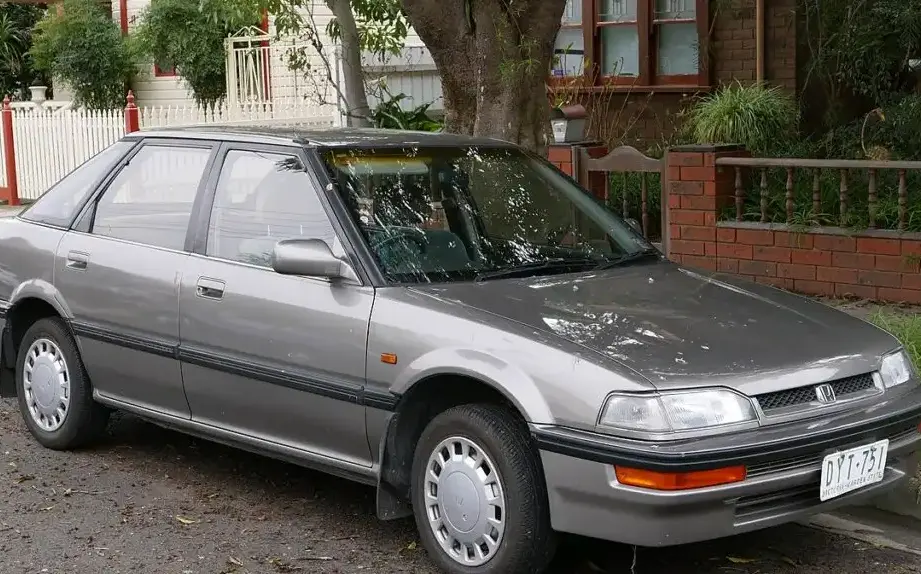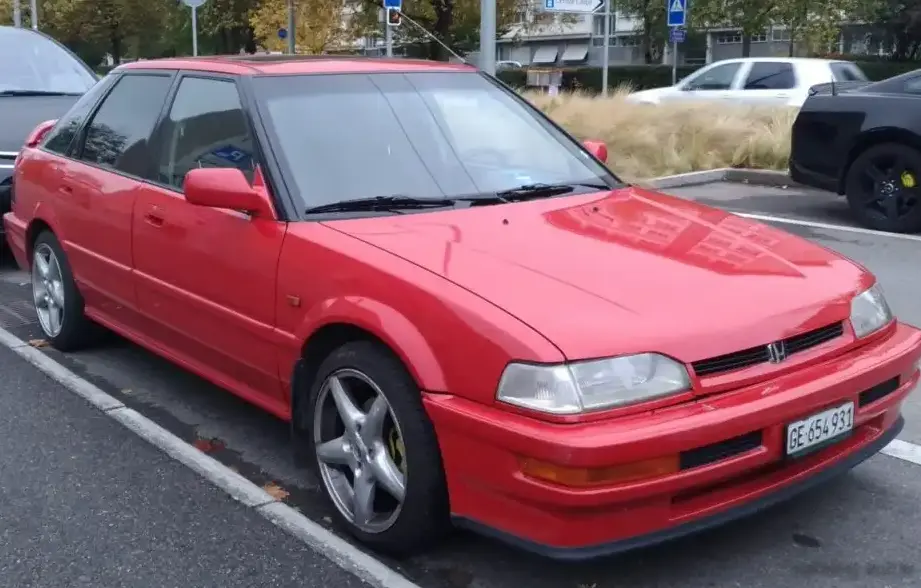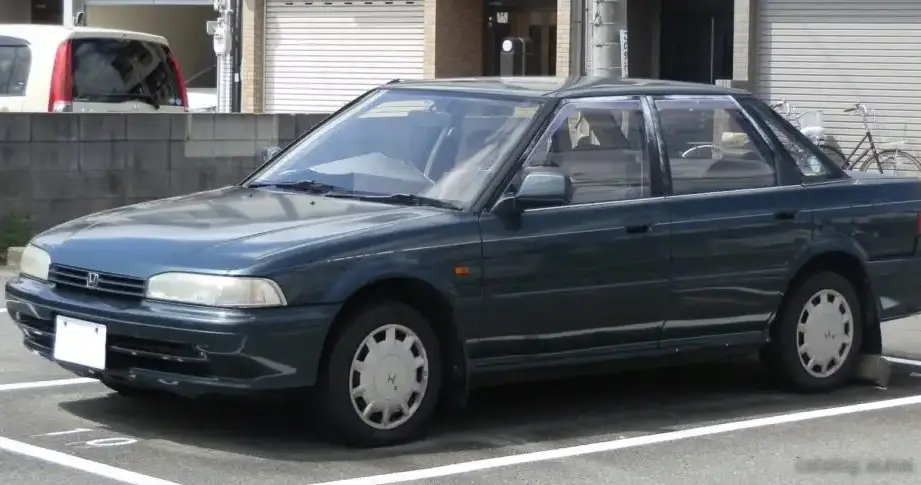
The Honda Concerto 1.6i 16V, produced between 1989 and 1995, represented a significant step forward for Honda in the compact sedan segment. Part of the HW generation, the Concerto was primarily aimed at the European market as a more sophisticated and refined alternative to the Civic. It shared its platform with the Rover 200 (and later the Honda Domani in Japan), a result of Honda’s British Leyland partnership. The 1.6i 16V trim occupied a mid-range position within the Concerto lineup, offering a balance between performance, fuel efficiency, and equipment levels. It slotted above the base 1.5L models and below the more performance-oriented variants, appealing to buyers seeking a comfortable and capable daily driver.
Technical Specifications
| Brand | Honda |
| Model | Concerto |
| Generation | Concerto (HW) |
| Type (Engine) | 1.6i 16V (122 Hp) |
| Start of production | 1989 |
| End of production | 1995 |
| Powertrain Architecture | Internal Combustion engine |
| Body type | Sedan |
| Seats | 5 |
| Doors | 4 |
| Fuel consumption (urban) | 9.8 l/100 km (24 US mpg) |
| Fuel consumption (extra urban) | 7.1 l/100 km (33.1 US mpg) |
| Fuel consumption (combined) | 9.1 l/100 km (25.8 US mpg) |
| Fuel Type | Petrol (Gasoline) |
| Acceleration 0 – 100 km/h | 10 sec |
| Acceleration 0 – 62 mph | 10 sec |
| Acceleration 0 – 60 mph | 9.5 sec |
| Maximum speed | 190 km/h (118.06 mph) |
| Weight-to-power ratio | 8.9 kg/Hp |
| Weight-to-torque ratio | 7.7 kg/Nm |
| Power | 122 Hp @ 6800 rpm |
| Power per litre | 76.7 Hp/l |
| Torque | 140 Nm @ 5700 rpm (103.26 lb.-ft. @ 5700 rpm) |
| Engine layout | Front, Transverse |
| Engine displacement | 1590 cm3 (97.03 cu. in.) |
| Number of cylinders | 4 |
| Engine configuration | Inline |
| Cylinder Bore | 75 mm (2.95 in.) |
| Piston Stroke | 90 mm (3.54 in.) |
| Compression ratio | 9.5:1 |
| Number of valves per cylinder | 4 |
| Fuel injection system | Multi-port manifold injection |
| Engine aspiration | Naturally aspirated engine |
| Valvetrain | DOHC |
| Kerb Weight | 1080 kg (2380.99 lbs.) |
| Max. weight | 1580 kg (3483.3 lbs.) |
| Max load | 500 kg (1102.31 lbs.) |
| Trunk (boot) space – minimum | 420 l (14.83 cu. ft.) |
| Fuel tank capacity | 55 l (14.53 US gal | 12.1 UK gal) |
| Length | 4415 mm (173.82 in.) |
| Width | 1690 mm (66.54 in.) |
| Height | 1395 mm (54.92 in.) |
| Wheelbase | 2550 mm (100.39 in.) |
| Front track | 1450 mm (57.09 in.) |
| Rear (Back) track | 1455 mm (57.28 in.) |
| Drivetrain Architecture | The Internal combustion engine (ICE) drives the front wheels of the vehicle. |
| Drive wheel | Front wheel drive |
| Number of gears and type of gearbox | 5 gears, manual transmission |
| Front suspension | Coil spring |
| Rear suspension | Coil spring |
| Front brakes | Ventilated discs |
| Rear brakes | Drum |
| Assisting systems | ABS (Anti-lock braking system) |
| Steering type | Steering rack and pinion |
| Power steering | Hydraulic Steering |
| Tires size | 175/70 R13 |
Powertrain & Engine Architecture
The heart of the Concerto 1.6i 16V was Honda’s S16A engine, a 1.6-liter (1590cc) inline-four cylinder powerplant. This engine featured a double overhead camshaft (DOHC) valvetrain operating 16 valves, contributing to its relatively high output for its displacement. The engine utilized multi-port fuel injection, a technology becoming increasingly common in the late 1980s, for precise fuel delivery and improved efficiency. The S16A engine was known for its smooth operation and willingness to rev. The 16-valve head design allowed for improved breathing, enhancing both horsepower and torque. The engine’s 9.5:1 compression ratio was a compromise between performance and the fuel quality available in European markets. The five-speed manual transmission was the standard offering, providing drivers with good control over the engine’s powerband.
Driving Characteristics
The 1.6i 16V Concerto offered a noticeably more spirited driving experience than its 1.5-liter counterparts. With 122 horsepower, acceleration to 60 mph took around 9.5 seconds, and it could reach a top speed of approximately 118 mph. While not a sports car, the Concerto 1.6i 16V provided adequate power for comfortable highway cruising and overtaking maneuvers. The five-speed manual transmission allowed drivers to keep the engine in its optimal power range. The gear ratios were well-chosen for everyday driving, providing a balance between acceleration and fuel economy. Compared to the later, more powerful Honda engines, the S16A felt less muscular, but its lighter weight and responsive nature made it an enjoyable engine to drive. The suspension, while comfortable, wasn’t particularly sporty, resulting in a slight degree of body roll during cornering.
Equipment & Trim Levels
The 1.6i 16V trim generally included features such as power steering, central locking, electric windows, and an upgraded stereo system. Interior upholstery was typically cloth, with a relatively simple but functional dashboard layout. Optional extras included a sunroof, alloy wheels, and upgraded sound systems. The trim level aimed for a balance of comfort and convenience, appealing to buyers who wanted a well-equipped car without the higher price tag of more luxurious models. The interior design was typical of Japanese cars of the era – practical, durable, and focused on ergonomics.
Chassis & Braking
The Concerto utilized a front-wheel-drive layout with coil spring suspension at all four corners. The front suspension featured MacPherson struts, while the rear employed a torsion beam setup. Braking duties were handled by ventilated discs at the front and drum brakes at the rear. ABS (Anti-lock Braking System) was available as an option, enhancing safety in emergency braking situations. The chassis was designed to provide a comfortable ride, prioritizing smoothness over outright handling prowess. The relatively modest weight of the Concerto helped to offset the limitations of the suspension and braking system.
Market Reception & Comparison
The Honda Concerto 1.6i 16V was generally well-received by automotive critics. It was praised for its refined engine, comfortable ride, and good build quality. However, some reviewers noted that its styling was somewhat conservative and that its handling wasn’t as sharp as some of its rivals. Compared to other cars in its class, such as the Ford Escort and Vauxhall Astra, the Concerto offered a more sophisticated and reliable alternative. Fuel economy was respectable for the time, averaging around 25.8 US mpg in combined driving. The 1.6i 16V offered a compelling alternative to the base models, providing a noticeable performance boost without significantly increasing the price.
Legacy
The Honda Concerto, while not a hugely popular model, established Honda’s reputation for building reliable and well-engineered cars in the European market. The S16A engine proved to be a durable and long-lasting unit, and many examples are still on the road today. The Concerto 1.6i 16V remains a relatively affordable classic car, appealing to enthusiasts who appreciate its simplicity and reliability. Parts availability is generally good, although some trim-specific components may be difficult to find. The Concerto’s influence can be seen in later Honda models, which continued to build on its strengths in terms of build quality and engineering excellence.