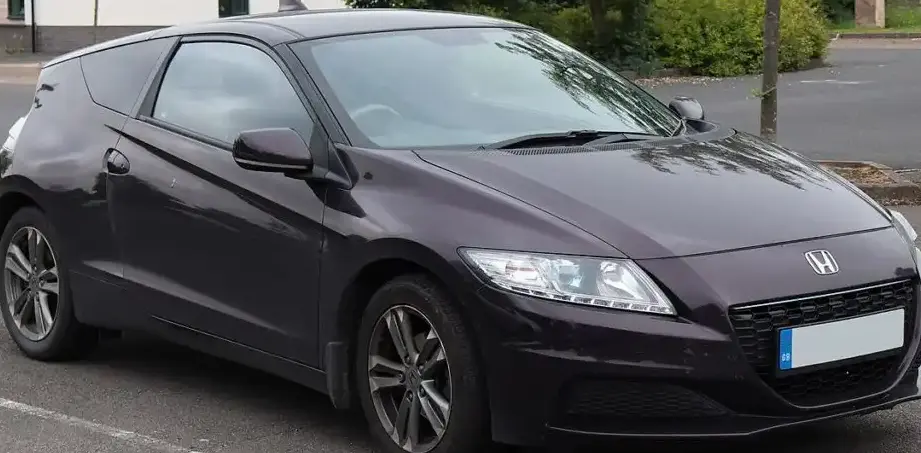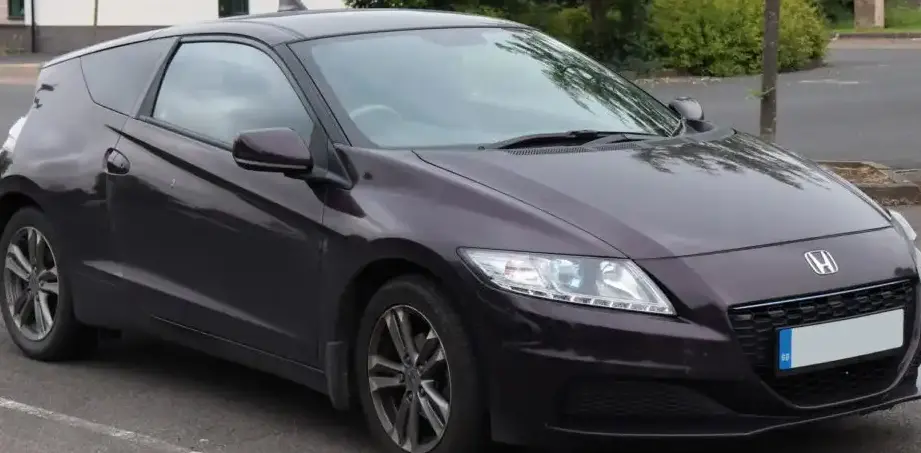
The Honda CR-Z 1.5 i-VTEC, produced from 2010 to 2013, served as the entry point into the second-generation CR-Z lineup. Positioned as a sporty, fuel-efficient coupe, it aimed to recapture the spirit of the original CR-Z from the 1980s, but with a modern design. This variant, powered by a 1.5-liter inline-four engine producing 114 horsepower, was primarily targeted at buyers seeking a stylish and economical daily driver with a touch of sporty handling. It formed the base for the CR-Z range, with the hybrid model offering increased complexity and performance, and a later 1.5L version available with a manual transmission.
Technical Specifications
| Brand | Honda |
| Model | CR-Z |
| Generation | CR-Z |
| Type (Engine) | 1.5 i-VTEC (114 Hp) |
| Start of production | 2010 |
| End of production | 2013 |
| Powertrain Architecture | Internal Combustion engine |
| Body type | Coupe |
| Seats | 4 |
| Doors | 3 |
| Fuel consumption (urban) | 6.1 l/100 km (38.6 US mpg, 46.3 UK mpg, 16.4 km/l) |
| Fuel consumption (extra urban) | 4.4 l/100 km (53.5 US mpg, 64.2 UK mpg, 22.7 km/l) |
| Fuel consumption (combined) | 5 l/100 km (47 US mpg, 56.5 UK mpg, 20 km/l) |
| Fuel Type | Petrol (Gasoline) |
| Acceleration 0 – 100 km/h | 9.9 sec |
| Acceleration 0 – 62 mph | 9.9 sec |
| Acceleration 0 – 60 mph | 9.4 sec |
| Maximum speed | 200 km/h (124.27 mph) |
| Weight-to-power ratio | 10.1 kg/Hp, 99.4 Hp/tonne |
| Weight-to-torque ratio | 7.9 kg/Nm, 126.4 Nm/tonne |
| Power | 114 Hp @ 6100 rpm |
| Power per litre | 76.2 Hp/l |
| Torque | 145 Nm @ 4800 rpm (106.95 lb.-ft. @ 4800 rpm) |
| Engine layout | Front, Transverse |
| Engine displacement | 1497 cm3 (91.35 cu. in.) |
| Number of cylinders | 4 |
| Engine configuration | Inline |
| Compression ratio | 10.4:1 |
| Number of valves per cylinder | 4 |
| Fuel injection system | Multi-port manifold injection |
| Engine aspiration | Naturally aspirated engine |
| Valvetrain | SOHC |
| Engine oil capacity | 3.6 l (3.8 US qt | 3.17 UK qt) |
| Coolant capacity | 4.4 l (4.65 US qt | 3.87 UK qt) |
| Kerb Weight | 1147 kg (2528.7 lbs.) |
| Trunk (boot) space (minimum) | 225 l (7.95 cu. ft.) |
| Fuel tank capacity | 40 l (10.57 US gal | 8.8 UK gal) |
| Length | 4078 mm (160.55 in.) |
| Width | 2013 mm (79.25 in.) |
| Height | 1395 mm (54.92 in.) |
| Wheelbase | 2435 mm (95.87 in.) |
| Minimum turning circle | 12.6 m (41.34 ft.) |
| Drivetrain Architecture | The Internal combustion engine (ICE) drives the front wheels of the vehicle. |
| Drive wheel | Front wheel drive |
| Number of gears and type of gearbox | 6 gears, manual transmission |
| Front suspension | Independent, type McPherson with coil spring and anti-roll bar |
| Rear suspension | Torsion |
| Front brakes | Ventilated discs |
| Rear brakes | Disc |
| Assisting systems | ABS (Anti-lock braking system) |
| Steering type | Steering rack and pinion |
| Tires size | 195/55 R16 |
| Wheel rims size | 16 |
Powertrain & Engine Architecture
The CR-Z 1.5 i-VTEC utilizes Honda’s R16A engine, a 1.5-liter inline-four cylinder engine. This engine is a naturally aspirated powerplant featuring Honda’s i-VTEC (intelligent Variable valve Timing and lift Electronic Control) system. The i-VTEC system allows for variable valve timing and lift, optimizing engine performance and fuel efficiency across a wider range of engine speeds. The engine employs a multi-point fuel injection system and a compression ratio of 10.4:1. The engine is transversely mounted at the front of the vehicle, driving the front wheels. A 6-speed manual transmission was the sole transmission option for this trim level, offering precise gear changes and a more engaging driving experience compared to an automatic.
Driving Characteristics
The 114 horsepower and 106.95 lb-ft of torque delivered by the 1.5L i-VTEC engine provided adequate, but not overwhelming, performance. Acceleration from 0-60 mph took approximately 9.4 seconds, making it competitive with other small coupes of the era, but noticeably slower than the CR-Z Hybrid. The manual transmission’s gear ratios were tuned for a balance between fuel economy and responsiveness. While the engine felt lively at higher RPMs, low-end torque was somewhat lacking, requiring drivers to downshift to maintain momentum during overtaking maneuvers. Compared to the CR-Z Hybrid, the 1.5L i-VTEC offered a more traditional driving experience, prioritizing driver control and a direct connection to the engine.
Equipment & Trim Levels
The CR-Z 1.5 i-VTEC was generally offered with a fairly basic level of standard equipment. Interior features typically included cloth upholstery, air conditioning, power windows and locks, and a basic audio system. Higher trim levels, such as the EX, added features like a sunroof, upgraded audio system with USB connectivity, and keyless entry. Optional extras included navigation system, premium sound system, and alloy wheels. The interior design was driver-focused, with a digital instrument cluster and a sporty three-spoke steering wheel.
Chassis & Braking
The CR-Z featured a McPherson strut front suspension and a torsion beam rear suspension. This setup provided a good balance between ride comfort and handling. The front suspension incorporated a stabilizer bar to reduce body roll during cornering. Braking duties were handled by ventilated discs at the front and solid discs at the rear, equipped with an Anti-lock Braking System (ABS) as standard. The relatively lightweight construction of the CR-Z (approximately 2529 lbs) contributed to its nimble handling characteristics.
Market Reception & Comparison
The CR-Z 1.5 i-VTEC was generally well-received by critics for its sporty styling, fuel efficiency, and engaging driving dynamics. However, some reviewers criticized its limited rear seat space and relatively modest performance. Compared to the CR-Z Hybrid, the 1.5L i-VTEC offered a lower price point and a more conventional driving experience, appealing to buyers who preferred a traditional gasoline engine and manual transmission. Fuel economy was a strong point, achieving around 47 mpg in combined driving, making it a competitive option in the fuel-efficient coupe segment.
Legacy
The Honda CR-Z 1.5 i-VTEC, while not a high-volume seller, established a niche for itself as a stylish and economical sporty coupe. The R16A engine proved to be relatively reliable, with few major mechanical issues reported. On the used car market, these CR-Zs are generally affordable and represent a good value for buyers seeking a fuel-efficient and fun-to-drive vehicle. The CR-Z’s unique design and sporty character have also garnered a small but dedicated following among enthusiasts, ensuring its place in Honda’s history.