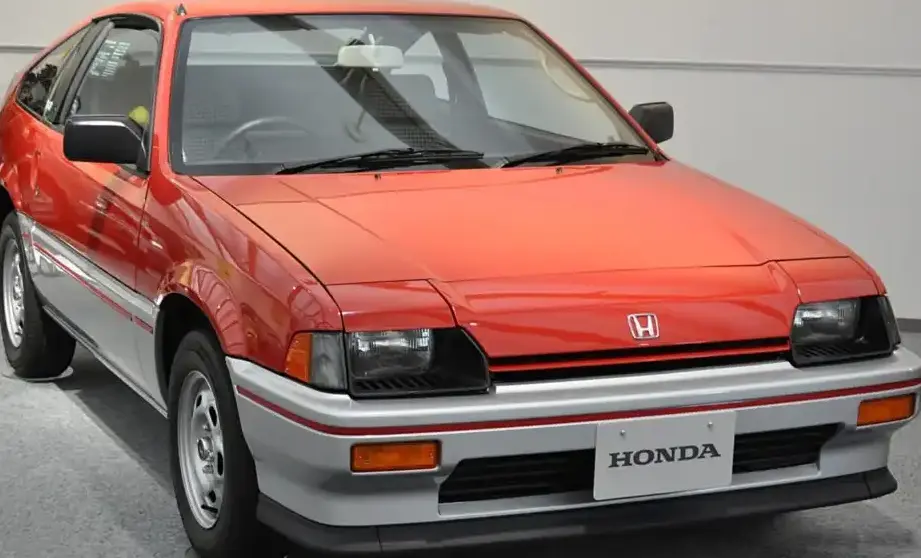
The Honda CRX I (AF/AS) 1.6i (AS), produced from 1986 to 1987, represents a significant iteration within the first generation of Honda’s iconic CRX (Compact Recreational Vehicle) line. Positioned as a sporty and fuel-efficient coupe, the CRX aimed to capture a segment of the market seeking a fun-to-drive, yet practical vehicle. The “AS” designation specifically denotes the 1.6-liter, 125 horsepower variant, which occupied a mid-range position within the CRX lineup, offering a step up in performance from the base 1.5-liter models while remaining more accessible than the later Si trim levels. This model was primarily sold in the North American and European markets, contributing to Honda’s growing reputation for reliability and engineering prowess.
Technical Specifications
| Brand | Honda |
| Model | CRX |
| Generation | CRX I (AF, AS) |
| Type (Engine) | 1.6 i (AS) (125 Hp) |
| Start of Production | 1986 |
| End of Production | 1987 |
| Powertrain Architecture | Internal Combustion Engine |
| Body Type | Liftback |
| Fuel Type | Petrol (Gasoline) |
| Power | 125 Hp |
| Engine Aspiration | Naturally Aspirated |
Powertrain & Engine Architecture
The heart of the CRX 1.6i (AS) is the Honda A16A engine, a 1.6-liter inline four-cylinder powerplant. This engine utilizes a single overhead camshaft (SOHC) valvetrain, operating with two valves per cylinder. Fuel delivery is managed by a Honda’s Programmed Fuel Injection (PGM-FI) system, a sophisticated electronic fuel injection system for its time, contributing to both performance and fuel efficiency. The A16A engine boasts a bore and stroke of 80.0 mm x 88.0 mm, resulting in a displacement of 1586 cc. The engine’s 125 horsepower output is achieved at 6000 rpm, with a torque figure of approximately 103 lb-ft at 4800 rpm. The engine is paired with a four-speed automatic transmission, a common choice for buyers prioritizing ease of use over outright performance. This transmission features electronic control for smoother shifting and improved fuel economy. While a five-speed manual transmission was available on other CRX trims, the automatic was specifically offered on this variant to broaden its appeal to a wider range of drivers.
Driving Characteristics
The CRX 1.6i (AS) with the automatic transmission delivers a comfortable and relatively refined driving experience. Acceleration is adequate for everyday driving, with a 0-60 mph time estimated around 9-10 seconds. However, it’s noticeably slower than the manual transmission equipped models or the higher-output Si variant. The automatic transmission’s gear ratios are geared towards fuel economy, resulting in a slightly less responsive feel compared to the manual. The engine is willing to rev, but the automatic transmission can sometimes feel hesitant to downshift quickly when demanding acceleration is needed. The CRX’s lightweight construction (around 1800 lbs) helps to mitigate the performance deficit somewhat, providing a nimble and engaging feel in corners. Steering is precise and well-weighted, contributing to a confident driving experience. The suspension, while relatively simple, provides a good balance between ride comfort and handling.
Equipment & Trim Levels
The CRX 1.6i (AS) trim level offered a reasonable level of standard equipment for its price point. Interior features typically included cloth upholstery, a basic AM/FM radio, and manual windows and locks. Air conditioning was often an optional extra, as were power windows and a sunroof. The dashboard layout is functional and straightforward, with clearly marked gauges and controls. The interior space is relatively limited, reflecting the CRX’s compact dimensions. Exterior features included steel wheels with hubcaps, black plastic trim, and a rear spoiler. The AS trim generally lacked the more aggressive styling cues of the Si model, such as the sport seats and larger wheels. Optional extras could include upgraded sound systems and various cosmetic enhancements.
Chassis & Braking
The CRX I utilizes a front-engine, front-wheel-drive layout. The chassis is a monocoque construction, providing a good balance of rigidity and weight savings. The front suspension consists of independent MacPherson struts, while the rear suspension employs a torsion beam setup. Braking duties are handled by disc brakes on the front wheels and drum brakes on the rear wheels. The braking system is adequate for normal driving conditions, but lacks the stopping power of the Si model, which featured front and rear disc brakes. The CRX’s relatively light weight helps to compensate for the rear drum brakes. A stabilizer bar is fitted to the front suspension to reduce body roll during cornering.
Market Reception & Comparison
The CRX 1.6i (AS) was generally well-received by automotive critics as a practical and fuel-efficient sports coupe. It was praised for its nimble handling, responsive engine, and attractive styling. However, the automatic transmission was often criticized for detracting from the overall driving experience, particularly when compared to the more engaging manual transmission. Compared to the base 1.5-liter CRX, the 1.6i (AS) offered a noticeable improvement in performance. Compared to the Si model, it was less powerful and lacked some of the more desirable features, but it was also more affordable and easier to insure. Fuel economy was a strong point for the 1.6i (AS), typically achieving around 30-35 mpg in combined driving. Reliability was also a key strength, with the Honda A16A engine proving to be exceptionally durable.
Legacy
The Honda CRX I 1.6i (AS) has maintained a loyal following among enthusiasts and collectors. The A16A engine is known for its reliability and relatively simple maintenance requirements. While finding well-preserved examples can be challenging, the CRX remains a popular choice for those seeking a classic, fuel-efficient sports coupe. The automatic transmission variant, while not as highly sought after as the manual, offers a more accessible entry point into CRX ownership. Today, these cars are often found as project cars or weekend cruisers, appreciated for their retro styling and engaging driving dynamics. Parts availability is generally good, although some specific trim pieces may be difficult to source. The CRX’s enduring popularity is a testament to Honda’s engineering excellence and its ability to create vehicles that are both fun to drive and reliable to own.