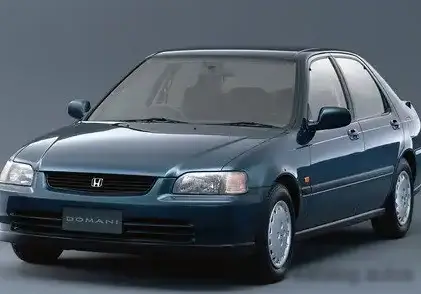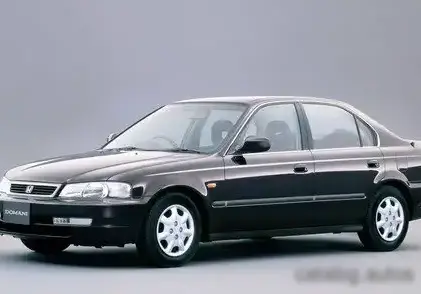
The Honda Domani II 1.6, produced between 1997 and 2000, represented a refined iteration of Honda’s compact sedan, primarily aimed at the Japanese domestic market (JDM). Positioned as a more stylish and comfortable alternative to the Civic, the Domani II offered a blend of practicality and a slightly more upscale experience. This particular 1.6-liter, 120 horsepower variant served as a mid-range offering within the Domani II lineup, slotting between the base 1.5-liter engine and potentially higher-performance trims depending on the specific market and optional packages. The Domani II was built on the Honda Civic platform, sharing many components but distinguished by its unique body styling and interior appointments.
Technical Specifications
| Brand | Honda |
| Model | Domani |
| Generation | Domani II |
| Type (Engine) | 1.6 (120 Hp) |
| Start of production | 1997 |
| End of production | 2000 |
| Powertrain Architecture | Internal Combustion engine |
| Body type | Sedan |
| Seats | 5 |
| Doors | 4 |
| Fuel Type | Petrol (Gasoline) |
| Weight-to-power ratio | 9.2 kg/Hp, 109.1 Hp/tonne |
| Weight-to-torque ratio | 7.7 kg/Nm, 129.1 Nm/tonne |
| Power | 120 Hp @ 6300 rpm |
| Power per litre | 75.5 Hp/l |
| Torque | 142 Nm @ 3000 rpm (104.73 lb.-ft. @ 3000 rpm) |
| Engine layout | Front, Transverse |
| Engine displacement | 1590 cm3 (97.03 cu. in.) |
| Number of cylinders | 4 |
| Engine configuration | Inline |
| Cylinder Bore | 75 mm (2.95 in.) |
| Piston Stroke | 90 mm (3.54 in.) |
| Compression ratio | 9.1:1 |
| Number of valves per cylinder | 4 |
| Fuel injection system | Multi-port manifold injection |
| Engine aspiration | Naturally aspirated engine |
| Valvetrain | OHC |
| Kerb Weight | 1100 kg (2425.08 lbs.) |
| Fuel tank capacity | 45 l (11.89 US gal | 9.9 UK gal) |
| Length | 4480 mm (176.38 in.) |
| Width | 1695 mm (66.73 in.) |
| Height | 1390 mm (54.72 in.) |
| Wheelbase | 2620 mm (103.15 in.) |
| Minimum turning circle | 10 m (32.81 ft.) |
| Drivetrain Architecture | The Internal combustion engine (ICE) drives the front wheels of the vehicle. |
| Drive wheel | Front wheel drive |
| Number of gears | 4 |
| Gearbox type | Manual transmission |
| Front suspension | Double wishbone |
| Rear suspension | Double wishbone |
| Front brakes | Disc |
| Rear brakes | Drum |
| Tires size | 185/ 65R14 86H |
| Wheel rims size | 14 x 5J |
Powertrain & Engine Architecture
The heart of the Domani II 1.6 was the S16A engine, a 1.6-liter inline-four cylinder gasoline engine. This engine utilized a single overhead camshaft (OHC) valvetrain, operating four valves per cylinder. The multi-point fuel injection system delivered fuel directly into the intake ports, optimizing combustion efficiency. The engine’s 9.1:1 compression ratio was a typical value for naturally aspirated engines of the era, balancing performance and fuel economy. The 1.6-liter engine produced 120 horsepower at 6,300 rpm and 142 Nm (104.73 lb-ft) of torque at 3,000 rpm. This engine was known for its smooth operation and relatively linear power delivery. The Domani II 1.6 was exclusively offered with a 4-speed automatic transmission, designed to provide comfortable and convenient shifting for everyday driving.
Driving Characteristics
The Domani II 1.6 with the 4-speed automatic transmission offered a comfortable and predictable driving experience. While not particularly sporty, the engine provided adequate power for typical commuting and highway driving. The automatic transmission, while smooth, did contribute to a slight reduction in acceleration compared to the available manual transmission options. Gear ratios were tuned for fuel efficiency and ease of use, rather than outright performance. The weight-to-power ratio of 9.2 kg/Hp meant that the Domani II 1.6 wasn’t a particularly quick car, but it was certainly adequate for its intended purpose. The suspension, featuring double wishbone setups both front and rear, provided a reasonably comfortable ride, absorbing bumps and imperfections in the road surface effectively.
Equipment & Trim Levels
The Domani II 1.6 typically came equipped with a reasonable level of standard features. Interior appointments generally included cloth upholstery, power windows, and power steering. Air conditioning was a common feature, and some models included an upgraded audio system. Optional extras could include alloy wheels, a sunroof, and more advanced audio systems. The specific trim level dictated the level of equipment, with higher trims offering more luxurious features. The Domani II aimed for a slightly more refined interior than the Civic, with a focus on comfort and usability.
Chassis & Braking
The Domani II utilized a front-wheel-drive chassis layout. The front suspension employed a double wishbone design, providing good handling characteristics and ride comfort. The rear suspension also featured a double wishbone setup, contributing to stability and control. Braking duties were handled by disc brakes at the front and drum brakes at the rear. This configuration was common for vehicles in this class during the late 1990s. The 14-inch wheels were typically fitted with 185/65R14 tires, providing a balance of comfort and grip.
Market Reception & Comparison
The Honda Domani II 1.6 was generally well-received in the Japanese market as a practical and comfortable sedan. Critics praised its stylish design and refined interior. Compared to the Civic, the Domani II offered a more mature and sophisticated driving experience. However, the 1.6-liter engine and automatic transmission combination wasn’t the most exciting option available. The manual transmission versions and potentially higher-displacement engines offered more engaging performance. Fuel economy was considered good for its class, and reliability was typical of Honda products. Compared to other competitors in the Japanese market, such as the Toyota Corolla and Nissan Sentra, the Domani II offered a compelling blend of style, comfort, and reliability.
Legacy
The Honda Domani II, while not a globally recognized model, holds a respectable position among JDM enthusiasts. The S16A engine is known for its durability and relatively simple maintenance requirements. The 4-speed automatic transmission, while not the most technologically advanced, has proven to be reliable over the long term. Today, well-maintained Domani II 1.6 models are becoming increasingly sought after by collectors and enthusiasts who appreciate their unique styling and Honda’s reputation for quality. Parts availability can be a challenge outside of Japan, but the shared components with the Civic make sourcing replacements somewhat easier. The Domani II 1.6 represents a snapshot of late 1990s Japanese automotive design and engineering, offering a comfortable and reliable driving experience that continues to appeal to enthusiasts today.