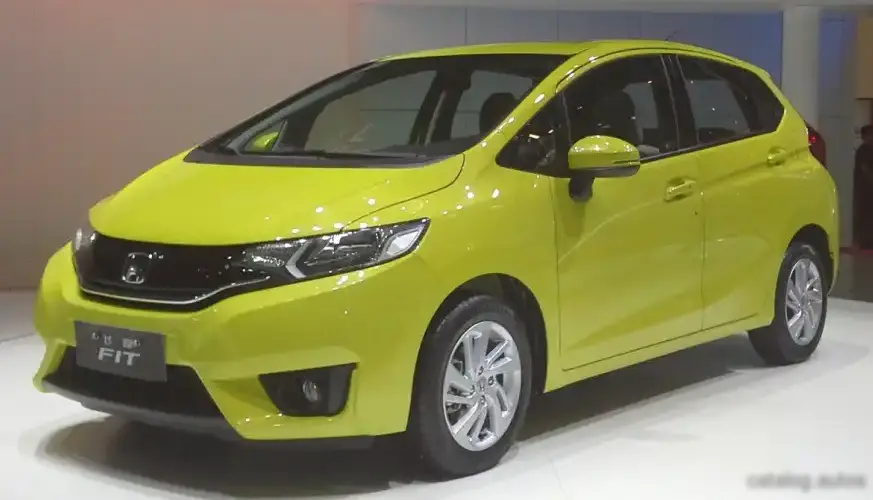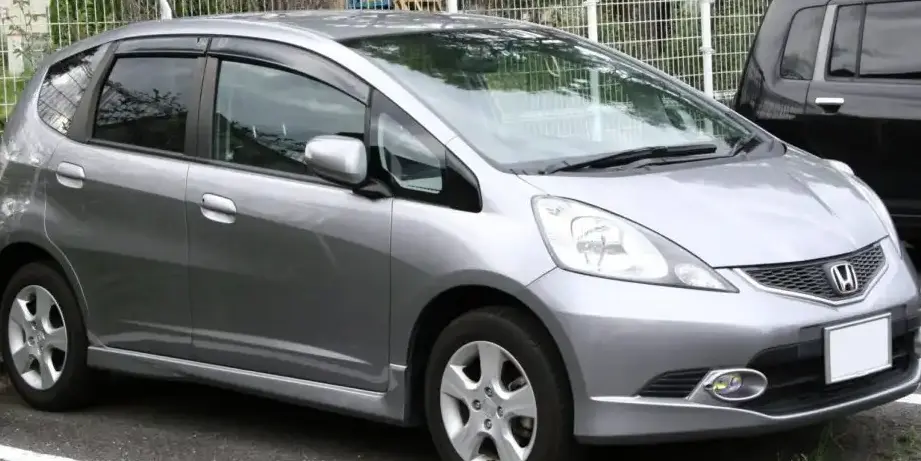
The Honda Fit II 1.5, produced between 2009 and 2012, represented the second generation of Honda’s popular subcompact hatchback. Sold globally under the Fit nameplate (and as the Jazz in some markets), the second generation, internally designated the GE6/GE8, continued the first generation’s focus on maximizing interior space within a small footprint. The 1.5-liter engine variant, producing 117 horsepower, served as a key model within the lineup, offering a balance of fuel efficiency and practicality for everyday driving. In the US market, it was positioned as an entry-level offering, appealing to buyers seeking an affordable and versatile vehicle. This particular configuration, with the 1.5L engine, was a mainstay in many markets, offering a compelling alternative to larger, less efficient vehicles.
Technical Specifications
| Brand | Honda |
| Model | FIT |
| Generation | Fit II |
| Type (Engine) | 1.5 (117 Hp) |
| Start of production | 2009 |
| End of production | 2012 |
| Powertrain Architecture | Internal Combustion engine |
| Body type | Hatchback |
| Seats | 5 |
| Doors | 5 |
| Fuel consumption (urban) | 8.7 l/100 km (27 US mpg) |
| Fuel consumption (extra urban) | 7.1 l/100 km (33.1 US mpg) |
| Fuel consumption (combined) | 8.1 l/100 km (29 US mpg) |
| Fuel Type | Petrol (Gasoline) |
| Emission standard | ULEV-2 |
| Weight-to-power ratio | 9.6 kg/Hp |
| Weight-to-torque ratio | 7.8 kg/Nm |
| Power | 117 Hp @ 6600 rpm |
| Power per litre | 78.2 Hp/l |
| Torque | 144 Nm @ 4800 rpm (106.21 lb.-ft. @ 4800 rpm) |
| Maximum engine speed | 6800 rpm |
| Engine layout | Front, Transverse |
| Engine Model/Code | L15A7 |
| Engine displacement | 1497 cm3 (91.35 cu. in.) |
| Number of cylinders | 4 |
| Engine configuration | Inline |
| Cylinder Bore | 73 mm (2.87 in.) |
| Piston Stroke | 89.4 mm (3.52 in.) |
| Compression ratio | 10.4:1 |
| Number of valves per cylinder | 4 |
| Fuel injection system | Multi-port manifold injection |
| Engine aspiration | Naturally aspirated engine |
| Valvetrain | SOHC, i-VTEC |
| Engine oil capacity | 3.6 l (3.8 US qt | 3.17 UK qt) |
| Coolant | 4.9 l (5.18 US qt | 4.31 UK qt) |
| Kerb Weight | 1129 kg (2489.02 lbs.) |
| Trunk (boot) space – minimum | 583 l (20.59 cu. ft.) |
| Trunk (boot) space – maximum | 1623 l (57.32 cu. ft.) |
| Fuel tank capacity | 40 l (10.57 US gal | 8.8 UK gal) |
| Length | 4105 mm (161.61 in.) |
| Width | 1695 mm (66.73 in.) |
| Height | 1525 mm (60.04 in.) |
| Wheelbase | 2500 mm (98.43 in.) |
| Front track | 1476-1492 mm (58.11 – 58.74 in.) |
| Rear (Back) track | 1459-1475 mm (57.44 – 58.07 in.) |
| Minimum turning circle | 10.5 m (34.45 ft.) |
| Drivetrain Architecture | Front wheel drive |
| Number of gears | 5 |
| Type of gearbox | Manual transmission |
| Front suspension | Independent type McPherson |
| Rear suspension | Torsion |
| Front brakes | Ventilated discs, 261.62 mm |
| Rear brakes | Drum, 200.66 mm |
| Assisting systems | ABS (Anti-lock braking system) |
| Steering type | Steering rack and pinion |
| Power steering | Electric Steering |
| Tires size | 175/65 R15 |
Powertrain & Engine Architecture
The heart of the Fit II 1.5 was the L15A7 engine, a 1.5-liter inline-four cylinder gasoline engine. This engine belonged to Honda’s L-series engine family, known for its reliability and fuel efficiency. The L15A7 featured a single overhead camshaft (SOHC) design, coupled with Honda’s intelligent Variable Valve Timing and Lift Electronic Control (i-VTEC) system. i-VTEC allowed for variable valve timing and lift, optimizing engine performance across a wider range of engine speeds. Fuel delivery was handled by a multi-point fuel injection system. The engine produced 117 horsepower at 6600 rpm and 144 Nm (106.21 lb-ft) of torque at 4800 rpm. This engine was paired with a five-speed manual transmission in most configurations, providing a direct and engaging driving experience. The manual transmission was chosen to maximize fuel economy and provide a more connected feel for the driver.
Driving Characteristics
The 1.5-liter engine and five-speed manual transmission combination in the Fit II offered a surprisingly lively driving experience for a subcompact car. While not a performance-oriented vehicle, the engine provided adequate power for everyday driving situations, including city commuting and highway merging. The five-speed manual allowed drivers to keep the engine in its optimal power band, resulting in responsive acceleration. The gear ratios were well-suited for maximizing fuel efficiency, but also provided enough flexibility for spirited driving. Compared to higher-trim models with larger engines, the 1.5L version felt less powerful, particularly when fully loaded with passengers and cargo. However, the lighter weight of the vehicle helped to offset some of the power deficit. The manual transmission offered a more engaging driving experience than the optional automatic transmission, which could feel sluggish at times.
Equipment & Trim Levels
The Fit II 1.5 typically came with a reasonable level of standard equipment, focusing on practicality and convenience. Base models generally included power windows and locks, air conditioning, and a basic audio system. Higher trim levels added features such as alloy wheels, a more advanced audio system with steering wheel-mounted controls, and keyless entry. Interior upholstery was typically cloth, with a durable and easy-to-clean finish. Optional extras included a navigation system, a sunroof, and upgraded audio systems. The interior design was minimalist but functional, with a focus on maximizing space and visibility. The “Magic Seat” system, a hallmark of the Fit, allowed for a variety of seating configurations, providing exceptional cargo versatility.
Chassis & Braking
The Fit II utilized a front-wheel-drive layout with an independent McPherson strut suspension in the front and a torsion beam suspension in the rear. This suspension setup provided a comfortable ride quality while maintaining decent handling characteristics. The front brakes were ventilated discs, providing adequate stopping power, while the rear brakes were drums. Anti-lock Braking System (ABS) was standard, enhancing safety. The chassis was designed to be lightweight and rigid, contributing to the car’s nimble handling. Stabilizer bars were included to reduce body roll during cornering. The relatively light weight of the vehicle also helped to improve braking performance.
Market Reception & Comparison
The Honda Fit II 1.5 was generally well-received by automotive critics and consumers alike. It was praised for its spacious interior, fuel efficiency, and versatility. Critics noted that the 1.5-liter engine provided adequate power for most driving situations, but some found it to be underpowered when the car was fully loaded. Compared to other subcompact cars in its class, the Fit II stood out for its innovative “Magic Seat” system and its overall practicality. Fuel economy was a strong point, with the Fit II achieving competitive gas mileage figures. Reliability was also a key strength, with Honda having a reputation for building durable and dependable vehicles. The 1.5L manual configuration was often favored by drivers who prioritized fuel economy and a more engaging driving experience.
Legacy
The Honda Fit II 1.5 has proven to be a reliable and durable vehicle, with many examples still on the road today. The L15A7 engine is known for its longevity, and with proper maintenance, it can provide many years of trouble-free service. In the used car market, the Fit II 1.5 remains a popular choice for buyers seeking an affordable and practical subcompact car. Its fuel efficiency, spacious interior, and reputation for reliability make it a compelling option. While newer subcompact cars offer more advanced features and technology, the Fit II 1.5 continues to hold its own as a value-oriented and versatile vehicle.