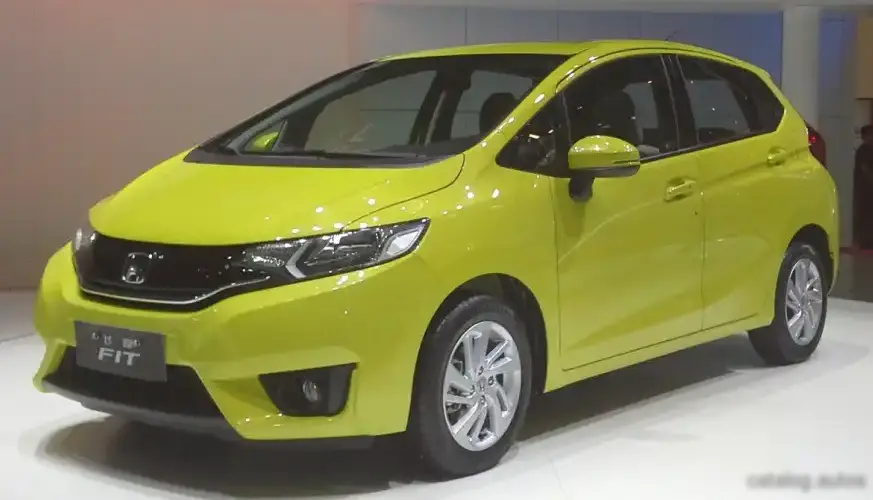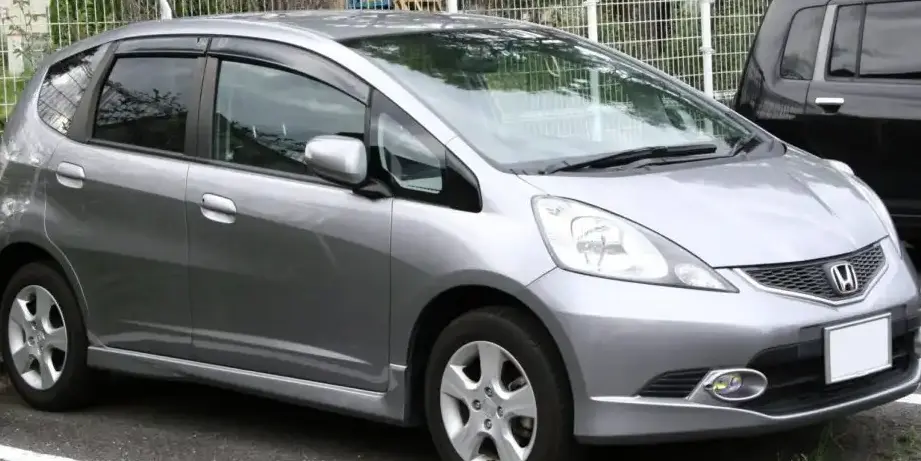
The Honda Fit II Sport 1.5 (117 hp) Automatic, produced between 2009 and 2012, represents a compelling blend of practicality, fuel efficiency, and sporty styling within the second generation of Honda’s popular subcompact hatchback. Positioned as a mid-range trim within the Fit II lineup, it offered a step up from the base models with enhanced aesthetics and a more responsive driving experience, while remaining more accessible than the top-tier variants. This model was primarily marketed in North America, Europe, and Asia, capitalizing on the growing demand for versatile and economical vehicles. It built upon the innovative “Man-Max” interior design philosophy of the first-generation Fit, offering exceptional space utilization in a small footprint.
Technical Specifications
| Brand | Honda |
| Model | FIT |
| Generation | Fit II |
| Type (Engine) | Sport 1.5 (117 Hp) Automatic |
| Start of production | 2009 |
| End of production | 2012 |
| Powertrain Architecture | Internal Combustion engine |
| Body type | Hatchback |
| Seats | 5 |
| Doors | 5 |
| Fuel consumption (urban) | 8.7 l/100 km (27 US mpg, 32.5 UK mpg, 11.5 km/l) |
| Fuel consumption (extra urban) | 7.1 l/100 km (33.1 US mpg, 39.8 UK mpg, 14.1 km/l) |
| Fuel consumption (combined) | 7.8 l/100 km (30.2 US mpg, 36.2 UK mpg, 12.8 km/l) |
| Fuel Type | Petrol (Gasoline) |
| Emission standard | ULEV-2 |
| Weight-to-power ratio | 10.1 kg/Hp, 98.7 Hp/tonne |
| Weight-to-torque ratio | 8.2 kg/Nm, 121.4 Nm/tonne |
| Power | 117 Hp @ 6600 rpm |
| Power per litre | 78.2 Hp/l |
| Torque | 144 Nm @ 4800 rpm (106.21 lb.-ft. @ 4800 rpm) |
| Maximum engine speed | 6800 rpm |
| Engine layout | Front, Transverse |
| Engine Model/Code | L15A7 |
| Engine displacement | 1497 cm3 (91.35 cu. in.) |
| Number of cylinders | 4 |
| Engine configuration | Inline |
| Cylinder Bore | 73 mm (2.87 in.) |
| Piston Stroke | 89.4 mm (3.52 in.) |
| Compression ratio | 10.4:1 |
| Number of valves per cylinder | 4 |
| Fuel injection system | Multi-port manifold injection |
| Engine aspiration | Naturally aspirated engine |
| Valvetrain | SOHC, i-VTEC |
| Engine oil capacity | 3.6 l (3.8 US qt | 3.17 UK qt) |
| Coolant capacity | 5 l (5.28 US qt | 4.4 UK qt) |
| Kerb Weight | 1186 kg (2614.68 lbs.) |
| Trunk (boot) space – minimum | 583 l (20.59 cu. ft.) |
| Trunk (boot) space – maximum | 1623 l (57.32 cu. ft.) |
| Fuel tank capacity | 40 l (10.57 US gal | 8.8 UK gal) |
| Length | 4105 mm (161.61 in.) |
| Width | 1695 mm (66.73 in.) |
| Height | 1525 mm (60.04 in.) |
| Wheelbase | 2500 mm (98.43 in.) |
| Front track | 1476 mm (58.11 in.) |
| Rear track | 1458 mm (57.4 in.) |
| Minimum turning circle | 10.5 m (34.45 ft.) |
| Drivetrain | Front wheel drive |
| Number of gears | 5 |
| Gearbox type | Automatic transmission |
| Front suspension | Independent type McPherson |
| Rear suspension | Torsion |
| Front brakes | Ventilated discs, 261.62 mm |
| Rear brakes | Drum, 200.66 mm |
| Assisting systems | ABS (Anti-lock braking system) |
| Steering type | Steering rack and pinion |
| Power steering | Electric Steering |
| Tires size | 185/55 R16 |
Powertrain & Engine Architecture
At the heart of the Fit II Sport 1.5 Automatic lies the L15A7 engine, a 1.5-liter inline-four cylinder gasoline engine. This engine is part of Honda’s L-series engine family, known for its reliability and fuel efficiency. The L15A7 utilizes a single overhead camshaft (SOHC) configuration coupled with Honda’s intelligent Variable Valve Timing and Lift Electronic Control (i-VTEC) system. i-VTEC allows for variable valve timing and lift, optimizing engine performance across a wider RPM range. Fuel delivery is managed by a multi-point fuel injection system. The engine produces 117 horsepower at 6,600 rpm and 144 Nm (106.21 lb-ft) of torque at 4,800 rpm. The engine’s transverse mounting and front-wheel-drive configuration contribute to its compact footprint. Paired with the L15A7 is a 5-speed automatic transmission, chosen for its ease of use and accessibility. While not offering the sportiness of a manual transmission, it provided smooth shifts and contributed to the vehicle’s overall convenience.
Driving Characteristics
The 1.5-liter engine and 5-speed automatic transmission combination in the Fit II Sport delivered adequate, though not exhilarating, performance. Acceleration was sufficient for everyday driving, with a 0-60 mph time estimated around 10-11 seconds. The automatic transmission, while smooth, did exhibit some typical characteristics of older automatic designs, such as a slight delay in downshifting. Compared to the 6-speed manual transmission available on other Fit II models, the automatic version felt less responsive. However, the automatic’s gear ratios were tuned for fuel efficiency, making it a practical choice for commuting and long-distance travel. The Fit’s lightweight construction helped mitigate the power deficit, providing a reasonably nimble driving experience. The steering was light and precise, making it easy to maneuver in urban environments.
Equipment & Trim Levels
The Sport trim of the Honda Fit II included several features that distinguished it from the base models. Standard equipment typically included air conditioning, power windows and locks, a basic audio system with MP3 compatibility, and alloy wheels. The Sport trim also featured unique exterior styling elements, such as a rear spoiler and sportier front and rear bumpers. Interior appointments included cloth upholstery with sporty accents. Optional extras available for the Sport trim included a sunroof, upgraded audio system, and navigation system. The interior layout prioritized space efficiency, with Honda’s “Man-Max” design allowing for versatile seating configurations and ample cargo space.
Chassis & Braking
The Fit II Sport utilized a McPherson strut independent suspension in the front and a torsion beam suspension in the rear. This suspension setup provided a comfortable ride quality while maintaining reasonable handling characteristics. The front brakes were ventilated discs, offering good stopping power, while the rear brakes were drum brakes, a cost-saving measure common in this class of vehicle. Anti-lock Braking System (ABS) was standard, enhancing safety during emergency braking situations. The electric power steering provided light and responsive steering feel. The relatively lightweight nature of the vehicle contributed to its agility and reduced strain on the braking system.
Market Reception & Comparison
The Honda Fit II Sport 1.5 Automatic was generally well-received by automotive critics. It was praised for its fuel efficiency, spacious interior, and versatile cargo capacity. However, some reviewers noted that the automatic transmission detracted from the overall driving experience compared to the manual version. Compared to other subcompact hatchbacks of the time, such as the Toyota Yaris and Nissan Versa, the Fit offered a more refined interior and a more engaging driving experience. Its fuel economy was competitive, and its reliability reputation was a significant selling point. The automatic transmission version was often favored by buyers prioritizing convenience over outright performance.
Legacy
The Honda Fit II Sport 1.5 Automatic has proven to be a reliable and durable vehicle in the used car market. The L15A7 engine is known for its longevity, and the automatic transmission, while not the most sophisticated, has generally held up well over time. Common maintenance items include regular oil changes, timing belt replacement (typically around 100,000 miles), and inspection of the suspension components. Today, these vehicles are often sought after by budget-conscious buyers looking for a practical and fuel-efficient commuter car. The Fit II’s innovative interior design and reputation for reliability have cemented its place as a popular choice in the subcompact hatchback segment.