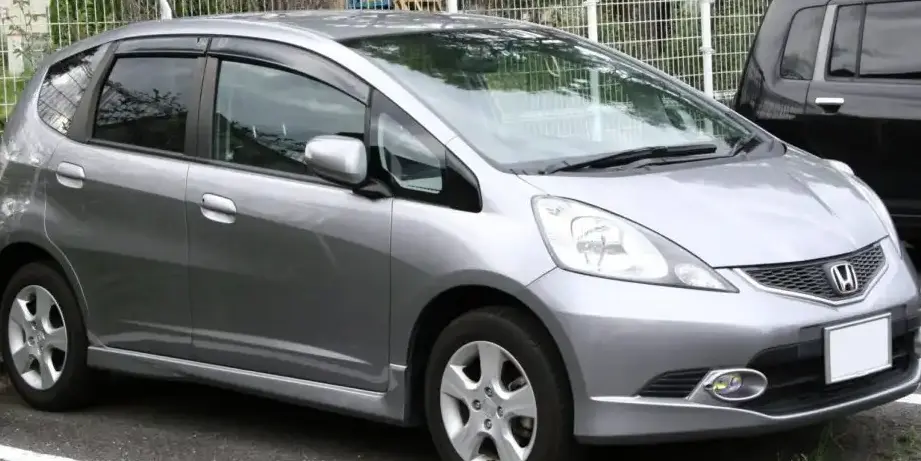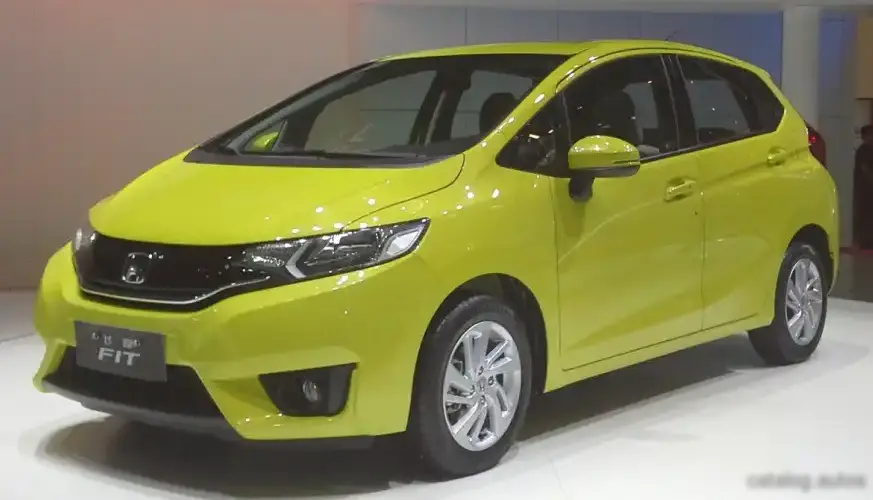
The Honda Fit III 1.3 (100 hp) Automatic, produced between 2013 and 2017, represents an entry-level variant within the third generation (GE/GK series) of Honda’s popular subcompact hatchback. Positioned as a fuel-efficient and practical option, this model aimed to provide affordable transportation with Honda’s reputation for reliability. It was primarily marketed in regions where smaller, economical cars were in high demand, including Europe, Asia, and Australia, though it was also available in limited quantities in the United States. The Fit III, overall, was a significant evolution of the Fit/Jazz line, building upon the innovative “Multi-Tank Center Mount” fuel tank design that freed up interior space.
Technical Specifications
| Brand | Honda |
| Model | FIT |
| Generation | Fit III |
| Type (Engine) | 1.3 (100 Hp) Automatic |
| Start of production | 2013 |
| End of production | 2017 |
| Powertrain Architecture | Internal Combustion engine |
| Body type | Hatchback |
| Seats | 5 |
| Doors | 5 |
| Fuel Type | Petrol (Gasoline) |
| Weight-to-power ratio | 9.7 kg/Hp, 103.1 Hp/tonne |
| Weight-to-torque ratio | 8.2 kg/Nm, 122.7 Nm/tonne |
| Power | 100 Hp @ 6000 rpm |
| Power per litre | 75.9 Hp/l |
| Torque | 119 Nm @ 5000 rpm (87.77 lb.-ft. @ 5000 rpm) |
| Engine layout | Front, Transverse |
| Engine Model/Code | L13B |
| Engine displacement | 1317 cm3 (80.37 cu. in.) |
| Number of cylinders | 4 |
| Engine configuration | Inline |
| Cylinder Bore | 73 mm (2.87 in.) |
| Piston Stroke | 78.7 mm (3.1 in.) |
| Compression ratio | 13.5:1 |
| Number of valves per cylinder | 4 |
| Fuel injection system | Multi-port manifold injection |
| Engine aspiration | Naturally aspirated engine |
| Valvetrain | DOHC, i-VTEC |
| Engine oil capacity | 3.3 l (3.49 US qt | 2.9 UK qt) |
| Coolant | 3.48 l (3.68 US qt | 3.06 UK qt) |
| Kerb Weight | 970 kg (2138.48 lbs) |
| Fuel tank capacity | 40 l (10.57 US gal | 8.8 UK gal) |
| Length | 3955 mm (155.71 in) |
| Width | 1695 mm (66.73 in) |
| Height | 1525 mm (60.04 in) |
| Wheelbase | 2530 mm (99.61 in) |
| Front track | 1490 mm (58.66 in) |
| Rear (Back) track | 1480 mm (58.27 in) |
| Ride height (ground clearance) | 135 mm (5.31 in) |
| Drag coefficient (Cd) | 0.30 |
| Minimum turning circle (turning diameter) | 9.4 m (30.84 ft) |
| Drivetrain Architecture | The Internal combustion engine (ICE) drives the front wheels of the vehicle. |
| Drive wheel | Front wheel drive |
| Number of gears and type of gearbox | automatic transmission CVT |
| Front brakes | Ventilated discs |
| Rear brakes | Drum |
| Assisting systems | ABS (Anti-lock braking system) |
| Tires size | 175/70 R14 |
| Wheel rims size | 14 |
Powertrain & Engine Architecture
The heart of the Fit III 1.3 Automatic is the L13B engine, a 1.3-liter inline-four cylinder gasoline engine. This engine is part of Honda’s “Earth Dreams” technology series, focusing on efficiency and reduced emissions. The L13B utilizes a multi-point fuel injection system and a double overhead camshaft (DOHC) valvetrain with Honda’s i-VTEC (Variable Valve Timing and Lift Electronic Control) technology. i-VTEC allows for optimized valve timing based on engine speed and load, improving both fuel economy and power output. The engine produces 100 horsepower at 6000 rpm and 119 Nm (87.77 lb-ft) of torque at 5000 rpm. The engine’s relatively high compression ratio of 13.5:1 contributes to its efficiency. Paired with the engine is a Continuously Variable Transmission (CVT), chosen for its smooth operation and fuel-saving capabilities. This CVT differs from traditional automatic transmissions by using a belt and pulley system to provide an infinite number of gear ratios within its operating range.
Driving Characteristics
The 1.3L engine and CVT combination in the Fit III delivers adequate, but not exhilarating, performance. Acceleration is best described as leisurely, with a 0-60 mph time estimated around 12-13 seconds. The CVT is programmed to prioritize fuel efficiency, which means it often holds lower engine speeds during normal driving. This can result in a slightly “rubber band” feel, where engine revs rise before the car accelerates noticeably. Compared to the 1.5L engine options available in other Fit III trims, or even the manual transmission versions of the 1.3L, this variant feels noticeably slower. However, the CVT provides smooth and seamless gear changes, making it a comfortable choice for city driving. The relatively light weight of the Fit (970 kg / 2138 lbs) helps mitigate the engine’s modest power output.
Equipment & Trim Levels
The 1.3 Automatic trim level typically served as the base model in many markets. Standard equipment generally included air conditioning, power windows, power door locks, and a basic audio system with USB connectivity. Safety features such as ABS (Anti-lock Braking System) and multiple airbags were also standard. Interior upholstery was typically cloth, and the dashboard featured a straightforward design with easy-to-use controls. Optional extras often included alloy wheels, a more advanced audio system with touchscreen display, and rear parking sensors. Higher trim levels, such as the 1.5L variants, added features like automatic climate control, keyless entry, and a more premium interior finish.
Chassis & Braking
The Fit III utilizes a front-wheel-drive platform with a MacPherson strut suspension in the front and a torsion beam suspension in the rear. The torsion beam setup is a cost-effective solution that provides adequate ride comfort for everyday driving. The front brakes are ventilated discs, providing good stopping power, while the rear brakes are drums, a cost-saving measure common in entry-level trims. The steering is electrically assisted, offering light and precise control. The 14-inch wheels and 175/70 R14 tires contribute to a comfortable ride, absorbing bumps and imperfections in the road surface.
Market Reception & Comparison
The Honda Fit III 1.3 Automatic was generally well-received by critics as a practical and economical city car. Its fuel efficiency was a major selling point, with combined fuel economy figures often exceeding 50 mpg. However, its performance was often criticized as being underpowered, particularly when compared to the more powerful engine options. Compared to rivals like the Toyota Yaris or Volkswagen Polo, the Fit offered a unique advantage in terms of interior space and versatility thanks to its “Multi-Tank Center Mount” fuel tank design. Reliability was also a strong point, with Honda’s reputation for building durable and dependable vehicles.
Legacy
The L13B engine, while not known for its high performance, has proven to be a reliable and durable powertrain. The CVT transmission, when properly maintained, is also generally considered reliable. In the used car market, the Fit III 1.3 Automatic remains a popular choice for buyers seeking an affordable and fuel-efficient vehicle. Maintenance costs are relatively low, and parts availability is generally good. However, potential buyers should be aware of the CVT’s maintenance requirements, including regular fluid changes, to ensure its longevity. The Fit III, as a whole, cemented Honda’s reputation for building small cars that are both practical and enjoyable to drive, and the 1.3 Automatic variant continues to offer a compelling value proposition for budget-conscious buyers.