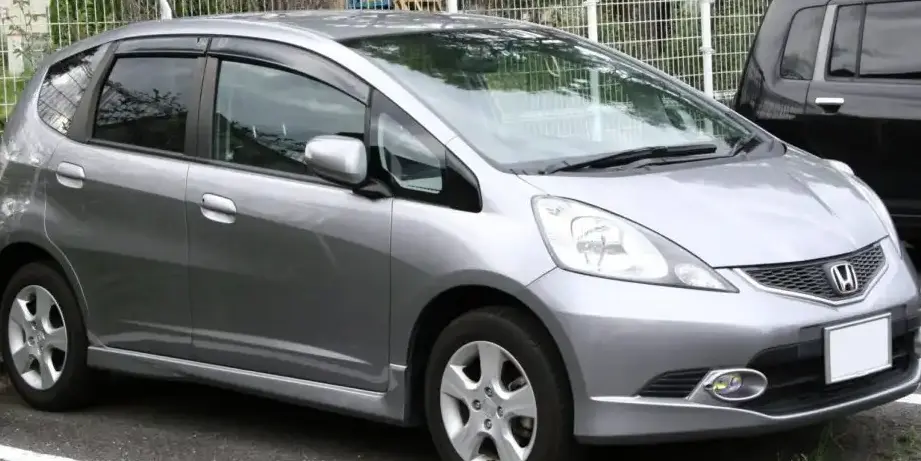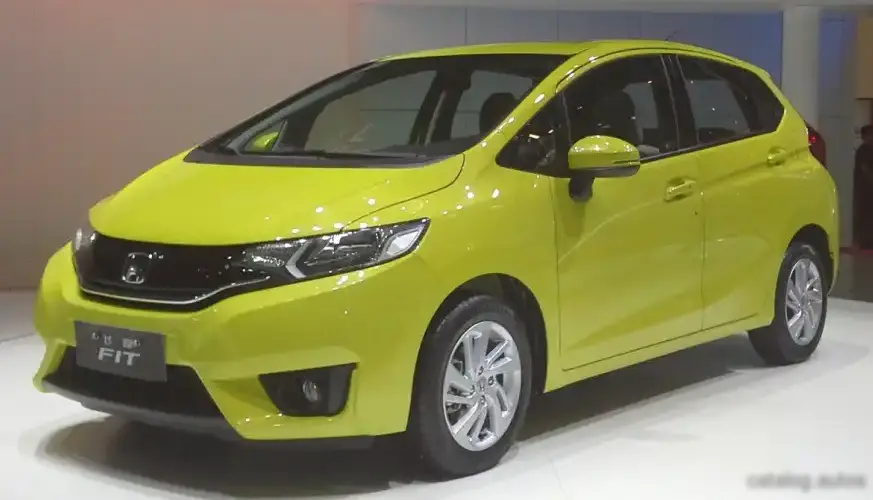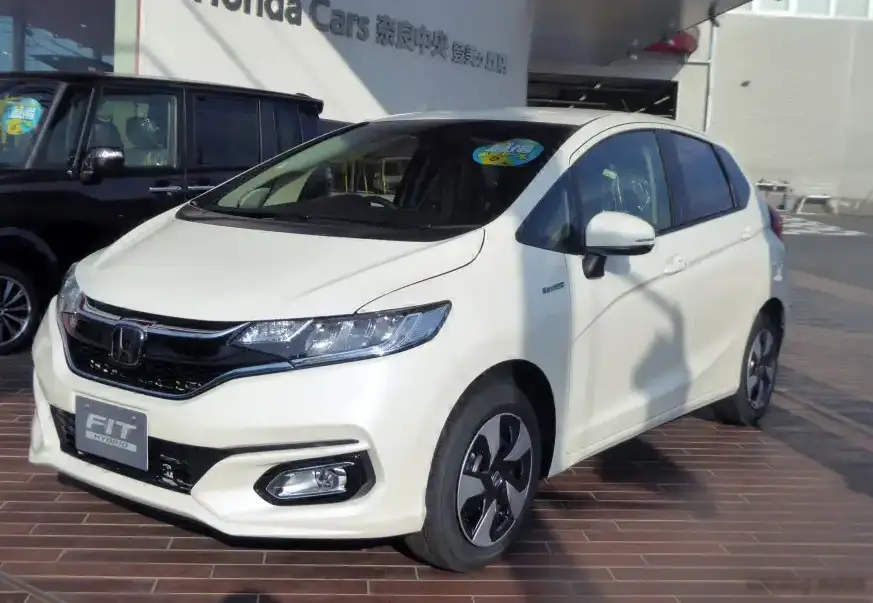
The Honda Fit III, specifically the facelifted model produced from 2017 to 2020, represented a significant evolution of Honda’s subcompact hatchback. Among the various configurations offered, the 1.5-liter engine paired with a continuously variable transmission (CVT) automatic was a popular choice, particularly in markets where ease of use and fuel efficiency were prioritized. This variant occupied a mid-range position within the Fit III lineup, offering a balance between performance and affordability. It built upon the strengths of the second-generation Fit – its innovative “Magic Seat” system and surprisingly spacious interior – while refining the styling and adding updated technology.
Technical Specifications
| Brand | Honda |
| Model | FIT |
| Generation | Fit III (facelift 2017) |
| Type (Engine) | 1.5 (132 Hp) Automatic |
| Start of production | 2017 |
| End of production | 2020 |
| Powertrain Architecture | Internal Combustion engine |
| Body type | Hatchback |
| Seats | 5 |
| Doors | 5 |
| Fuel Type | Petrol (Gasoline) |
| Weight-to-power ratio | 8.1 kg/Hp, 123.4 Hp/tonne |
| Weight-to-torque ratio | 6.9 kg/Nm, 144.9 Nm/tonne |
| Power | 132 Hp @ 6600 rpm |
| Power per litre | 88.2 Hp/l |
| Torque | 155 Nm @ 4600 rpm, 114.32 lb.-ft. @ 4600 rpm |
| Engine layout | Front, Transverse |
| Engine Model/Code | L15B1 |
| Engine displacement | 1497 cm3, 91.35 cu. in. |
| Number of cylinders | 4 |
| Engine configuration | Inline |
| Cylinder Bore | 73 mm, 2.87 in. |
| Piston Stroke | 89.4 mm, 3.52 in. |
| Compression ratio | 11.5:1 |
| Number of valves per cylinder | 4 |
| Fuel injection system | Direct injection |
| Engine aspiration | Naturally aspirated engine |
| Valvetrain | DOHC, i-VTEC |
| Engine oil capacity | 3.3 l, 3.49 US qt | 2.9 UK qt |
| Coolant | 3.78 l, 3.99 US qt | 3.33 UK qt |
| Kerb Weight | 1070 kg, 2358.95 lbs |
| Fuel tank capacity | 40 l, 10.57 US gal | 8.8 UK gal |
| Length | 3990 mm, 157.09 in |
| Width | 1695 mm, 66.73 in |
| Height | 1525 mm, 60.04 in |
| Wheelbase | 2530 mm, 99.61 in |
| Front track | 1480 mm, 58.27 in |
| Rear (Back) track | 1470 mm, 57.87 in |
| Ride height (ground clearance) | 135 mm, 5.31 in |
| Drag coefficient (Cd) | 0.30 |
| Minimum turning circle (turning diameter) | 9.8 m, 32.15 ft |
| Drivetrain Architecture | The Internal combustion engine (ICE) drives the front wheels of the vehicle. |
| Drive wheel | Front wheel drive |
| Number of gears and type of gearbox | automatic transmission CVT |
| Front brakes | Ventilated discs |
| Rear brakes | Drum |
| Assisting systems | ABS (Anti-lock braking system) |
| Tires size | 185/60 R15 |
| Wheel rims size | 15 |
Powertrain & Engine Architecture
The heart of this Fit variant is the L15B1 1.5-liter inline-four cylinder engine. This engine is part of Honda’s Earth Dreams Technology series, focusing on efficiency and reduced emissions. The L15B1 utilizes direct injection, a key component in achieving improved fuel economy and responsiveness. The engine also features Honda’s intelligent Variable Valve Timing and Lift Electronic Control (i-VTEC) system, which optimizes valve timing and lift based on engine speed and load, further enhancing performance and efficiency. The engine produces 132 horsepower at 6,600 rpm and 155 Nm (114 lb-ft) of torque at 4,600 rpm. The engine’s relatively high compression ratio of 11.5:1 contributes to its thermal efficiency.
Paired with the engine is a continuously variable transmission (CVT). Unlike traditional automatic transmissions with fixed gear ratios, a CVT provides a virtually infinite number of ratios within its range, allowing the engine to operate at its most efficient point more often. This contributes to improved fuel economy and smoother acceleration. While CVTs are known for their efficiency, some drivers find their operation less engaging than traditional automatics due to the lack of distinct gear shifts. Honda addressed this by programming the CVT to simulate stepped gear changes under hard acceleration.
Driving Characteristics
The 1.5-liter engine and CVT combination in the Fit III delivers adequate performance for everyday driving. Acceleration is smooth and linear, though not particularly brisk. The CVT effectively utilizes the engine’s powerband, providing reasonable responsiveness for merging onto highways or passing other vehicles. Compared to the six-speed manual transmission option, the CVT prioritizes fuel economy over outright performance. The manual transmission offered a more engaging driving experience and slightly quicker acceleration, but at the expense of fuel efficiency. The CVT’s programming does attempt to mimic traditional gear changes, but it lacks the immediate response of a conventional automatic or manual gearbox. The weight of the vehicle, around 1070 kg (2359 lbs), contributes to a feeling of nimbleness, making it easy to maneuver in urban environments.
Equipment & Trim Levels
The 1.5-liter automatic Fit typically came equipped with a respectable array of standard features. These generally included air conditioning, power windows and locks, a multi-function steering wheel, and a basic audio system with Bluetooth connectivity. Higher trim levels, often denoted by designations like “EX” or “EX-L”, added features such as alloy wheels, a touchscreen infotainment system with Apple CarPlay and Android Auto compatibility, a rearview camera, and advanced safety features like lane departure warning and forward collision warning. Interior upholstery was typically cloth, with leather options available on higher trims. Optional extras included a sunroof, navigation system, and upgraded audio systems.
Chassis & Braking
The Fit III utilizes a front-wheel-drive platform with a MacPherson strut suspension in the front and a torsion beam suspension in the rear. This suspension setup provides a comfortable ride quality, well-suited for everyday driving. The torsion beam rear suspension is a cost-effective solution that minimizes space requirements, contributing to the Fit’s impressive interior space. Braking duties are handled by ventilated discs in the front and drum brakes in the rear. While the front discs provide adequate stopping power, the rear drums are a cost-saving measure that can limit braking performance under heavy loads. Anti-lock Braking System (ABS) is standard, enhancing safety by preventing wheel lockup during hard braking.
Market Reception & Comparison
The 1.5-liter automatic Fit was generally well-received by automotive critics. It was praised for its fuel efficiency, spacious interior, and versatile “Magic Seat” system. However, some reviewers noted that the engine could feel underpowered when fully loaded or driving uphill. Compared to other subcompact hatchbacks, the Fit stood out for its interior space and innovative seating configurations. In terms of fuel economy, the 1.5-liter automatic Fit typically achieved around 31-36 mpg combined, making it one of the more fuel-efficient options in its class. Reliability was also a strong point, with the Fit consistently earning high marks in consumer reports.
Legacy
The Honda Fit III 1.5-liter automatic has proven to be a reliable and economical vehicle. On the used car market, these models hold their value reasonably well, particularly those in good condition with low mileage. The L15B1 engine is known for its durability, and the CVT transmission, while sometimes criticized, has generally proven to be reliable with proper maintenance. The Fit’s reputation for practicality, fuel efficiency, and reliability continues to make it a popular choice among budget-conscious buyers seeking a versatile and dependable subcompact hatchback. Its innovative design and spacious interior have left a lasting impact on the segment.