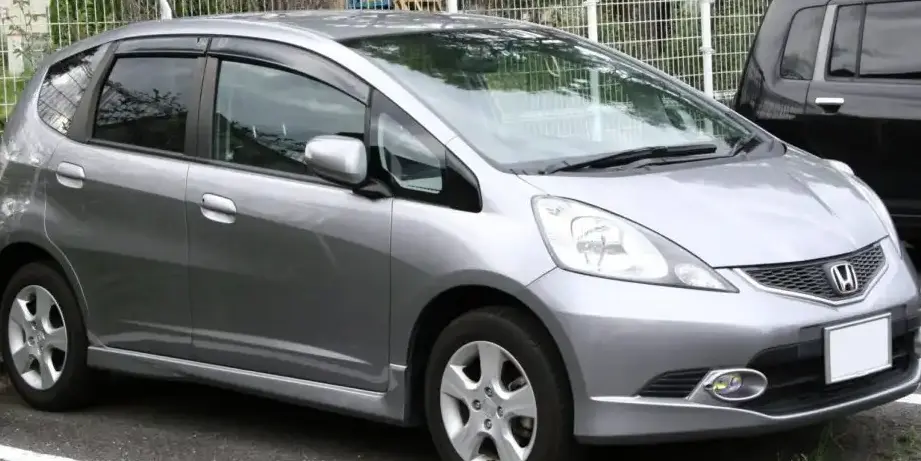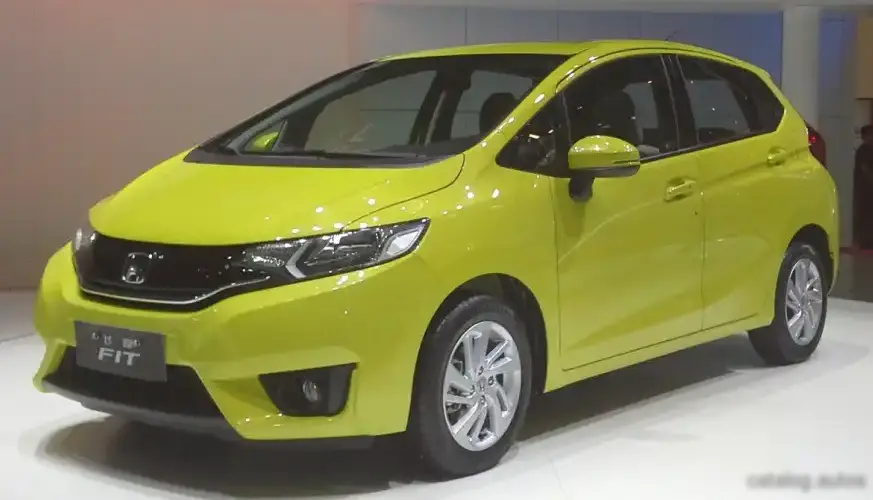
The Honda Fit Crosstar 1.5 e:HEV, introduced in February 2020 as part of the fourth-generation (GR1) Fit lineup, represents Honda’s entry into the subcompact crossover segment with a focus on fuel efficiency and practicality. This variant, powered by Honda’s e:HEV hybrid system, was primarily marketed in Europe and Japan, offering a unique blend of hatchback versatility and slightly increased ground clearance for a more rugged aesthetic. The Crosstar 1.5 e:HEV utilizes a sophisticated powertrain designed to maximize fuel economy while providing adequate performance for urban and highway driving. It occupied a mid-range position within the Fit IV lineup, offering more features and a distinctive appearance compared to the base models, but remaining more accessible than the top-tier trims.
Technical Specifications
| Brand | Honda |
| Model | FIT |
| Generation | Fit IV (GR1) |
| Type (Engine) | Crosstar 1.5 (109 Hp) e:HEV e-CVT |
| Start of production | February, 2020 |
| Powertrain Architecture | FHEV (Full Hybrid Electric Vehicle) |
| Body type | Hatchback |
| Seats | 5 |
| Doors | 5 |
| Fuel consumption at Low speed (WLTP) | 3.7 l/100 km (63.6 US mpg, 76.3 UK mpg, 27 km/l) |
| Fuel consumption at Medium speed (WLTP) | 3.4 l/100 km (69.2 US mpg, 83.1 UK mpg, 29.4 km/l) |
| Fuel consumption at high speed (WLTP) | 3.9 l/100 km (60.3 US mpg, 72.4 UK mpg, 25.6 km/l) |
| Combined fuel consumption (WLTP) | 3.7 l/100 km (63.6 US mpg, 76.3 UK mpg, 27 km/l) |
| Fuel consumption (economy) – combined | 2.9 l/100 km (81.1 US mpg, 97.4 UK mpg, 34.5 km/l) |
| Fuel Type | Petrol (Gasoline) |
| Weight-to-power ratio | 11 kg/Hp, 90.8 Hp/tonne |
| Weight-to-torque ratio | 9.4 kg/Nm, 105.8 Nm/tonne |
| Battery technology | Lithium-ion (Li-Ion) |
| Electric motor power | 109 Hp @ 3500-8000 rpm, 253 Nm (186.6 lb.-ft.) @ 0-3000 rpm |
| Electric motor location | Integrated into the transmission |
| Electric motor type | Synchronous |
| System power | 109 Hp |
| Internal combustion engine power | 98 Hp @ 5600-6400 rpm, 65.5 Hp/l |
| Internal combustion engine torque | 127 Nm (93.67 lb.-ft.) @ 4500-5000 rpm |
| Engine layout | Front, Transverse |
| Engine Model/Code | LEB-H5 |
| Engine displacement | 1496 cm3 (91.29 cu. in.) |
| Number of cylinders | 4 |
| Engine configuration | Inline |
| Cylinder Bore | 73 mm (2.87 in.) |
| Piston Stroke | 89.4 mm (3.52 in.) |
| Compression ratio | 13.5:1 |
| Number of valves per cylinder | 4 |
| Fuel injection system | Direct injection |
| Engine aspiration | Naturally aspirated engine |
| Valvetrain | DOHC |
| Engine oil capacity | 3.6 l (3.8 US qt, 3.17 UK qt) |
| Coolant capacity | 3.85 l (4.07 US qt, 3.39 UK qt) |
| Kerb Weight | 1200 kg (2645.55 lbs.) |
| Fuel tank capacity | 40 l (10.57 US gal, 8.8 UK gal) |
| Length | 4090 mm (161.02 in.) |
| Width | 1725 mm (67.91 in.) |
| Height | 1545 mm (60.83 in.) |
| Wheelbase | 2530 mm (99.61 in.) |
| Front track | 1495 mm (58.86 in.) |
| Rear track | 1485 mm (58.46 in.) |
| Ride height (ground clearance) | 160 mm (6.3 in.) |
| Minimum turning circle | 10 m (32.81 ft.) |
| Drivetrain Architecture | Front wheel drive, FHEV |
| Number of gears and type of gearbox | automatic transmission e-CVT |
| Front suspension | Independent type McPherson |
| Rear suspension | Torsion |
| Front brakes | Ventilated discs |
| Rear brakes | Disc |
| Assisting systems | ABS (Anti-lock braking system) |
| Steering type | Steering rack and pinion |
| Power steering | Electric Steering |
| Tires size | 185/60 R15 84H; 185/55 R16 83V |
| Wheel rims size | 15; 16 |
Powertrain & Engine Architecture
The heart of the Fit Crosstar 1.5 e:HEV is Honda’s Intelligent Multi-Mode Drive (i-MMD) hybrid system. This system doesn’t rely on traditional gears; instead, it utilizes an e-CVT (electronically controlled continuously variable transmission). The powertrain consists of a 1.5-liter, four-cylinder LEB-H5 gasoline engine paired with two electric motors. The engine itself produces 98 horsepower and 127 Nm of torque. However, the system’s combined output is 109 horsepower. The engine operates primarily as a generator, charging the lithium-ion battery pack and powering the electric motor that drives the front wheels. Under certain conditions, such as highway cruising, the engine can directly drive the wheels, improving efficiency. The e-CVT seamlessly blends power from the engine and electric motor, providing a smooth and linear driving experience. The engine features direct injection and a high compression ratio of 13.5:1, contributing to its efficiency.
Driving Characteristics
The 1.5L e:HEV powertrain in the Crosstar delivers a comfortable and refined driving experience, particularly well-suited for urban environments. While not a performance-oriented vehicle, the combined output of the engine and electric motor provides adequate acceleration for everyday driving. The e-CVT contributes to a seamless and almost gearless feel, although some drivers may find the engine’s tendency to hold a constant RPM during acceleration slightly unusual. Compared to the standard 1.5L non-hybrid Fit, the e:HEV offers quieter operation, especially in electric-only mode. The Crosstar’s slightly increased ride height, compared to the standard Fit, provides a more comfortable ride over uneven road surfaces, but also introduces a bit more body roll in corners. The e-CVT is programmed for efficiency, prioritizing fuel economy over aggressive acceleration.
Equipment & Trim Levels
The Crosstar trim level generally included features such as alloy wheels, roof rails, and unique exterior styling elements to give it a more rugged appearance. Inside, the Crosstar typically featured upgraded upholstery and trim compared to the base Fit models. Standard equipment often included a touchscreen infotainment system with Apple CarPlay and Android Auto compatibility, Honda Sensing suite of safety features (including adaptive cruise control, lane keeping assist, and automatic emergency braking), and climate control. Optional extras could include a premium audio system, navigation, and parking sensors.
Chassis & Braking
The Fit Crosstar 1.5 e:HEV utilizes a front-wheel-drive configuration with an independent McPherson strut suspension in the front and a torsion beam suspension in the rear. The braking system consists of ventilated discs on the front wheels and solid discs on the rear. ABS (Anti-lock Braking System) is standard. The suspension is tuned for comfort, prioritizing ride quality over sporty handling. The Crosstar’s slightly increased ground clearance, due to its crossover styling, provides a bit more capability on unpaved roads.
Market Reception & Comparison
The Honda Fit Crosstar 1.5 e:HEV was generally well-received by automotive critics for its fuel efficiency, practicality, and comfortable ride. Its hybrid powertrain was praised for its seamless operation and ability to deliver impressive fuel economy in real-world driving conditions. Compared to the non-hybrid Fit models, the Crosstar offered a more refined driving experience and a more distinctive appearance. However, some critics noted that the engine could feel underpowered at times, particularly when accelerating uphill or overtaking. The Crosstar’s fuel economy consistently outperformed the standard gasoline-powered Fit, making it an attractive option for environmentally conscious buyers.
Legacy
The Honda Fit Crosstar 1.5 e:HEV represents a significant step in Honda’s electrification strategy. The i-MMD hybrid system proved to be reliable and efficient, and the Crosstar’s popularity helped to establish Honda as a leader in the subcompact hybrid crossover segment. On the used car market, these models hold their value well due to their fuel efficiency and Honda’s reputation for reliability. The powertrain is known for its longevity, with many examples exceeding 100,000 miles without major issues. The Fit Crosstar 1.5 e:HEV remains a practical and economical choice for buyers seeking a fuel-efficient and versatile subcompact crossover.